Pay in installments of $6.29 with
 ,
,
 and
and

Shipping Estimate
USA
- USA
- CAN
- USA
- CAN
Ships within 48 hours · Estimated delivery Aug 6 - Aug 11
 Promo Codes Available:
For Your Every Summer RSVP, with Code: SUMMER15
Description
planting indigo seeds Hairy Indigo SeedHairy indigo is mainly used for grazing, and growth is sometimes accumulated to furnish high quality grazing in the fall. Hairy indigo leaves are also nutritious for goats. Studies at the University of Florida showed that hairy indigo can produce up to 12 tons of dry matter per acre, which would contain about 20% crude protein and 50 to 60% digestibility. The leaves also contain high levels of mineral nutrients.~~~ Hairy indigo is mainly used for
Hairy indigo is mainly used for grazing, and growth is sometimes accumulated to furnish high-quality grazing in the fall. Hairy indigo leaves are also nutritious for goats. Studies at the University of Florida showed that hairy indigo can produce up to 12 tons of dry matter per acre, which would contain about 20% crude protein and 50 to 60% digestibility. The leaves also contain high levels of mineral nutrients.~~~
Hairy indigo is mainly used for grazing, and growth is sometimes accumulated to furnish high-quality grazing in the fall. Hairy indigo leaves are also nutritious for goats. Studies at the University of Florida showed that hairy indigo can produce up to 12 tons of dry matter per acre, which would contain about 20% crude protein and 50 to 60% digestibility. The leaves also contain high levels of mineral nutrients.
Product Information
- Application or Use: Pasture, Cattle Forage, Livestock Grazing, Cover Crop
- Germination Time: 7 - 14 days, under optimal conditions
- Growing Locations: Warm Season, Transition Zone, Cool Season
- Height: 2 - 5 feet
- Sunlight Requirements: 6 - 8 hours, full sun for best results
- Advantages: Reseeding annual, resistant to root-knot nematode, well adapted to sandy soil.
- When to Plant: Recommended planting time is spring or summer when night time temperatures are consistently 65+ degrees and 3 months prior to first frost.
Product Details
- Reseeding, summer annual legume
- Moderately resistant to root-knot nematode
- Adapts to sandy soils that have good drainage
- Grows on land that may be too dry for other legumes
- Mainly used for grazing
*Product packaging may appear different than what is pictured.
Product Information
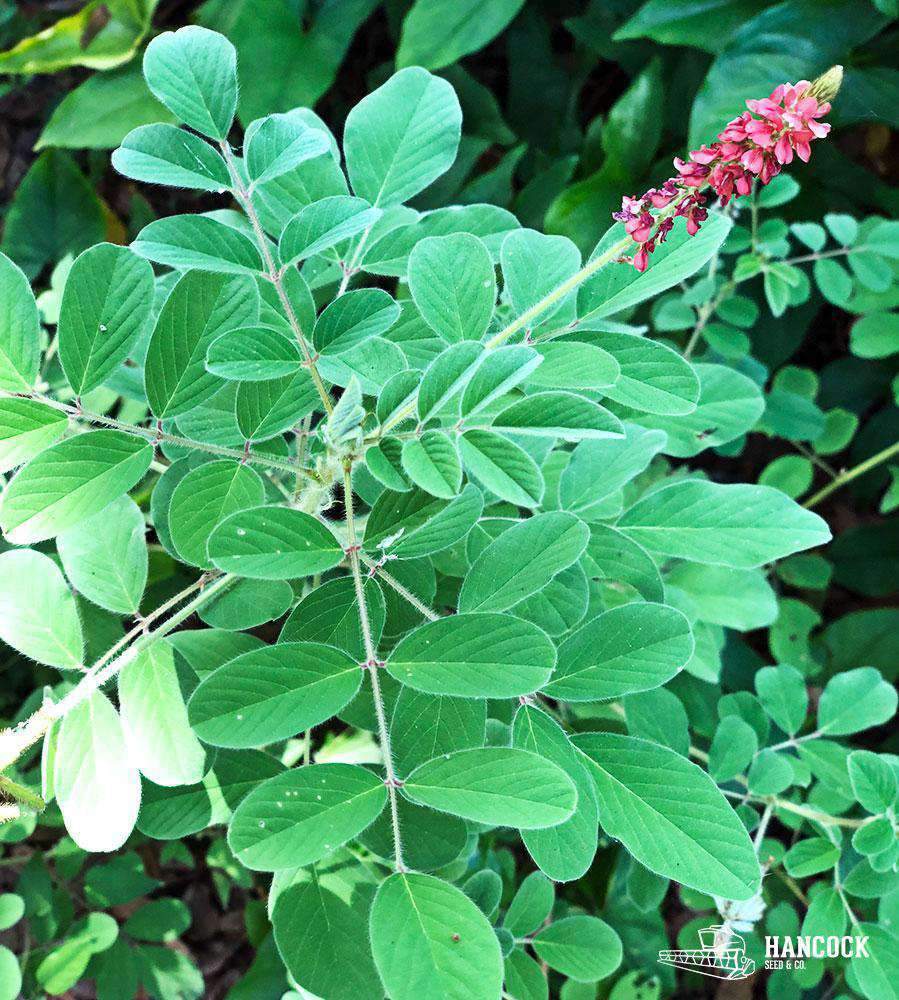
Hairy Indigo (Indigofera hirsuta) is an erect-growing, reseeding, summer annual legume that may grow 4 to 7 ft. tall if not grazed. Hairy Indigo germinates in late Spring and continues throughout the Summer. It is generally considered a late emerging plant (late May through June.) The plant is somewhat shrubby, and stems become very woody as the plant matures. Stems and leaves are covered with short, bristle-like hairs. It is moderately resistant to root-knot nematode. Hairy Indigo adapts to sandy soils that have good drainage, and grows on land that may be too dry for other legumes. It does not grow well on soils that flood for an extended period of time. Early-and-late-flowering types have been developed, but all are now marketed as common hairy indigo.
Hairy indigo is mainly used for grazing, and growth is sometimes accumulated to furnish high-quality grazing in the fall for weaned calves or dry cows. Hairy indigo leaves are also nutritious for goats. Studies at the University of Florida showed that hairy indigo can produce up to 12 tons of dry matter per acre, which would contain about 20% crude protein and 50 to 60% digestibility. The leaves also contain high levels of mineral nutrients.
Cattle may reject hairy indigo when they are first placed in a pasture, but after one or more days, they begin grazing. After adapting to Hairy Indigo, cows and calves readily consume it. Cattle may develop sores on their feet and legs when grazing Hairy Indigo in the rainy season due to irritation of the wet skin of the cattle by the bristle-like hairs on the stems of the plants.~~~
Plant between April and July at a rate of 5 to 8 lbs. per acre.
Establishment and management procedures are similar to those for other warm-season annual legumes. Hairy Indigo is easy to establish and requires very little management afterwards. Hairy Indigo requires soil pH of 5 to 6; the plant will not grow well or persist on acidic soils. Liming may be required to achieve the optimum pH. Depending on soil test results, it may be better to apply dolomite (which also supplies magnesium) than lime. How much lime will be needed depends on the soil type and original or native pH of the soil. Contact your County Extension agent for help on how you can test your soil and determine your liming needs. For good establishment, 15 lbs. of seed per acre is recommended. Disking, rolling or packing the soil after broadcasting the seed, will give better establishment. Establishment and production can be enhanced with application of 30 and 60 lbs. per acre of P2O2 and K2O, respectively. Inorganic nitrogen fertilizer is not required since Hairy Indigo is a legume and will produce its own nitrogen from the air. Due to its hardseededness, some seed may lie dormant in the soil for many years after being planted, and then germinate when the soil is disturbed.
To ensure that the plant reestablishes each year from seed, it is advisable to withdraw animals from the pasture or reduce grazing intensity two weeks before the plants begin to flower or in late Summer or early fall. This practice would allow some of the plants to go to seed. Grazing animals will help distribute the seeds in the pastures. The self-seeding nature of the plants is good from the forage standpoint, but it is a negative characteristic in terms of the weed potential of the plant. Consequently, vegetable and other row crop farmers often consider Hairy Indigo a weed. However, used as a cover crop or green manure crop, Hairy Indigo can effectively suppress nematodes that might otherwise seriously damage succeeding crops. Besides grazing, hairy indigo has also been used for hay and silage.
Shipping Notes
- Free Standard Shipping on $100+ Orders to the USA.
- Except Preorder products are shipped in 48 hours.
- Delivery to the USA:
- Standard Shipping : 3-10 business days
- If time is of the essence, please consider selecting expedited delivery for faster service.
Exchange/Return Notes
- We offer a 30-day return/exchange service after receiving.
- Final sale items are not eligible for returns or exchanges.
- To process your return/exchange, please contact us at [email protected]
- Please click here for more details>>> Return & Exchange Policy