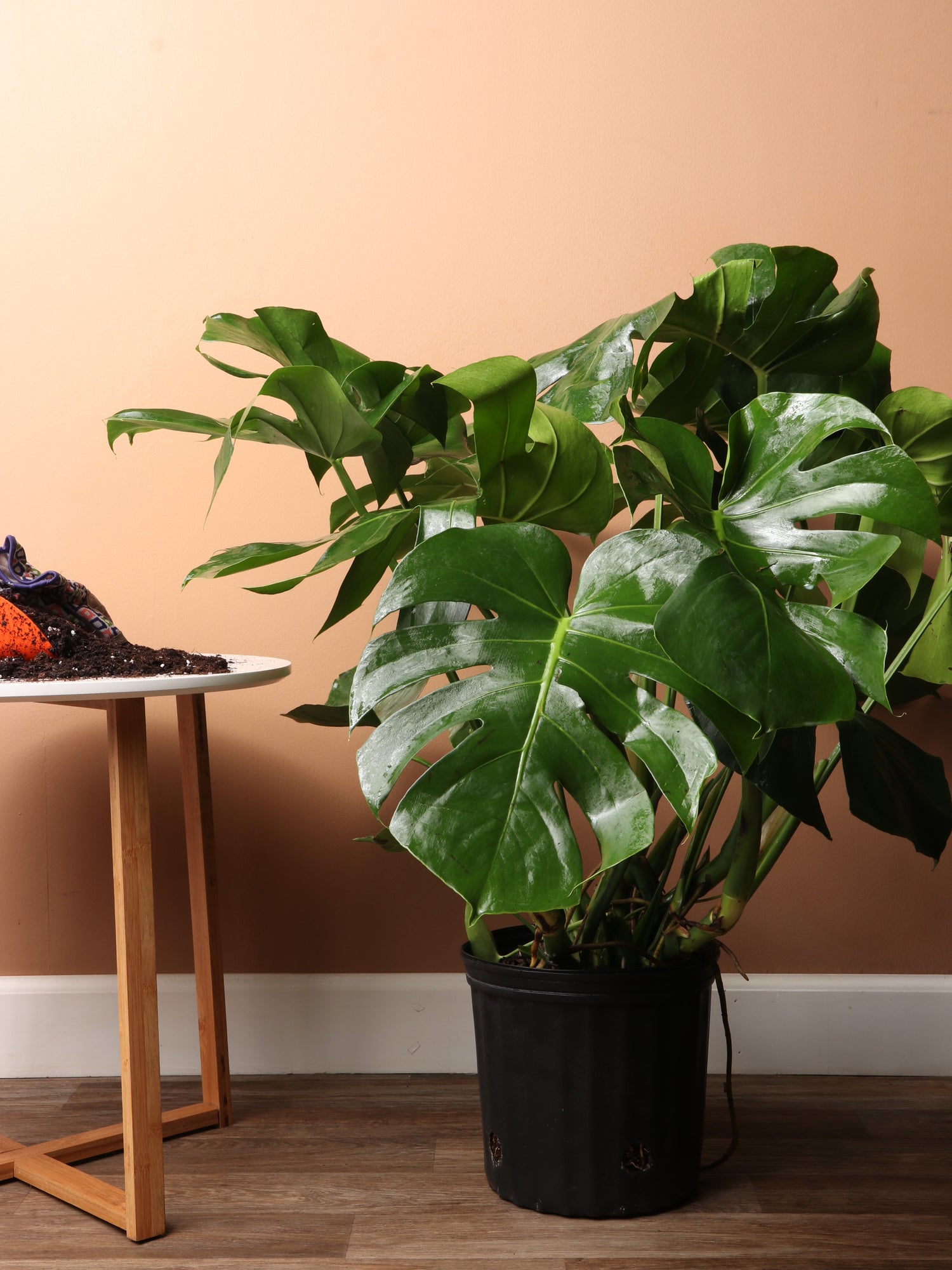
SKU: 10151819498
shop monstera plant

shop monstera plant Buy Monstera deliciosa Online | Large Indoor Plant

Sale price$22.49 Regular price$24.99
Save 10%

Pay in installments of $6.25 with ShopPay, AfterPay and Klarna

Shipping Estimate
USA
  • USA
  • CAN

Ships within 48 hours · Estimated delivery Aug 23 - Aug 28

Promo Codes Available:

For Your Every Summer RSVP, with Code: SUMMER15

Description

shop monstera plant Buy Monstera deliciosa Online | Large Indoor PlantDescription The Monstera Deliciosa has been capturing hearts for generations, and we completely understand why. This gentle giant brings such warmth and character to any space with those iconic split leaves that develop naturally as the plant matures. Originally from the rainforests of southern Mexico and Central America, she's perfectly adapted for indoor life and genuinely wants to thrive in your home. What makes her truly special are those

Description

The Monstera Deliciosa has been capturing hearts for generations, and we completely understand why. This gentle giant brings such warmth and character to any space with those iconic split leaves that develop naturally as the plant matures. 

Originally from the rainforests of southern Mexico and Central America, she's perfectly adapted for indoor life and genuinely wants to thrive in your home. What makes her truly special are those beautiful fenestrations (the fancy term for the natural holes in her leaves) that aren't just stunning to look at—they actually help her survive in windy conditions by allowing air to flow through. In nature, she's a climber who uses aerial roots to scale trees while drawing nutrients from the humid air around her. While many Monstera varieties exist, this classic Monstera Deliciosa remains the most beloved for good reason.


Care 

How do you care for an indoor Monstera deliciosa?

Caring for an indoor Monstera Deliciosa means providing bright indirect light near windows, weekly watering when the topsoil feels dry, and maintaining comfortable temperatures between sixty-five to eighty-five degrees Fahrenheit throughout the year for optimal healthy growth.

The beauty of Monstera plant care is that once you understand her basic needs, she's wonderfully forgiving. Place her where she can enjoy filtered sunlight—think of the dappled light filtering through a rainforest canopy. Water when the top 2-3 inches of soil feel dry to your touch, and she'll show her appreciation with new growth. A well-draining potting mix with some perlite keeps her roots comfortable, and during the growing season, a monthly feeding with balanced Monstera fertilizer helps support those magnificent leaves.


Should I mist my Monstera deliciosa?

Misting your Monstera Deliciosa helps increase humidity levels around her gorgeous leaves, which she truly appreciates since she naturally thrives in humid rainforest conditions where moisture levels stay consistently high throughout the growing seasons for healthy development.

It’s not absolutely necessary, but gentle misting makes her feel more at home, especially during dry winter months when indoor heating can reduce air moisture. Think of it as a little spa treatment for your plant friend. You can also place a humidity tray nearby or use a humidifier if you want to create that perfect environment.


How often should I water a Monstera deliciosa inside?

Water your Monstera Deliciosa inside every one to two weeks during growing season, carefully checking that the top two to three inches of soil feel completely dry before giving her another thorough drink to promote healthy growth.

The key to successful watering is paying attention to what your plant is telling you rather than following a strict schedule. In brighter locations, she'll be thirstier and may need weekly watering, while in lower light she can comfortably wait longer between drinks. We always recommend the finger test—stick your finger right into the soil to check moisture levels. This personal approach works much better than calendar-based watering and helps you build that wonderful connection with your plant.


What does a Monstera need to thrive?

A Monstera needs bright indirect light from windows, well-draining nutrient-rich soil mixtures, moderate to high humidity levels, consistent moisture without sogginess, adequate room to grow and climb upward, plus warm stable temperatures year-round for optimal health and development.

Creating the right environment is about understanding her natural habitat and bringing those conditions indoors in a gentle way. She loves having space to spread those magnificent leaves and really appreciates a moss pole or trellis to support her climbing nature.


What do Monstera deliciosa like to be potted in?

Monstera Deliciosa like being potted in well-draining organic-rich soil blends with excellent drainage capabilities, typically combining high-quality potting soil with perlite and orchid bark chunks for optimal aeration and proper drainage throughout the root system for healthy plant development.

The perfect soil mix holds just enough moisture without becoming soggy—imagine the texture of a well-made chocolate cake that's moist but not wet. Adding perlite or bark chips creates those important air pockets that keep her roots breathing comfortably. Always choose a pot with drainage holes because good drainage is one of the most loving things you can provide for your plant.


Where is the best place to put a Monstera plant?

The best place to put a Monstera plant is near large windows that provide bright indirect light throughout the day, such as living rooms, bedrooms, or home offices with east or west-facing window exposure for optimal growing conditions.

Bathrooms and kitchens with natural light are also wonderful spots because of their naturally higher humidity levels, which makes her feel right at home. Avoid placing her directly in harsh afternoon sun from south-facing windows—think gentle morning light or filtered afternoon glow instead. 


Should I put my Monstera in the window?

You should place your Monstera near a window with bright filtered light rather than directly in harsh afternoon sun exposure, which can easily scorch her delicate leaves and cause permanent brown damage throughout the foliage that ruins her natural beauty.


East or west-facing windows are perfect because she can enjoy gentle morning sun without dealing with those intense afternoon rays that are too much for her rainforest sensibilities. If you only have a south-facing window, position her a few feet back or use a sheer curtain to create that perfect filtered light she craves.


Is Monstera deliciosa a good indoor plant?

Monstera deliciosa is an excellent indoor plant choice because it adapts remarkably well to home environments, tolerates various indoor conditions gracefully, purifies air effectively, and creates absolutely stunning visual impact in any space while requiring minimal daily care.

She's genuinely designed for sharing our homes—forgiving when life gets busy, adaptable to different light situations, and grows at a thoughtful pace that won't overwhelm your space. Plus, those beautiful large leaves work hard to clean your air while creating that lush, peaceful atmosphere we all crave. For plant parents who want a meaningful relationship with a plant that gives back as much as it receives, she's truly special.


Pet-friendly?

The Monstera deliciosa is not pet-friendly, as all parts contain calcium oxalate crystals that are harmful to cats, dogs, and other pets if eaten. We always recommend keeping this beautiful plant safely out of reach of curious furry family members who might be tempted to explore with their mouths.


Is Monstera deliciosa toxic to dogs?

Monstera deliciosa is toxic to dogs because calcium oxalate crystals throughout the plant cause oral irritation, excessive drooling, vomiting, and difficulty swallowing if any of the parts are ingested, meaning you’ll need immediate veterinary attention for safety.


Is Monstera deliciosa toxic to cats?

Monstera Deliciosa is toxic to cats. It contains calcium oxalate crystals that can cause immediate mouth irritation, excessive drooling, vomiting, and potentially even more severe symptoms if large amounts of it are consumed by your curious felines.


Factoids

Is Monstera deliciosa toxic to touch?

Monstera deliciosa sap can cause mild skin irritation or rashes in sensitive individuals due to calcium oxalate crystals in plant tissues, but it's generally safe to touch during normal handling and care. Always wash your hands after pruning or repotting.


Is it safe to have a Monstera in your bedroom?

Having a Monstera in your bedroom is completely safe for most people, provided pets and children can’t get access the plant. It also offers excellent air-purifying benefits, giving you better sleep quality while creating a beautiful ambience.

She actually makes a wonderful bedroom companion—those magnificent leaves work quietly through the night to filter toxins from your air while you rest. Just ensure she gets adequate light near a window and that curious pets or little ones can't reach her. Many of our customers find having plants in their sleep space creates a calming, nurturing environment that helps them unwind at the end of each day.


Are Monstera deliciosa air purifiers?

Monstera deliciosa is an effective air purifier that helps filter harmful toxins and improve indoor air quality. They’re popular choices for homes and offices where you need natural air purification solutions that also provide stunning visual appeal.

Those impressive leaves aren't just for show—they're working steadily to clean your air throughout the day and night. She's particularly good at removing formaldehyde and other common indoor pollutants that can accumulate in our homes. While she won't replace a mechanical air purifier, she definitely contributes to a healthier indoor environment while looking absolutely beautiful doing it. It's like having a living air filter that also brings joy to your daily routine.


What is the origin of the name Monstera deliciosa?

The name Monstera deliciosa is made up of the Latin words meaning "monstrous", referring to the dramatic split leaves with striking fenestrations, and "delicious", specifically referencing the plant's edible fruit when it reaches full ripeness in natural habitats.

It's a name that perfectly captures both her dramatic visual impact and her hidden culinary talents.


Is Monstera deliciosa known by any other names?

The Monstera deliciosa is known by many names, including Swiss cheese plant, split-leaf philodendron, fruit salad plant, delicious monster, ceriman, windowleaf, Mexican breadfruit, and Penglai banana, with names varying by different geographic regions and plant communities worldwide.

The "Swiss cheese plant" nickname is probably the most popular because of those distinctive holes that look like nature's own artwork. "Split-leaf philodendron" stuck even though she's not technically a philodendron—sometimes plant names take on a life of their own! 


Why does Monstera deliciosa have holes in its leaves?

Those distinctive holes are brilliant evolutionary adaptations that prevent wind damage by allowing air to flow through the leaves in her native rainforest environment, while also helping rainwater reach the forest floor to support the entire ecosystem around her.


Can you eat Monstera deliciosa fruit?

You can eat Monstera Deliciosa fruit only when it reaches full ripeness, as it tastes like a delightful blend of pineapple and banana, but unripe fruit contains irritating calcium oxalate crystals that cause mouth discomfort and should be avoided completely.


Buy a Monstera deliciosa

Your home is ready for this beloved classic that has been bringing joy to plant families for generations. This Monstera deliciosa offers you the chance to nurture a living piece of art that grows more beautiful with time, developing those iconic split leaves that make every space feel more alive and welcoming.

Through our live video shopping calls, you can meet your exact plant before she arrives—we believe in making sure you feel completely confident about welcoming her into your home. Point to the one that speaks to your heart, and we'll ensure that special plant arrives looking just as healthy and beautiful as when you first fell in love. Because choosing the right plant is the beginning of a wonderful, long-term relationship.

Shipping Notes
  • Free Standard Shipping on $100+ Orders to the USA.
  • Except Preorder products are shipped in 48 hours.
  • Delivery to the USA:
  1. Standard Shipping : 3-10 business days
  • If time is of the essence, please consider selecting expedited delivery for faster service.
Exchange/Return Notes
  • We offer a 30-day return/exchange service after receiving.
  • Final sale items are not eligible for returns or exchanges.
  • To process your return/exchange, please contact us at [email protected]
  • Please click here for more details>>> Return & Exchange Policy
SKU: 10151819498

Discover Niche Categories That Outsell shop monstera plant

Top-Converting Item to Boost Your Average Order

4.8 ★★★★★
Based on 5 reviews
Sort
Highest Rating
Newest First
Oldest First
Product Reviews
K
Verified Purchase
Karen Joan
Phoenix, US
★★★★★ 5
A Martian Named Smith
There is no question that Robert Anson Heinlein is one of the Fathers of Science Fiction. There is also no question that STRANGER IN A STRANGE LAND is his most famous work, having been called "the most famous science fiction novel ever written." Is it his best? Perhaps not. But it is a ground breaking classic, one that I enjoy reading again and again. STRANGER IN A STRANGE LAND is the story of Valentine Michael Smith (Mike), a male born of human parents on the first Earth colony ship to Mars. Literally born as the ship landed on Mars, Mike's parents and the rest of the crew died, and Mike was raised by Martians. 25 years later, a second Earth colony ship lands on Mars, and discovers Mike, the native inhabitants of Mars, and a host of unanswered questions. Mike returns to Earth, and STRANGER IN A STRANGE LAND is the detailed chronicle of his introduction to, interaction with, and transformation of human culture. STRANGER IN A STRANGE LAND was Heinlein's first truly adult science fiction novel, and he took on some pretty heady topics. Politics, religion, sex, equality, and the concept of a truly un-human culture (which happened to be superior), to name a few. Heinlein wove these themes into STRANGER IN A STRANGE LAND, each of which contributed to his idealistic vision of a perfect world.He intermixed shock value, logic, and plain good storytelling to get his points across, and I think he did so quite wonderfully. 1. Religion. Heinlein was not an atheist, as some have claimed. He did believe in a higher power; what he did not have any use for was organized religion. He believed in faith. If you had faith, true faith, then the trappings of religion were unnecessary and superfluous. They just did not matter. The Church of All Worlds in STRANGER IN A STRANGE LAND was set up to show that no matter what the religious trapping were, it was faith that really mattered. He also created a religion where happiness and self-belief were the main drivers, rather than fire, brimstone, and fear. Makes great sense to me. 2. Sex. Contrary to popular belief, STRANGER IN A STRANGE LAND did not promote promiscuity or free love. What Heinlein did was to create a world where people were open about sex, where it was enjoyable and exciting, but with it came great responsibility. In this world, sex wasn't hidden, secret, or naughty; rather it was honest and pure and fun. People who could develop this utopian attitude became happier, healthier, less jealous, more caring, and, yes, more sexual. Responsibility to partners, offspring, and an entire extended family became the norm. In his own way, by exploring sexuality, Heinlein was exploring and redefining the meaning of family. He was also trying to define sex as a miraculous union, and to show that humans should treat it as the miracle of bonding and "growing closer" that it is. 3. Equality. Before the sexual revolution and equality for women, Heinlein clearly believed in equality of the sexes, equality of the races, equality of faiths...basically the equality of all humans. Yes, he felt women should be treated with respect and reverence and be protected and nurtured because they gave birth and perpetuated the species, but he clearly believed that they were intelligent and capable. He also believed that women had sexual needs equal to those of men and had the right to pursue those needs. 4. Politics. In STRANGER IN A STRANGE LAND, Heinlein clearly had little use for government, politics, or politicians. He believed that government in general was a necessary evil, but preferred that it be kept small and out of his business. He didn't care what it was based on or what guided it - astrology was the ridiculous example used in STRANGER IN A STRANGE LAND - as long as it left him alone. Works for me. He also had little use for entitlements, and expected human beings to work for what they received. Again, works for me. 5. Un-Human, Superior Culture. Heinlein did a remarkable and revolutionary thing when he created the Martian culture of STRANGER IN A STRANGE LAND. The Martians of this novel are clearly not humanoids from another planet. They do not think like humans, act like humans, look like humans, reproduce like human, live like humans, or do anything like we do here on the planet Earth. There is nothing remotely recognizable about these Martians; they are completely alien. We can't them, and they can't understand us. They are older, more advanced, and can perceive the universe around them in ways that humans do not. But humans can, if properly taught, learn some of the things that Martians do. What a marvelous concept. In 1962 the original version of STRANGER IN A STRANGE LAND won the Hugo Award for the Best Science Fiction Novel of the Year. After Heinlein's death in 1988, his wife Virginia discovered the original uncut manuscript and arranged to have it published in 1991. It is interesting to read the two books side by side, to see the differences, and to compare them. I enjoy both versions very much, and am still not sure which is my favorite. Whatever version you choose, I HIGHLY RECOMMEND STRANGER IN A STRANGE LAND. Whether you have read it before or not, whether you love it or not, you will find it to be an interesting and thought-provoking read.
WAS THIS REVIEW HELPFUL?YesReportShare
Reviewed in the United States on June 20, 2009
M
Verified Purchase
Marcel Dupasquier
Charlottesville, US
★★★★★ 4
A strange book I don’t grok
I have started to read this book directly after I had read “The Moon is a harsh Mistress” and after the first chapter, I almost stopped reading again. The first chapter starts promisingly enough, after a Mars expedition with only four couples, finding the fitting couples that contained all the required capabilities in themselves had been difficult enough, had failed, years later, another expedition is started, and this time, the flight takes much shorter. They find a young man there and bring him back, but how they treat him here, locked and no women allowed, for the first time really showed me how old Robert Heinlein’s books really are and here, for the first time, it was an annoyance. What would happen if a woman would visit him? We find out in the second chapter, and the answer is, basically, nothing. Then, for about 10% of the book, we get Jill, working in the hospital where the Man from Mars is kept, discussing with Ben, a journalist, about the implication of the Man from Mars. Once he owns the whole Mars, once he owns a majority of Lunar Enterprises. In any case, the government under the Secretary General cannot keep him alive. Then, finally, some action occurs: Ben tries to get the Man released, but fails miserably; Jill subsequently tries to prisonbreak with the Man. They escape to Ben’s place but the henchmen are not far away. They ring at the door, there is a confrontation and... it’s over. They go to another benefactor, Jubal, who keeps Jill and the Man hidden for rest of almost half of the book. There, Jubal thinks about how to help the Man, together with getting Ben back, while he tries to learn as much as possible about the Martian and Mars. Then, the henchmen appear again, ready to arrest everybody, and after the Martian makes the policemen disappear once more, Jubal eventually manages to bluff the Secretary General into calling back the second arresting team and agreeing to meet with the Man from Mars with him, Jubal, as the official delegate for the Martian. At the meeting, Jubal does what he can to make the Man’s live safe: He gives the Secretary General the mandate the manage the money of the Martian with the payment as much money as he sees fit. Having thus secured the Martian’s safety, the Martians keeps living at Jubal’s place and learning. They visit a service of the Fosterite church, where people gamble, visit the bar and have stories with women but when the archbishop wants to have one-to-one talk with the Martian, latter recognizes former’s evilness and discorporates him. Eventually, the Man from Mars has learned all he can at Jubal’s and he and Jill set out for the world. They join a circus troupe where the Martian performs a levitating trick with Jill, only it is not a trick, he really does so. But they are unsuccessful, the marks see right through it. They leave again, but not before they have listened to a snake charmer sermon about the Fosterites and before they make her a water brother. They next move to Las Vegas where Jill works in a show and the Martian as croupier and they elucidate naughty pictures. Thereafter, they go to San Francisco, where the Martian reads all the books about the various religions without grokking anything. They then visit a zoo where the Martian breaks out laughing as he, observing monkeys, finally groks people. They founded their own church, but it’s not a religion. The Martian had hereto shown some extraordinary capabilities, such as being able to enter a trance state where he could stay under water for hours, telekinesis and the ability to discorporate things or beings at will. Had the reader so far been wondering how he could do that, if the Old Ones on Mars has changed him somehow on Mars, now it become clear that this was not the case. Everybody can do it but, in order to facilitate such deeds, which were connected to Martian creed, one had to understand the Martian concepts, which one could only by firstly learning the Martian language. The Martian church was thus foremost a Martian language school. That was however not all it was. The Martian idea was that there was no God than God in everyone of us. All other religions were considered as truths, only that they were kind of hiding that God was each of us, and thus the creed was “Thou are God.” In the Martian church, also free love was practiced. We get hence a chapter where Ben was shocked by this and fled the church most hurriedly to report to Jubal, only to join it again the next chapter. And of course, we get Fosterites who try to start a persecution against their competitors. The end then also makes sense, but I don’t understand why. It was on one hand logical but on the other hand why was it necessary? This is thus not really a work of science fiction and but rather a theological treatise. I think it could have shortened somehow, then realized, that what the original editors thought as well. It was my third book I read from Robert Heinlein, Starship Troopers was a good concept which Joe Haldeman made into a good book, the Moon is a harsh Mistress was a quick read that kept me hooked, but considering, it is basically a story of the American struggle for independence, just on the Moon, and it will also be my last. There are other science fictions authors out there.
WAS THIS REVIEW HELPFUL?YesReportShare
Reviewed in the United States on November 15, 2022
B
Verified Purchase
b slev
Bozeman, US
★★★★★ 5
seekers paradise
Format: Kindle
Some of this book disturbed me a little but overall I found it amazing and fascinating. Possibilities abound in fantasy and can be just the thing you need to open up. Enjoy! I sure did.
WAS THIS REVIEW HELPFUL?YesReportShare
Reviewed in the United States on May 22, 2026
J
Verified Purchase
Jenni DaVinCat
Louisville, US
★★★★★ 3
We Should All Be a Little Stranger.
I understand why this book is often cited as one of the most important sci-fi books of all time. While reading it, you might begin to question why it’s lumped into the sci-fi category because the themes are very human. It is science fiction, that cannot be argued, but it’s also a coming of age story, a religious story and at its very core, a story about love. Valentine Michael Smith was born and raised on Mars, but he is a human. He is brought back to Earth to learn what it means to be a human. This causes the reader to be forced to think outside of the box because Michael is not just coming from a different human culture, he has never learned what it means to be a human so any chapter told from his perspective is like an outsider, looking in on human culture. It’s wildly fascinating to think about ourselves in this manner. As Michael progresses in his grokking of humans, he gets out to explore the world and to challenge it. Our concepts of God/religion and sex/love are strange to him. We tend to not really think about it from an outside perspective because this is just the way life is, but being forced to think about it, makes for a very fascinating read. I’d never really considered myself to be a “prude” but there were times that this book made me feel that way. At times, the reader must take a step back and remember that Heinlein did intend for many of the themes to be viewed as satire of what is commonly accepted. There were a few negatives when reading this book, however. It was written in the sixties, which was a very different time from today in terms of the way women are spoken to/about and how they are treated. Heinlein wasn’t too bad in this regard, but there were a few sentences that made me stop for a second. Heinlein also has some of his characters go on these long drawn-out speech tangents that go on for pages and pages. I felt it was a little unnecessary to go on for that long, especially considered the length of the uncut version. It took me a little while to get through this book and normally I’m a pretty quick reader. Negatives aside, I do feel like this book is important. The story itself is not challenging, but as I stated before, it challenges the reader to think about humans from an outside perspective and that is fascinating. He really doesn’t seem to rely too much on Sci-fi elements, preferring to focus on the human elements of the story (love, religion etc.). If you’re looking for something long and fulfilling, this may just be the sci-fi book for you!
WAS THIS REVIEW HELPFUL?YesReportShare
Reviewed in the United States on September 29, 2016
K
Verified Purchase
Kendal Brian Hunter
Massapequa, US
★★★★★ 5
Wicked Satire, yet Strangely Familiar
Format: Mass Market Paperback
Heinlein's satire is wicked and well-placed, reminiscent of Voltaire and Swift. IF you love British comedy, you'll love this book. Both come from the same sarcastic taproot. I'm still debating whether or not the main charter is Smith or Jubal. Maybe it is us, since we need to recognize that we are Juba, and must nurture, and eventually become like Smith. Smith's reflective, contemplative message, reminds of Thomas A Kempis ( ), James Allen ( ), Lao Tzu ( ). Smith's message is nothing new: as C. S. Lewis pointed out, "Really great moral teachers never do introduce new moralities: it is quacks and cranks who do that... The real job of every moral teacher is to keep on bringing us back, time after time, to the old simple principles which we are all so anxious not to see." . In fact, Smith's slogan "Thou art God" is merely run-of-the-mill Christianity: * "Inasmuch as ye have done it unto one of the least of these my brethren, ye have done it unto me." * "Be ye therefore perfect, even as your Father which is in heaven is perfect." * "Therefore, what manner of men ought ye to be? Verily I say unto you, even as I am." * "Ye are gods; and all of you are children of the most High." * "God became man so that man might be god." * "It is a serious thing to live in a society of possible gods and goddesses to remember that the dullest and most uninteresting person you may talk to may one day be a creature which, if you saw it now, you would be strongly tempted to worship, or else a horror and corruption such as you now meet if at all only in a nightmare. . . . There are no ordinary people. You have never met a mere mortal, Nations, cultures, arts, civilizations, these are mortal, and their life is to ours as the life of a gnat. But it is immortals whom we joke with, work with, marry, snub, and exploit--immortal horrors or ever lasting splendours." . Heinlein seems to have stolen a page from Søren Kierkegaard, who tried to re-Christianize Christianity ( , 458). To paraphrase John, "Brethren, I write no new commandment unto you, but an old commandment which ye had from the beginning." As I read this book, Smith struck me as oddly familiar. His first name, Michael, refers to the Archangel, the captain of the Lord's army. The second name, Valentine, is the patron saint of all shades of love, phileo, agape, eros, and romance. The last name, Smith, makes him Everyman. But I wonder if there is something more. What happens to Smith is common to all founders of religions--Abraham, Jesus, Mohammed, and so forth. There is evolution, turns and twists of fate, and eventual triumph. However, there is a deeper nuance. Society begins with vulgarized Christianity, then there was the Fosterite Revolution, and another apostasy and commercialization of religion as a Megachurch. And lastly comes along Smith, with his Martian philosophy. This bears a strong parallel to the life of Joseph Smith . In fact, both have a similar martyrdom: "Thou art God" versus "O Lord My God." The satire can get tedious at time, but I think this flaw is excusable. As I read, I kept thinking that this book could loose about 1/3rd of the text. But on the other hand, the artistry and beauty of the wicked satire forces me to say, "Leave it alone." Note: This book is the Q document for so much other fiction. I see shades of "Dune" here and there. Smith the new prophet is akin to Ender, the Speaker for the Dead. And if you have seen Star Trek: The Original Series episode "Charlie X," some of the elements will seem a bit too familiar. Keep in mind that this book came first, and that it does a much better job of mixing wit and wisdom than Kirk and Spock. There is no comparison--after reading this book, "Charlie X" rolls like a flat tire.
WAS THIS REVIEW HELPFUL?YesReportShare
Reviewed in the United States on July 9, 2007

recommand products