SKU: 10387457247
philodendron with orange stems

philodendron with orange stems Philodendron 'Prince of Orange'

Sale price$20.82 Regular price$23.13
Save 10%

Pay in installments of $5.78 with ShopPay, AfterPay and Klarna

Shipping Estimate
USA
  • USA
  • CAN

Ships within 48 hours · Estimated delivery Aug 3 - Aug 8

Promo Codes Available:

For Your Every Summer RSVP, with Code: SUMMER15

Description

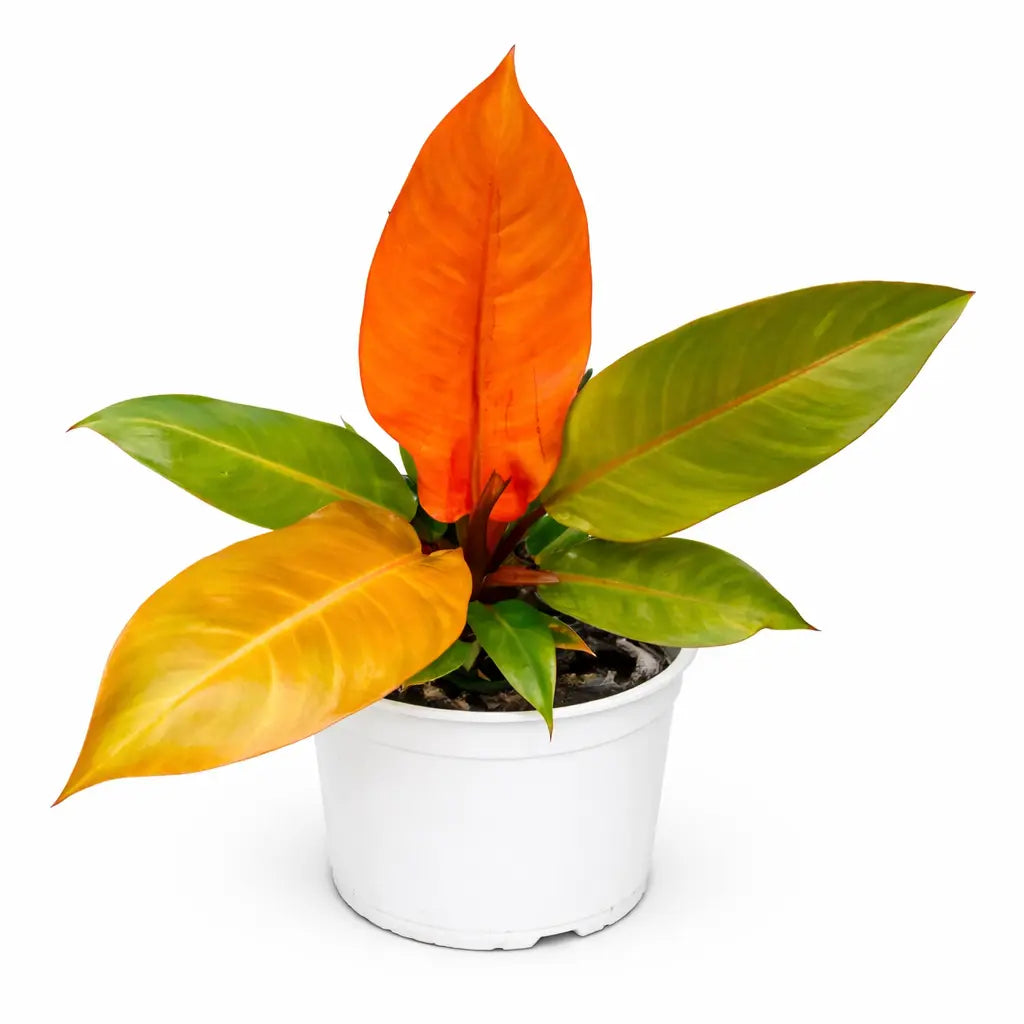
philodendron with orange stems Philodendron 'Prince of Orange'The Philodendron 'Prince of Orange' is one of those rare plants that earns its name without any exaggeration. Every new leaf that unfurls does so in vivid orange deep, saturated, genuinely the colour of a ripe citrus then spends the following weeks travelling through copper and amber and chartreuse before settling into the rich, glossy dark green of a mature leaf. Because the plant pushes new growth continuously, multiple stages of this journey are

The Philodendron 'Prince of Orange' is one of those rare plants that earns its name without any exaggeration. Every new leaf that unfurls does so in vivid orange — deep, saturated, genuinely the colour of a ripe citrus — then spends the following weeks travelling through copper and amber and chartreuse before settling into the rich, glossy dark green of a mature leaf. Because the plant pushes new growth continuously, multiple stages of this journey are always visible simultaneously: a fully orange new spear at the centre, copper leaves mid-transition, and deep green mature leaves forming the outer canopy. No two moments in the growing season look quite the same. A hybrid of the *Philodendron erubescens* lineage — *erubescens* meaning "blushing" in Latin, a name suddenly made literal by the Prince of Orange's extraordinary leaf colour — it is entirely self-heading: it grows as a compact, symmetrical rosette without climbing, without needing a moss pole, and without taking over a room. At 60–90 cm at maturity it is perfectly scaled for desks, shelves, and tabletops, and it is one of the fastest-growing self-heading Philodendrons available.

💡 Stable Colour — This Is Not Variegation The orange colouration of the Prince of Orange is genetically locked into the plant's growth cycle — it is not chimeric variegation and it does not revert. Every new leaf this plant produces will emerge orange, without exception. The colour is driven by pigment expression in new growth that fades as chlorophyll develops and the leaf matures — a reliable, repeatable process. The intensity of the orange phase is directly controlled by light: brighter indirect light = more vivid, longer-lasting orange before the leaf greens up. Lower light = the orange phase is shorter and the leaf transitions to green faster. More light is the single most effective tool for keeping the display as vivid as possible.
🌿 Self-Heading Habit — No Pole, No Climbing, No Drama Unlike the majority of collector Philodendrons, the Prince of Orange does not climb and does not need support. It grows as a compact, upright rosette, producing new leaves from the central growing point and expanding outward symmetrically. This makes it one of the most practical collector aroids available — ideal for desks, console tables, windowsills, and shelves where a climbing vine would be out of place. Simply rotate the pot a quarter turn every few weeks to ensure even light exposure and a balanced, symmetrical form.
☀️

Light

Bright indirect light — the most important factor for a vivid, long-lasting orange display. An east or west-facing window is ideal; a south-facing window with a sheer curtain works well. The orange phase is most intense and lasts longest in bright conditions — in lower light the new leaves transition to green quickly and the distinctive colour display loses much of its impact. No direct harsh afternoon sun — it scorches and bleaches the leaves. Gentle morning sun is fine and beneficial. A grow light at 12–14 hours is excellent and produces the most consistently colourful new growth.

💧

Watering

Allow the top 3–5 cm to dry before watering thoroughly. The Prince of Orange prefers to dry out a little more between waterings than moisture-loving aroids — consistent soggy soil causes root rot faster in self-heading forms. Use room-temperature filtered water where possible. Empty the saucer after watering; never allow to sit in standing water. Reduce frequency slightly in winter but never allow to dry out completely. Check weekly; water when the top layer is clearly dry rather than just slightly dry.

💦

Humidity

50–70% preferred — a humidifier is beneficial but not essential. The Prince of Orange is more humidity-tolerant than many collector aroids and adapts well to typical Indian indoor conditions. Keep away from cold AC drafts and heating vents. Do not mist directly onto the leaves — water sitting on the new orange leaves encourages brown spotting, particularly on the tender young growth. India's tropical climate is naturally adequate for outdoor or semi-outdoor growing.

🌱

Growing Media

Well-draining aroid mix — 40% quality potting soil, 25% orchid bark, 25% perlite, 10% coco coir. pH 5.5–7.0. The mix must drain freely; self-heading Philodendrons are more susceptible to root rot from compacted, moisture-retentive mixes than climbing forms. Repot every 1–2 years in spring, one pot size up — the plant prefers to be slightly snug rather than over-potted. A pot with drainage holes is essential; terracotta is a good option for extra drainage insurance.

🌾

Feeding

Balanced liquid fertilizer at half strength every 2–3 weeks in spring and summer. The fast growth rate means consistent feeding during the growing season is visibly rewarded — larger leaves and more frequent new growth flushes. Apply to moist soil only. Flush every 3 months to prevent mineral salt build-up. Stop feeding in autumn and winter. Avoid high-nitrogen formulas — they push very fast leafy growth that outpaces the plant's structural development.

⚠️ Common Issues & Quick Fixes

New Leaves Coming Out Green, Not Orange

Insufficient light — the most common complaint. The orange phase shortens and fades dramatically in low light; in deep shade new leaves can emerge barely orange at all. Move to a significantly brighter indirect position or add a grow light. The colour will return to full intensity within 1–2 new growth cycles in better light. This is not reversion — the plant cannot revert; it is purely a light response.

Brown Spots on New Orange Leaves

Water contact on tender new leaves — do not mist; ensure watering does not splash onto unfurling leaves. Also check for thrips, which target new growth specifically: silver streaking or distorted unfurling leaves indicate thrips. Treat with spinosad spray every 5–7 days for 4 weeks and quarantine immediately.

Yellow Leaves

Overwatering or root rot — allow the top 3–5 cm to dry before watering. One older lower leaf yellowing as new growth pushes is normal cycling. Widespread yellowing with soggy soil: unpot, inspect roots, trim any blackened or mushy sections, repot in fresh well-draining mix, and water less going forward.

Leaves Staying Small

Insufficient light, underfeeding, or the plant being too root-bound to support larger leaf production. Move to a brighter position, begin consistent feeding every 2–3 weeks, and check whether the plant needs repotting — roots circling the base of the pot indicate it is ready for the next size up.

Leggy or Lopsided Growth

The plant is reaching toward its light source — rotate a quarter turn every 2–3 weeks to maintain even, symmetrical growth. If the plant has become significantly lopsided, increase overall light levels and begin regular rotation to gradually correct the form.

📋 Quick Plant Profile

Botanical Name Philodendron erubescens 'Prince of Orange'
Name Meaning erubescens = Latin for "blushing" — the vivid orange-red new leaf colour taken to its most dramatic expression
Common Names Prince of Orange, Orange Splendor (Indian market trade name)
Family Araceae
Colour Journey Vivid orange → copper → amber → chartreuse → deep glossy green; all stages visible simultaneously
Colour Type Stable genetic trait — not variegation; every new leaf will be orange; does not revert
Colour Key More light = longer, more vivid orange phase; less light = faster transition to green
Growth Habit Self-heading rosette — does not climb; no moss pole needed; compact and symmetrical
vs. erubescens Emerald Queen Same lineage; Emerald Queen is a climber with cream variegation; Prince of Orange is self-heading with orange new growth
Light Bright indirect; no direct harsh sun; grow light excellent; low light fades orange phase
Watering Top 3–5 cm dry between waterings; well-draining mix essential; do not sit in water
Humidity 50–70%; adaptable; no misting on leaves; humidifier beneficial but not essential
Temperature 18°C–30°C; no cold drafts; thrives in Indian indoor conditions
Mature Size 60–90 cm height and spread; compact; ideal for desks, shelves, and tabletops
Growth Rate Fast for a self-heading Philodendron — new leaves in frequent succession with good light and feeding
Rotation Quarter turn every 2–3 weeks for even, symmetrical growth
Ideal For Desks, Shelves, Tabletops, Bright Rooms, Collectors, Gifting, Beginners and Experts Alike
Care Level Easy to intermediate — bright light is the one non-negotiable; everything else is forgiving
Shipping Notes
  • Free Standard Shipping on $100+ Orders to the USA.
  • Except Preorder products are shipped in 48 hours.
  • Delivery to the USA:
  1. Standard Shipping : 3-10 business days
  • If time is of the essence, please consider selecting expedited delivery for faster service.
Exchange/Return Notes
  • We offer a 30-day return/exchange service after receiving.
  • Final sale items are not eligible for returns or exchanges.
  • To process your return/exchange, please contact us at [email protected]
  • Please click here for more details>>> Return & Exchange Policy
SKU: 10387457247

Discover Niche Categories That Outsell philodendron with orange stems

Top-Converting Item to Boost Your Average Order

4.5 ★★★★★
Based on 12 reviews
Sort
Highest Rating
Newest First
Oldest First
Product Reviews
O
Verified Purchase
ocasio
Lowell, US
★★★★★ 5
My favorite toothbrush for my fur babies!
Color: Pink (2-pack)
I think these brushes are the easiest way to brush your fur babies teeth. I can get into their mouths and really see in there and brush each tooth and make sure the tarter is off. They even assist by trying to bite the brush and I use toothpaste for dog and gently brush back and forth first the front teeth then the side teeth then the inside teeth and the top of the teeth then the inside of the bottom and top teeth and I end with the left inside top and bottom teeth. I use vanilla mint toothpaste for dogs because my dogs are allergic to proteins. Their teeth look so white and their vet comments that their teeth look so great and clean. She does want them of course to have their yearly cleaning but she said there is no rush because their teeth are so clean and she sees no dental disease. I make sure that I wash the brushes daily with soap and keep them open after use otherwise mold will grow on them if you shut them in the case they come in. My pups weigh 6 lbs and 7 lbs and are Maltese females. They cooperate fully with me brushing their teeth because I started when they were puppies and now they are one and two years old. These brushes are lightweight and not expensive at all. I usually buy several at a time to make sure I have clean ones on hand just like you would change a human toothbrush monthly. Each pup gets its own toothbrush and I label the case for each with a marker. I like these better than a regular toothbrush because it’s 360 degrees and the pup can chew on it without hurting themselves or the bristles coming off. Highly recommend!
WAS THIS REVIEW HELPFUL?YesReportShare
Reviewed in the United States on May 2, 2026
A
Verified Purchase
akjruthies
West Palm Beach, US
★★★★★ 5
Dog Approved - Highly Preferred Over Standard Toothbrush
Color: Neon (4-pack)
These pet finger tooth brushes work well for me and my dog. He most definitely tolerates these so much more than a standard tooth brush. I believe I am able to reach more of his teeth and that I'm more effective brushing with these than I am with a standard brush. I put one on each of my index fingers. This makes it easier to do each side and the top and bottom without having to twist and turn to reach everything. The size is just right for my index fingers. They are a little tight getting them on and I have found that wetting my finger and the inside of the finger brush makes it a lot easier to put them on. The bristles on the finger brushes are soft, yet they are durable enough to give some good scrub quality and gum massage. These are a good price for what you get. I purchased the four-pack at right about $16.00. I have gotten numerous uses so far out of the two that I have been using. I will definitely purchase these again when it is time.
WAS THIS REVIEW HELPFUL?YesReportShare
Reviewed in the United States on July 13, 2025
P
Verified Purchase
Patrice Dickinson
Draper, US
★★★★★ 4
Probably Best for Medium-Large Size Dogs
Color: Blue (2-pack)
This finger cot–style toothbrush works well and is a simple way to brush your dog’s teeth, especially if they’re not comfortable with a traditional toothbrush. The material is soft yet effective at cleaning, and it gives you good control while brushing. The only drawback is that it’s a little large for my miniature Dachshund’s mouth, making it somewhat difficult to reach all areas comfortably. It would probably be a better fit for medium or larger dogs. Even so, it gets the job done and is a good option for introducing dogs to regular dental care.
WAS THIS REVIEW HELPFUL?YesReportShare
Reviewed in the United States on May 31, 2026
L
Verified Purchase
Lemons Limes
Lowell, US
★★★★★ 5
The easiest and best tooth brush!
Color: Pink (2-pack)
Ive tried several other dog tooth brushes for my 74 lbs Coonhound. This style and brand is the only one that is easy and works for us. It's easy to move your finger around and all sides of it have the cleaning nodules so no matter which way your finger turns, they are always touching her teeth. I like to try to open her mouth and get the inside of the mouth too. I loop my finger around her fangs. It is soft without harder parts so it doesn't make her pull away. This brush is perfect. It's a good quality and comes with a container for storage.
WAS THIS REVIEW HELPFUL?YesReportShare
Reviewed in the United States on March 3, 2026
M
Verified Purchase
Mark
Chelsea, US
★★★★★ 5
Total GAME CHANGER - incredibly effective toothbrush for dogs
Color: Clear (2-pack)
This silicon finger brush is incredibly easy to use - and so EFFECTIVE (more on that in the last paragraph this review). At first, it seemed a little hard to get on my finger but I simply got my finger wet first under the faucet and it slipped right on with virtually no effort. And once on, it's easy to take off but doesn't slip off accidentally when in use - so - perfect! Quick & simply to clean - rinses off in the sink in seconds, and ready to use the next time. And, my dog not only lets me clean her teeth - she actually like it (this from a dog who used to hate it when I would try to brush her teeth with a regular doggy toothbrush). This silicon "brush" is incredibly maneuverable - way more so than standard dog toothbrushes or regular finger brushes. So much so it makes it super easy to not only get those normally impossible to reach back molars - AND - even the back sides of the teeth! With a normal dog tooth brush (or finger brush) my dog's clamping down made that impossible. Now, it's not only possible - it's easy! Our dog's canine teeth had build-up but it was not until I pulled her gums back and looked at her back molars that I saw how bad things had gotten - and we have a young dog! Her back molars not only had build-up but some appeared to be stained a tea colored brown that did not come off with my fingernail. It was pretty disheartening and I felt terrible. How could this happen so quickly? The vet said it was plaque (and not yet tartar) and that it wasn't bad enough to warrant a professional cleaning - yet - but that I needed to do a better job brushing. He said: "I can see exactly where your brushing stops" (referring to the condition on the back molars which I had not been able to do with a regular brush as my dog just wasn't having it). Tips: here's what's working for us. Instead of squeezing out a pea sized blog of tooth paste onto this brush, I put a tiny dab - that it's - on the very tip of the brush and focus my efforts on two of our dog's worst teeth on one side - on top and then on the bottom. Then I put another small dab and repeat on the other side of her mouth with 4 teeth on that side. Then, I use another small dab and focus work on another group of teeth. All totaled, I'm using maybe 4 to 6 very small dabs of dog toothpaste, probably half the size of pea collectively, perhaps less. That's it. However much you choose to use is up to you - be sure and use an amount that's safe and effective for your dog. Effectiveness: this works and it works well! In just 3 days using the same vanilla flavored enzymatic toothpaste by CET I was seeing improvement. By day 7, that improvement was so obvious I was actually surprised by how much better they looked. It's now been a little over two weeks and they are looking considerably better! Conservatively, I'm thinking a 50% improvement. Not bad for just 2 weeks, right? I'm actually think I'm going to be able to completely reverse things - we'll see. I'll try and update this review again in a few weeks and let you know how it's looking but in the meantime, I am absolutely thrilled with this brush. I paid $16 and it came 2 in a pack) and the first (and only one) I've been using still looks brand new after it's rinsed off. All in all - this brush is a game changer! I can now brush our dogs back teeth and even the back sides of her teeth, all in less than a couple minutes a day.
WAS THIS REVIEW HELPFUL?YesReportShare
Reviewed in the United States on August 23, 2020

recommand products