SKU: 10409982558
beavertail cactus vs prickly pear cactus

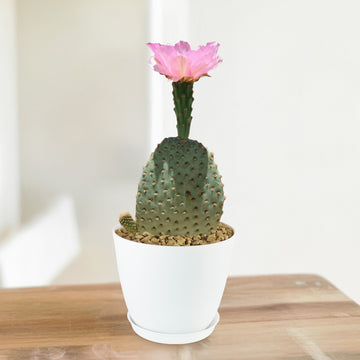
beavertail cactus vs prickly pear cactus Beavertail Cactus 'Opuntia basilaris'

Sale price$26.95 Regular price$29.94
Save 10%

Pay in installments of $7.49 with ShopPay, AfterPay and Klarna

Shipping Estimate
USA
  • USA
  • CAN

Ships within 48 hours · Estimated delivery Aug 3 - Aug 8

Promo Codes Available:

For Your Every Summer RSVP, with Code: SUMMER15

Description

beavertail cactus vs prickly pear cactus Beavertail Cactus 'Opuntia basilaris'Introducing the beavertail cactus, known as Opuntia basilaris, a vibrant member of the genus Opuntia Prickly pear cactus. Native to the southwestern United States and northern Mexico and Colorado Deserts, the Beavertail Cactus gets its name from its unique flattened pads that resemble the shape of a beaver's tail. The beavertail cactus is sometimes referred to as the "beavertail prickly pear" because they belong to the same prickly pear family

Introducing the beavertail cactus, known as Opuntia basilaris, a vibrant member of the genus Opuntia Prickly pear cactus.

Native to the southwestern United States and northern Mexico and Colorado Deserts, the Beavertail Cactus gets its name from its unique flattened pads that resemble the shape of a beaver's tail. The beavertail cactus is sometimes referred to as the "beavertail prickly pear" because they belong to the same prickly pear family (Opuntia species).

The Opuntia basilaris is a sight to behold with its vibrant colors and interesting texture. A single plant may consist of hundreds of fleshy, flattened pads. Unlike other prickly pears, its pads are typically blue-gray in color and covered in small, barbed bristles that give it a velvety appearance.

The beavertail cactus Opuntia basilaris, can grow up to 2 feet tall and 4 feet wide. This cactus beavertail prickly pear is a relatively compact cactus, perfect for adding a touch of desert beauty to your indoor or outdoor space.

The flowers of the beavertail cactus add a burst of vibrant color to the desert landscape from spring to early summer. These flowers are typically pink to magenta in color and are absolutely stunning. They emerge from the edges of the cactus pads, creating a beautiful contrast against the greenish-blue backdrop. The cactus with purple flowers is not only visually appealing, but it also attracts pollinators like bees and butterflies, adding even more life to your garden.

You can propagate the beavertail cactus through stem cuttings or seeds. You can collect the large seeds from the mature fruit of the cactus and plant them in a suitable growing medium. With a little patience and care, you can grow new beavertail cacti and expand your desert plant collection.

Additionally, the beavertail cactus Opuntia basilaris, is friendly to both humans and pets. This makes it a great choice for gardens or indoor spaces where children and pets may be present.

Watering Needs 

The beavertail cactus has low watering needs, making it a great choice for those who prefer low-maintenance, drought-tolerant plants. It's adapted to survive in arid desert conditions, which means it can handle drought-like conditions like a champ. It has the ability to store water in its pads, allowing it to tolerate long periods of dryness. 

In the spring and summer, during the growing season, you can water your beavertail cactus Opuntia basilaris, once every two to three weeks. However, it's crucial to adjust the watering frequency based on the environmental conditions and the moisture level of the soil.

Pro Tip

Before watering, always check the moisture level of the soil by sticking your finger about an inch deep into the soil. If it feels dry, it's time to water. When watering, make sure to thoroughly saturate the soil, allowing the excess water to drain out completely. Avoid leaving the cactus sitting in standing water, as it can lead to root rot.

In the fall and winter, during the dormant period, the Beavertail cactus requires less water. Reduce the frequency of watering to once every four to six weeks, or even less, depending on the conditions. It's crucial to let the soil dry out completely between waterings to mimic its natural habitat.

Remember, it's easier to revive an underwater cactus than an overwatered one. So, when in doubt, it's better to err on the side of underwatering. 

Light Requirement 

If growing indoors, find a sunny spot for your beavertail cactus Opuntia basilaris, preferably near a south-facing window. If you don't have a south-facing window, a west- or east-facing window can also work well. If you notice your cactus leaning towards the light, simply rotate it every few weeks to ensure even growth.

When grown outdoors, the beavertail cactus loves lots of bright sunlight! It thrives in full sun to partial shade, so make sure to place it in a sunny spot where it can soak up those rays. A minimum of 6 hours of direct sunlight per day is ideal for this desert beauty. Just be careful not to expose it to intense, scorching sunlight for extended periods, as it can cause sunburn. However, it's important to strike a balance, as too much shade can lead to weak growth and elongated stems.

With the right amount of sunlight, your beavertail cactus will flourish and show off its vibrant colors! 

Optimal Soil & Fertilizer Needs 

When it comes to the soil for your beavertail cactus plants, it's important to use well-draining soil. Planting them in ordinary soil will result in compacted roots, stunted growth, and, most likely, root rot. Instead, make or buy a well-draining potting mix, or ideally, use our specialized cactus potting mix that contains 5 natural substrates and mycorrhizae to promote the development of a strong root system that helps your beavertail cactus Opuntia basilaris to thrive. 

As for fertilizer, you can use a diluted, balanced (5-10-5) NPK fertilizer once a year during the growing season in the spring. Just be careful not to over-fertilize, as cacti generally prefer lean soil. Following these soil and fertilizer guidelines will help your beavertail cactus thrive and stay happy and healthy! 

Hardiness Zone & More 

When growing your Opuntia basilaris beavertail cactus indoors, the Beaver Tail cactus can adapt well to a variety of room temperatures. It generally prefers temperatures between 65°F and 80°F. It can tolerate slightly cooler temperatures during the winter months, but it's important to keep it away from drafts or cold windowsills. As for humidity, the Beaver Tail cactus is native to arid regions, so it doesn't require high humidity levels. Average indoor humidity is usually sufficient for its needs.

If you are living in USDA zones 7 - 10, you can grow your beavertail cactus outdoors year-round. This means it can tolerate temperatures ranging from 25°F. It's a tough little beavertail prickly pear that can handle the heat! 

If you live in a colder region, you can still grow the Beaver Tail cactus outdoors during the warmer months and bring it indoors during winter to protect it from freezing temperatures.

The Bottom Line

Overall, the Beaver Tail cactus (Opuntia basilaris) is a popular prickly pear with its flattened, paddle-like stems resembling a beaver's tail, is a unique and striking plant. It is low-maintenance, requiring well-draining soil, infrequent watering, and plenty of sunlight. It can be grown indoors or outdoors, depending on your climate. Overall, the Beaver Tail cactus is a fascinating and adaptable plant that adds desert charm to any space.

Be sure to add Beavertail cactus - Opuntia basilaris for sale to your collection today and elevate the beauty of your home or garden with this stunning-looking plant. 

Frequently Asked Questions

  • Is the Beavertail Cactus the same as the prickly pear?

    Yes, the Beaver Tail cactus is a type of prickly pear cactus! The scientific name for the Beaver Tail cactus is Opuntia basilaris, and it belongs to the larger group of cacti known as prickly pears. Both the Beaver Tail cactus and other prickly pear cacti have flat, paddle-like stems and produce beautiful flowers and edible fruits. So, you can think of the Beaver Tail cactus as a unique variation within the prickly pear family. They share some similarities but also have their own distinct characteristics.

  • Are Beavertail Cactus poisonous?

    Beavertail cacti are not considered to be poisonous to humans or pets. This remarkable plant is deer-resistant and easy to care for. However, like other cacti, they do have spines that can cause irritation or injury if touched. So, it's always a good idea to handle them with care and keep them out of reach of curious little hands or paws.

  • What are the adaptations of a Beavertail Cactus?

    The beavertail cactus has some amazing adaptations! One of its main adaptations is its ability to store water in its thick, fleshy pads. This allows it to survive in arid desert environments with limited rainfall. The spines on the cactus help to reduce water loss by providing shade and reducing airflow around the plant. Additionally, the waxy coating on the pads helps to prevent water evaporation. These adaptations help the beavertail cactus thrive in its harsh desert habitat.

  • How do you take care of beavertail cactus?

    To take care of the Beaver Tail cactus, make sure to water it only when the soil is completely dry and give it plenty of bright, indirect sunlight. It prefers well-draining soil, you can use our specialized cactus potting mix for healthy growth. The Beaver Tail cactus thrives in USDA hardiness zones 7-11, so if you're in a colder area, keep it indoors during winter. Aim for temperatures between 60-85°F and avoid extreme temperature changes.

Shipping Notes
  • Free Standard Shipping on $100+ Orders to the USA.
  • Except Preorder products are shipped in 48 hours.
  • Delivery to the USA:
  1. Standard Shipping : 3-10 business days
  • If time is of the essence, please consider selecting expedited delivery for faster service.
Exchange/Return Notes
  • We offer a 30-day return/exchange service after receiving.
  • Final sale items are not eligible for returns or exchanges.
  • To process your return/exchange, please contact us at [email protected]
  • Please click here for more details>>> Return & Exchange Policy
SKU: 10409982558

Discover Niche Categories That Outsell beavertail cactus vs prickly pear cactus

Top-Converting Item to Boost Your Average Order

4.2 ★★★★★
Based on 10 reviews
Sort
Highest Rating
Newest First
Oldest First
Product Reviews
S
Verified Purchase
Susan M. Steege
Boise, US
★★★★★ 5
Delicious Theology
Format: Hardcover
I VERY often struggle with this thing: I know that Christianity does not make sense to many people in this day and culture and I would love to help with that. AT THE SAME TIME, it makes perfect, intuitive sense to me. I know in my bones that Jesus is real, that He loves me and that I am giddy at the prospect of following Him. What this means is that I don't know how to explain that to someone for whom Christianity is a mystery--or worse, an empty ritualized religion. That's why I couldn't wait to read "Simply Christian". NT Wright tells the reader in his introduction what he was hoping to accomplish in this book: My aim has been to describe what Christianity is all about, both to commend it to those outside the faith and to explain it to those inside. I loved this book. The theology in it was so delectable. It presents truth in a way that makes me want to read sections of it over and over again. Wright paints a picture for the reader of the "echoes" of God that are all around us, especially these four: * Justice * Spirituality * Relationships * Beauty Wright makes a case that EVERY human being longs for these four things (I agree-do you?) and that that very fact proves the existence of the one true God portrayed in the Bible, made flesh in Jesus Christ. He does a masterful job of describing the salvation history of the Bible in a chapter or two. I found His take on prayer and worship to be beautiful as well. Wright covers the "basics" of the Christian faith in a way that beckons the reader to engage, rather than lecturing the reader who isn't. I took many notes that will be useful in teaching Bible studies in the future. Of course, in me, Wright had a reader who was already on board. My posture was one of cheerleader--with every lovely truth I was saying "AMEN, brother PREACH IT" and turning the words over on my tongue and in my heart like they were a gourmet meal. I would love to have a skeptic read this--someone who really isn't so sure about Christianity and get their take on it. If you are reading this and you fall into this category, I would purchase the book for you so I could hear what you think. Leave me a comment below... Wright's closing words are written in my journal and pondered regularly. Maybe you will like them, too: Christian holiness is not (as people often imagine) a matter of denying something good. It is about growing up and grasping something even better. Made for spirituality, we wallow in introspection. Made for joy, we settle for pleasure. Made for justice, we clamor for vengeance. Made for relationship, we insist on our own way. Made for beauty, we are satisfied with sentiment. But new creation has already begun. The sun has begun to rise. Christians are called to leave behind, the the tomb of Jesus Christ, all that belongs to the brokenness and incompleteness of the present world. It is time, in the power of the Spirit, to take up our proper role, our fully human role, as agents, heralds and stewards of the new day that is dawning. That, quite simply is what it means to be Christian: to follow Jesus Christ into the new world, which he has thrown open before us.
WAS THIS REVIEW HELPFUL?YesReportShare
Reviewed in the United States on April 16, 2010
J
Verified Purchase
Jason G
San Leandro, US
★★★★★ 4
An explanation for a post modern culture
An extension of Wright's book could be "why Christianity makes sense to post modern people". This is a fine book, for what it tries to do, which is to clearly explain what Christianity is about. It is not necessarily designed to persuade anyone, other than to show that what the basic Christian story is about is reasonable and worth taking a look in. Wright, the Anglican Bishop of Durham, and one of the more renowned and accessible to the public, theologians of our day is at times controversial, but never a poor writer, even to the most untrained ear for the nuances of theology. From the very first paragraph of the book, the reader is alerted that this is a different sort of explanation of the Christian faith, for Wright talks of how people might understand the meaning, but miss the experience of what the yearning for the faith is all about. He talks of justice, beauty, and relationship and how the reality of what we hope for is often far from present, what he calls the "echo of the voice", something that we think that should be there, but is not there at all, and begs the question why. This book will not help but to be compared to C S Lewis classic work, Mere Christianity. And there are enough similarities between the two, that make the differences jarring enough. Lewis' is more of a classic apologetic. He speaks of universal laws, the differences between longstanding morality and modern pyschology, and the logic of why the Christian Gospel, of the invaision of humanity by the God/man Jesus and how theology is constantly practical in every area of the individual, personal lives of moder people. Written in the 1940's, Mere Christianity answers quite well the challenges of its, and still to a large extent, our age. What Wright is trying to do with "Simply Christian" is to take the same old story and apply to the common questions of our era, from a different perspective. Loneliness, rejection of an older era, cynicism at the structures designed to meet the challenges of day to day life, like the family, the church, and the state are real actions obviously taken by many today. So for Wright, to begin his work, not by explaining who God is and why man needs him, but instead to point out and agree that there are many things missing and empty in the solutions that post modern people have used for solutions to their concerns about why older systems failed, the older systems that Lewis attempted to answer to in a very reasonable way in Mere Christianity. Wright does spend a lot more time on how communal activities and experiences are far more vital to the simply Christian life than is realized, and why vital relationships, as expressed in the church, seen as a real community, are the engine for linking understanding and experience. Wright's three common expressions of the Christian life: worship, prayer and Bible study only have their fullest expression when done in community with others, so as to grow as a living, breathing organism might. In so doing, Wright is bridging the gap between the credibility of the Christian message, with those who are disaffected and disbelieving, not at necessarily the propositions in the gospel, but at how the whole system around contemporary life has been disapointing to many. Developing a theology of the person and work of Jesus has been the hallmark of Wright's career as a pastor and theologian, and it is in writing about who Jesus is and what he has done that this work finds its greatest strength, and to some degree its greatest weakness. He has written how Jesus was the final victory of God, the great exodus of his people and the culmination of a great military campaign to bring justice and the arrival of the kingdom of God on earth. Stupendous claims, as they always are, when fully understood, even more so when contrasted with the paradoxes of the earthly life of Jesus of Nazareth, with the expectations of the Jewish people of first century Palestine. By so doing, Wright encourages the post modern audience to look again at the reality of real history, and the undeniable facts as told, which led to radical conclusions by those who first lived them. It is here that Wright is at his weakest, for he doesn't make the leap between the person and work of Jesus and that connection of justification from sin for today's believer as a direct, actionable item. Not that he denies it, but the connection is just not made at all. Even Lewis spends a great deal of Mere Christianity discussing sin and the necesity of events long ago affecting today's actions. Nevertheless, this is an important work that should be read by many, especially in the post industrial world. Wright's pastoral call to look to Christ, living out in the community of believers to answer the deep longings and disapointments of the human experience is freshly written and worth considering.
WAS THIS REVIEW HELPFUL?YesReportShare
Reviewed in the United States on January 23, 2008
G
Verified Purchase
Guapx
Belleville, US
★★★★★ 5
Compulsory reading for any follower of Jesus.
Format: Kindle
This book is for Christians, agnostics and atheists. The journey from shadows to light is presented as a provocative, compelling invitation for all.
WAS THIS REVIEW HELPFUL?YesReportShare
Reviewed in the United States on April 2, 2026
T
Verified Purchase
TX Kindle Customer
Whiting, US
★★★★★ 5
Simple AND essential, everyone should read
Format: Kindle
I've been Christian for many years, reading many books, sermons, biblical readings, but we never stop having more beautiful insights of this glorious Christian path laid before our minds and hearts. This book is a wise, beautiful, encouraging, and simply amazing way to see and live out the Christian life and calling, rich with meaning in our current broken world and the redeemed and restored world in Christ. Are you yearning for real spirituality, joy, justice, beauty, relationships, but they seem somehow out of reach? Read this book. It is simple yet profound. Take the time to savor the words of this book alongside prayer, biblical reading, community, daily work...And partake in the overlap of heaven and earth with the Lord.
WAS THIS REVIEW HELPFUL?YesReportShare
Reviewed in the United States on March 28, 2026
M
Verified Purchase
Montana Angela
Lexington, US
★★★★★ 5
Amazing Book with great insights
Format: Paperback
This book is a great for those looking for a deeper understanding of Christianity. It covers all the basic areas and questions with insight and consideration of other points of views.
WAS THIS REVIEW HELPFUL?YesReportShare
Reviewed in the United States on December 28, 2025

recommand products