planting papaya seeds hawaii Papaya – UJAMAA SEEDS
SKU: 10718268352
planting papaya seeds hawaii

planting papaya seeds hawaii Papaya – UJAMAA SEEDS

Sale price$18.42 Regular price$20.47
Save 10%

Pay in installments of $5.12 with ShopPay, AfterPay and Klarna

Shipping Estimate
USA
  • USA
  • CAN

Ships within 48 hours · Estimated delivery Jul 4 - Jul 9

Promo Codes Available:

For Your Every Summer RSVP, with Code: SUMMER15

Description

planting papaya seeds hawaii Papaya – UJAMAA SEEDSCarica Papaya Approximately ~12 seeds per packet. Germination: 71% Packed for 2025 Native to tropical regions of the Americas, particularly southern Mexico and Central America this tropical fruit plant is now cultivated in most tropical countries. In the continental USA it will thrive in zones 9 10. It also does well in Hawaii (zone 12). The papaya tree is a fast growing, herbaceous plant (producing soft flexible green stems above the ground). This

Carica Papaya

Approximately ~12 seeds per packet.

Germination: 71% Packed for 2025

Native to tropical regions of the Americas, particularly southern Mexico and Central America this tropical fruit plant is now cultivated in most tropical countries. In the continental USA it will thrive in zones 9 – 10. It also does well in Hawaii (zone 12).

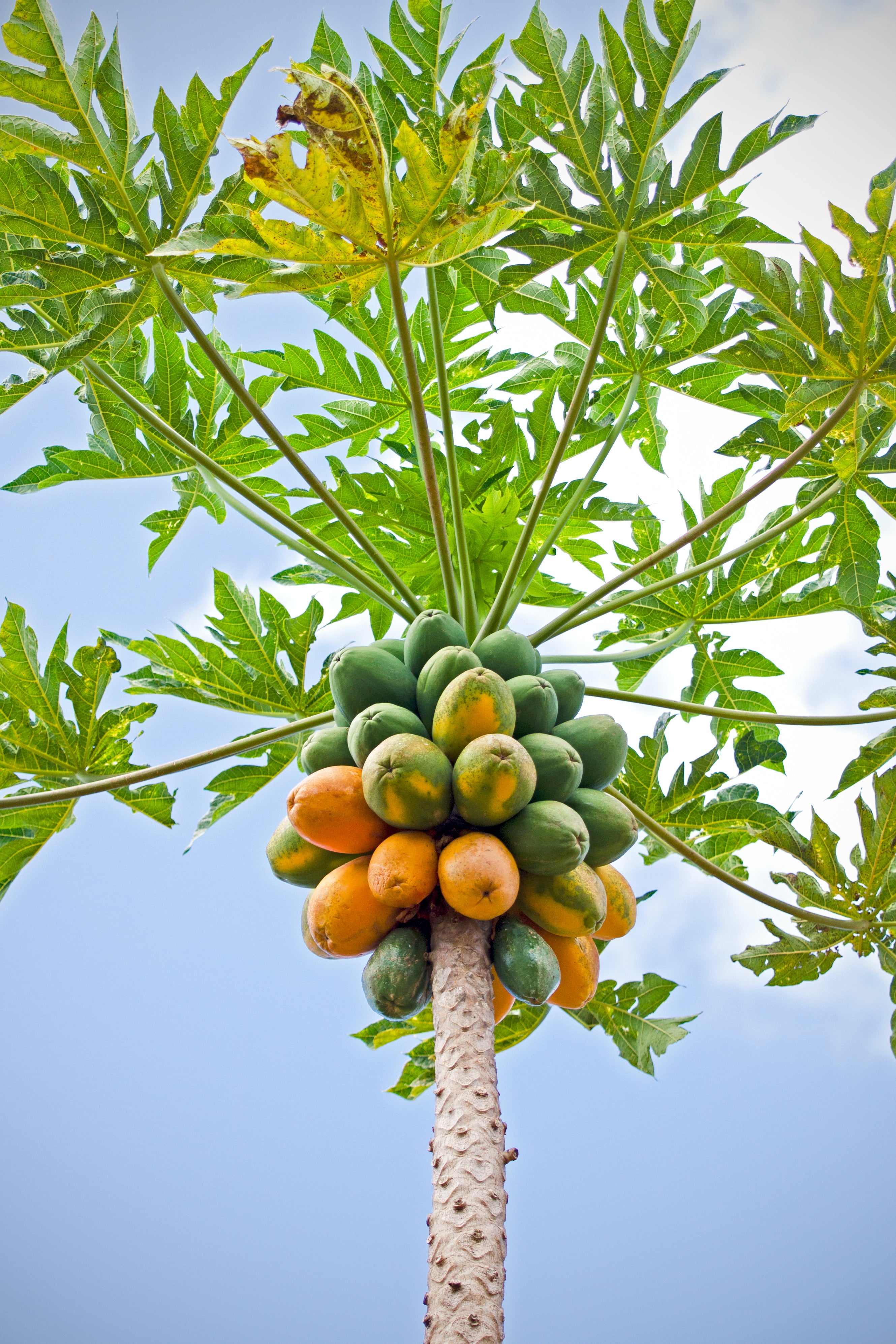
The papaya tree is a fast-growing, herbaceous plant (producing soft flexible green stems above the ground).   This tree can reach up to 33 feet (10 meters) in height, growing rapidly and fruiting within three years.

Small and sparsely branched, with leaves arranged spirally at the top of the trunk, the papaya tree leaves are large, lobed, and palmate. The leaves can reach up to 24 inches (60 centimeters) in diameter.

Usually fragrant and tubular in shape, papaya tree flowers are small, white to cream-colored. With a hermaphrodite flower, which can self-pollinate, male and female hermaphroditic flowers can occur on the same plant.

The fruit is a large berry, ripening to a large, oval or pear-shaped berry, that is amber to orange hue when soft. Skin color ranges from green to yellow or orange as it ripens. They can weigh between 1 to 20 pounds. The flesh is sweet, juicy, and typically orange or red when ripe, with black seeds clustered in the center. Papaya have a shallow but extensive fibrous root system.

Papaya is consumed raw when ripe, either without skin or seeds, and cooked when unripe, often in curries, salads, or stews. Papaya skin, pulp, and seeds contain several phytochemicals, including carotenoids and polyphenols, as well as benzyl isothiocyanates and glucosinates.

Growing Guidance for Carica Papaya

Prefers tropical and subtropical climates. Ideal temperature range:  70-90°F (21-33°C). Sensitive to frost and prolonged cold weather. Requires high humidity and ample sunlight. Well-draining, fertile soil is crucial. The pH range should be 5.5 to 7.0. Avoid waterlogged or compacted soils.

Planting, Spacing, & Watering: Best propagated from seeds. Seeds should be sown fresh, directly into the soil or in containers. Plant seeds about 0.4-0.8 inches (1-2 centimeters) deep. Germination occurs within 2-3 weeks. Space plants 6 to 10 feet (1.8 to 3 meters) apart. Ensure adequate air circulation to prevent diseases. Regular, deep watering is essential. Maintain consistent moisture but avoid waterlogging. Drip irrigation is recommended for optimal growth.

Fertilization: Balanced fertilizer rich in nitrogen, phosphorus, and potassium. Apply fertilizer every 2-3 months. Supplement with micronutrients such as magnesium, zinc, and iron if needed. Minimal pruning required. Remove dead or diseased leaves to promote air circulation and reduce pest problems.

Pest and Disease Management:  Common pests: aphids, whiteflies, fruit flies, spider mites. Common diseases: papaya ringspot virus, anthracnose, powdery mildew. Integrated pest management (IPM) strategies, including biological control, can be effective. Regular monitoring for signs of stress, pests, and diseases. Mulching around the base can help retain soil moisture and suppress weeds.

Harvesting: Fruits typically mature within 6-9 months after flowering. Harvest when the skin starts to turn yellow. Use a sharp knife to cut the fruit from the tree to avoid damage. Papaya plants have a relatively short lifespan, typically producing fruit for 3-4 years.

By following these guidelines, you can expect healthy growth and productive yields of Carica papaya in suitable climates and vegetation zones.

GUIDELINES - FALL SOWING TREE SEEDS-PDF FOR PRINTING

KEEP SEEDS REFRIGERATED FOR LONG TERM STORAGE PRIOR TO SCARIFICATION TREATMENT BELOW.

GROWING INFORMATION

Scarification

Soak in water, let stand in water for 24 hours

Stratification

None required

Germination

Sow seed 1/8” deep, tamp the soil, keep moist but not wet


Shipping Notes
  • Free Standard Shipping on $100+ Orders to the USA.
  • Except Preorder products are shipped in 48 hours.
  • Delivery to the USA:
  1. Standard Shipping : 3-10 business days
  • If time is of the essence, please consider selecting expedited delivery for faster service.
Exchange/Return Notes
  • We offer a 30-day return/exchange service after receiving.
  • Final sale items are not eligible for returns or exchanges.
  • To process your return/exchange, please contact us at [email protected]
  • Please click here for more details>>> Return & Exchange Policy
SKU: 10718268352

Discover Niche Categories That Outsell planting papaya seeds hawaii

Top-Converting Item to Boost Your Average Order

4.6 ★★★★★
Based on 1226 reviews
Sort
Highest Rating
Newest First
Oldest First
Product Reviews
A
Allen Mickle
Phoenix, US
★★★★★ 5
Best Book on the Integration of Faith and Learning
Format: Paperback
A problem area in Christian ministry is the area of Christian higher education. As we continue to progress through the 21st century we continue to see the decline of the Christian higher education movement. What was once a strong area in the Christian ministry, Christian higher education is failing. The Bible College movement has been in decline for sometime. Schools are folding without the students or the funds to stay open. Most people are going to secular colleges and universities over Christian schools. One of the major problems with Christian higher education has been the failure to critically interact with the movement and offer an approach to dealing with this decline. David Dockery has helped fill this void with his recent volume, Renewing Minds. Dockery, President of Union University in Jackson, TN, is extremely qualified to write in this capacity. A clear and thoughtful theologian, he has extensive experience in the areas of leading and administrating a Christian higher education institution. Not only has he lead Union University he also serves as chairman of the board of the Council for Christian Colleges and Universities. With recommendations from J. I. Packer, R. Albert Mohler, Chuck Colson, and a foreword by Robert P. George of Princeton University, this is a volume that should be seriously considered by all who love Christian education. In Chapter 1, Dockery highlights the problem in America. He writes, "I believe that the integration of faith and learning is the essence of authentic Christian higher education and should be wholeheartedly implemented across the campus and across the curriculum. This was once the goal of almost every college in America. This is no longer the case.... What happened was a loss of an integrated worldview in the academy. There was a failure to see that every discipline and every specialization could be and should be approached from the vantage point of faith, the foundational building block for a Christian worldview" (pp. 5-6). Tracing the history of the departure of American schools into secularism and surveying the kinds of Christian higher education institutions in North America leads to a defense of the system derived from Matthew 22:36-40 and the Great Commandment to love the Lord your God with your mind! The rest of the book explains how to go about obeying the Great Commandment in Christian higher education. Chapter 2 builds on this by explaining from the Scriptures the role of the Christian higher education institution and deals especially with the role of the Church, and therefore the Christian higher education institution in society. Chapter 3 explains the process of shaping a Christian worldview and the impact on this on Christian higher education. Chapter 4 is about reclaiming the Christian intellectual tradition. Dockery writes here after tracing the history of the Christian intellectual tradition "Certainly we all learn apart from the great Christian intellectual tradition, apart from the vantage point of faith. But we cannot connect these things into a unified whole, we cannot fully understand the grand metanarrative; we cannot truly grasp how to explore and engage the issues in history and science, business and health care, apart from this approach to learning. Thus we must seek to sanctify the secular because Jesus Christ has come to earth" (p. 84). Chapter 5 addresses the issues of integrating faith and learning. Chapter 6 addresses the necessary concept of developing a place of belonging and community where scholars, educators, staff, and students live together, share, serve, and learn. Chapter 7 begins to offer practical ways of establishing this grace-filled academic community. Chapter 8 articulates how to develop a theology of Christian higher education. Developing this theology would have positive implications for the academic community and the individual. Chapter 9 serves as the culmination of the book with thinking globally about the future. With the changes in communication we must embrace the new in order to communicate the orthodoxy of the past into a new global world. This means listening as much as talking especially as global Christianity begins to reflect non-Western images, positions, and principles. Christian higher education does not just simply say the West is best but listens to all Christian voices in order to best communicate the timeless truth in new ways. This is then concluded by an extensive bibliography on the integration of faith and learning. Dockery's book fills a great need in the area of Christian higher education. He states the issues and the problems, traces the history of Christian higher education, articulates a biblical defense of the integration of faith and learning as well as a comprehensive theological defense. Not only does he articulate this at an academic level but he does not neglect the spiritual aspect of things, emphasizing not just "smart" Christians but "spiritual" Christians. The movement from "theory" to "practice" in Dockery's book is exceptional. I hardly find anything in it that I would disagree with or anything I wish I say that I did not see in the book. It is an even handed treatment that should be read by those who care about Christian higher education and especially those involved in Christian higher education. May we see a renewal of a close integration of faith and learning on our campuses as we emphasize the great truth that all truth is God's truth. May we raise up godly men and women who are passionate about the truth and about serving Christ in the world around them through the Great Commission. And may those of us involved in Christian higher education lead the way through authentic spirituality grounded in the truth. Highly recommended!
WAS THIS REVIEW HELPFUL?YesReportShare
Reviewed in the United States on October 10, 2009
R
Verified Purchase
Reid McCormick
Omaha, US
★★★★★ 2
Not much about higher education
Format: Paperback
I gave this book 3 stars not because I think it was bad, but because it didn't really have much to do with higher education. I am a big believer in Christian higher education and the integration of faith and learning, however, if you were to take this book and replace "Christian higher education" with a phrase like "the Christian community" or the "Church family" no one would notice the difference. I do believe in much of what he said but that's because I follow Christ. I didn't expect him to spend chapters on what Christians believe and how they differ from other religions, I was hoping for an intelligent argument and exploration of Christian higher education and how it differs from other higher education. And the argument, higher education used to be all Christian higher education is not a good argument. Once again, not a bad book but just not what I expected based on the description and title.
WAS THIS REVIEW HELPFUL?YesReportShare
Reviewed in the United States on December 7, 2011
W
wisdomofthepages.com
Natrona Heights, US
★★★★★ 5
A Sterling Vision of Christian Education
David Dockery is the president of my alma mater, Union University in Jackson, Tennessee. Therefore, I have always taken great interest in keeping up with what Dockery says and does in the realm of Christian higher education. B&H publishing has done us all a favor by pulling together his ideas into a unified book with the theme - "Serving Church and Society through Christian Higher Education". Dockery's heart beats with the passion of a pastor, theologian, academic, and administrator. He sees the Christian university as a place in society where both mind and heart can renewed along biblical and gospel lines. It is difficult work in our day, but it is a necessary work. Dockery writes, "I believe that the integration of faith and learning is the essence of authentic Christian higher education and should be wholeheartedly implemented across the campus and across the curriculum." And how is this accomplished? Dockery says, "We need more than just new ideas and enhanced programs, we need distinctively Christian thinking, the king of touch-minded thinking that results in culture-engaging living. ...This perspective involves the whole of our human personality. Our minds are to be renewed, our emotions purified, our conscience kept clear, and our will surrendered to God's will. Applying the Great Commandment entails all that we know of ourselves being committed to all that we know of God." A number of the chapters in this book simply sparkled with insight. Pastors will especially note the overlap of Dockery's vision of Christian community in the university with what we also hope to find within the local church. For example, Dockery writes a chapter on "Establishing a Grace-Filled Academic Community" that could and should be applied to the local church as well, with an emphasis on unity, shared life, worship, and service. Within chapter six is a section titled, "Building Blocks for Building a Community with Renewed Message", a message with such urgency and clarity that I did in fact bring it home to our church for a renewed sense of Christian community. Such is the case for much of this excellent book. You may not have a vocational calling to higher education. However, as a pastor or Christian parent, it is your responsibility to consider carefully the type of institution you send your students to for university education. Dockery writes, "I would suggest that the starting point of loving God with our minds, thinking Christianly, points us to a unity of knowledge, a seamless whole, because all true knowledge flows from the one Creator to His one creation." Dockery's vision is compelling and sound, and I heartily recommend this book.
WAS THIS REVIEW HELPFUL?YesReportShare
Reviewed in the United States on November 22, 2007
M
Verified Purchase
Martin B.
Chelsea, US
★★★★★ 5
Good Value & Good Product.
For those of us that don't eat a lot of fruits and veggies normally, this product really helps. It meets my needs for fruits and veggies. It's easy to take, goes down well, and has no after taste. Good value too.
WAS THIS REVIEW HELPFUL?YesReportShare
Reviewed in the United States on April 11, 2026
T
Verified Purchase
Tanny
Whiting, US
★★★★★ 5
Good product, reasonable price.
Good product. Easy to swallow. Reasonable price.
WAS THIS REVIEW HELPFUL?YesReportShare
Reviewed in the United States on May 22, 2026

recommand products