SKU: 12162847763
house plants string of pearls

house plants string of pearls String of Pearls 'Senecio rowleyanus' 2 Gal. / Black / Without Pot

Sale price$26.69 Regular price$29.66
Save 10%

Pay in installments of $7.42 with ShopPay, AfterPay and Klarna

Shipping Estimate
USA
  • USA
  • CAN

Ships within 48 hours · Estimated delivery Sep 27 - Oct 2

Promo Codes Available:

For Your Every Summer RSVP, with Code: SUMMER15

Description

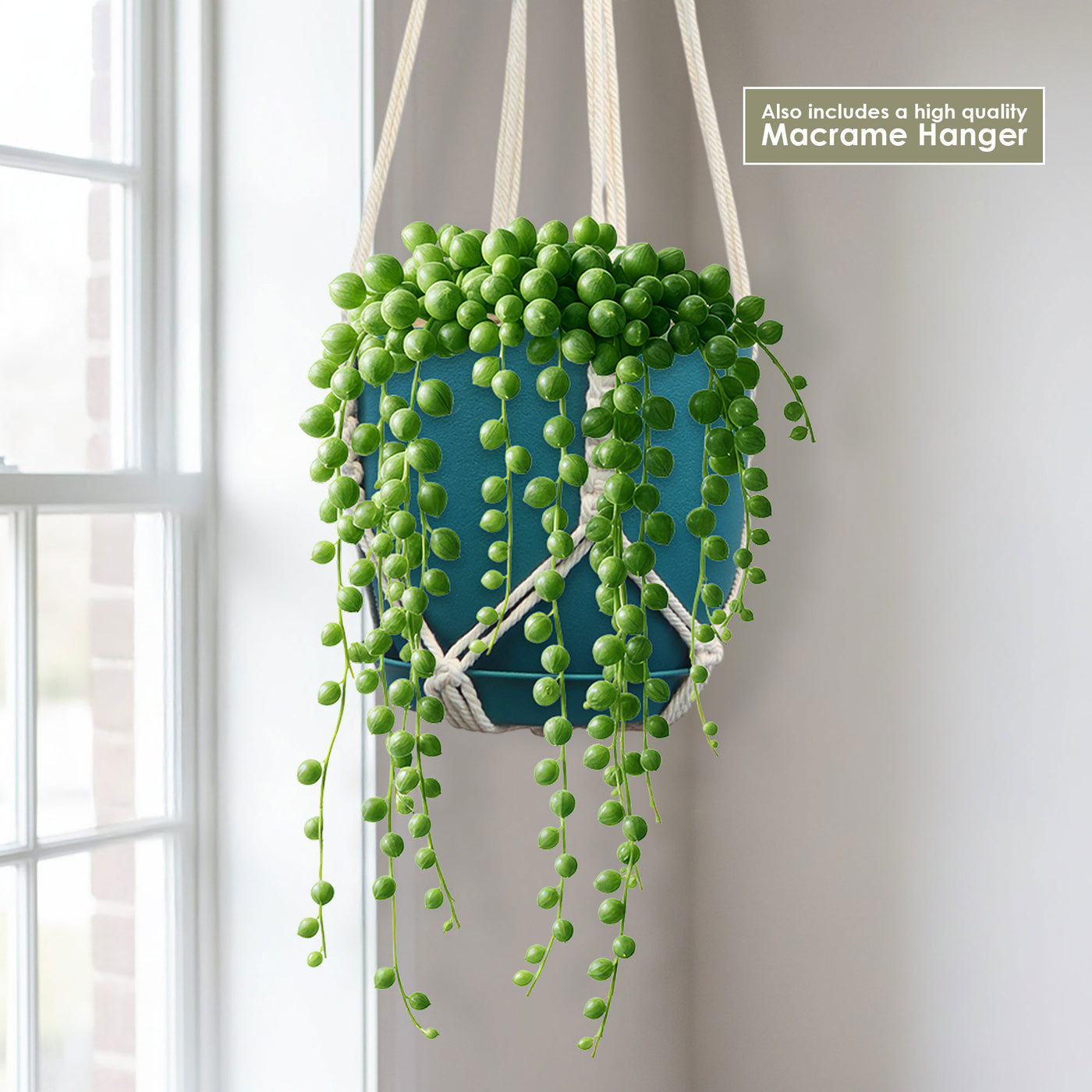
house plants string of pearls String of Pearls 'Senecio rowleyanus' 2 Gal. / Black / Without PotThe String of Pearls, also known as Senecio rowleyanus, is a unique trailing succulent from the daisy family, admired for its distinctive cascading growth habit. This plant is also commonly called string of beads, string of peas, and rosary vine. The String of Pearls gets its name from its distinctive, long, trailing stems that are adorned with small, spherical leaves that resemble pearls. Each of these bead like leaves features a unique translucent

The String of Pearls, also known as Senecio rowleyanus, is a unique trailing succulent from the daisy family, admired for its distinctive cascading growth habit. This plant is also commonly called string of beads, string of peas, and rosary vine. 

The String of Pearls gets its name from its distinctive, long, trailing stems that are adorned with small, spherical leaves that resemble pearls. Each of these bead-like leaves features a unique translucent “window”, a thin, clear strip that allows light to pass into the leaf for photosynthesis. These little green pearls hang delicately from the stems, creating a beautiful cascading effect. In its natural habitat, the stems trail along the ground, rooting where they come into contact, and form dense mats.

Native to South Africa, this charming string of pearls houseplant features trailing stems with pea-like or tiny melon-shaped leaves spilling over planters and hanging baskets, much like its closely related plant string of rubiesGo to othonna capensis ruby necklace.

Your String of Pearls typically grows up to 2 feet long rather than tall, as it is a naturally trailing and hanging plant. 

The moderately fast-growing nature of this string of pearls plant makes it a great choice for a variety of landscapes.

The flowers of the string of pearls bloom during the spring and summer months, with white flowers along the stalk and bright yellow anthers. However, it's important to note that String of Pearls plants are primarily grown for their unique bead-like foliage rather than their flowers. Nonetheless, if your string of pearl plants does flower, it's definitely a treat to behold!

This string of pearls also comes in another lovely variety, a variegated string of pearlsGo to senecio rowleyanus string of pearls variegated, with its white-creamy foliage.

When and How to Water Your String of Pearls Plant

String of Pearls is a drought-tolerant succulent that thrives with minimal watering. To keep your plant healthy, allow the soil to dry out between waterings, and only water when the top inch of soil feels dry. The spring of pearls plant prefers watering every 10-14 days in the growing season, and every 3-4 weeks in the dormant season.

During the spring and summer growing season, water every 10–14 days on average. As the plant actively grows, it may require slightly more frequent watering, especially in warm or bright environments. 

In fall and winter, reduce watering to about once every 3–4 weeks. Since the plant enters a semi-dormant phase, it uses less moisture and is more vulnerable to overwatering. 

Too much water can quickly kill a String of Pearls plant, so it’s always safer to underwater than to overwater. Using terracotta or clay pots helps absorb excess moisture and keeps roots healthier by preventing soggy soil conditions.

Related Article

Light Requirements - Where to Place Your String of Pearls 

When grown indoors, place it near a window that receives bright indirect sunlight for at least 4-6 hours a day. South-facing or west-facing windows are usually the best choices. You can also use artificial grow lights to provide the necessary light if natural sunlight is limited.

When growing outdoors, your low-maintenance string of pearls prefers full sun to partial shade to thrive. Four hours of direct morning or evening sun can also be beneficial for your Senecio rowleyanus, but be careful not to expose it to intense, direct sunlight for extended periods, as it can scorch the leaves of your String of Pearls succulent.

Keep an eye on your string of pearl succulents for any signs of light stress. If the leaves start to turn yellow or brown, it could be a sign that the light is too intense. On the other hand, if the leaves become elongated and spaced out, it might indicate that your pearl succulent is not receiving enough light. 

Optimal Soil & Fertilizer Needs 

Use a well-drained soil for your Senecio rowleyanus, and NPK fertilizer (5-10-5) once a year in spring for healthy growth. Planet Desert has got your back with our specialized succulent potting mix or cactus soil mix that includes 5 natural substrates with organic mycorrhizae, perfect for promoting shallow root systems and happy String of Pearls succulents.

Apply the NPK fertilizer once a year in the spring of about 5-10-5 ratio, to provide a gentle boost of nutrients. However, during the cooler months or when your Senecio rowleyanus is in a dormant phase, it's best to avoid fertilizing altogether. 

If you notice any signs of fertilizer burn, such as leaf discoloration or wilting, flush the soil with water to remove any excess nutrients. 

Hardiness Zone & More 

In the United States, this is mostly an indoor plant, but if you live in southern Florida or Hawaii, then you can cultivate it outdoors in USDA zones 9-12. 

When it comes to humidity, the String of Pearls is adapted to low-humidity environments.

It can tolerate average indoor humidity levels, but it's important to avoid excessive moisture around the plant.

Ensure good air circulation and avoid placing your String of Pearls in areas prone to high humidity, such as bathrooms or kitchens.

Indoor Growing String of Pearls Plant Requirements

If you are growing your String of Pearls indoors, ideally, keep your plant in a warm environment. In general, it prefers average room temperatures between 60°F and 85°F, which helps it stay healthy and active. Its trailing growth habit makes it an excellent houseplant for hanging baskets, shelves, and high planters, where its cascading stems can be fully displayed and appreciated.

Wildlife - String of Pearls Flowers Attracts the Following Friendly Pollinators

When in bloom, String of Pearls produces small, delicate white flowers that can attract friendly pollinators such as bees, butterflies, hummingbirds, and other beneficial insects in outdoor or greenhouse settings. These subtle blooms add ecological value while enhancing the plant’s ornamental charm.

Butterflies
Bees
Hummingbirds
Lady Bugs
Multi Pollinators
Other Birds

According to the ASPCA, String of Pearls is mildly toxic to cats, dogs, and horses if ingested in large amounts. So, if you have furry friends at home, it's best to keep your string of pearls out of their reach or opt for pet-friendly alternatives. 

How to Propagate Your String of Pearls Plant

For propagating a string of pearls Senecio rowleyanus, simply snip off a healthy stem or string of pearls plant seed (from leaf tips) and place it in well-draining soil. After a few weeks, you should start to see roots forming, indicating successful propagation by stem cuttings.

Key highlights

  1. String of Pearls is one of the best trailing houseplants, featuring long cascading strands that look beautiful in hanging baskets and shelves.
  2. This plant is highly drought-tolerant, storing water in its round leaves and requiring minimal watering.
  3. String of Pearls remains compact and space-efficient, making it ideal for small homes, desks, and modern interiors.
  4. The plant can produce delicate, fragrant white flowers under the right growing conditions, adding subtle ornamental value.

Final Thoughts

Overall, the String of Pearls plant is a unique and eye-catching succulent that is loved for its trailing stems adorned with small, bead-like leaves resembling pearls. It's a popular choice for indoor gardens and hanging baskets, adding a touch of whimsy and elegance to any space. With its distinct appearance and low-maintenance nature, the String of Pearls hanging plant is a delightful addition to any plant lover's collection!

Don't miss out on this opportunity to add something truly exceptional to your garden or in hanging baskets. Order your very own Senecio Rowleyanus string of pearls today! 

Shipping Notes
  • Free Standard Shipping on $100+ Orders to the USA.
  • Except Preorder products are shipped in 48 hours.
  • Delivery to the USA:
  1. Standard Shipping : 3-10 business days
  • If time is of the essence, please consider selecting expedited delivery for faster service.
Exchange/Return Notes
  • We offer a 30-day return/exchange service after receiving.
  • Final sale items are not eligible for returns or exchanges.
  • To process your return/exchange, please contact us at [email protected]
  • Please click here for more details>>> Return & Exchange Policy
SKU: 12162847763

Discover Niche Categories That Outsell house plants string of pearls

Top-Converting Item to Boost Your Average Order

4.6 ★★★★★
Based on 11 reviews
Sort
Highest Rating
Newest First
Oldest First
Product Reviews
D
Verified Purchase
D. Kobza
Pawtucket, US
★★★★★ 5
Human-being ET celebration!
Format: Paperback
What made this book so fascinating and essential to my collection is the amount of Human Being looking humanoid off worlders who have visited our planet…it is so fascinating. Most of the time you hear, simply about the Pleiadians when the word Nordic is brought up. This goes so much further into the diversity of systems out there that human beings exist within. Highly recommended.
WAS THIS REVIEW HELPFUL?YesReportShare
Reviewed in the United States on May 29, 2025
G
Verified Purchase
Geral T. Blanchard
Draper, US
★★★★★ 5
An Amazingly Wise Book
Format: Paperback
Trauma, in fact, intergenerational trauma that has not been metabolized, is a recipe for racism. As a psychotherapist with over 50 years addressing trauma and the need for decolonization therapies that go far beyond what is customarily taught in universities, My Grandmother's Hands is the clearest guide I have come across to help suffering individuals "grow up" as Resma Menakem respectfully says. This is a profound, wise, brilliant, compassionate, and exceptionally insightful effort to confront our body's pain as well as that of our families, communities, and our American culture. When we grow as individuals we will also grow as communities -- what Martin Luther King Jr. referred to as "the beloved community."
WAS THIS REVIEW HELPFUL?YesReportShare
Reviewed in the United States on May 25, 2026
S
Verified Purchase
Syd Seattle
Louisville, US
★★★★★ 5
A must read for therapists and everyone else
Format: Paperback
As a psychologist who works primarily with individuals in marginalized communities, I see a lot of clients who have experienced historical, intergenerational, developmental and ongoing current trauma, often as a result of systems of oppression (racism, sexism, homophobia, transphobia, etc.). I was very excited to dive into training in somatic experiencing (SE), a "bottom up" approach to trauma treatment that recognizes the ways that traumatic experiences get stored in the body, and therefore need to be healed through the body. However, I was disappointed to find that most of the books on SE, as well as the trainings themselves, rarely if ever mention racism or other systems of oppression and the trauma they cause. This was such a disappointment to me, especially given that racial trauma is so prevalent in the everyday lives of my clients and perpetuated daily by the current political climate. Therefore I was thrilled to discover this book. Resmaa Menakem filled in the gap I was feeling in the SE literature, applying somatic experiencing to racial trauma and the ways that racism impacts the bodies of white people, black people (and all people of color), and those who are charged with "serving and protecting" us, the police. This book was a huge eye opener for me. Not only did it give me compassion for my own white body and the ways that trauma has been metabolized and passed on from white folks to POC through the mechanisms of white supremacy, but it gave me new and more embodied ways to understand the lives of people of color and work effectively with my POC clients. It also gave me new compassion for cops, who, through their own trauma responses and the effects of white supremacy, are now more like soldiers whose mission is to control and suppress black and brown bodies. Although I will continue to feel outrage and grief at every unnecessary police killing of an innocent man or woman of color, this book helped me to remember that we are all impacted by centuries of white supremacy conditioning and that cops need and deserve healing around racial trauma too. I highly recommend this book to therapists and healers, especially those who work with individuals in marginalized communities. Each chapter provides exercises to embody the learning in the chapter, so that healing is happening not just from the top down, but from the bottom up. There are exercises for individuals and groups, for white bodies, POC bodies and police bodies. The book is extremely timely and relevant and should be required reading for anyone wanting to understand more about the history and current conditions of racism in America, its impacts, and how to heal.
WAS THIS REVIEW HELPFUL?YesReportShare
Reviewed in the United States on September 3, 2018
M
Verified Purchase
Marc
Pawtucket, US
★★★★★ 5
Think of racism as a moral failing isn’t helpful. Instead, think of it as a trauma response.
Format: Kindle, Format: Kindle
If we are willing to stop and listen to the voices of these people, both in the streets and in their writings (for generations now), we will hear them tell us their experience. And their experience is horrific. Some of us will turn away, finding solace in justifications (“He should have complied!”) or distancing (“My family was poor too. None of my family owned slaves.”) But if we care about a sustainable future for our country, if we have the smallest shred of a sense of responsibility for our neighbor, or if (like me) we claim to follow Jesus, the one who taught us to love our neighbor as ourselves, and to put other people’s lives before our own, then we must listen. In My Grandmother’s Hands, Resmaa Menakem comes to this conversation from a different and very helpful angle. He suggests that three groups are clashing in our country today: black-bodied people, white-bodied people and police. He suggests that the animus, reactivity, and often explosive violence between these groups is in fact the result of unprocessed trauma. He digs deep into the story of each of these groups to demonstrate the primary and secondary trauma each group carries. Then he talks about the process of trauma retention and how, if we fail to understand and process our trauma, we inevitably become less flexible, more reactive, and more violent. He suggests that the solution to our problem is not solely in education, awareness or even new policies, but in becoming more aware of our bodies, learning how to handle and process trauma, and becoming more resilient in our interactions with other traumatized people. This is the first book about racial injustice that I’ve read where I finished feeling like I could actually make a difference. I’m not a policy maker. I’m not able to be a regular front-line activist. I don’t have piles of money to spend at Black-owned businesses. It’s easy to feel like my small contribution can’t possibly make a real difference. But Menakem suggests a path that any one of us can walk--coming to terms with our own experience of racialized trauma -- and this will open up the path for other ways we can be a part of creating a more just, compassionate, and equal society.
WAS THIS REVIEW HELPFUL?YesReportShare
Reviewed in the United States on July 23, 2020
C
Verified Purchase
C. Newman
Dallas, US
★★★★★ 5
Enlightening, transformative, maybe even life-changing
Format: Paperback
I would have to say that this is an interactive book. As I was reading this with a group, reading one or two chapters at a time, it was possible to do all the exercises. I did not do them all, but must say it was an eye-opening experience. The basis premise of the book is that we carry trauma in our bodies, and that we respond to issues of race, first and foremost, in our bodies, as a visceral response. And, as so many of our experiences originate early in life, these responses are often immediate and unconscious, and thus, this book requires a great deal of interior work. It's worth every moment of it. I remember clearly, that before I had finished the introduction, I felt rage- actual rage. And for a person who considers herself balanced and rather low-key this was quite astounding. And this rage continued to surface. Let me just say that this book makes you explore unexamined parts of yourself, if you will let it. Expect to feel uncomfortable, and if you push through it, you may be different when you get to the other side...
WAS THIS REVIEW HELPFUL?YesReportShare
Reviewed in the United States on December 1, 2021

recommand products