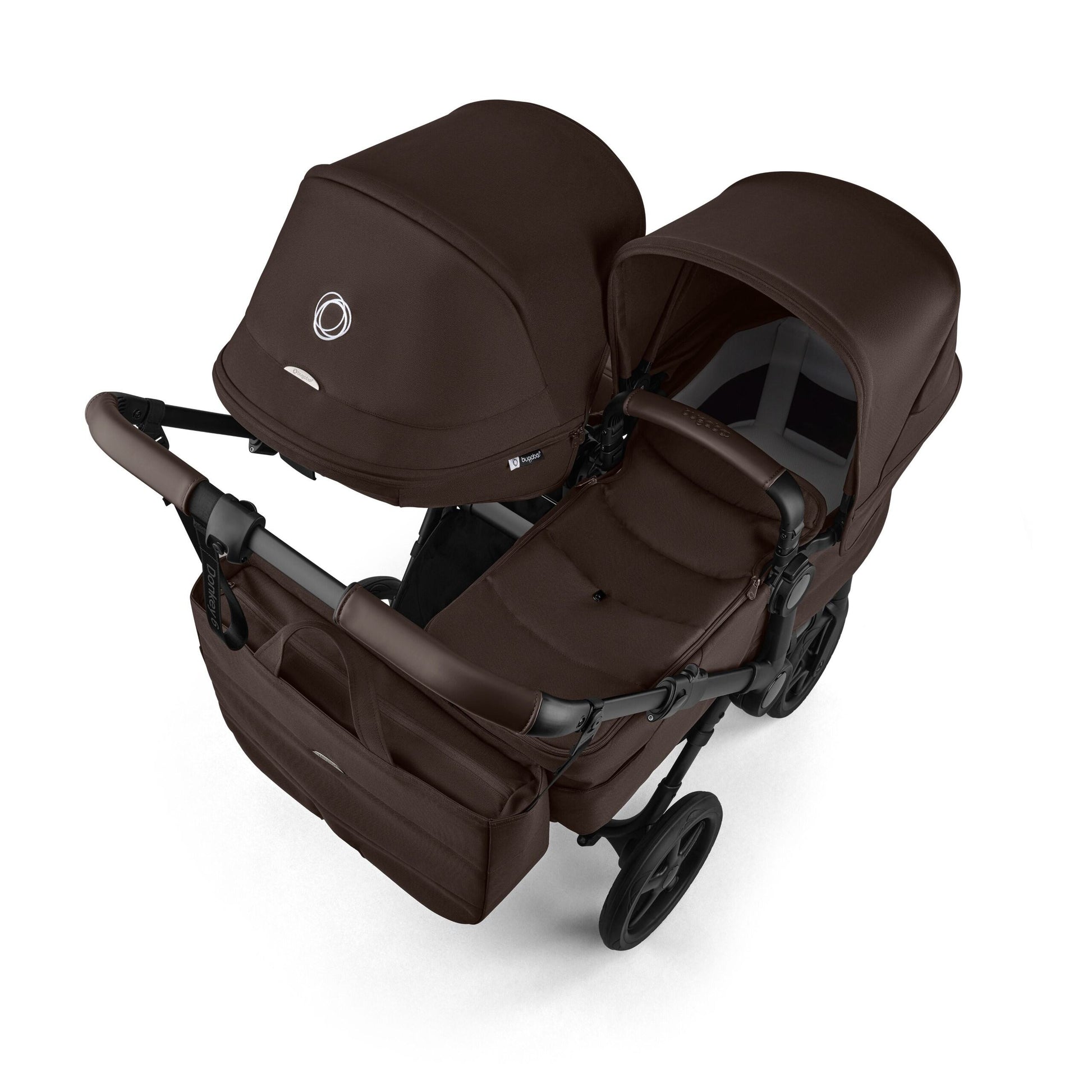
SKU: 12678225818
bugaboo donkey mineral taupe

bugaboo donkey mineral taupe Bugaboo Donkey 6 Double Pram – Baby Kingdom

Sale price$25.07 Regular price$27.86
Save 10%

Pay in installments of $6.96 with ShopPay, AfterPay and Klarna

Shipping Estimate
USA
  • USA
  • CAN

Ships within 48 hours · Estimated delivery Sep 25 - Sep 30

Promo Codes Available:

For Your Every Summer RSVP, with Code: SUMMER15

Description

bugaboo donkey mineral taupe Bugaboo Donkey 6 Double Pram – Baby KingdomBugaboo Donkey double pram for 2 children of different ages The Bugaboo Donkey 6 Double includes everything you need to convert from a mono to a double configuration for two children of different ages and includes: Bugaboo Donkey 6 Mono Bugaboo Donkey 6 Sibling Seat Let your children discover life together with the new and improved side by side double pram. Convert the pram from single to double in just three clicks and keep your little co pilots side

Bugaboo Donkey double pram for 2 children of different ages

The Bugaboo Donkey 6 Double includes everything you need to convert from a mono to a double configuration for two children of different ages and includes:
- Bugaboo Donkey 6 Mono 
- Bugaboo Donkey 6 Sibling Seat

Let your children discover life together with the new and improved side by side double pram.

Convert the pram from single to double in just three clicks and keep your little co-pilots side by side from birth to toddler.

DONKEY 6

Parenting begins with connection. A journey shared between partners, between siblings, between everyone who shows up with love.
The Bugaboo Donkey 6 was designed for that kind of togetherness. A pram that puts connection first, keeping little ones side by side, and parents close to what matters most. Because closeness isn’t just a feeling, it’s a choice we design for.
For parents who know that family doesn’t fit one shape. For siblings who grow stronger together.
Because the only thing better than raising a child, is getting to do it side by side.

Great design shapes more than comfort—it shapes the shared world. Every detail of the Bugaboo Donkey 6 is intentional, from the integration of recycled and bio-based materials to pioneering dyeing processes that conserve water and energy. By prioritizing innovation, the brand builds the future children deserve, proving that caring for families and caring for the planet go hand in hand.

The Bugaboo Donkey 6 is built to last—and built responsibly. Its outer fabrics are made from 100% recycled PET bottles, its structure uses recycled aluminum, and key components are made from bio-based plastics. Every material has been chosen for strength, quality, and lower environmental impact. Together, they reduce the pram's CO2 footprint by 17%, because design should move families forward, not hold the planet back.

FEATURES:
- Convertible Design: The pram's unique patented design converts from a single to a double pram, and vice versa, in just three clicks (Sibling seat sold separately).
- Flexible Configurations: It offers over 20 configurations when adding car seats and a wheeled board (sold separately).
- Capacity for Three: It can accommodate up to three children by adding the Bugaboo wheeled board (sold separately).
- Side-by-Side Bonding: Designed to foster family bonding by keeping siblings at the same height to share the same level of view.
- Advanced Bassinet: Features an all-season bassinet with new soft organic cotton linings and 2 x times larger breezy panels for better airflow.
- Ergonomic Seating: Includes reversible and reclinable side-by-side seats with an ergonomic padded design and a quick-click 5-point safety harness.
- All-Terrain Handling: Large 10" front and 12" rear puncture-proof wheels with soft foam cores provide suspension for a smooth ride on any terrain.
- Tight Navigation: Features a tight turning radius and agile, responsive one-hand steering.
- Standard Doorway Fit: Even in double or twin mode, the pram is only 74 cm wide, allowing it to fit through standard doorways.
- Large Underseat Basket: The basket is 50% larger than earlier models, carrying up to 15 kg or 70 L.
- Side Luggage Bag: A redesigned side bag doubles as a changing bag, holding up to 10 kg on the chassis in single mode.
- Recycled Materials: Crafted with more durable, 100% recycled outer fabrics and built with 60% recycled aluminum and bio-based material.
- Eco-Friendly Dyeing: Utilizes water-free "dope-dye" technology to deliver richer colour durability while reducing chemical use, water consumption, and energy.
- Reduced Carbon Footprint: The total CO2 footprint has been reduced by 17% compared to previous Bugaboo Donkey models.
- Safe Fabrics: Uses durable, water-repellent, and PFAS-free fabrics.
- Compact Storage: Offers a self-standing one-piece fold or a compact two-piece fold for easy transport.
- Breathable, dual-sided PureBreeze™ mattress for optimal newborn support
- Integrated accessory attachment points.

SPECIFICATIONS:
General
- Pram weight (fully assembled, bassinet & seat): 19.04kg 
- Pram width: 74 cm (double configuration)
- Age range: 0-4 years old (max. 22 kg)
Capacity
- On seat: 22 kg (per seat)
- Underseat basket: 15 kg or 70 L 
- Side bag: 10kg on chassis, 4 kg on handlebar
Dimensions
- Folded: One-piece self-standing fold (with seat) : 56 x 79.5 x 90cm
In-use
- With seat and bassinet: 92 x 74 x 111 cm 
- With two seats: 87 x 74 x 111cm
- Front wheels: 25 cm
- Rear wheels: 30 cm
- Handlebar min-max: 88 - 103 cm
Materials
- Outer fabric: 100% recycled water-free dyed polyester
- Carrycot lining: Lining 1: 100% organic cotton. Lining 2: 100% polyester
- Handlebar grips: 100% PU faux leather material.

WHAT'S IN THE BOX:
- Pram base: The hardware for your Bugaboo Donkey 6. Including chassis, wheels, wheel caps, and pre-assembled grips.
- Seats: Including two sets of seat frames, seat fabrics with 5-point safety harness, and carry handles with leather-look grips.
- Bassinet: Including bassinet fabric set, mattress, and bottom.
- PureBreeze™ mattress: With dual sides for summer and winter. Featuring firmer foam and enhanced breathability for better comfort.
- Sun canopies: Including two sun canopy sets with wires and clamps. With UPF 50+ protection and a peek-a-boo panel on both canopies.
- Underseat basket and side bag: Underseat basket holds maximum 15 kg. Side bag holds maximum 10 kg on chassis in single mode, and 4 kg on handlebar in double mode.

Shipping Notes
  • Free Standard Shipping on $100+ Orders to the USA.
  • Except Preorder products are shipped in 48 hours.
  • Delivery to the USA:
  1. Standard Shipping : 3-10 business days
  • If time is of the essence, please consider selecting expedited delivery for faster service.
Exchange/Return Notes
  • We offer a 30-day return/exchange service after receiving.
  • Final sale items are not eligible for returns or exchanges.
  • To process your return/exchange, please contact us at [email protected]
  • Please click here for more details>>> Return & Exchange Policy
SKU: 12678225818

Discover Niche Categories That Outsell bugaboo donkey mineral taupe

Top-Converting Item to Boost Your Average Order

4.3 ★★★★★
Based on 5 reviews
Sort
Highest Rating
Newest First
Oldest First
Product Reviews
M
Verified Purchase
Miriam Dixon
Boise, US
★★★★★ 5
Lilias Trotter is amazing!
Format: Paperback
Lilias Trotter is inspired in her prose and beautiful watercolors. Wonderful!
WAS THIS REVIEW HELPFUL?YesReportShare
Reviewed in the United States on February 27, 2022
D
Darcy W.
Battle Creek, US
★★★★★ 5
A beautifully crafted invitation to journal
Format: Paperback
Lilias Trotter Legacy’s latest book Beholdings is not so much a text as it is a beautifully crafted invitation. Inspired by the journals and sketches of Lilias Trotter (1853-1928—English missionary to Algeria, artist, writer, and journaler par excellence), biographer Miriam Rockness invites the reader to try their own hand at journaling, using Trotter as a model and guide. Rockness herself is no stranger to journaling, and her Preface to Beholdings enumerates the many benefits that await any reader who is willing to commit to the discipline for a period of time. In the short term, Rockness describes how journaling encourages one to focus, to pay attention, to take the time to behold the beauty in the world before one’s very eyes. Each page following the Preface includes a quote designed to stir the imagination, and an image from Trotter’s journals to illustrate what it means to behold an acorn, a flower petal, a sunrise in the Algerian desert. It is not just to see what is before one’s eyes, but to hold it in the mind’s eye and cherish it. As Simone Weil said, “Attention, taken to its highest degree, is the same thing as prayer. It presupposes faith and love.” It is this kind of attention that Rockness encourages the journaler to cultivate, and it is the kind of attention that Lilias Trotter so artfully illustrates. There is ample space on each page for the journaler, thus inspired, to record his or her observations, musings, sketches, or doodles. In the longer term, Rockness suggests that journaling helps cultivate a sense of proportion and perspective. She describes looking back with her husband over her journals from years before, reliving the moments that might otherwise have been forgotten, and allowing those glimpses in the rear view mirror to inform present day experience. Sometimes one finds that images seen in the rear view mirror really are smaller than they appeared at the time! In addition to being an incitement to journaling, Beholdings is a beautifully produced creation in its own right. Great thought has gone into the selection of the typeface, the texture and feel of the paper, the quality of the images reproduced. This makes Beholdings not only a delight to own, but also an exquisite gift to offer. My advice: buy one for yourself, and another for someone you love.
WAS THIS REVIEW HELPFUL?YesReportShare
Reviewed in the United States on January 16, 2022
W
Verified Purchase
WellBCare
West Palm Beach, US
★★★★★ 2
Be clear that it's a blank journal you create, with brief quotes and thumbnail art
Format: Paperback
If one is looking for a personal journal of empty lined pages ~ and a brief Lilias Trotter quote with a thumbnail-size photo of her art on each page then this is for you. I understood it was a book of her journalling with more viewable-size sketches.
WAS THIS REVIEW HELPFUL?YesReportShare
Reviewed in the United States on May 13, 2022
E
Verified Purchase
Eric Balkan
Houston, US
★★★★★ 5
When and where economics went wrong
Format: Paperback
This is one of those books that can provide an epiphany to the reader -- but not very many American readers have even heard of it, unfortunately. That could be due to it's being a book primarily about English economic history, with assumptions that the reader is familiar to some extent with things like the Poor Laws and Tory socialism. But I wasn't, and was still able to glean some great insights from the work. That could be because Polanyi is not afraid of repetition. :-) A key insight, and the one that could be summed up as the theme of the book, is Polanyi's realization that prior to about 1830, the market and the economy were considered part of society. That is, economic activity was something that people did along with everything else they did, like engage in social/familial relationships, religious rituals, etc. But with the 1830s came a paradigm shift: the advent of rational capitalism. Now, the market was considered an entity by itself, outside of society. This market entity was viewed as governed by universal laws. Like laws of physics, these market laws were independent of culture, independent of social group, independent of time period, and, in fact, independent of human behavior. While any observer of human nature would say that people often make decisions for emotional reasons -- and modern neurological research shows that virtually every decision we make is a combination of the rational and the emotional -- these market laws assumed only rational behavior on the part of economic actors. Though Polanyi doesn't mention it, it's now easy to see how Alfred Marshall could get carried away with creating a mathematical foundation for microeconomics and how Leon Walras could, reportedly, say that if something couldn't be studied mathematically, it wasn't worth studying. There's no current way to model emotions with math, and so the Ricardian prototype of an emotion-less economics continues into the modern economics of today. These universal market laws frees the market from any social constraints. A number of modern neo-classical economists assert that this makes economics purely amoral, i.e., without regard for any ethics. Therefore any attempts by the public, by politicians, or by workers to add ethics to the market is an interference with pure market workings, which, according to their interpretation of Adam Smith's "invisible hand", will produce optimal results if just left alone. But Smith never said that, and in fact rational capitalism, in elevating greed and selfishness to the status of goals -- see the Ayn Rand work "The Virtue Of Selfishness" -- is, IMO, not amoral at all, but rather is a morality of its own. Anyway, back to Polanyi's insights. Another key one is the concept of a "double movement" in 19th century England. Each move to create a purer market created an ad-hoc counter move. E.g., Ricardian free trade was faced with opposition from workers losing their jobs and local firms losing business Americans can easily think of another example: where the employment of children (eventually) led to laws restricting that employment, simply because human beings have too much of a sympathetic nature to sit still for children losing limbs in the dangerous factories and mines of the time. Polanyi notes that capitalists often blame these anti-capitalist laws on planned activity by socialist anti-market groups, but he says they're actually the result of the recognition by the general public that they don't want to live under a pure market system. Yet another good insight is Polanyi's recognition that market laws treat labor, land, and money as commodities. We can see that today, where neo-classical economists assert that the law of supply and demand should apply to workers as it applies to anything else in the economy. That is, if there's a surplus of workers in one area and a shortage in another, supply and demand dictates the flow of workers from the one area to the other. But a laid-off textile worker in South Carolina is not going to move to China for a job. That's my own example, but Polanyi offers his own from modern English history. The book isn't perfect. Polanyi does have a tendency to generalize, a common failing among authors, IMO. E.g., in discussing the rise of fascism in the 1930s, he's on very shaky ground when he starts talking about the US or about Russian policy intentions during that period. I gave The Great Transformation 5 stars because, even with its faults, the reader will be thinking about Polanyi's insights for some time to come. I am.
WAS THIS REVIEW HELPFUL?YesReportShare
Reviewed in the United States on May 18, 2009
K
Verified Purchase
Kindle Customer
Waukegan, US
★★★★★ 5
Not light reading but worth it
Format: Kindle
Much of this book was heavy reading for me, mainly due my not being familiar with the background development and history of various economic theory and associated laws over 500 or so years of British history. I did stick it out and am glad I did. There are many insights as to how we have arrived at today and the book is still relevant even though it was written in 1942. I found the last few chapters and the comments in Sources to offer the most explanations to fit modern times especially with regard to the rise of fascism. Thick but worth it.
WAS THIS REVIEW HELPFUL?YesReportShare
Reviewed in the United States on May 6, 2025

recommand products