SKU: 16364230407
philodendron martianum propagation

philodendron martianum propagation Philodendron Martianum 'Fat Boy'

Sale price$22.01 Regular price$24.46
Save 10%

Pay in installments of $6.12 with ShopPay, AfterPay and Klarna

Shipping Estimate
USA
  • USA
  • CAN

Ships within 48 hours · Estimated delivery Aug 2 - Aug 7

Promo Codes Available:

For Your Every Summer RSVP, with Code: SUMMER15

Description

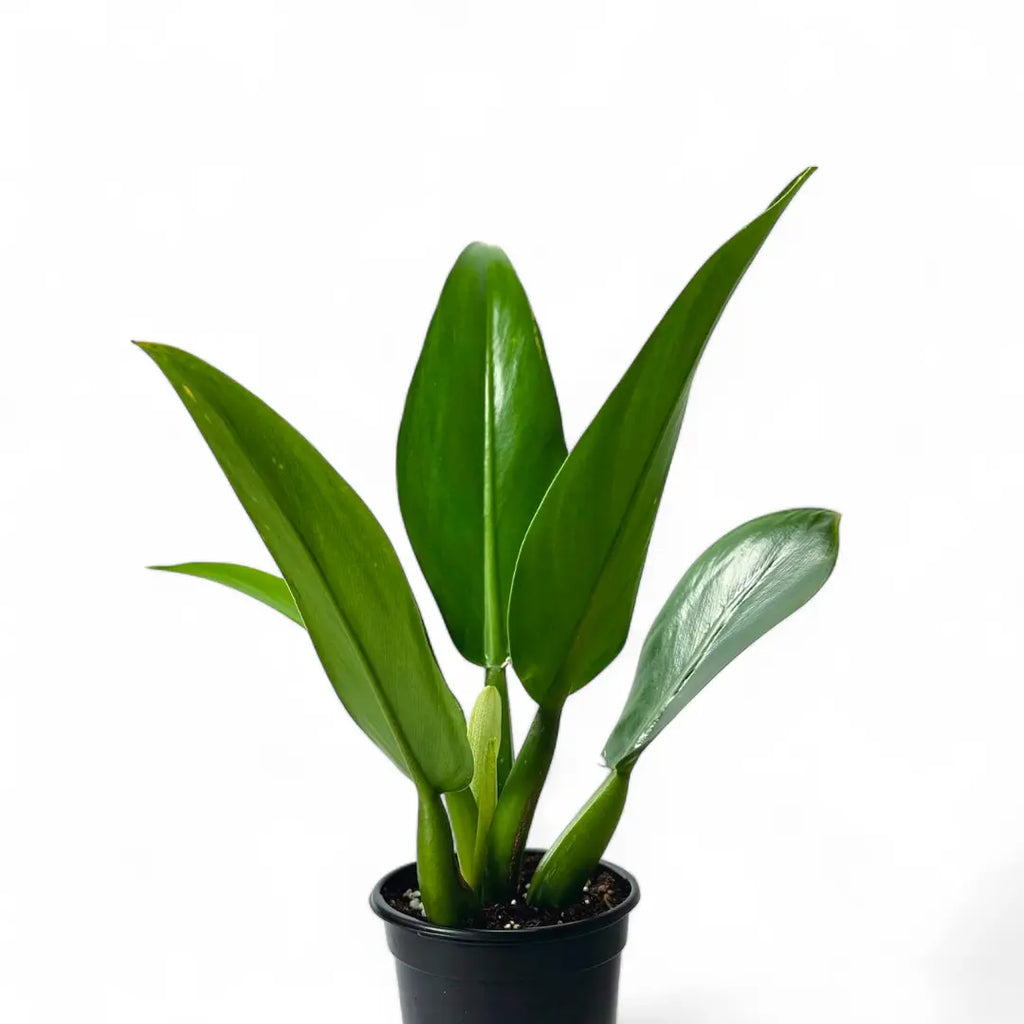
philodendron martianum propagation Philodendron Martianum 'Fat Boy'The name explains itself the moment you see it. Every petiole on the Philodendron Martianum 'Fat Boy' is dramatically swollen inflated, bulbous, and hollow, like a series of fat green sausages holding up the broad, glossy dark green leaves above. No other Philodendron looks quite like this. Named in honour of Carl Friedrich Philipp von Martius, the great German botanist who spent years cataloguing the flora of Brazil's Amazon basin, martianum is a

The name explains itself the moment you see it. Every petiole on the Philodendron Martianum 'Fat Boy' is dramatically swollen — inflated, bulbous, and hollow, like a series of fat green sausages holding up the broad, glossy dark-green leaves above. No other Philodendron looks quite like this. Named in honour of Carl Friedrich Philipp von Martius, the great German botanist who spent years cataloguing the flora of Brazil's Amazon basin, martianum is a species from Brazil's Atlantic rainforest and rocky outcroppings — a plant equally at home growing on tree trunks and bare cliff faces, which explains its unusually tough, drought-tolerant character. The swollen petioles are not just a visual quirk; they are water storage organs, making this a semi-succulent Philodendron that tolerates dry spells far better than most of its genus. New leaves emerge with a warm bronze flush before deepening to the rich, glossy green of a mature plant. It grows as a self-heading, compact rosette — no climbing, no moss pole, no drama — and is one of the most genuinely low-maintenance collector aroids available.

💡 The Swollen Petioles — Water Storage, Not a Defect The dramatically inflated, hollow petioles of Philodendron martianum are its most distinctive feature and its most practical one. They function as water storage organs — the plant draws on the moisture held within them during dry periods, making it significantly more drought-tolerant than most Philodendrons. This semi-succulent adaptation is why the Fat Boy should be treated more like a succulent-philodendron hybrid than a typical aroid: allow the soil to dry much further between waterings than you would for other Philodendrons, and never keep the root zone perpetually moist. The petioles will appear visibly plumper on a well-hydrated plant and slightly softer when the plant is ready for water.
🌿 Self-Heading Rosette — No Pole, No Climbing Philodendron martianum is a non-vining, self-heading species that grows as a compact, upright clump. It does not climb, does not trail, and needs no support structure. New leaves push upward and outward from the central growing point, building a layered rosette that displays the bronze new growth at the centre against the mature dark-green outer leaves. Rotate the pot a quarter turn every 2–3 weeks for even, symmetrical growth. Its compact, structured habit makes it ideal for desks, shelves, and tabletops where a climbing vine would be impractical.
☀️

Light

Bright indirect light — an east or west-facing window is ideal. The Fat Boy tolerates lower light better than many collector aroids, but in good bright light it produces larger leaves, more vivid bronze new growth, and a more compact, robust rosette form. Avoid direct harsh afternoon sun — it scorches and bleaches the glossy leaves. Gentle morning sun is fine and beneficial. A grow light at 12–14 hours works well indoors and produces consistent new growth year-round.

💧

Watering

Allow the top 50% of the soil to dry out before watering thoroughly — much drier than most Philodendrons. The swollen petioles store water and the plant tolerates short dry spells with ease; consistent soggy soil is the primary cause of root rot in this species. Water deeply and allow to drain completely; empty the saucer after watering and never allow to stand in water. In winter reduce frequency further — the petioles provide a visible cue: slightly softened or less plump petioles indicate the plant is ready for water. Filtered water preferred; room temperature.

💦

Humidity

Average indoor humidity (40–55%) is ideal — one of the few Philodendrons that actively prefers drier air. The thick petioles store moisture internally and excessive ambient humidity can encourage fungal issues on the leaf surfaces and around the stem base. Do not mist. No humidifier needed. India's typical indoor climate is naturally well-suited. Keep away from excessively humid bathrooms or very damp corners. Good air circulation around the plant is beneficial.

🌱

Growing Media

Well-draining, airy mix — 40% orchid bark, 30% perlite, 20% quality potting soil or coco coir, 10% worm castings. pH 6.0–6.5. The mix must drain immediately and completely; any sustained moisture retention around the roots causes rot in this semi-succulent species. A terracotta pot with drainage holes is strongly recommended — the porous walls assist evaporation and prevent moisture build-up between waterings. Repot every 1–2 years in spring; slightly root-bound is preferred. Move up only one pot size at a time.

🌾

Feeding

Balanced liquid fertilizer at half strength every 3–4 weeks during the growing season (spring through early autumn). Apply to moist soil only. The Fat Boy is not a heavy feeder; consistent but light feeding during active growth produces robust new leaves. Flush soil every 3 months to prevent mineral salt build-up. Stop feeding in winter. Avoid high-nitrogen formulas — they push soft, watery growth that is particularly susceptible to rot in this semi-succulent species.

⚠️ Common Issues & Quick Fixes

Soft, Mushy, or Collapsing Petioles

The most Fat Boy-specific complaint — and the most serious. Mushy, collapsing petioles indicate root rot from overwatering. Unpot immediately, inspect the roots — trim all blackened or mushy sections with clean scissors, allow the root ball to air-dry for several hours, repot in fresh completely dry well-draining mix, and do not water for at least 2 weeks. Going forward: allow top 50% of soil to dry before watering; terracotta pot; no saucer standing water.

Yellow Leaves

Overwatering — the primary cause in this species. Allow the soil to dry much further between waterings and check that drainage is excellent. One older leaf yellowing as a new one unfurls is normal cycling. Widespread yellowing with soggy soil: unpot, trim rotted roots, repot in fresh mix, water less going forward.

Leaves Staying Small or Growth Stalling

Insufficient light or the plant being too root-bound. Move to a brighter indirect position. Check whether roots are circling the pot base — if so, repot one size up in spring. Begin consistent feeding every 3–4 weeks. In good conditions the Fat Boy produces large, substantial leaves; small leaves are a reliable indicator that one of these three conditions needs attention.

Brown Leaf Tips or Edges

Mineral build-up from tap water or over-fertilizing. Switch to filtered water, flush the soil thoroughly every 3 months, and reduce fertilizer concentration. Existing brown tips are permanent — trim neatly at a slight angle; new growth in improved conditions will be clean.

Fungal Spots on Leaves or Stem Base

Excessive humidity or water splashing on the leaf surfaces or stem base — this species prefers drier air than most aroids. Improve air circulation, stop any misting, and reduce ambient humidity. Remove badly affected leaves. Apply a diluted neem oil solution to the stem base and leaf surfaces as a preventive. Move to a drier, better-ventilated position.

📋

Quick Plant Profile

Botanical Name Philodendron martianum Engl. 'Fat Boy'
Named After Carl Friedrich Philipp von Martius — German botanist who catalogued Brazil's Amazon flora
Common Names Fat Boy Philodendron, Cannifolium Philodendron, Swollen Petiole Philodendron
Family Araceae
Origin Brazil; Atlantic rainforest and rocky outcroppings; epiphytic and lithophytic
Defining Feature Dramatically swollen, hollow, inflated petioles — water storage organs; unlike any other Philodendron
Petiole Function Semi-succulent water storage — plant tolerates dry spells; plump petioles = well-hydrated; soft petioles = water needed
New Leaf Colour Bronze flush on emergence; deepens to deep glossy green as leaf matures
Growth Habit Self-heading rosette; non-vining; no climbing; no moss pole needed; compact upright clump
Humidity Note Prefers drier air (40–55%) — one of the few Philodendrons that does NOT benefit from a humidifier
Light Bright indirect; tolerates medium light; no direct harsh sun
Watering Top 50% dry before watering; much drier than most Philodendrons; terracotta pot recommended
Temperature 18°C–30°C; no cold drafts; no sustained cold below 15°C
Mature Size 30–60 cm in pots; significantly larger in-ground in tropical gardens
Propagation Stem cuttings with at least one node; allow cut end to callous before placing in bark or sphagnum
Ideal For Collectors, Desks, Shelves, Low-Maintenance Setups, Aroid Enthusiasts, Gifting
Care Level Easy — bright light, let it dry well, avoid overwatering and excess humidity; the rest takes care of itself
Shipping Notes
  • Free Standard Shipping on $100+ Orders to the USA.
  • Except Preorder products are shipped in 48 hours.
  • Delivery to the USA:
  1. Standard Shipping : 3-10 business days
  • If time is of the essence, please consider selecting expedited delivery for faster service.
Exchange/Return Notes
  • We offer a 30-day return/exchange service after receiving.
  • Final sale items are not eligible for returns or exchanges.
  • To process your return/exchange, please contact us at [email protected]
  • Please click here for more details>>> Return & Exchange Policy
SKU: 16364230407

Discover Niche Categories That Outsell philodendron martianum propagation

Top-Converting Item to Boost Your Average Order

4.3 ★★★★★
Based on 13 reviews
Sort
Highest Rating
Newest First
Oldest First
Product Reviews
M
Verified Purchase
Michael Stephens
Whiting, US
★★★★★ 4
Good but not as good
Format: Kindle
Freedom From Fear #1 was one of the most interesting and informational books I've ever read. Part Two was interesting but I did not learn much more about the war than I had known before other than the fact that, while Japan lost the war, Anglo-Saxons are no longer in control in the Far East. I somewhat disagree with his ending ideas about the "good" war, that it wasn't so "good" after all in it's outcome. However, those who fought in it and their families would probably disagree.
WAS THIS REVIEW HELPFUL?YesReportShare
Reviewed in the United States on May 22, 2014
P
Verified Purchase
Peter Sorenson
Belleville, US
★★★★★ 5
The Innovator's DNA - Disruptive Research - Disruptive Writing
A Politically Correct Status Quo It is politically correct in management circles to say that you are "results oriented" or that you "drive for results" in your organization. The status quo in business schools is to indoctrinate students in the delivery skills of analyzing, planning, detail-oriented implementing, and disciplined executing. This book and the research upon which it is based disrupts that politically correct status quo. Clayton Christensen has spent close to two decades creating the research, conceptual, and application foundation of the disruptive innovation body of knowledge. He has been working for more than 8 years with Jeff Dyer and Hal Gregersen, both gifted researchers, teachers, and consultants in their own right, on this project. These guys are a disruptive "dream team" of contributors. This book articulates an extension of the disruptive innovation body of knowledge that clearly describes an individual profile of the disruptive innovator and an organizational profile of an organization that makes disruptive innovation happen. So what makes this book disruptive? The first thing is timing. It arrives on the scene at a time when innovation is one of the most critical components of a solution to our global financial and organizational mess. If we are to get out of our morass of debt and sluggish growth and respond to the continually emerging challenges of a burgeoning global society it will ride on the backs and wings of innovation. The status quo must be disrupted for us to survive and thrive! Second is the audacity of the core models. The authors claim that innovation can be learned at both the individual and organizational level. Individuals can increase their ability to discover (Discovery Quotient - DQ) and learn to be more innovative. They cite the four specific behavioral skills of asking questions, engaging in observations, networking with people who have a different point of view, and experimenting to figure out what can work as the common elements of what innovators do. They also identify the cognitive skill of associational thinking, the ability to find connections between ideas that do not seem to be related to each other, as the connection between the behavioral skills and the generation of ideas. They extend their claim that the innovation competency can be learned to the organizational domain by saying that organizations can become more innovative through developing and leading people, designing and implementing processes, and advocating and living by philosophies that support innovation. These two arguments stand in stark contrast to the beliefs and practices of a vast majority of leaders and institutions. (For a diagram of the Model see [...]) 'And all of this is built upon the third source of disruption: research. Their work is based on well-founded research into the "DNA" of the world's leading innovators and the world's most innovative organizations. The authors conducted nearly 100 interviews of world class innovators and their colleagues to get at the heart of what innovators do. They also interviewed and surveyed executives who are not innovators. (Their survey data base has over 5000 respondents in it.) So they have been able to compare and contrast the two populations to more clearly see what it takes to effectively innovate. They have also done research on business results attributable to innovation. Collaborating with HOLT (a division of Credit Suisse) they were able to craft a measurement called the "innovation premium." This measure identifies if an organization's market capitalization can be accounted for by existing cash flows or if there is an innovation influence on the stock price. By using this measure, they have been able to clearly and objectively identify which organizations are benefiting from innovation. Yet to Explore The tension in the balance of influence and power between the leaders with predominantly "Discovery" or "Delivery" mindsets is an area that has yet to be explored. If the premises of this book are sound, and I believe they are, we need to figure out how to manage that tension and balance in order to generate, incubate, and strengthen innovative ideas as we bring them to full fruition in the marketplace. Great ideas that are not delivered upon are simply recreational pursuits that do not build great people, great institutions, and great societies. So there is work yet to do. Invest Your Time and Effort This book makes a significant contribution to both the disruptive innovation body of knowledge and the evolving body of practice on innovating disruptively. It is well worth reading, pondering, and acting upon.
WAS THIS REVIEW HELPFUL?YesReportShare
Reviewed in the United States on August 18, 2011
A
Verified Purchase
Amazon Customer
Louisville, US
★★★★★ 5
Inspiring and well-written
This is a very interesting book written by some Harvard profs. They did a large national survey of innovative businesses and their leaders. The book posits that innovative people follow five skills: associating, questioning, observing, networking, and experimenting. These skills can be found at the individual or organizational level. The idea is that most people have these skills in their DNA and can bring them out with some practice. There are a lot of interesting and inspiring examples like Steve Jobs and Jeff Bezos. Although this book seems like a self-help type book with a lot of hype, it has an academic underpinning. Any organization that is interested in promoting innovation could benefit from encouraging these 5 skills. If you are interested in innovation or creativity in business or any organization that produces something, you will like this book. The books is a little distracting to read because it has sidebars all through it giving interesting examples that break up reading concentration. Aside from that, it is a well-written book that is easy and enjoyable to read. I enjoyed the book greatly and found it to be inspiring.
WAS THIS REVIEW HELPFUL?YesReportShare
Reviewed in the United States on December 5, 2015
S
Verified Purchase
Stephen Collins
Louisville, US
★★★★★ 4
Great read and research. But what about daily application for regular people?
The research piece behind this book might be the next thing I read, as I'm intrigued by the academic rigor applied. The reveal and living examples of the five skills - questioning, networking, experimenting, observing and associating - are tangible and approachable given their articulation through well-known and highly visible entrepreneurs running innovative companies. There's much to be gleaned by looking at the way these people behave and, even through simple emulation, enhancing one's own skills. My only real disappointment with the book is its limited approach to practical, daily application for those not yet at the top of the tree. It's rather a different kettle of fish for the innovation-minded, but stuck in bureaucracy, worker who wants to make things better, is still motivated, and hasn't been crushed by the machine. How does that person actively innovate? And, in some cases, get away with it? This book (or an accompanying volume) focussing on daily, in-work, innovation would be useful.
WAS THIS REVIEW HELPFUL?YesReportShare
Reviewed in the United States on May 23, 2013
A
Verified Purchase
Annette
Birmingham, US
★★★★★ 5
A Favorite Book on Innovation
Format: Hardcover
Very well written and enough stories to help the true content stick. This is a favorite book of mine and has lead to interesting conversations to boot.
WAS THIS REVIEW HELPFUL?YesReportShare
Reviewed in the United States on September 29, 2025

recommand products