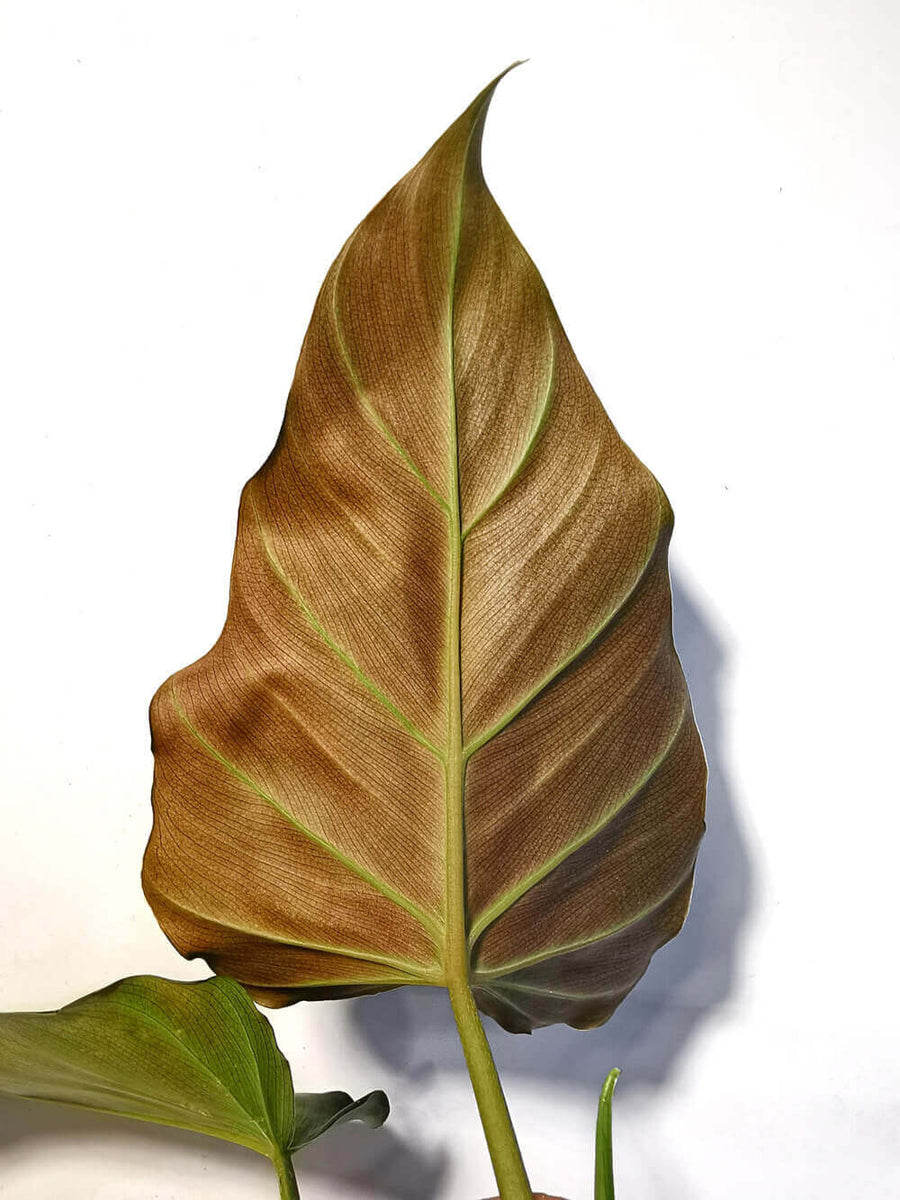
SKU: 16677350473
philodendron corsnianum

philodendron corsnianum Philodendron corsinianum – Red-Backed Leaves with Colourful Emergence

Sale price$18.57 Regular price$20.63
Save 10%

Pay in installments of $5.16 with ShopPay, AfterPay and Klarna

Shipping Estimate
USA
  • USA
  • CAN

Ships within 48 hours · Estimated delivery Sep 30 - Oct 5

Promo Codes Available:

For Your Every Summer RSVP, with Code: SUMMER15

Description

philodendron corsnianum Philodendron corsinianum – Red-Backed Leaves with Colourful EmergencePhilodendron corsinianum A Historic Botanical Marvel Philodendron corsinianum is a remarkable hybrid philodendron, believed to be the first man made philodendron hybrid. Created in the 1880s at the public gardens of 'La Cascine' in Florence, Italy, it was named in honor of Prince Corsini. This plant is thought to be a cross between Philodendron verrucosum and Philodendron pinnatifidum, resulting in a unique and captivating specimen. Distinctive

Philodendron corsinianum – A Historic Botanical Marvel

Philodendron corsinianum is a remarkable hybrid philodendron, believed to be the first man-made philodendron hybrid. Created in the 1880s at the public gardens of 'La Cascine' in Florence, Italy, it was named in honor of Prince Corsini. This plant is thought to be a cross between Philodendron verrucosum and Philodendron pinnatifidum, resulting in a unique and captivating specimen.

Distinctive Features of Philodendron corsinianum

  • Striking Foliage: Features wide, heart-shaped leaves with undulating margins, exhibiting a luminous green hue that adds a touch of elegance to any space.
  • Robust Growth: Capable of growing to an impressive size, making it a standout centerpiece in plant collections.
  • Historical Significance: As one of the oldest known philodendron hybrids, it carries a rich botanical heritage.

Essential Information About Philodendron corsinianum

  • Origin: Hybridized in the 1880s at 'La Cascine' gardens in Florence, Italy.
  • Parentage: Believed to be a cross between Philodendron verrucosum and Philodendron pinnatifidum.
  • Growth Habit: Exhibits a climbing nature but maintains a bushy form when pruned, with the potential to develop large, draping leaves.
  • Toxicity: Contains calcium oxalate crystals – keep away from pets and children.

How to Care for Philodendron corsinianum

  • Light Preferences: Thrives in filtered sunlight; avoid direct sun exposure to prevent leaf burn.
  • Watering Routine: Prefers moist soil with high organic matter; allow the top inch of soil to dry out between waterings to prevent root rot.
  • Humidity Needs: Benefits from moderate to high humidity levels; occasional misting can enhance growth.
  • Temperature Range: Ideal between 18-27°C (65-80°F); avoid exposure to temperatures below 10°C (50°F).
  • Soil and Growing Medium: Requires a well-draining, rich organic mix; incorporating peat, perlite, and orchid bark can be beneficial.
  • Repotting and Container Choice: Repot every 1-2 years to accommodate growth and refresh soil nutrients.
  • Fertilization: Feed monthly during the growing season with a balanced, diluted liquid fertilizer.
  • Propagation: Can be propagated through stem cuttings; ensure each cutting has at least one node and healthy aerial roots.
  • Pruning and Maintenance: Prune to maintain desired shape and encourage bushier growth; remove any yellowing or damaged leaves promptly.

Common Issues and Solutions

  • Yellowing Leaves: May indicate overwatering; ensure soil dries out slightly between waterings and improve drainage if necessary.
  • Leggy Growth: Often due to insufficient light; move to a location with brighter, indirect light.
  • Pest Prevention: Susceptible to common houseplant pests like aphids and mealybugs; regular inspection and prompt treatment with insecticidal soap are recommended.

Additional Growing Insights

To encourage robust growth and larger foliage, provide a support structure such as a moss pole for the plant to climb. Regular pruning will help maintain a bushier appearance and prevent the plant from becoming too leggy.

Botanical Background

Philodendron corsinianum holds a special place in botanical history as one of the earliest known philodendron hybrids. Its creation in the 1880s marked a significant achievement in plant hybridization, and it continues to be a cherished specimen among plant enthusiasts.

Order Philodendron corsinianum Today!

Looking to add a piece of botanical history to your collection? Philodendron corsinianum is a unique and captivating choice. Order now and enjoy the beauty and heritage this plant brings!

Shipping Notes
  • Free Standard Shipping on $100+ Orders to the USA.
  • Except Preorder products are shipped in 48 hours.
  • Delivery to the USA:
  1. Standard Shipping : 3-10 business days
  • If time is of the essence, please consider selecting expedited delivery for faster service.
Exchange/Return Notes
  • We offer a 30-day return/exchange service after receiving.
  • Final sale items are not eligible for returns or exchanges.
  • To process your return/exchange, please contact us at [email protected]
  • Please click here for more details>>> Return & Exchange Policy
SKU: 16677350473

Discover Niche Categories That Outsell philodendron corsnianum

Top-Converting Item to Boost Your Average Order

4.8 ★★★★★
Based on 24 reviews
Sort
Highest Rating
Newest First
Oldest First
Product Reviews
C
Verified Purchase
Clint Pachl
Whiting, US
★★★★★ 5
Well Presented Concepts and Implementations (5th ed.)
Format: Paperback
Foreword: I have been running my own DNS servers on OpenBSD and FreeBSD for about 4 years. All of my previous DNS knowledge was obtained from the man pages and online tutorials. The book is great because the example network used throughout the book is built upon, showing you how to "grow" your DNS with your expanding network. The design and implementation presented is priceless and covers some of my favorite topics: placement of slaves, hidden primaries, building root servers, split views, daisy-chaining, forwarders, partial-slaves, address maintenance issues, etc. The pros and cons of each setup are weighed and best practices are suggested. If you like a generous helping of diagrams, examples, and tables as a learning aid, you won't be disappointed. One specific example of weighing the pros and the cons is presented on page 479 as follows: "Could we have saved a few bucks on hardware by using our external authoritative nameservers as forwarders, too? Sure, but that would have presented a risk." After that statement, they proceed into all the details of "why." There is adequate coverage on security. The authors preach defense in depth. An implementation example includes hiding your masters and only exposing bastion slaves. Securing communications between the masters and slaves is also covered in the security chapter using DNSSEC and TSIG. I think IPSec is another way to add a security layer, but that is probably another book. After reading the book, I started to implement my new DNS infrastructure and found myself referring to the index often. It is fairly consummate, however, I found a few things missing, such as the $GENERATE statement. Also, some of the configuration details were lacking slightly. For example, the order in which ACL elements are processed and how negated elements affect the processing outcome. Another question I had was, what would happen if an ACL name is negated, and what if that ACL contained some negated elements. Well I found my answer by actually trying it and verifying with the canonical reference docs on isc.org. I gave this book five stars because of its effectiveness in presenting the concepts and implementations of DNS using examples, good writing style, tables, and diagrams. If you're looking for the last 4 percent of the diminutive details of DNS, you will find it on isc.org.
WAS THIS REVIEW HELPFUL?YesReportShare
Reviewed in the United States on August 22, 2006
C
Verified Purchase
C. Brown
Boise, US
★★★★★ 5
Good DNS reference
Format: Paperback
The Book is a good reference for BIND9 DNS administration. Although, at this time, it's a bit outdated. It wasn't written to reference DNSSEC, or other new configurations.
WAS THIS REVIEW HELPFUL?YesReportShare
Reviewed in the United States on January 2, 2025
A
Verified Purchase
Alexander
Waukegan, US
★★★★★ 4
Overall it was an OK book. I am already ...
Format: Paperback
Overall it was an OK book. I am already "competent" with DNS, specifically the BIND9 implementation but I got the book as reference material since the official documentation is a little sparse. The fifth edition (not sure about the others) even covers, albeit a little too briefly, how to deal with reverse lookup zones with subnet masks that do not fall on octet boundaries.
WAS THIS REVIEW HELPFUL?YesReportShare
Reviewed in the United States on July 31, 2015
D
Verified Purchase
Dan
Los Angeles, US
★★★★★ 5
Domain Names...Serves us!
Format: Paperback
This is the most complete and must-have DNS book i've ever seen before. Nor only prepares you to understand every basic and some advanced issues about DNS, it also shows a lot of "tricks" with the most powerfull and well know - famous DNS implementation!: BIND. If you are a beginner in the DNS world, this is a good step towards become an expert, if you're already an expert this guide will surely show you a lot of useful information in your daily DNS administration problems. Definitely, this was one of my best investments on my way to become a site administrator.
WAS THIS REVIEW HELPFUL?YesReportShare
Reviewed in the United States on June 11, 2011
P
Verified Purchase
Pzano
San Leandro, US
★★★★★ 5
Thicker than I anticiapted
Format: Paperback
The encyclopedia of DNS books, meaning thicker than a phone book. I like the fact that this book is thick but so easy to read and follow along with. If you know nothing about DNS, this book makes it easy to learn about DNS. It starts with the history of DNS and then explains the hierarchy of the DNS tree. A must read if you want to improve your understanding of the internet and what happens under the hood for name resolution.
WAS THIS REVIEW HELPFUL?YesReportShare
Reviewed in the United States on February 7, 2014

recommand products