Pay in installments of $6.97 with
 ,
,
 and
and

Shipping Estimate
USA
- USA
- CAN
- USA
- CAN
Ships within 48 hours · Estimated delivery Sep 28 - Oct 3
 Promo Codes Available:
For Your Every Summer RSVP, with Code: SUMMER15
Description
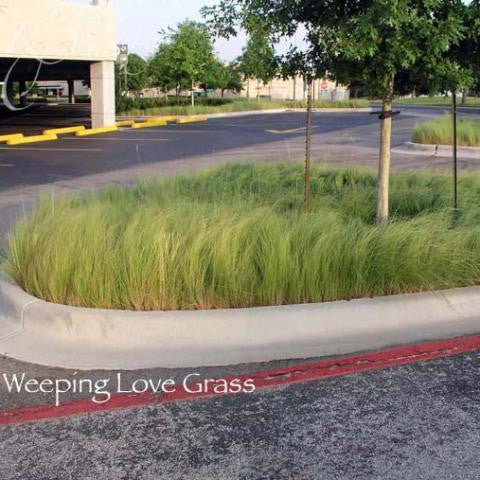
planting love grass seed Weeping Lovegrass Seed (Coated)Weeping lovegrass Weeping lovegrass is a long lived perennial bunchgrass adapted to summer rainfall. In critical rainfall areas occasional prolonged droughts may kill well established stands, but sufficient grazing to prevent excessive transpiration due to excess leaf buildup can lessen the danger of drought loss. Areas with less than 15 inches of annual precipitation would be hazardous for weeping lovegrass. Nevertheless, it is very tolerant of
Weeping lovegrass
Weeping lovegrass is a long-lived perennial bunchgrass adapted to summer rainfall. In critical rainfall areas occasional prolonged droughts may kill well established stands, but sufficient grazing to prevent excessive transpiration due to excess leaf buildup can lessen the danger of drought loss. Areas with less than 15 inches of annual precipitation would be hazardous for weeping lovegrass. Nevertheless, it is very tolerant of drought and responds rapidly to precipitation after a drought. The first accession of weeping lovegrass was brought to the U.S. in 1928 from a collection made in 1927 in north-central Tanganyika (Tanzania). It is indigenous to south and east Africa where it occupies the successional stage just before climax. It was widely used for erosion control in the southwest and south central U.S. from 1936 to 1945. Weeping lovegrass acreage slowly increased up to the late 1950s with rapid increases in Oklahoma and Texas in the 1960s.Weeping lovegrass grows and produces well on a wide variety of soils. It does well on clay loam soils if in high rainfall areas such as southeastern Oklahoma and northeastern Texas. It is best adapted to sandy loam soils and does well on deep sands in semiarid west Texas. Soil pH affects weeping lovegrass relatively little as it does well on acid soils of the southeastern U.S. and on highly basic soils. However, it is not adapted to severely alkaline soils and although it grows well on soils of pH 8, severe chlorosis usually occurs as the growing season progresses and if soils are high in sodium the plants may die. It prefers well drained soils and it cannot tolerate standing water. Ungrazed weeping lovegrass becomes decadent, very weak, and low in vigor. Despite the fact that weeping lovegrass grows well on low fertility soils, it does best on fertile soils. As pointed out by Noble Foundation personnel, "No grass can take out soil nutrients that are not there and produce luxuriant nutritious forage. Weeping lovegrass forage is very nutritious and palatable when fertilized properly regardless of the inherent fertility of the soil." Burning just before spring green up is a first step in renovating decadent lovegrass. Geographically, weeping lovegrass is best adapted to Texas and Oklahoma in the U.S. where rainfall exceeds 15 inches annually. Although it is more winter hardy than other lovegrasses, cold temperatures limit its northern spread to about the northern boundary of Oklahoma. Winter injury is more likely with a rapid temperature drop in fall when the grass is growing and during severe cold coupled with dry soil. Fall growth initiated by rainfall, irrigation, fertilization, or grazing seems to predispose weeping lovegrass to freeze damage. Hence, fall grazing is discouraged until after full winter dormancy. Although adapted throughout the southeastern U.S., it is little used except for conservation purposes. In the arid southwest its use is restricted to irrigation, favorable local situations such as swales, and where annual rainfall exceeds about 15 inches.Shipping Notes
- Free Standard Shipping on $100+ Orders to the USA.
- Except Preorder products are shipped in 48 hours.
- Delivery to the USA:
- Standard Shipping : 3-10 business days
- If time is of the essence, please consider selecting expedited delivery for faster service.
Exchange/Return Notes
- We offer a 30-day return/exchange service after receiving.
- Final sale items are not eligible for returns or exchanges.
- To process your return/exchange, please contact us at [email protected]
- Please click here for more details>>> Return & Exchange Policy
4.6 ★★★★★
Based on 24 reviews
Sort
Product Reviews
★★★★★ 5
Good sleep
Size: King - 20"*34" (pack of 2), Color: Grey
Soft, but firm,good sleeping pillows
WAS THIS REVIEW HELPFUL?YesReportShare
Reviewed in the United States on June 6, 2026
★★★★★ 5
Good find for the money
Size: King - 20"*34" (pack of 2), Color: Grey
These pillows puffed right up and they are soft and comfy to sleep on. Good find for the money
WAS THIS REVIEW HELPFUL?YesReportShare
Reviewed in the United States on June 5, 2026
★★★★★ 5
Excellent pillows
Size: Queen - 20"*30" (pack of 2), Color: Grey
Very nice pillows seem well made perfect size after a couple of days the filling is absolutely perfect provides plenty of support
WAS THIS REVIEW HELPFUL?YesReportShare
Reviewed in the United States on May 31, 2026
★★★★★ 5
Great pillows
Size: King - 20"*34" (pack of 2), Color: Grey
Very luxurious and comfortable! Exactly as described and priced well.
WAS THIS REVIEW HELPFUL?YesReportShare
Reviewed in the United States on May 18, 2026
★★★★★ 5
Perfect Stylish Comfy Queen Size Pillows
Size: Queen - 20"*30" (pack of 2), Color: Grey
These two pillows replaced some very old pillows. They are perfect size for my son’s double bed. They come rolled up and when I removed the plastic they puffed right up to their puffy pillowy size. They are extremely comfortable and my son loves them. They are a down alternative and work perfect for him as he is a stomach sleeper. They have just the right support for a restful nights sleep. They have a nice stylish look 👀. They keep their fluffiness even after sleeping on them overnight. They can be washed in cold water and tumbled dry on low heat. They are the perfect pillows for our family. Extremely happy with our purchase. I highly recommend them. ⭐️⭐️⭐️⭐️⭐️
WAS THIS REVIEW HELPFUL?YesReportShare
Reviewed in the United States on April 17, 2026