Pay in installments of $7.42 with
 ,
,
 and
and

Shipping Estimate
USA
- USA
- CAN
- USA
- CAN
Ships within 48 hours · Estimated delivery Oct 9 - Oct 14
 Promo Codes Available:
For Your Every Summer RSVP, with Code: SUMMER15
Description
jade plant thin leaves Crassula ovata 'Minor'Crassula ovata 'Minor' Crassula ovata 'Minor' is a compact jade plant selection with smaller, fleshy leaves and a dense, branching habit. It has the familiar jade plant habit of thick succulent stems, paired glossy leaves and a miniature tree like outline as it matures. In strong light, the leaf edges can develop a warmer tint, while the main leaf surface remains rich green. This plant stores water in its leaves and stems, so its care depends on
Crassula ovata 'Minor'
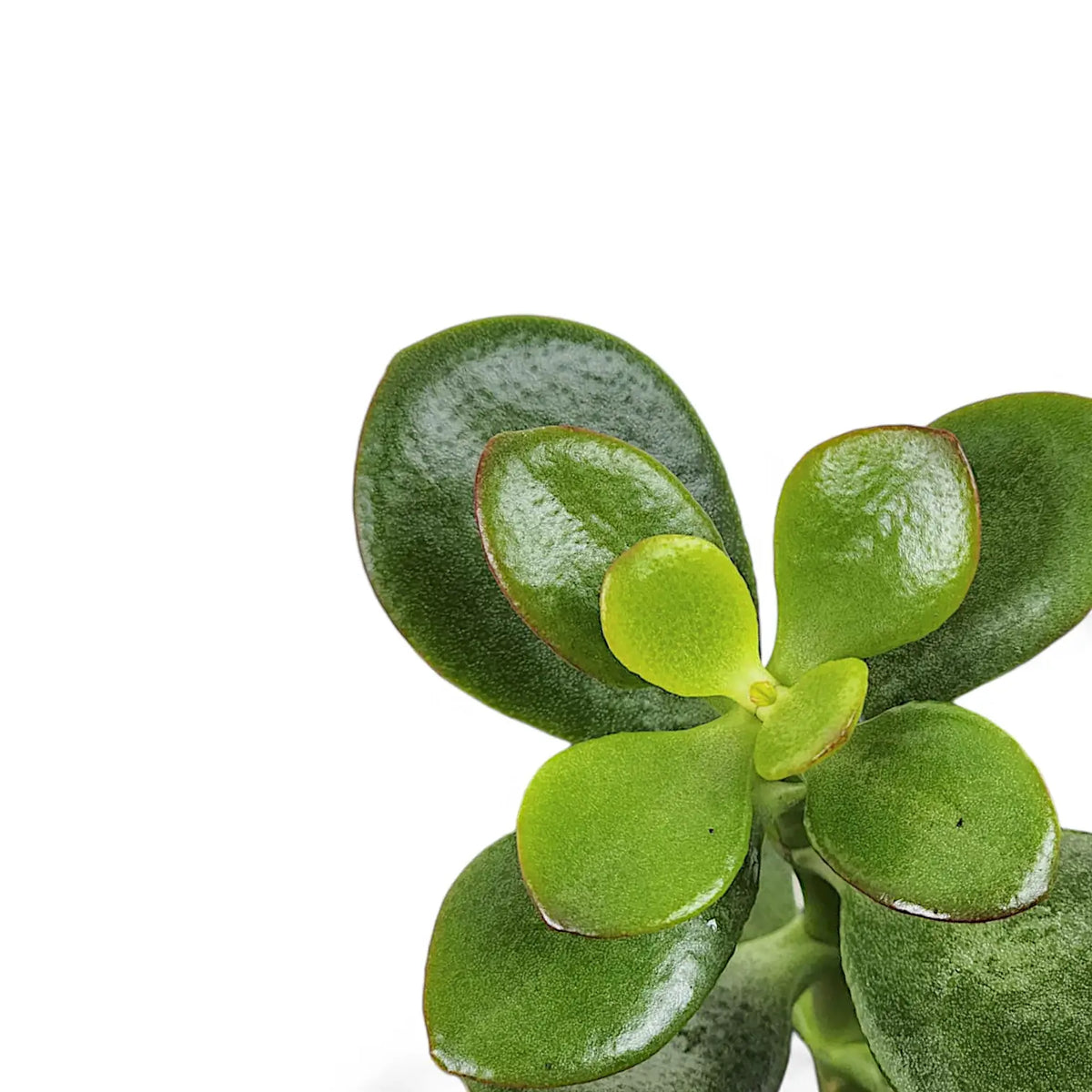
Crassula ovata 'Minor' is a compact jade plant selection with smaller, fleshy leaves and a dense, branching habit. It has the familiar jade plant habit of thick succulent stems, paired glossy leaves and a miniature tree-like outline as it matures. In strong light, the leaf edges can develop a warmer tint, while the main leaf surface remains rich green.
This plant stores water in its leaves and stems, so its care depends on bright light, drainage and dry intervals between waterings. With time, Crassula ovata 'Minor' forms a sturdy base and naturally branched outline that suits small pots and bonsai-style shaping.
Crassula ovata 'Minor' compact features
- Compact jade plant selection with smaller rounded leaves
- Thick, branching succulent stems that age into a tree-like form
- Glossy green foliage, sometimes with warmer leaf edges in strong light
- Slow, steady growth in pots
- Suited to bright windowsills and mineral succulent substrates
Crassula ovata 'Minor' origin and growth habit
Crassula ovata is a succulent shrub from south-eastern Mozambique to the south-eastern Cape region. The species stores water in fleshy leaves and thick stems, traits suited to bright, seasonally dry conditions and fast drainage. 'Minor' is a compact cultivated form of the species, selected for smaller foliage and contained growth.
In indoor cultivation, Crassula ovata 'Minor' keeps a neat scale when light is strong and watering is measured. Older stems become thicker and more woody-looking with age, while new shoots stay fleshy and green before maturing.
Crassula ovata 'Minor' light and dry-cycle care
- Light: Provide very bright light with direct sun where available. Increase sun exposure gradually after transport or darker winter months.
- Watering: Water deeply, then let the substrate dry well. Reduce watering in cooler, darker months when growth slows.
- Substrate: Use a fast-draining succulent mix with a high mineral fraction. Good aeration is essential around the roots.
- Pot choice: Keep it in a freely draining container. Shallow or moderately snug pots help keep the compact form stable.
- Temperature: Keep frost-free and ideally above 10 °C. Warm, bright rooms support steady growth.
- Humidity: Low to average indoor humidity suits Crassula ovata 'Minor'. Keep the foliage dry between cleanings.
- Feeding: Use a diluted succulent fertiliser while the plant is actively growing. Heavy fertilising can push soft, stretched growth.
- Pruning: Pinch or prune during active growth to shape the crown and encourage branching.
- Propagation: Stem cuttings root reliably after callusing. Leaf cuttings can also root, though they develop more slowly.
Crassula ovata 'Minor' troubleshooting checks
- Wrinkled leaves: Check substrate dryness and root health. Healthy, dry roots can be watered; damaged roots need recovery first.
- Yellow, soft or translucent leaves: Reduce watering and inspect for compact, wet substrate.
- Leaning growth: Rotate the pot and increase light gradually.
- Mealybugs or scale: Inspect leaf pairs, stem joints and the woody base, then isolate the plant for treatment.
Crassula ovata 'Minor' safety notes
Cats and dogs should not be allowed to chew Crassula ovata leaves or stems. Keep Crassula ovata 'Minor' away from pets that chew foliage and place it out of reach of small children.
Crassula ovata 'Minor' etymology and family
Crassula comes from Latin crassus, meaning thick, referring to the succulent leaves and stems. The species epithet ovata means egg-shaped, describing the leaf shape of the species. The species sits within Crassulaceae, the stonecrop family.
Crassula ovata 'Minor' forms a compact jade plant with small glossy leaves, thick stems and a naturally branched outline.
Shipping Notes
- Free Standard Shipping on $100+ Orders to the USA.
- Except Preorder products are shipped in 48 hours.
- Delivery to the USA:
- Standard Shipping : 3-10 business days
- If time is of the essence, please consider selecting expedited delivery for faster service.
Exchange/Return Notes
- We offer a 30-day return/exchange service after receiving.
- Final sale items are not eligible for returns or exchanges.
- To process your return/exchange, please contact us at [email protected]
- Please click here for more details>>> Return & Exchange Policy