Pay in installments of $5.33 with
 ,
,
 and
and

Shipping Estimate
USA
- USA
- CAN
- USA
- CAN
Ships within 48 hours · Estimated delivery Oct 7 - Oct 12
 Promo Codes Available:
For Your Every Summer RSVP, with Code: SUMMER15
Description
succulent fish rdo Shop 'String of Fishhook Plant - Senecio radicans glauca' Care and Growing GuideIntroducing the stunning string of fishhooks, scientifically known as Senecio radicans glauca, which is a trailing succulent variety of the Senecio radicans. The fish hook plant, also known as the blue pickle vine, is a hybrid trailing succulent that belongs to the Asteraceae family and is native to South Africa. The name "string of fish hook" comes from its distinctive appearance, as its leaves resemble tiny fishhooks. This fishhook Senecio plant
Introducing the stunning string of fishhooks, scientifically known as Senecio radicans glauca, which is a trailing succulent variety of the Senecio radicans.
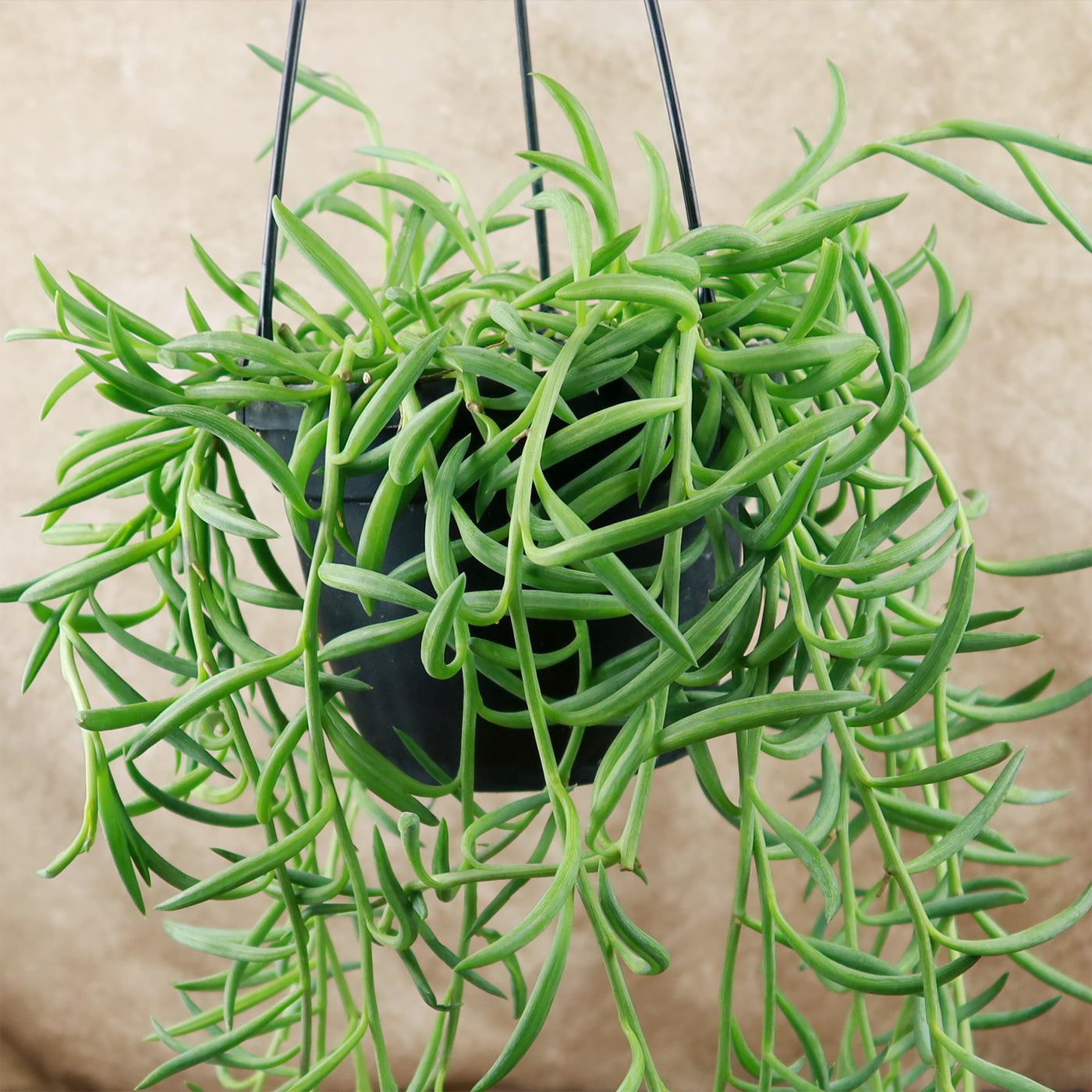
The fish hook plant, also known as the blue pickle vine, is a hybrid trailing succulent that belongs to the Asteraceae family and is native to South Africa. The name "string of fish hook" comes from its distinctive appearance, as its leaves resemble tiny fishhooks.
This fishhook Senecio plant features long, slender stems that cascade down, making it an excellent choice for hanging baskets or trailing down from shelves.
The stems are covered in small, cylindrical leaves that grow in pairs along the stems.
When the fishhooks plant has the proper growing conditions it grows very quickly and can get up to 32 feet tall. Whether you grow Fishhooks Senecio indoors or out, just make sure you give it room to trail!
The flowers of a string of fishhooks bloom from late summer to winter with daisy-like flowers. These delicate blooms are typically a creamy white or pale-yellow color and appear sporadically. While the Senecio flowers are not the main attraction of this hanging plant, they add a lovely touch when they do appear.
Most sites mix up the string of fishhook and string of bananas plants, but the glauca fishhook differs from the string of bananas (Senecio radicans) by having smaller, cylindrical leaves resembling fishhooks and a bluish-green color, whereas the string of bananas has elongated, banana-shaped leaves and a bright green color. Furthermore, the shape of 'Hooks' is longer and flatter than that of the string of bananas, which is rounded with a plump shape.
The Senecio radicans glauca fish hooks can be propagated from leaf or stem cuttings. This fish hook plant is not frost-hardy and winter-dormant. Avoid placing it directly under ACs, as it may cause leaves to droop. The fish hook plant looks best in hanging baskets as well as pots hung on walls. These can be grown in the driveway too.
Watering Needs
Succulents, like the Senecio Fish Hook plant, are excellent at withstanding drought or drought-tolerant fish hook plants. That's because the foliage of these succulent plants has the capacity to store water. Their leaves will explode if the soil is excessively wet or if you give them too much water.
Therefore, you typically only need to let the roots completely dry before watering them again. Watering them before they are completely dry can cause the roots to soak up water, which is bad because they are particularly prone to rotting. When your string of fishhook plants and roots get mushy, you'll recognize that something is wrong.
If you notice the leaves trimming or wrinkling, this indicates that your Senecio plant needs to be watered. You ought to water these plants once every two weeks or so during the height of their growing season.
You can dramatically cut back on that in the winter and only do it once a month. It's important to check the moisture level of the soil by sticking your finger about an inch deep into the soil. If it feels dry, it's time to water. If it still feels moist, wait a few more days before watering.
Light Requirements
The glauca string of fishhooks prefers bright, indirect sunlight. If you are growing his hanging plant indoors it thrives when placed near a window with filtered sunlight or in a well-lit area of your home. Remember to rotate the fish hooks plant occasionally to ensure all sides receive adequate light for even growth.
When outdoors, ensure light shade and full sun indoors. Avoid exposing your fishhook plant to direct sunlight, as it can cause the leaves to burn.
If you notice the leaves stretching or becoming pale, it might indicate that the Senecio plant is not receiving enough light, so you can try moving it to a brighter location.
Optimal Soil & Fertilizer Needs
The fishhook plant prefers well-draining soil. A good option is a succulent potting mix, which provides the right balance of moisture retention and drainage. You can also create your own potting mix by combining regular potting soil with perlite or pumice to improve drainage.
Planet Desert specializes in succulents and has specialized succulent potting soilGo to soil cactus mix blend 1 gal 4 qt cacti succulent dirt compost growing media that includes an organic substrate with mycorrhizae to help with the growth of a healthy root system to help your string of fishhook Senecios thrive.
When it comes to fertilizing, these fishhook plants don't require heavy feeding. A balanced (5-10-5) natural NPK fertilizer can be applied once a year during the growing season of spring. It's important not to over-fertilize, as this can lead to salt buildup in the soil and damage your fishhook succulent.
If the leaves start turning yellow or the Senecio succulent appears unhealthy, it may be a sign of over-fertilization, so it's best to reduce or stop fertilizing until the Senecio plant recovers.
Hardiness Zones & More
When growing indoors, they prefer temperatures between 60-80°F during the day and slightly cooler temperatures at night. They become mushy when exposed to chilly temperatures for too long. So, throughout the winter, you should bring the pots indoors. If the air in your home is particularly dry, you can increase humidity by placing a tray of water near the plants or using a humidifier.
For outdoor cultivation, your fishhook plant is generally suitable for USDA hardiness zones 10-12. Like many other succulents, they can withstand heat well, but they can only withstand cold or moisture for a brief period of time.
This fishhook Senecio can adapt to both dry and moderately humid environments. However, they may benefit from slightly higher humidity levels, especially during the drier winter months.
Remember, these are general guidelines, and it's always best to observe your specific plant's response to its environment and make adjustments accordingly.
Final Thoughts
Overall, the String of Fishhooks (Senecio radicans glauca) is a fantastic trailing succulent that's perfect for hanging baskets or cascading down shelves. Its unique fishhook-shaped leaves give it a distinctive appearance. This plant loves bright, indirect light, so place it near a window where it can soak up some rays. When it comes to watering, it's best to let the soil dry out between waterings to prevent overwatering. This low-maintenance plant is a great addition to any succulent collection and adds a touch of whimsy to your space.
Give this succulent a try if you're looking for a beautiful plant Senecio radicans glauca - a string of fishhooks to care for!
Shipping Notes
- Free Standard Shipping on $100+ Orders to the USA.
- Except Preorder products are shipped in 48 hours.
- Delivery to the USA:
- Standard Shipping : 3-10 business days
- If time is of the essence, please consider selecting expedited delivery for faster service.
Exchange/Return Notes
- We offer a 30-day return/exchange service after receiving.
- Final sale items are not eligible for returns or exchanges.
- To process your return/exchange, please contact us at [email protected]
- Please click here for more details>>> Return & Exchange Policy