SKU: 23116529972
dolomite vertical rib succulent

dolomite vertical rib succulent Buy Fat Blue Myrtle Cactus Phoenix, AZ | M. geometrizans

Sale price$19.42 Regular price$21.58
Save 10%

Pay in installments of $5.39 with ShopPay, AfterPay and Klarna

Shipping Estimate
USA
  • USA
  • CAN

Ships within 48 hours · Estimated delivery Aug 1 - Aug 6

Promo Codes Available:

For Your Every Summer RSVP, with Code: SUMMER15

Description

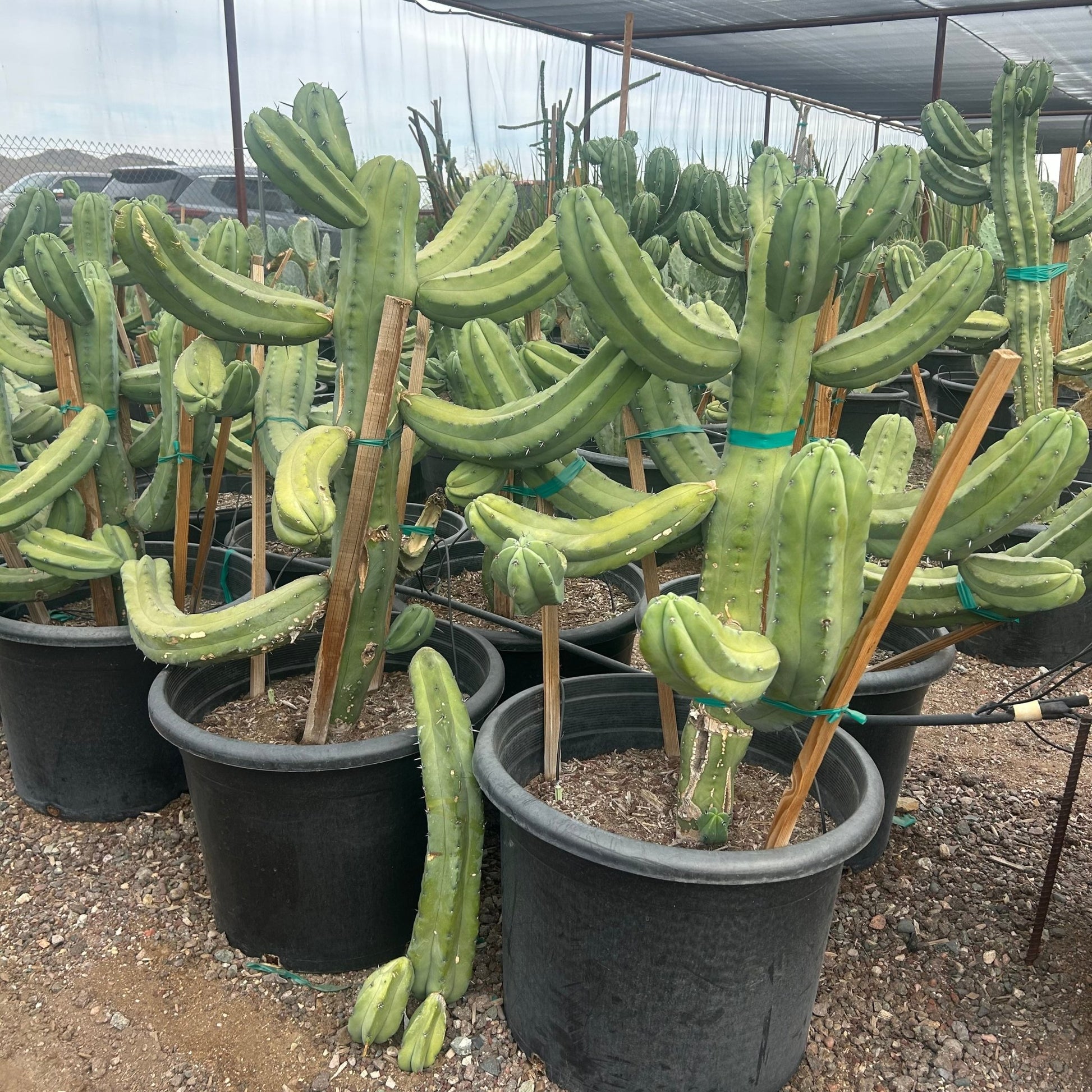
dolomite vertical rib succulent Buy Fat Blue Myrtle Cactus Phoenix, AZ | M. geometrizansThe Thickest Blue Columnar Cactus for Phoenix Desert Landscapes Fat Blue Myrtle Cactus (Myrtillocactus geometrizans fat form) is a bold, sculptural columnar cactus prized for its unusually thick blue green stems and striking vertical growth. Unlike the standard Blue Myrtle, this fat form develops wider, more robust columns that create a powerful architectural presence in any landscape. The powdery blue skin gives it an almost metallic shimmer in the

The Thickest Blue Columnar Cactus for Phoenix Desert Landscapes

Fat Blue Myrtle Cactus (Myrtillocactus geometrizans fat form) is a bold, sculptural columnar cactus prized for its unusually thick blue-green stems and striking vertical growth. Unlike the standard Blue Myrtle, this fat form develops wider, more robust columns that create a powerful architectural presence in any landscape. The powdery blue skin gives it an almost metallic shimmer in the Phoenix sun, and its slow-growing, low-maintenance nature makes it ideal for modern desert designs. Whether you're creating a dramatic focal point in a Scottsdale courtyard, flanking a Chandler entryway with living columns, or building a collector's cactus garden in Mesa — Fat Blue Myrtle Cactus delivers serious visual impact with zero fuss.

Fat Blue Myrtle Cactus Plant Details

Attribute Detail
Scientific Name Myrtillocactus geometrizans (fat form)
Common Names Fat Blue Myrtle Cactus, Fat Blue Candle, Garambullo
Mature Height 6–12 feet
Mature Width 4–8 feet (multi-branching candelabra form)
Growth Rate Moderate — 6–12 inches per year in Phoenix once established
Sun Full sun (6+ hrs). Handles reflected heat from walls.
Water Low once established. Highly drought-tolerant.
USDA Zones 9–11 (Phoenix is Zone 9b–10a)
Soil Well-draining. Adapts to Arizona caliche soils with amendment.
Foliage Evergreen — powdery blue-green columns year-round
Special Feature Extra-thick stems with blue powdery coating — the fattest form available

Fat Blue Myrtle Cactus Uses in Phoenix Landscapes

Architectural Focal Point

Fat Blue Myrtle's thick blue columns make it a natural sculptural centerpiece for modern desert courtyards, entry gardens, and xeriscape beds. A single specimen surrounded by decomposed granite and accent boulders commands attention without competing plants. The blue skin creates stunning contrast against warm-toned stucco walls, Cor-Ten steel, and terracotta. For maximum impact, uplight at night to cast dramatic column shadows.

Statement Entryway Planting

Plant a matching pair of Fat Blue Myrtles on either side of a front door, driveway, or gate for a bold, symmetrical welcome. Their vertical form draws the eye upward while the blue color reads as sophisticated and intentional. Choose 15–25 gallon specimens for instant height and presence.

Desert Garden Background Column

Use Fat Blue Myrtle as a tall backdrop behind lower agaves, barrel cacti, and desert shrubs. Its vertical growth adds height without significant spread, making it ideal for layered desert plantings. Pair with Golden Barrel Cactus, Desert Spoon, and Agave americana for a classic Arizona desert composition. Space 4–6 feet from neighboring plants.

Best Time to Plant Fat Blue Myrtle Cactus in Phoenix

Late spring through early fall (April–October) is ideal for columnar cacti. Warm soil and air temperatures promote root establishment and reduce the risk of rot from cold-wet conditions. Avoid planting in winter when cold temperatures and dormancy slow root growth. For container-to-ground transplants, May through September is the sweet spot.

How to Plant Fat Blue Myrtle Cactus

  1. Dig wide, not deep — Excavate a hole 2–3x the width of the root ball, same depth. Never plant deeper than the original soil line.
  2. Check for caliche — Break through any hardpan layer. Columnar cacti absolutely require excellent drainage.
  3. Backfill with native soil — Mix in 30% pumice or perlite for improved drainage. No compost needed.
  4. Spacing — 4–6 feet apart for grouped plantings; 6+ feet for standalone specimens.
  5. Do not water immediately — Let the roots callous for 3–5 days after transplanting before the first watering.
  6. Mulch with gravel — 2–3 inches of rock mulch around the base. Avoid bark mulch that retains moisture against the trunk.

Watering Fat Blue Myrtle Cactus in Phoenix

First Year Watering Schedule

After initial callous period (3–5 days): Water deeply every 10–14 days.
Months 1–3: Every 10–14 days during warm months; monthly in winter.
After Year 1: Every 2–3 weeks in summer; once monthly or less in winter.
Established plants (3+ years): Survive on rainfall alone in most years.

Drip Irrigation

Place 1–2 GPH emitters 18–24 inches from the trunk base. Columnar cacti are highly sensitive to overwatering — always err on the dry side. Root rot is the #1 killer. If unsure, wait another week before watering.

How big does Fat Blue Myrtle Cactus get?
In Phoenix, Fat Blue Myrtle typically reaches 6–12 feet tall with a multi-branching candelabra form 4–8 feet wide. Growth rate is moderate at 6–12 inches per year once established. Larger specimens with multiple branches can take 10–15 years to develop their full form.

What's the difference between Fat Blue Myrtle and regular Blue Myrtle?
Same species (Myrtillocactus geometrizans), but the fat form develops noticeably thicker, wider columns. Standard Blue Myrtle has thinner, more pencil-like branches. The fat form creates a bolder, more substantial presence in the landscape.

Is Fat Blue Myrtle Cactus cold hardy in Phoenix?
It handles typical Phoenix winters well but can suffer damage below 25°F. In unusually cold winters, protect young plants with frost cloth. Mature specimens are more cold-tolerant. Plant in a warm microclimate (south or west-facing wall) for extra protection.

Does Fat Blue Myrtle Cactus produce fruit?
Yes — Myrtillocactus produces small edible purple berries called garambullo, popular in Mexican cuisine. You may see small greenish-white flowers along the ribs in spring, followed by fruit clusters. The berries attract birds and add seasonal interest.

You May Also Like

Blue Myrtle Cactus — The standard form with thinner columns and a more open branching habit.
Crested Blue Myrtle — A rare crested mutation with dramatic fan-shaped growth, perfect for collectors.
Totem Pole Major — A smooth, spineless columnar cactus with a bold sculptural presence.
San Pedro Cactus — A fast-growing columnar cactus with ribbed green columns, great for quick height.

How Many Fat Blue Myrtle Cactus Do I Need?

This is a thick, multi-branching columnar cactus that matures 4 to 8 feet wide, so it is planted as a specimen or a spaced row of living pillars rather than a tight hedge. Use the grouping guide below, measuring center to center.

Planting use Spacing (on center) Layout
Single focal column n/a One specimen in granite with accent boulders
Entry pair 4 to 6 ft apart Two matched plants flanking a door or gate
Sculptural cluster 5 to 6 ft apart Odd-numbered group of 3 or 5 so each column stands clear
Spaced backdrop row 6 ft apart 5 plants span roughly 24 to 30 ft of bed

Fat Blue Myrtle Cactus Season-by-Season in Phoenix

  • Spring (Feb to Apr): Small greenish-white flowers open along the ribs as days warm, the start of the garambullo fruit cycle. A good second window to plant once nights stay above the mid 40s.
  • Summer (May to Sep): Peak growth season. The thick blue columns shrug off Phoenix heat and reflected warmth from south and west walls. Monsoon humidity and rain push a flush of new branching, but keep the root zone on the dry side since rot is the main risk in wet heat.
  • Fall (Oct to Nov): Prime planting season with warm soil and easing heat. Berries finish coloring and draw birds. Roots establish quickly before winter.
  • Winter (Dec to Jan): Holds its blue evergreen structure but is the tender season. Expect cosmetic damage below about 25°F. Cover young plants with frost cloth on hard-freeze nights and site them against a warm wall for protection.

At a Glance

✔ Heat-Loving (Reflected-Heat Tolerant)   ✔ Drought-Tolerant   ✔ Evergreen   ✔ Low-Maintenance   ✔ Pollinator-Friendly   ✔ Edible   ✔ Deer & Rabbit-Resistant   ✔ Cold-Hardy to 25°F

Plant It With

  • Blue Myrtle Cactus: the standard thinner-columned form, a natural companion for a graduated blue grouping.
  • Crested Blue Myrtle: the fan-shaped crested mutation of the same species, a collector's accent at the base.
  • Mexican Fence Post: a slim green columnar cactus that contrasts the fat blue columns for added vertical rhythm.
  • Golden Barrel: a low golden globe that grounds the tall blue columns at ground level.

Is Fat Blue Myrtle Cactus Right for Your Yard?

It thrives in full sun with sharp drainage, including hot reflected-heat spots against stucco or block walls, and asks for very little water once established. Give it room for the 4 to 8 foot branching spread and a warm microclimate so winter cold stays survivable. It is not a fit if your soil stays soggy or your planting spot drops well below 25°F without protection, since prolonged cold-wet conditions cause rot and frost scarring.

Shipping Notes
  • Free Standard Shipping on $100+ Orders to the USA.
  • Except Preorder products are shipped in 48 hours.
  • Delivery to the USA:
  1. Standard Shipping : 3-10 business days
  • If time is of the essence, please consider selecting expedited delivery for faster service.
Exchange/Return Notes
  • We offer a 30-day return/exchange service after receiving.
  • Final sale items are not eligible for returns or exchanges.
  • To process your return/exchange, please contact us at [email protected]
  • Please click here for more details>>> Return & Exchange Policy
SKU: 23116529972

Discover Niche Categories That Outsell dolomite vertical rib succulent

Top-Converting Item to Boost Your Average Order

4.7 ★★★★★
Based on 15 reviews
Sort
Highest Rating
Newest First
Oldest First
Product Reviews
B
Verified Purchase
Beantown857
Lake Worth, US
★★★★★ 5
Shocking!
Format: Hardcover
You never know who you can really trust.
WAS THIS REVIEW HELPFUL?YesReportShare
Reviewed in the United States on December 7, 2025
D
Verified Purchase
David Torres
West Palm Beach, US
★★★★★ 5
Very cool
Format: Hardcover
Very good storyline
WAS THIS REVIEW HELPFUL?YesReportShare
Reviewed in the United States on July 15, 2025
I
Verified Purchase
Ian McKee
Charlottesville, US
★★★★★ 5
Revenge for a fallen emperor, redemption for a fallen warrior
Format: Kindle
The crimson empire saga is the story of kir kanos, last of emperor Palpatine's crimson clad imperial guardsmen. It is a story of revenge and redemption, as over the course of the trilogy Kanos grows and changes in ways he'd never have expected. I did especially like his changing relationship with Mirith Sinn, and how her arc is a fitting mirror to his own. I also liked the villain of the first series. Jax, and I wish he had stuck around for the rest of the trilogy. The rest of the villains throughout the trilogy are far less memorable than jax, but I suppose that's the problem when you make sequel to whats unseemly a self contained story. Of the three series contained here, the first series is by far the best. It's quite self contained, and any knowledge of the universe at the time is explained quite well. It's also the simplest, Kanos wants Jax dead, and Jax wants Kanos dead. The second series is abit of a mess, with an overly complicated plot and a good deal of unseemly wasted page count on the random side characters that don't advance anything. In particular I'm thinking of the hutt character, as well as the mystery hooded figure who doesn't actually come into play at any point in the saga. Perhaps he comes into play in some later star wars story, but in this it reeks of a dropped plot line. The third and final series is a worthy sequel to the first although the scenes with Han solo also seem unnecessary. I did like the ending of the saga, even though I would have referred a bit of a more definitive ending in terms of certain character relationships. The art of the saga get progressively better with each series. In the first series it's still reasonable good, but some of the faces and body proportions are bit weak. By the third it's really good if standard comic art. The fight scenes are well done throughout, and the ship battles are a great to see. In conclusion, I would recommend this to anyone who likes a good revenge story. Don't worry about the context of this in the greater star wars saga, the most pertinent information is explained well enough, in my opinion. As long you have seen the star wars movies and remember who the emperor is, your good.
WAS THIS REVIEW HELPFUL?YesReportShare
Reviewed in the United States on September 22, 2017
L
Verified Purchase
Levi Turek
Los Angeles, US
★★★★★ 5
A must read
Format: Kindle
This series is a must read if you love Star Wars post Endor. The galaxy is still in a struggle to see who is on top. With many a individual falling through the cracks in galactic society.
WAS THIS REVIEW HELPFUL?YesReportShare
Reviewed in the United States on October 23, 2025
L
Verified Purchase
L. W. Swint
Phoenix, US
★★★★★ 4
One man's quest for vengeance
Format: Hardcover
"A long time ago in a galaxy far, far away..." It is the time of a falling empire, a time of betrayal and vengeance. This is the story of the last of the mysterious Imperial Guards of the Emperor Palpatine. It is the story of his quest to seek justice for the galactic ruler he served, and for his fellow comrades in arms, who gave their lives in that service. "Star Wars: The Crimson Empire Saga," tells the tale of Kir Kanos, the sole survivor of the scarlet clothed guardians of the Emperor, first shown in "Star Wars, Episode VI: Return of the Jedi." Over more than a decade of Dark Horse Comics publishing history, starting in 1997 to its long awaited conclusion in 2012, "Crimson Empire" reveals the history of these elite soldiers, "the best of the best," trained for one purpose: to serve the Emperor of "the first Galactic Empire." This 504 paged hardcover book collects the following stories: Star Wars: Crimson Empire #1-6 (1997) Star Wars: The Bounty Hunters (Kenix Kil) (1999) Star Wars: Crimson Empire II: Council of Blood #1-6 (1999) Star Wars: "Hard Currency" (Dark Horse Extra #21-24) (2000) Star Wars: Crimson Empire III: "The Third Time Pays for All" (Dark Horse Presents #1) (2011) (Note: The above is also the opening passage to Crimson Empire III #1) Star Wars: Crimson Empire III: Empire Lost #1-6 (2011) Star Wars Handbook Volume 2: Crimson Empire (1999) "The Crimson Empire Saga" begins with an ending; the final defeat of the Emperor Palpatine by his long-time foes, the Rebel Alliance, led by the legendary siblings, Luke Skywalker and Leia Organa Solo. But unbeknownst to those fighting to free the galaxy from Palpatine's tyranny, treachery also played a role in the Emperor's downfall. In a stunning turn of events it is revealed that one of those thought to be most loyal to Palpatine, a member of the Imperial Guard itself, betrayed his master in an attempt to seize power for himself. To insure the success of his treason, Carnor Jax also ordered the assassination of all the surviving Imperial Guard. But in his arrogance, the traitor underestimated the skill of the warriors he had trained with. Though faced with the overwhelming force of an army of stormtroopers sent to eliminate them on their training world Yinchorr, one Imperial Guard survived the massacre. Kir Kanos, the last of Emperor Palpatine's Imperial Guard lived on, to seek vengeance on Carnor Jax, and all those who had betrayed his Emperor. The core "Crimson Empire" trilogy is the creation of writers Mike Richardson and Randy Stradley, and artist Paul Gulacy, and they have produced an exciting adventure of Star Wars action, intrigue and emotion. The first "Crimson Empire" 6 issue comic mini-series was published in 1997, in the early years of what came to be called the "Star Wars Expanded Universe." The "EU" is an ongoing showcase for the continuing "adventures of Luke Skywalker" in novels, comics, computer games and more, as well as for other characters and worlds from the movie and now television saga envisioned by George Lucas. But the Expanded Universe also highlights original ideas based on characters and situations created by Mr. Lucas. "Crimson Empire" represents a prime example of talented imaginations thinking, 'what if we told a story about the red cloaked guards seen in "Return of the Jedi?"' In Kir Kanos, Richardson, Stradley, and Gulacy have created a classic Star Wars anti-hero/hero. Along with such Expanded Universe creations as Grand Admiral Thrawn, Mara Jade, Quinlan Vos, and Asajj Ventress, he is one of the most intriguing characters in the Star Wars Universe. Kanos is a highly trained warrior with a steadfast moral code, whose quest for vengeance anchors "The Crimson Empire Saga." It is this focus on the lead character's ultimate goal that is one of the achievements of the series. This dramatic strength, when adhered to, allows the comic creators to truly delve into their original characters and concepts without having to include or depend on the more famous Star Wars heroes and villains, although some appear in supporting roles. It is a testament to the makers' storytelling abilities that as the reader follows this tale of Kir Kanos' road to revenge, one becomes sympathetic to the character's cause to avenge the death of one of the most evil men who ever lived in any galaxy! A special highlight of "Crimson Empire" is the artistry of Paul Gulacy. Mr. Gulacy has a distinctive style in the sequential art medium; a clean precise vision that combines traditional comic book panel progression with simulated photographic technique. For example, Mr. Gulacy rarely uses motion lines in his comic art, except to depict the movement of a lightsaber, or in the case of Kir Kanos' preferred weapon, the force pike, a doubled-bladed long staff. This style gives Mr. Gulacy's work a heightened sense of realism. In the first "Crimson Empire" mini-series, Mr. Gulacy is inked by P. Craig Russell. In "Crimson Empire II: Council of Blood," he is embellished by Randy Emberlin. "Crimson Empire III: Empire Lost" saves the best for last as Mr. Gulacy produced full pencil and ink artwork for the third mini-series. He was always his best inker. This "Crimson Empire" collection also offers the reader the opportunity to see the evolution and advancement of comic coloring from 1997 through to 2012, the year of this special compendium's release. Dave Stewart created the color art for Mr. Gulacy's pencil work on the first two installments of the prime comic trilogy and the results display a marked improvement over the flat colors long produced in comics of the past. But with "Crimson Empire III," the most recent part of the saga, the color rendering of Michael Bartolo shows an even more nuanced use of tone and hue over Mr. Gulacy's art. Thanks in no small part to the computer age, comic coloring has come a long way from the days of newsprint. Another highlight of "The Crimson Empire Saga" is the inclusion of two addition stories within the thick hardcover. "How the Mighty have Fallen" is a tale written by Randy Stradley, and illustrated by Javier Saltares and Christopher Ivy. Published in 1999 as part of the Star Wars: The Bounty Hunters comic series, it relates how Kir Kanos created the secret bounty hunter identity Kenix Kil,to better hide from members of the fallen Galactic Empire that were hunting for him across the stars. The second adventure, the short story, "Hard Currency," was published in Dark Horse Extra, a newspaper-like fanzine released from 1998-2002, and features Kenix Kil teaching an enemy the cost of betrayal. It was scripted by Mr. Stradley, and drawn by Isaac Buckminster Owens. There is a great deal to enjoy in this "Crimson Empire" collection but it is not without flaws. While the premiere "Crimson Empire" mini-series succeeds in being an enthralling adventure on every level, "Crimson Empire II: Council of Blood" sometimes suffers from a story that concentrates too much on subterfuge and political power-plays; so much so that the series' starring character, Kir Kanos, seems rather to be a supporting player in his own story. The long-awaited third part in the "Crimson Empire" trilogy, "Empire Lost," improves on the faults of its predecessor but still has a sometimes convoluted plotline. Another flaw in the multi-part saga is the character arc of Mirith Sinn, the brave and beautiful Rebel Alliance commander who plays a major part in most of Kir Kanos' exploits. The series writers, Mr. Richardson and Mr. Stradley, showcase the evolution of the relationship between these two driven individuals, a relationship that has an undeniable chemistry. Mirith and Kir Kanos share a bond, a bond that is complicated by violent loss. But the complexities of their relationship are sometimes handled in conflicting ways from story to story, resulting in confusion for the reader in understanding the otherwise strong character of Mirith Sinn. Still another flaw in this collection is the editorial decision not to include all the striking covers painted by artist Dave Dorman for the 18 individual comics in the "Crimson Empire" trilogy of mini-series. While it is gratifying to see 6 of Mr. Dorman's contributions to the saga, notably his special wrap-around cover painting to the first "Crimson Empire" trade paperback reprint volume, as well as the "Crimson Empire Handbook" cover, this reviewer regrets the omission of the artist's 13 other paintings. Nor was the sole "variant" cover to "Crimson Empire III" number 1, drawn by Mr. Gulacy included, and it was the only cover he created for the entire series. It is doubly disappointing when the collection showcases Mr. Dorman's cover to that same comic issue twice in the book! This reviewer would have also been appreciative of a written introduction or history of the creation of the "Crimson Empire" series; and a feature that explained the long wait of 13 years before the concluding chapter in the trilogy was finally released for fans of the saga to enjoy. These editorial choices could have then given this hardcover collection the more appropriate title, "The Complete Crimson Empire Saga." Despite the above shortcomings, this is a very special Star Wars comic collection. From one Star Wars fan to any who read this review, I highly recommend you put on some of John Williams' immortal Star Wars music, sit back, open this hardcover and let yourself be taken away to that "galaxy far, far away" we love so much!
WAS THIS REVIEW HELPFUL?YesReportShare
Reviewed in the United States on September 18, 2012

recommand products