SKU: 25508151231
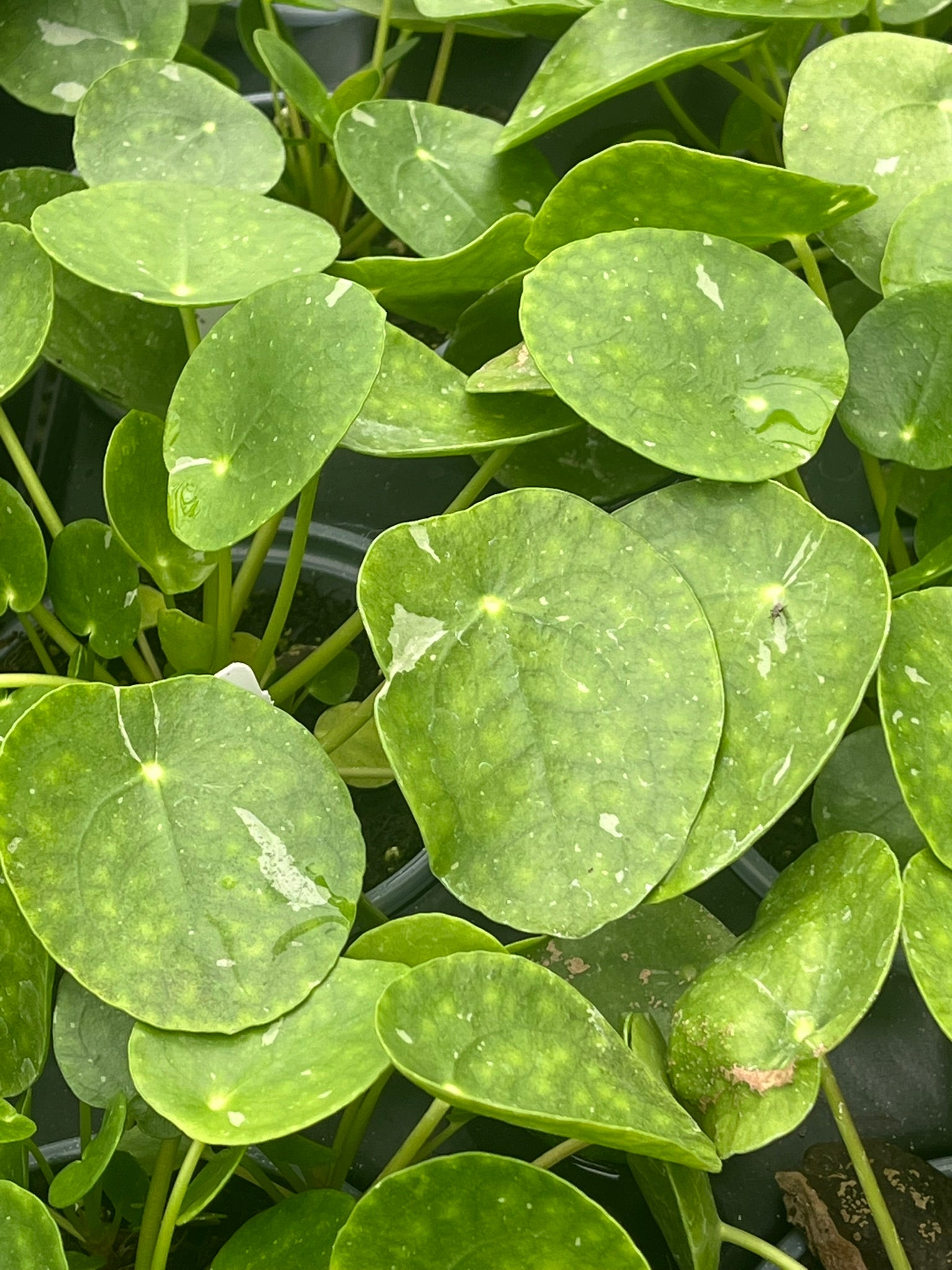
white dots on money plant

white dots on money plant Pilea peperomioides, Variegated Chinese Money Plant ‘White Splash’

Sale price$18.95 Regular price$21.06
Save 10%

Pay in installments of $5.26 with ShopPay, AfterPay and Klarna

Shipping Estimate
USA
  • USA
  • CAN

Ships within 48 hours · Estimated delivery Aug 10 - Aug 15

Promo Codes Available:

For Your Every Summer RSVP, with Code: SUMMER15

Description

white dots on money plant Pilea peperomioides, Variegated Chinese Money Plant ‘White Splash’Pilea peperomioides White Splash The Variegated Chinese Money Plant That Steals the Show Looking for a plant thats charming, easy to grow, and totally Instagram worthy? Let us introduce you to Pilea peperomioides White Splash, a rare and radiant version of the beloved Chinese Money Plant. This cultivar takes everything we love about the classic Pileathose round, pancake like leaves and upright, playful growthand adds stunning splashes of creamy white

Pilea peperomioides ‘White Splash’ – The Variegated Chinese Money Plant That Steals the Show

Looking for a plant that’s charming, easy to grow, and totally Instagram-worthy? Let us introduce you to Pilea peperomioides ‘White Splash’, a rare and radiant version of the beloved Chinese Money Plant. This cultivar takes everything we love about the classic Pilea—those round, pancake-like leaves and upright, playful growth—and adds stunning splashes of creamy white variegation to the mix.

Whether you're a seasoned houseplant collector or just dipping your toes into the world of indoor gardening, ‘White Splash’ is a perfect choice. It's cute, compact, and full of personality—but most of all, it’s easy to care for once you understand its needs.

Let’s explore what makes this plant so special, and how to keep it thriving.


Why Pilea ‘White Splash’ Is So Popular

There’s no mistaking it. The first thing you'll notice is the round, coin-shaped leaves—a symbol of prosperity and good fortune in Chinese culture. But what really sets ‘White Splash’ apart are the random streaks, dots, and patches of white on its otherwise green foliage.

No two leaves are ever the same. Some are lightly dusted, while others have bold paint-like splashes. This gives the whole plant a playful, artistic look that adds light and movement to any space.


Light Needs: Bright, Indirect Light

Variegated plants need a little more light than their all-green counterparts to maintain their unique coloring, and ‘White Splash’ is no exception.

  • Ideal location: A bright room near an east- or west-facing window.

  • Avoid direct afternoon sunlight—it can burn the leaves.

  • Too little light? You’ll see slower growth and less variegation.

  • A grow light can work great in darker spaces or during winter.

Rotate the plant every week or so to keep its shape even. It tends to lean toward the light.


Watering: Let It Dry a Bit Between Drinks

Pilea ‘White Splash’ likes a balance. It doesn’t want to sit in wet soil, but it doesn’t want to completely dry out either.

  • Water when the top 1–2 inches of soil feel dry.

  • In summer, you may water once a week. In winter, every 10–14 days may be enough.

  • Always use a pot with drainage holes. This prevents root rot.

Watch the leaves for signs:

  • Drooping? Usually a sign it’s thirsty.

  • Yellowing? That may be from overwatering.

Consistency is key. If you keep a routine, this plant will respond with steady, healthy growth.


Humidity and Temperature: Easygoing but Prefers Comfort

Pilea ‘White Splash’ is pretty adaptable to most indoor environments. But like most tropical plants, it appreciates warmth and a touch of humidity.

  • Ideal temperature: 65°F to 80°F

  • Humidity: 40%–60% is great

  • Avoid cold drafts and sudden temperature drops

  • In winter, group it with other plants or place it near a humidity tray if your air is dry

It’s hardy indoors, but happier when not exposed to dry heat or cold breezes.


Soil and Potting: Light and Well-Draining

To keep the roots healthy, use a soil mix that’s light and fast-draining. Think airy and loose—not compact.

Recommended soil mix:

  • 2 parts potting soil

  • 1 part perlite

  • 1 part coco coir or orchid bark

Use a pot with drainage holes, and consider repotting every year or two to refresh the soil and make space for roots.


Feeding: A Bit of Plant Food Helps

Pilea ‘White Splash’ doesn’t need a lot of fertilizer, but a little bit helps support its growth and maintain those beautiful splashes of white.

  • Feed with a balanced, water-soluble fertilizer (like 10-10-10 or 20-20-20) diluted to half strength.

  • Fertilize once a month during spring and summer.

  • No need to feed in fall or winter when the plant slows down.

Avoid overfeeding—this can cause salt buildup or damage the delicate roots.


Growth Habit: Upright and Playful

This plant grows in a neat, upward habit with long petioles (leaf stems) that fan out in all directions. As it matures, it often forms a central stalk or “trunk,” giving it a palm-like appearance.

If your plant gets too leggy, that’s a sign it needs more light. You can trim older leaves to keep the plant compact and encourage new, bushier growth.


Propagation: Share the Wealth

One of the most delightful parts of growing Pilea is that it makes babies! These little offshoots, called “pups,” sprout up from the soil around the mother plant.

To propagate:

  1. Wait until the pup is at least 2–3 inches tall.

  2. Gently dig around it and snip it away with a sharp, clean knife.

  3. Replant in a small pot with fresh soil.

  4. Keep lightly moist until new roots develop.

It’s incredibly satisfying—and a fun way to share your plant love with friends and family.


Common Issues and Solutions

This plant is low-maintenance, but here are a few common problems to watch for:

Brown Leaf Edges

  • Cause: Dry air or inconsistent watering

  • Fix: Increase humidity, water on schedule

Leaf Drop

  • Cause: Sudden environmental changes or underwatering

  • Fix: Find a stable spot with consistent care

Faded Variegation

  • Cause: Too little light

  • Fix: Move it to a brighter spot (just avoid harsh sun)

Pests (rare)

  • Occasionally, you might see aphids, spider mites, or fungus gnats.

  • Treat with insecticidal soap, neem oil, or a quick rinse under the faucet.


Styling Ideas: How to Show Off Your ‘White Splash’

This plant shines in just about any space. Here are some fun ways to show it off:

  • Place it in a white or ceramic pot to complement the leaf splashes

  • Use it as a centerpiece on a desk, side table, or kitchen shelf

  • Pair it with green-leaved plants for dramatic contrast

  • Group with other variegated plants to create a collector’s corner

Because it stays compact, it’s perfect for apartments, offices, or small rooms.


A Plant That Brings Joy and Style

Pilea peperomioides ‘White Splash’ isn’t just another houseplant—it’s a conversation piece, a symbol of good luck, and a plant that grows with you. It’s friendly, forgiving, and full of charm.

Whether you’re building your indoor jungle or just looking for something beautiful to brighten your day, this little pancake-leafed wonder is up for the job. It’s the kind of plant that makes people smile—and best of all, it makes you feel like a plant pro, no matter your experience level.

Are you ready to let a little “splash” of joy into your home?

Shipping Notes
  • Free Standard Shipping on $100+ Orders to the USA.
  • Except Preorder products are shipped in 48 hours.
  • Delivery to the USA:
  1. Standard Shipping : 3-10 business days
  • If time is of the essence, please consider selecting expedited delivery for faster service.
Exchange/Return Notes
  • We offer a 30-day return/exchange service after receiving.
  • Final sale items are not eligible for returns or exchanges.
  • To process your return/exchange, please contact us at [email protected]
  • Please click here for more details>>> Return & Exchange Policy
SKU: 25508151231

Discover Niche Categories That Outsell white dots on money plant

Top-Converting Item to Boost Your Average Order

4.7 ★★★★★
Based on 10 reviews
Sort
Highest Rating
Newest First
Oldest First
Product Reviews
S
Verified Purchase
Shannon Latham
Los Angeles, US
★★★★★ 5
Obsessed with these boards!!
Color: Carbonized, Size: 3-piece
I love these cutting boards! It’s one of those items you don’t even know you need until you get them. Three perfect smaller sizes that can be used for so many different serving ideas. Great quality, great price. Definitely worth the buy!!!!
WAS THIS REVIEW HELPFUL?YesReportShare
Reviewed in the United States on May 24, 2026
B
Verified Purchase
BF J.V.
Alexandria, US
★★★★★ 5
Economical and descent for price
Color: Carbonized, Size: 3-piece, Color: Carbonized, Size: 3-piece
Pleased with price, style, color, and the 3 sizes of these carbonized bamboo cutting boards. Based on the reviews had the expectation of the "smell", which is the oil used to seal the cutting boards. (I suspect linseed oil was used based on the lingering smell, as the off-gasing process is longer. It's also cheaper than Tung oil and food grade mineral oil.) I work with wood and various oil sealants so the smell is a non-issue. As there are natural ways to speed that process up and minimize the smell. In addition, I will be using fractionated coconut oil or food grade mineral oil to seal cutting boards on a regularly basis (monthly or more frequent). As we live in a dry climate, hard water, and frequent use. Appreciate the other reviews which lead to our purchase and reasonable expectation of these cutting boards.
WAS THIS REVIEW HELPFUL?YesReportShare
Reviewed in the United States on May 28, 2026
B
Verified Purchase
briana canterino
Boise, US
★★★★★ 4
Good but wood smell
Color: Carbonized, Size: 3-piece
These came with a woodsy smell but the price was great for the quality
WAS THIS REVIEW HELPFUL?YesReportShare
Reviewed in the United States on May 8, 2026
M
Verified Purchase
Mike
Carnegie, US
★★★★★ 5
Fantastic book! Great introduction to some of the current misunderstandings about the Bible.
Format: Kindle
As a believer, I have wrestled with the issue of why I trust the Bible to be God’s defining word. After all, simply saying that I have faith in God and Jesus and therefore the Bible must be true creates an ever-tightening inward spiral based on nothing more than a belief that it’s true. Probably not the best standard to be waiving. Why I Trust The Bible by Dr. William Mounce answers not only this question, but also whether or not Jesus was real and why the different Bible translations are so different. We live in an age where we are bombarded with half-truths and deceptions by purported experts whose only requirement is to have a YouTube page. The Bible is no more immune from these barrages of untested and ill-researched ideas than is science or politics, but the stakes are higher. While many refute the authenticity and truthfulness of the Bible, one name stands out among the rest: Bart Ehrman. He seems to be very good at nuancing just the right word to cause a reaction in support of his unfounded claims. Fortunately Dr. Mounce is superb at refuting the often-ridiculous claims as well as correcting minor misunderstandings. What I especially liked about Why I Trust The Bible was the way Dr. Mounce not only disproved the inaccuracies touted by Ehrman, but revealed the underlying false premises and sensationalist comments that Ehrman uses. Dr. Mounce’s corrective approach was very helpful. Why I Trust The Bible easily counters the common claims and misrepresentations against the Bible’s inspiration. If you want to understand the background of how and why our Bible is accurate, real, truthful, and God’s inspired word, this resource is for you. Dr. Mounce systematically addresses key issues originating from contradictory arguments presented by unbelievers while at the same time answers questions many believers have about their Bible. I especially appreciated the way Dr. Mounce included enough material for each section so that I was able to understand the issue without feeling overburdened. It is an enjoyable read: comprehensive and coherent. This book opens by evaluating the reality of Jesus, then moves to dismantle common criticisms against the Bible, examines the processes and decisions necessary when translating from the original languages into English, and finishes by addressing some of the perceived claims against the nature of God. While these issues tend to be technical, Dr. Mounce expertly navigates the waters to keep the reader engaged as he addresses the Bible’s history, fundamentals of textual criticism, and interpretative and translation principles. Whether you begin this book with a blank slate in these areas or already understand these issues, the book will fill the gaps. Too often people confuse their faith in the Bible with how faith (in any proposition) reinforces beliefs and closes one’s mind to other possibilities. Much of what we believe is actually an outgrowth from our paradigms. Dr. Mounce points out that we all have faith-beliefs. For example, if I believe God is able to alter the laws of nature to perform a miracle, then that is my faith-belief. But if I believe there is no God or that miracles cannot happen, then that is also my faith belief. We each assess everything by our paradigms. Although we live in a world that seeks to accept every idea as a relative truth, only one of these propositions can be correct; in the case of miracles, they can either happen or they cannot. One thing that stood out was the tendency for the non-believers to try to make the believer prove them wrong. Dr. Mounce flips the script and places the onus on the non-believer to prove that miracles can happen. He can do that because through his systematic approach to answer the critical questions about the Bible, he shows that it is not a work of fiction and that the events in the Bible were not late additions or were not the result of conspiracies perpetrated by a cabal of nefarious theologians of the past. His book documents the veracity and reliability of the Bible that we now have, and while we may not have the first-edition autographed copy, we are confident we have what the original authors wrote. There are some who attempt to use the faith-belief premise as an argument against the truthfulness and accuracy or our Bible, but that is the wrong approach because it does not accurately represent the stalemate that exists between believers and non-believers. The problem is much deeper and is more centered on the belief that just because we don’t have the original documents, and that because there are too many discrepancies in the Bible itself, that it is untrustworthy. These are unfounded or inaccurate statements which are not backed by any facts, but are simply distortions, untested by any historic or scientific means. Why I Trust The Bible breaks through the unfounded arguments against authenticity by providing the documentation and proof that it is real, that what it says happened actually did happen, and that those who so diligently protected the text for us through the many generations did so with the utmost respect for God and his word. Yes there are what appear on the surface to be discrepancies. Yes there are variants between the 5,600 plus manuscripts (less than 1/10 of 1 percent even warrant further research). But Dr. Mounce shows how it is not the number of textual differences that matter, but whether or not the differences are significant in any way that they alter the basic understanding of God, Jesus, or salvation. He guides the reader in understanding that although there seems to be a lot of discrepancies, only a small number are viable; they do not alter any truth in the Bible. He proves that, “there is not a single viable variant that calls into question any point of biblical theology, major or minor.” This book is an excellent choice for anyone wanting to understand how we got our Bible, why we can trust it to be true, that it is the faithful word of God, and how Bible translators struggle with real issues relevant to helping us understand what God said. I have many of the resources listed in the footnotes of this book and have studied these issues in the past, but as in most books I read, I discover new insights and information. This book is not just for the person beginning this study, but is applicable for even those who have studied these concepts. If you don’t have the foundation necessary to believe that the Bible we now have “is the very words of God” or want to learn more about the processes involved in interpreting words and phrases and the various theories of Bible translation, then this is the book for you. Mike F., MDiv, Theology
WAS THIS REVIEW HELPFUL?YesReportShare
Reviewed in the United States on October 7, 2021
B
Verified Purchase
Bryan Catherman
Birmingham, US
★★★★★ 5
It's Great, but Maybe a Little More on the Topic than Some Might be Ready For
Format: Paperback
Dr. William Mounce's new book, "Why I Trust the Bible: Answers to Real Questions and Doubts People Have About the Bible," is a bit different than his typical work. This book is not specific to learning biblical Greek. Instead, it's a series of arguments for the reliability of the Bible with a much broader audience in mind. Mounce addresses this historicity of Jesus, contradictions in the Bible, how we have the biblical canon, issues of textual criticism, aspect of translation, and how the Old Testament supports our trust in the Bible more than you might think. "Why I Trust the Bible" is an accessible introduction to a selection of apologetic matters but goes deeper and beyond an introduction. For one seeking to explore these topics--for the first time or deeper study--Mounce does an outstanding job with each of these arguments. Each chapter (corresponding to a question) is well-argued and contains an excellent bibliography of references. Even without any theological knowledge, the book is easy to read, and it stands upon excellent theological study and solid academic work. While I highly recommend "Why I Trust the Bible," I found the scope of the "questions" and "doubts" limited. As a pastor, there are many questions about the historical Jesus, contradictions, how we got the revelation of God, and issues of translations. Sure. But they often come as more of an attempt to reject the Bible. Mounce's answers are excellent but address the reality of the situation rather than the questioner's heart. It's not something I'd expect to find someone with doubts and totally new to the Bible would pick up this book. Therefore, this book is better suited for the person who handles the questions and doubts of others. It provides the foundation and information to the pastor, Sunday school, teacher, friend, or family member in doubt. "Why I Trust the Bible" is also a helpful book for the seminary student, budding apologists, and preachers of God's Word. The chapters on textual criticism supply a fantastic framework (complete with charts and history). As we would expect from Bill Mounce, these chapters are a resource every pastor should have on his shelf, ready for when the tough challenges come. I found the book good and helpful and I have a Doctorate of Ministry and more than a decade of pastoral ministry under my belt. My twelve-year-old son is reading the book and also finding it in formative and helpful (although he also thumbs through my commentaries). My point: there's a little for everyone.
WAS THIS REVIEW HELPFUL?YesReportShare
Reviewed in the United States on September 15, 2021

recommand products