SKU: 26097309292
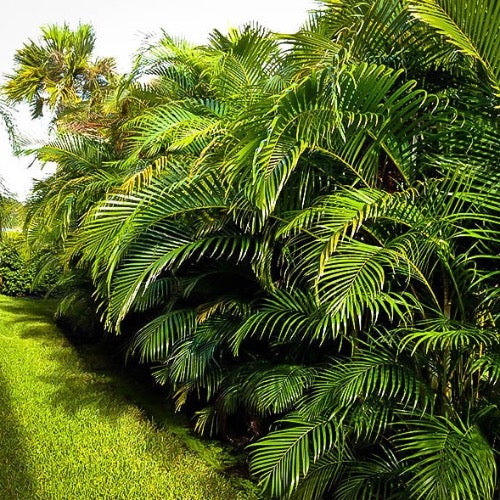
wild areca palm

wild areca palm Areca Palm

Sale price$21.90 Regular price$24.33
Save 10%

Pay in installments of $6.08 with ShopPay, AfterPay and Klarna

Shipping Estimate
USA
  • USA
  • CAN

Ships within 48 hours · Estimated delivery Sep 25 - Sep 30

Promo Codes Available:

For Your Every Summer RSVP, with Code: SUMMER15

Description

wild areca palm Areca PalmAreca Palm The Areca palm trees are a favorite palm for privacy, screening and garden backdrops in many Cape Coral landscaping projects. We recommend using the Butterfly Palm Trees as a living fence to provide privacy from neighbors, or block the view from the street into your home. Once they reach a taller height, with a little trimming they can be thinned out to display their bamboo looking trunks. Either left completely full and lush, or a little

Areca Palm

The Areca palm trees are a favorite palm for privacy, screening and garden backdrops in many Cape Coral landscaping projects. We recommend using the Butterfly Palm Trees as a living fence to provide privacy from neighbors, or block the view from the street into your home. 

Once they reach a taller height, with a little trimming they can be thinned out to display their bamboo-looking trunks. Either left completely full and lush, or a little manicured, the Areca palm tree is a beautiful addition to a tropical landscape.

  • These palms are a great choice for natural privacy screening.
  • Not just another pretty face, the dramatic areca palm can double duty as a spectacular tropical privacy screen.
  • It is sometimes called the "Butterfly Palm"-because they are full and dense.
  • Areca palms are slow to moderate growers for sun and shade and can reach heights of 15 to 20 feet. 
  • Zone 10 is best, though winter in warmers areas or Zone 9B that border 10A, you can use an Areca in a protected spot. You may see leaf tip burn after most winters, even in Zone 10. Areca are clustering palms.
WE ONLY SHIP TO LOCAL FL COUNTIES (Hillsborough, Pinellas, Manatee and Pasco Counties ONLY)

    More Details


    Advantages:

    Easy To Grow

    Low Maintenance

    Good For Containers

      Grows Best:

        Landscape

        House Plant

        House Plant

      Ideal position:

      Full Sun

      6 + Hours best

      Growth Outlook:

      Height : 10-30

      Wide: 8 - 10'

      Growth Rate: Fast

      Plant Spacing: 12' - 18'

      Pet Friendly - yes

      Toxicity: Safe for pets

      Caring For:

      Position Water Temps Food


      Caring for an Areca Palm tree involves several important steps to ensure its health and vitality:

      1. Sunlight: Areca Palms thrive in bright, indirect sunlight. Place your palm near a window with filtered light or provide it with dappled shade outdoors. Avoid exposing it to direct sunlight, as it can scorch the leaves.

      2. Watering: Keep the soil consistently moist but not waterlogged. Water your Areca Palm thoroughly when the top inch of soil feels dry to the touch. Ensure proper drainage to prevent root rot. During winter, reduce watering frequency slightly as the plant's growth slows down.

      3. Humidity: Areca Palms prefer high humidity levels. Mist the leaves regularly with water or place a humidifier nearby to create a humid environment. This helps prevent the tips of the leaves from turning brown.

      4. Fertilization: Feed your Areca Palm with a balanced, water-soluble fertilizer specifically formulated for indoor plants. Apply the fertilizer every two to three months during the growing season (spring and summer). Follow the package instructions for proper dilution and application.

      5. Pruning: Remove any yellow or brown fronds as they age or become damaged. Trim off any dead or brown leaf tips to maintain the plant's appearance. Avoid excessive pruning, as it can stress the palm.

      6. Pests: Monitor your Areca Palm for common pests like spider mites and mealybugs. If you notice any infestations, treat them promptly with an appropriate insecticidal soap or neem oil spray.

      7. Repotting: As the Areca Palm grows, it may require repotting every two to three years. Choose a pot that is one size larger and use well-draining soil. Repotting in spring allows the palm to establish itself before the active growing season.

      By following these care guidelines, you can ensure that your Areca Palm remains healthy, vibrant, and a beautiful addition to your indoor or outdoor space. Regular attention to watering, light, and humidity will help your palm thrive for years to come.

      Shipping Notes
      • Free Standard Shipping on $100+ Orders to the USA.
      • Except Preorder products are shipped in 48 hours.
      • Delivery to the USA:
      1. Standard Shipping : 3-10 business days
      • If time is of the essence, please consider selecting expedited delivery for faster service.
      Exchange/Return Notes
      • We offer a 30-day return/exchange service after receiving.
      • Final sale items are not eligible for returns or exchanges.
      • To process your return/exchange, please contact us at [email protected]
      • Please click here for more details>>> Return & Exchange Policy
      SKU: 26097309292

      Discover Niche Categories That Outsell wild areca palm

      Top-Converting Item to Boost Your Average Order

      4.4 ★★★★★
      Based on 20 reviews
      Sort
      Highest Rating
      Newest First
      Oldest First
      Product Reviews
      J
      Verified Purchase
      Jon Parshall
      Grantham, US
      ★★★★★ 5
      Groundbreaking Work!
      Format: Hardcover
      The first thing to note here is the author is trilingual. He's Polish by birth, writing very credibly in his second language (English), and using his Nihongo to translate Japanese source materials into English for the first time. Wow! As a historian myself, I only wish I had those kind of language skills. The second thing I'll say is that I learned a lot from the book. I've never seen many of the details the author had dug up. He's doing the same sort of thing that Tony Tully and I did in Shattered Sword--using the Japanese air group records, and Senshi Sosho, as well as more modern sources from Japanese historians like Mori Shiro--to paint a much richer picture of the Japanese side of the battle. And in some ways he's doing it better, because his language skills are so formidable that he was able to look at more Japanese source material than we were. Bravo Zulu. An example: for years American historians have portrayed the placement of Shoho in front of the Japanese invasion force as either 1) a bait force to lure the Americans away from Japan's main carrier force, or 2) at the very least an indication of extreme Japanese hubris, by sticking a lone light carrier's neck out waaaay too far. It turns out that there were a number of Japanese staff officers that were appalled at the dangers Shoho was being exposed to, and lobbied for her inclusion in the main carrier force instead (which would have made a lot more sense, frankly, and was a detail I hadn't known before.) But those officers were overridden in the name of keeping at least some air cover near the invasion force. What this demonstrates is that even here, at the very beginning of the war, the Japanese were already over their skis in terms of the fragility of their air power. All in all, Piegzik's book is a very welcome contribution to the English literature on the Pacific War. He has also written what is (from all accounts) a fine series on the Indian Ocean raid that I need to pick up as well. I am really looking forward to his continued publications in the field.
      WAS THIS REVIEW HELPFUL?YesReportShare
      Reviewed in the United States on April 25, 2026
      C
      Verified Purchase
      Chorzepa
      Belleville, US
      ★★★★★ 5
      An excellent book
      Format: Hardcover
      An excellent book, based on Japanese documents—offering, for the first time, such a detailed account of the first aircraft carrier battle, presented from the Japanese perspective. It covers every Japanese aircraft involved, as well as the fates of their naval aircrews. A must-read for anyone interested in World War II in the Pacific.
      WAS THIS REVIEW HELPFUL?YesReportShare
      Reviewed in the United States on May 8, 2026
      J
      Verified Purchase
      james
      Carnegie, US
      ★★★★★ 5
      Excellent book.
      Format: Audiobook
      History of WWII. Great research.
      WAS THIS REVIEW HELPFUL?YesReportShare
      Reviewed in the United States on May 21, 2026
      L
      Verified Purchase
      LynneC
      Draper, US
      ★★★★★ 4
      Good Book, not Parshall though
      Format: Kindle
      The author uses more Japanese terms than any similar book that I've read but uses western naming conventions for Japanese people. I don't quite know what to think. Good diagrams.
      WAS THIS REVIEW HELPFUL?YesReportShare
      Reviewed in the United States on December 12, 2025
      R
      Verified Purchase
      Robert K. B
      Draper, US
      ★★★★★ 5
      Japanese mindset Coral Sea
      Format: Kindle
      This book gave me fresh insights to the Battle of the Coral Sea. I feel like I have an idea as to what was going through the Japanese minds. Well written. He make it easy to follow each step of the battle.
      WAS THIS REVIEW HELPFUL?YesReportShare
      Reviewed in the United States on April 19, 2026

      recommand products