SKU: 2703069768
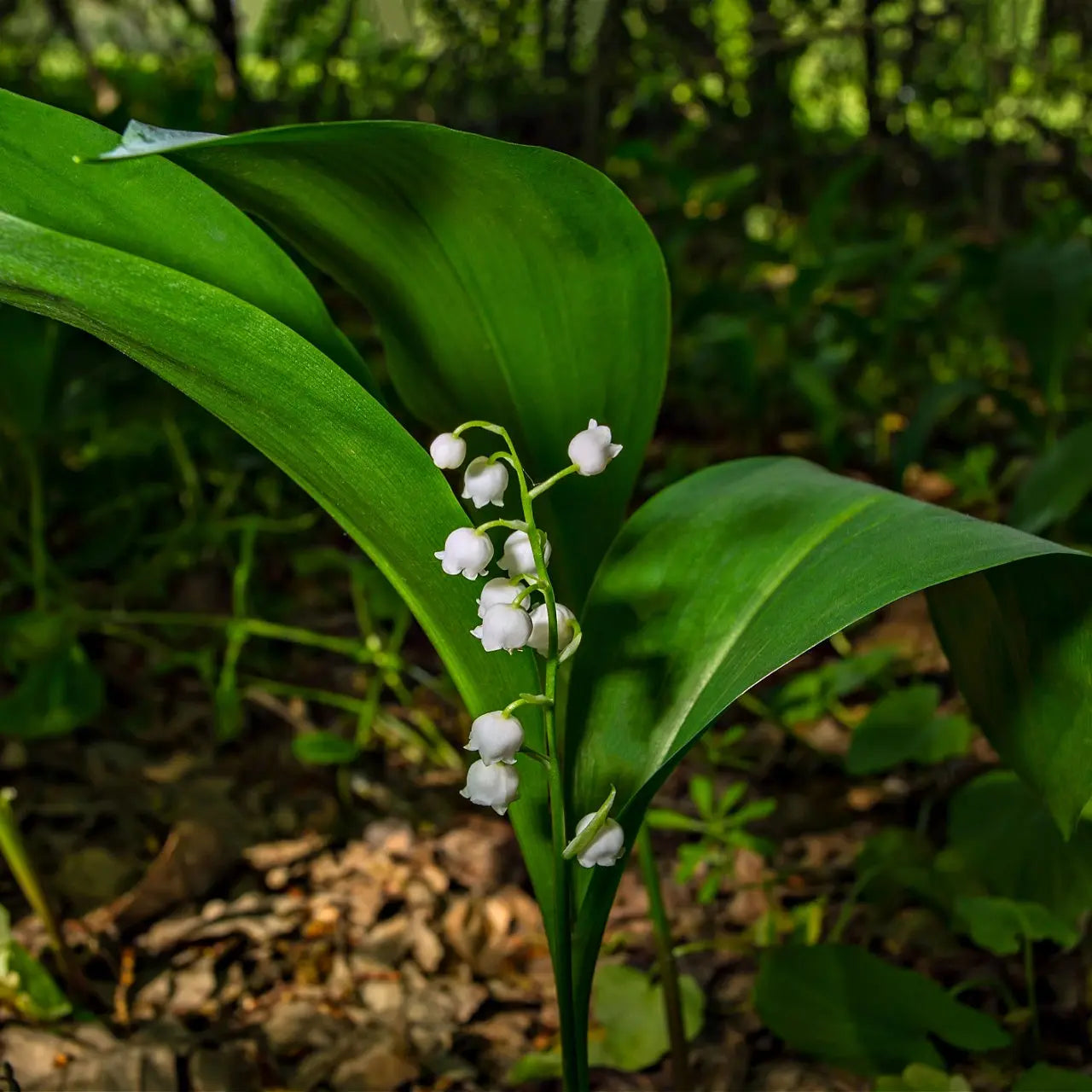
lily in the valley flower

lily in the valley flower Lily Of The Valley Plants For Sale Wholesale $2.49 – Tennessee Wholesale Nursery

Sale price$22.62 Regular price$25.13
Save 10%

Pay in installments of $6.28 with ShopPay, AfterPay and Klarna

Shipping Estimate
USA
  • USA
  • CAN

Ships within 48 hours · Estimated delivery Aug 30 - Sep 4

Promo Codes Available:

For Your Every Summer RSVP, with Code: SUMMER15

Description

lily in the valley flower Lily Of The Valley Plants For Sale Wholesale $2.49 – Tennessee Wholesale NurseryBuy Lily Of The Valley Plants Online Wholesale Lily of the Valley plants are a perennial native to North American conifer forested regions. More specifically, Canada, British Columbia, and mainly northern regions of the United States have also been discovered along the Appalachian Mountain chain as far south as Georgia. Lily of the valley flourishes under deciduous and evergreen trees alike. It is also known as Convallaria majalis. This type

Buy Lily Of The Valley Plants Online Wholesale

Lily of the Valley plants are a perennial native to North American conifer forested regions. More specifically, Canada, British Columbia, and mainly northern regions of the United States have also been discovered along the Appalachian Mountain chain as far south as Georgia.

 Lily of the valley flourishes under deciduous and evergreen trees alike.It is also known as Convallaria majalis. This type originates in Europe and Asia and has dark green leaves, small bell-shaped flowers, and a sweet scent. The stems are formed in the summer and grown throughout the spring, 15-30 cm tall, with leaves as long as 10-25 cm long. It has white flowers that can sometimes be pink and bell-shaped.

Lily of the Valley Plants Are Believed To Be Only Native To The U.S.

These are not found in the Mediterranean or Atlantic areas. It is debatable when it began in the Eastern United States. It is a partial shade type that prefers warm climates and summers. It can live in the mountains to a maximum altitude and is considered an herbaceous perennial.

Growing Conditions

  • Humus-rich, sandy, or silty soil

  • Acidic to moderately alkaline pH

  • Mature plants reach up to 23cm tall and spread 30cm wide

  • Can grow beneath roses, shrubs, or other garden plants

Symbolism and History

Lily Of The Valley can live in a cold climate for many years. In the past, it was the primary source of green pigments. In wedding ceremonies, it symbolizes modesty, chastity, and purity. It blooms in May and can also be seen as the return of happiness during these times.

It Produces Berries That Birds Love

It is a small berry producer that attracts birds and rodents. Each one produces one to three leaves, which are oval in shape, stalkless, and notched at the base, contouring around the stalk in a semi-circular fashion.

Flower Characteristics

From late spring to summer, it produces clusters of star-shaped flowers, white sprouting above the leaves at the plant's apex. The flowers, of which there are approximately twelve to twenty per cluster, can be further described as having four tepals (A term used for the outer part of the flower when sepals and petals cannot be differentiated.) Four stamens are also present.

The Flowers’ Fruit Holds 1 or 2 Seeds

The fruit itself is a small red berry which, when discovered in late spring to early summer, is mottled red and, when ripened by mid to late summer, is a darker red and, by some reports, more translucent. The berries are a source for various birds and rodents whose habitat is the forested regions where these grow.
Most found in one location are known as vegetative clones, meaning they multiply via budding instead of through a seed. Types with a single leaf have no fruiting structure to produce fruit and, therefore, seeds.

This Particular Has Many Look-A-Likes

The Lily of the Valley Plants has many monikers. It is also known as the Canadian Mayflower and the Canadian May Lily. Ironically, it is known as the False Lily Of The Valley and the more elegant label, the Two Leaved Solomonseal.

Let’s be honest, everyone knows Lily Of The Valley. It's that extremely fragrant perennial—the one with the small, bell-shaped white flowers. What people don't always realize is that it actually belongs to the asparagus family—odd, right? It's basically the go-to plant for any shady border or woodland area because it’s low-growing and thrives in cool, well-drained soil. If you need lush green foliage and an early spring scent, Lily Of The Valley is a reliable choice.

Shipping Notes
  • Free Standard Shipping on $100+ Orders to the USA.
  • Except Preorder products are shipped in 48 hours.
  • Delivery to the USA:
  1. Standard Shipping : 3-10 business days
  • If time is of the essence, please consider selecting expedited delivery for faster service.
Exchange/Return Notes
  • We offer a 30-day return/exchange service after receiving.
  • Final sale items are not eligible for returns or exchanges.
  • To process your return/exchange, please contact us at [email protected]
  • Please click here for more details>>> Return & Exchange Policy
SKU: 2703069768

Discover Niche Categories That Outsell lily in the valley flower

Top-Converting Item to Boost Your Average Order

4.5 ★★★★★
Based on 14 reviews
Sort
Highest Rating
Newest First
Oldest First
Product Reviews
A
Verified Purchase
Amazon Customer
Lexington, US
★★★★★ 5
Caveats for the professional tracker
Format: Paperback, Format: Paperback
This is a most excellent resource, arguably the best single tracking book that exists (i would argue so, if i had to pick one! And i recommend this book often). However, if you are in a professional field where this legally matters (EIS or ESA decisions on wolverine/fisher/lynx, etc.), take heed: the authors’ methods of measuring tracks are confusing (i.e. - where is the line between substrate/mammal family to determine when claws or ‘posterior’ pads are or are not used in measuring tracks? ) Also, the claim that “an individual animal can show incredible variation in track size” (p.57) is very misleading… Foot size of an individual animal from birth to adult will obviously change, but will not change in a day for the same-aged individual animal regardless of whether it walks in mud or atop rock. The animal’s foot does not change in size, but its track might appear to. This perceived “change” could be easily avoided by using minimum outline measurements (which are not discussed in this book, but can be found in the work by J. Halfpenny and others). I understand their reasons, but please do not refer to this book for legally defensible measuring techniques of rare species!!!! Also please disregard the negative reviewer who said “it’s a very Mythological Approach to how animals move and walk (jsopel),”- they clearly don’t know what that word means… All in all a well-researched and fantastic book that comes from ample and legitimate experience. A great book and happy tracking!
WAS THIS REVIEW HELPFUL?YesReportShare
Reviewed in the United States on August 15, 2021
N
Verified Purchase
Naturelover
Port Orchard, US
★★★★★ 5
A must have for wildlife lovers
Format: Paperback
Wow! What an excellent and thorough compilation of scat and tracks. Nice reference for when you take pics and bring the image back to the book for comparison. Also, great information about tracking.
WAS THIS REVIEW HELPFUL?YesReportShare
Reviewed in the United States on June 10, 2025
A
Verified Purchase
Allison
Boise, US
★★★★★ 4
Good but index needs improvement
Format: Paperback
This is a good, comprehensive guide to tracks and sign. However, there is no index of where to find each family, so in order to find a species you have to flip through the entire book looking for the right page. This makes it annoying to use if you are trying to look up information on a particular species or family.
WAS THIS REVIEW HELPFUL?YesReportShare
Reviewed in the United States on April 2, 2026
E
Verified Purchase
ed calvin
Whiting, US
★★★★★ 5
This is a very useful field manual for those interested in detailed traking methodology.
Format: Paperback
I spent many years as interpreter and ranger for the Colorado State Park System, now called CPW—Colorado Parks and Wildlife. We were annually tasked with surveying a given species' presence, density, and range in the park system and surrounding areas. Detailed field manuals were critical to the accuracy of our work, and HOW I WISH I HAD THIS BOOK DURING THAT PART OF MY CAREER. There are few other books I've come across providing detailed, yet very accessible information on how trail sign reflects animal behavior across different conditions, landscapes, and seasons (both weather seasons and mating seasons). One particular aspect of this book I found significantly intriguing was the section on predation—how does a mountain lion take down a mule deer vs. how wolves bring one down. The locations on a prey animal where a certain predator is most likely to attack, showing illustrations, is a remarkable piece of work, and there authors are clearly masters of interpreting tracks and sign! If you want learn about how mammals behave in their native environment, adding this book to your field manual packet will greatly expand your horizons! Busy it, read it, and get outside! Thank you Mr. Elbroch and Mr. McFarland for adding to the wildlife canon!
WAS THIS REVIEW HELPFUL?YesReportShare
Reviewed in the United States on August 5, 2023
N
Verified Purchase
naughtyzut
Charlottesville, US
★★★★★ 5
Great book and very useful tool to have
Format: Paperback
I had the older edition and lived it, but someone at my last job *borrowed* it and I never saw it again. This edition sends even better than the last, and I have that one five stars. Great pictures and the number of species covered means it's good in at least all states I've worked in.
WAS THIS REVIEW HELPFUL?YesReportShare
Reviewed in the United States on November 16, 2025

recommand products