Pay in installments of $5.64 with
 ,
,
 and
and

Shipping Estimate
USA
- USA
- CAN
- USA
- CAN
Ships within 48 hours · Estimated delivery Sep 21 - Sep 26
 Promo Codes Available:
For Your Every Summer RSVP, with Code: SUMMER15
Description
aloe vera cam plant Aloidendron dichotomum – Quiver Tree with Forking BranchesAloidendron dichotomum (formerly Aloe dichotoma) Aloidendron dichotomum is a drought adapted tree aloe from Namibia to the Northern Cape region of South Africa. It develops a stout trunk, forked branching and grey green rosettes, with pale flaking bark becoming more apparent as the plant matures. Young plants begin as rosettes, then gradually move toward the forked tree structure that gives the species its name. In a pot, that slow transition needs
Aloidendron dichotomum (formerly Aloe dichotoma)
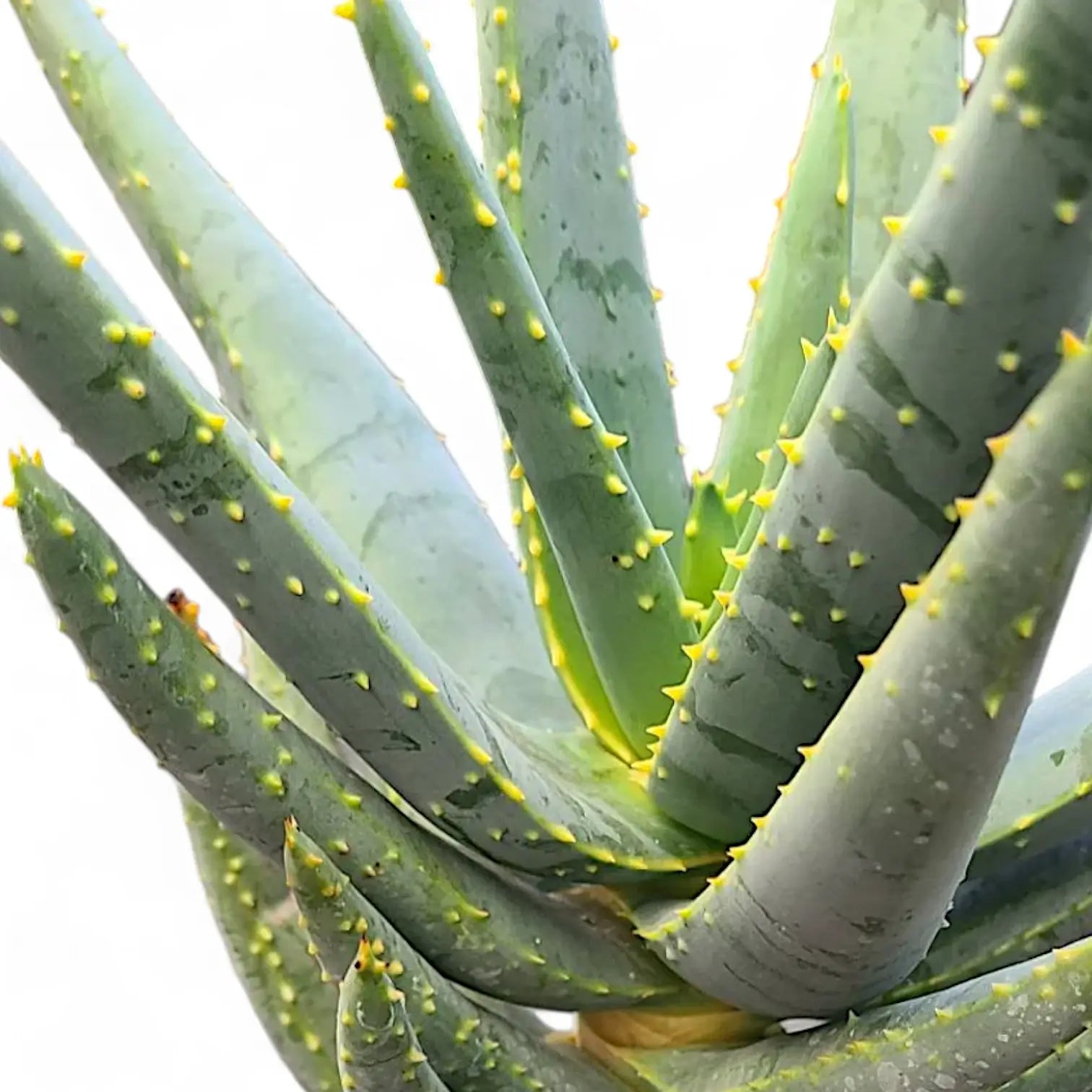
Aloidendron dichotomum is a drought-adapted tree aloe from Namibia to the Northern Cape region of South Africa. It develops a stout trunk, forked branching and grey-green rosettes, with pale flaking bark becoming more apparent as the plant matures.
Young plants begin as rosettes, then gradually move toward the forked tree structure that gives the species its name. In a pot, that slow transition needs very bright light, mineral drainage and a stable container that can hold the plant as the stem becomes heavier.
Forked tree aloe traits
- Plant type: Accepted tree aloe species from dry rocky habitats.
- Range: Native from west-central and southern Namibia to the Northern Cape region.
- Growth habit: A stout trunk develops forked branches with age.
- Bark: Pale flaking bark becomes part of the mature tree structure.
- Leaves: Grey-green rosettes sit at the ends of branches and carry small marginal teeth.
- Flowers: Mature plants can produce bright yellow tubular flowers.
Trunk, bark and dry rocky habitat
The juvenile plant grows as a rosette before the trunk and branching structure become obvious. As it ages, the forked stems carry rounded crowns of grey-green leaves, while the trunk base gains weight and needs steady pot support.
The species comes from very dry, rocky environments in west-central and southern Namibia and the Northern Cape. Its thick succulent tissues, forked trunk and dryland root behaviour suit sharp drainage, bright light and careful watering in cool periods.
Care for Aloidendron dichotomum
- Light: Very bright light keeps the rosette compact and the trunk growth firmer.
- Substrate: Use a gritty mineral mix that dries quickly around the roots and lower stem.
- Watering: Water deeply during active growth, then let the pot dry fully before watering again.
- Cool periods: Reduce watering in cooler months so the root zone stays dry for longer.
- Temperature: Keep the plant around warm indoor temperatures, with roughly 10 °C as a sensible lower limit.
- Pot stability: A heavy container helps balance the trunk as the plant gains height.
- Repotting: Repot carefully, as slow tree aloe roots can take time to settle after disturbance.
- Acclimation: Increase direct sun gradually to reduce scorch on exposed grey-green leaves.
Stress signals on Aloidendron dichotomum
- Cold wet roots: Root decline is likely when low temperatures combine with wet substrate.
- Top-heavy lean: A leaning stem usually needs a heavier pot, deeper planting stability or more even light.
- Stem rot: Soft tissue at the base points to prolonged moisture around the lower trunk.
- Slow recovery: Paused growth after repotting can happen while the roots re-establish.
- Leaf scorch: Dry pale patches can follow a sudden move into stronger sun.
Safety for Aloidendron dichotomum
Aloidendron dichotomum has toothed rosettes and a top-heavy structure as it matures. Move larger potted plants by the container rather than by the trunk or leaves.
Botanical background for Aloidendron dichotomum
Aloidendron dichotomum is the accepted name for the species long known in cultivation as Aloe dichotoma. The combination in Aloidendron was published by Klopper and Gideon F. Smith, and the epithet dichotomum refers to the forked branching pattern of mature plants.
As the trunk gains height, Aloidendron dichotomum carries forked branches, pale bark and grey-green rosettes on a heavier upper structure.
Shipping Notes
- Free Standard Shipping on $100+ Orders to the USA.
- Except Preorder products are shipped in 48 hours.
- Delivery to the USA:
- Standard Shipping : 3-10 business days
- If time is of the essence, please consider selecting expedited delivery for faster service.
Exchange/Return Notes
- We offer a 30-day return/exchange service after receiving.
- Final sale items are not eligible for returns or exchanges.
- To process your return/exchange, please contact us at [email protected]
- Please click here for more details>>> Return & Exchange Policy