SKU: 30976599647
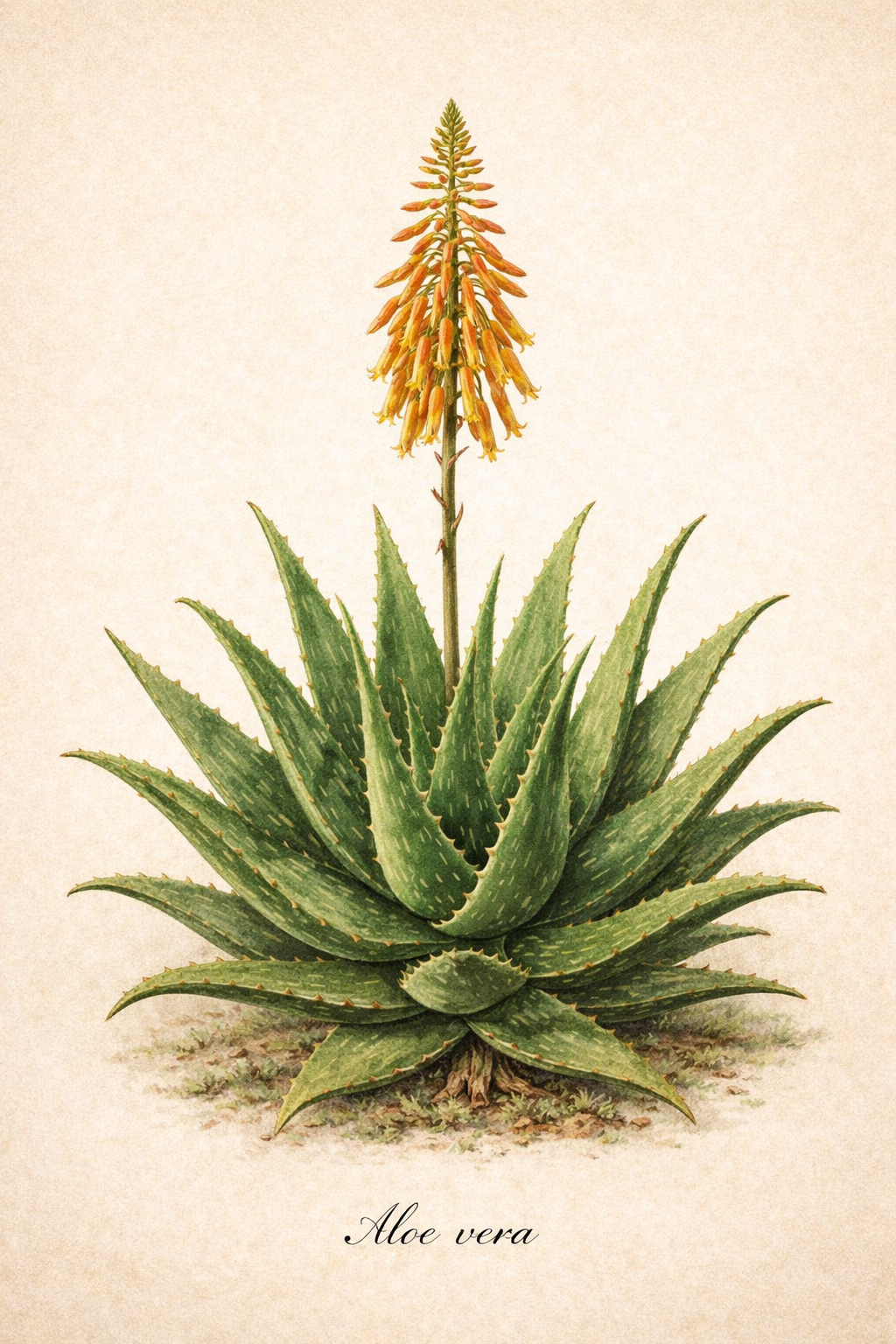
aloe vera plant in flower

aloe vera plant in flower Aloe Vera – Texas Tree Farms

Sale price$18.96 Regular price$21.07
Save 10%

Pay in installments of $5.27 with ShopPay, AfterPay and Klarna

Shipping Estimate
USA
  • USA
  • CAN

Ships within 48 hours · Estimated delivery Aug 1 - Aug 6

Promo Codes Available:

For Your Every Summer RSVP, with Code: SUMMER15

Description

aloe vera plant in flower Aloe Vera – Texas Tree FarmsAloe vera, also known as Aloe barbadensis, is a perennial succulent plant belonging to the Asphodelaceae family and native to the Arabian Peninsula. It has thick, fleshy, lance shaped leaves that grow in a rosette pattern from a central stem. The leaves are typically green to gray green in color and have serrated edges with small white teeth. Mature plants may produce tall flower spikes adorned with tubular yellow or orange flowers. Aloe vera is

Aloe vera, also known as Aloe barbadensis, is a perennial succulent plant belonging to the Asphodelaceae family and native to the Arabian Peninsula. It has thick, fleshy, lance-shaped leaves that grow in a rosette pattern from a central stem. The leaves are typically green to gray-green in color and have serrated edges with small white teeth. Mature plants may produce tall flower spikes adorned with tubular yellow or orange flowers. Aloe vera is primarily grown for its foliage and gel-filled leaves which are famous for their cooling effect on burns and skin irritations.

Scientific Name

Aloe vera (syn. Aloe barbadensis

Foliage: Evergreen

Leaves: The thick, lance-shaped leaves are gray-green (sometimes spotted with white when young). The edges are lined with small, soft white teeth.

Flowers: Mature plants (usually 4+ years old) produce a tall spike in summer topped with tubular yellow flowers. Aloe vera typically blooms in the late winter to early summer, with the peak flowering period usually occurring in spring (March through May).

Lifespan: Polycarpic Perennial  Unlike the 'Agave Whale's Tongue', which bloom once and die, a mature Aloe vera can bloom every year once it reaches reproductive maturity. The average lifespan for an indoor potted Aloe vera is 10 to 20 years and the average lifespan for an outdoor lifespan is 20 to 100 years. Even if the original "mother" plant eventually dies after 15 or 20 years, she will have produced dozens of genetically identical clones around her base. This allows the cluster to survive almost indefinitely if left undisturbed.

Mature Height

1-2 feet (flower stalks can reach 3 feet)

Mature Width (Spread)

1-2 feet (clumps can spread wider via "pups")

Growth Rate

Slow to Moderate

USDA Zone

Zone 8-11 (Best outdoors in 9-11; needs protection below 25 degrees F)


PLANT CARE & CHARACTERISTICS

Light Requirements: Bright Indirect Light to Full Sun. Indoors, it needs a very sunny window. Outdoors, it prefers full sun but appreciates some light afternoon shade in blistering desert climates to prevent the leaves from turning orange or "sunburnt." When grown indoors, place Aloe vera near a south- or west-facing window where it can receive plenty of sunlight throughout the day.

Water Requirements: Low. Aloe stores water in its fleshy leaves. The "soak and dry" method is best: water deeply, then allow the soil to dry out completely (at least the top 2 inches) before watering again. Over-watering is the most common cause of death, root rot. 

Drought Resistance: Exceptional. It is highly adapted to arid conditions and can survive long periods without supplemental water, though it looks "plumper" and healthier with occasional deep watering.

Soil Type: Gritty and Well-Drained. It requires a sandy or rocky soil mix. It will not tolerate "wet feet." In pots, a cactus or succulent potting mix is essential. A well-draining pot is important to prevent water-logging and root rot.

Deer Resistance: High. Deer generally find the thick, bitter sap and the prickly margins of the leaves unpalatable.

Pest/Disease Resistance: Moderate to High. If kept in the correct environment (low humidity, well-draining soil, and high light), Aloe vera rarely suffers from disease. For common pests like mealybugs, a cotton swab dipped in 70% isopropyl alcohol can be used to dab them away. For fungal spots, improving air circulation and keeping the leaves dry is usually enough to stop the spread.

Issue Description & Symptoms
Aphids / Mealybugs Small, sap-sucking insects that hide in the crevices of the leaves. You may see "honeydew" (sticky residue) or white, cottony clusters.
Aloe Mite Microscopic mites that cause "Aloe Gall"—an ugly, cancerous-looking growth or "wart" on the leaves or flower stalks.
Snout Beetle A more serious pest that bores into the center of the plant to lay eggs; the larvae then eat the plant from the inside out.
Root Rot The most common killer of Aloe. Caused by overwatering or poor drainage. Leaves will turn mushy, brown, or translucent at the base.
Fungal Leaf Spot Appears as small, dark brown or black spots on the leaves, often triggered by water sitting on the foliage in cool temperatures.
Aloe Rust A fungal infection that creates permanent black spots. It isn’t usually fatal but can ruin the plant's aesthetic.


Pollination: Aloe vera is generally self-incompatible, meaning a single plant cannot pollinate itself. To produce viable seeds, you typically need two different clones blooming at the same time.

HARVEST

Feature Guideline
Maturity Only harvest from plants that are at least 3 years old. Younger plants do not have the same concentration of active medicinal compounds.
Which Leaves? Always harvest the outermost, bottom leaves. These are the oldest and largest. Never harvest from the center "crown," as this is where the new growth happens.
Technique Use a sharp, clean knife. Cut the leaf as close to the main trunk as possible at a slight downward angle. Avoid "snapping" the leaf by hand, which can tear the plant's tissue.
The "Bleed" After cutting, stand the leaf upright in a container for 10–15 minutes. A yellow sap called aloin (latex) will drip out. This substance is a strong laxative and skin irritant; most people prefer to drain it before using the clear inner gel.
Frequency Do not remove more than 20–30% of the plant's total leaves at one time. If you over-harvest, the plant will become stunted.


STORAGE/SHELF LIFE

Form Storage Method Shelf Life
Whole Leaf (Fresh) Room Temperature (Cool/Dark) 1 to 2 days
Whole Leaf (Fresh) Refrigerated (Wrapped in plastic) 1 to 2 weeks
Extracted Gel (Pure) Refrigerated (Airtight container) 5 to 7 days
Extracted Gel (Pure) Frozen (Ice cube trays) 6 to 8 months
Extracted Gel (Preserved) Refrigerated (With Vitamin C/E) 1 to 2 months


Best Practices for Maximizing Shelf Life

1. The "Yellow Sap" Drain: As mentioned during harvesting, always allow the yellow liquid (aloin) to drain out for 10–15 minutes before storing or processing the gel. This liquid oxidizes quickly and can spoil the clear gel if left inside.

2. Preventing Oxidation: Once the clear gel is exposed to air, it begins to lose its potency. If you are storing extracted gel in the fridge, fill the container to the top to minimize the amount of oxygen inside.

3. Natural Preservatives: If you need the gel to last longer than a week without freezing, you can blend in Vitamin C powder (ascorbic acid) or Vitamin E oil. This helps stabilize the gel and acts as an antioxidant.

4. Signs of Spoilage: You should discard Aloe vera if you notice any of the following:

  • Smell: A strong, sour, or "pungent" odor (fresh aloe should have a very mild, grassy scent).
  • Color: The clear gel turns deep pink, brown, or dark gray.
  • Texture: The gel becomes excessively watery or develops mold on the surface.

PRUNING

Aspect Recommendation
Primary Goal To remove dead, damaged, or diseased leaves and to harvest healthy leaves for use.
Target Leaves Focus on the outermost leaves at the base of the plant. These are the oldest and most likely to show wear or be ready for harvest.
When to Prune Any time of year, though spring or summer is ideal as the plant is in its active growth phase and will heal faster.
The "Crown" Rule Never prune the center of the plant (the "crown"). This is the growth point; if damaged, the plant may stop growing or die.
Managing "Pups" If the pot is getting crowded, pruning includes removing the small "pups" (offsets) at the base to redirect energy to the mother plant.


Step-by-Step Pruning Process

1. Sanitize Your Tools: Use a sharp knife or garden shears cleaned with rubbing alcohol. This prevents the spread of fungal diseases like Aloe Rust.

2. Assess the Plant: Look for leaves that are turning brown, shriveled, or have dark spots. These should be your first priority for removal.

3. The Cut: Place your blade as close to the main stem as possible. Cut at a slight downward angle. Avoid leaving "stubs" of leaves, as these can rot.

4. Harvesting vs. Maintenance: If the leaves are healthy but the plant is simply too large, you can harvest these healthy outer leaves for their gel (see storage info above).

5. Remove Pups: If you want a single, large specimen, use a trowel to gently separate the babies (pups) from the mother plant's roots. These can be repotted into new containers.

6. Aftercare: After a heavy pruning session, avoid watering the plant for 2–3 days. This allows the "wounds" on the stem to callus over, which acts as a natural seal against bacteria and rot.

Essential Safety Note

Aloin Awareness: When you prune, the plant will "bleed" a yellow, latex-like sap called aloin. This can be a skin irritant for some people. If you have sensitive skin, it is a good idea to wear gloves.

Spines: While Aloe vera spines are softer than those on an Agave, they can still be prickly. Handle with care to avoid small scratches.

Shipping Notes
  • Free Standard Shipping on $100+ Orders to the USA.
  • Except Preorder products are shipped in 48 hours.
  • Delivery to the USA:
  1. Standard Shipping : 3-10 business days
  • If time is of the essence, please consider selecting expedited delivery for faster service.
Exchange/Return Notes
  • We offer a 30-day return/exchange service after receiving.
  • Final sale items are not eligible for returns or exchanges.
  • To process your return/exchange, please contact us at [email protected]
  • Please click here for more details>>> Return & Exchange Policy
SKU: 30976599647

Discover Niche Categories That Outsell aloe vera plant in flower

Top-Converting Item to Boost Your Average Order

4.9 ★★★★★
Based on 23 reviews
Sort
Highest Rating
Newest First
Oldest First
Product Reviews
B
Verified Purchase
Beantown857
Charlottesville, US
★★★★★ 5
Shocking!
Format: Hardcover
You never know who you can really trust.
WAS THIS REVIEW HELPFUL?YesReportShare
Reviewed in the United States on December 7, 2025
D
Verified Purchase
David Torres
New York, US
★★★★★ 5
Very cool
Format: Hardcover
Very good storyline
WAS THIS REVIEW HELPFUL?YesReportShare
Reviewed in the United States on July 15, 2025
I
Verified Purchase
Ian McKee
Los Angeles, US
★★★★★ 5
Revenge for a fallen emperor, redemption for a fallen warrior
Format: Kindle
The crimson empire saga is the story of kir kanos, last of emperor Palpatine's crimson clad imperial guardsmen. It is a story of revenge and redemption, as over the course of the trilogy Kanos grows and changes in ways he'd never have expected. I did especially like his changing relationship with Mirith Sinn, and how her arc is a fitting mirror to his own. I also liked the villain of the first series. Jax, and I wish he had stuck around for the rest of the trilogy. The rest of the villains throughout the trilogy are far less memorable than jax, but I suppose that's the problem when you make sequel to whats unseemly a self contained story. Of the three series contained here, the first series is by far the best. It's quite self contained, and any knowledge of the universe at the time is explained quite well. It's also the simplest, Kanos wants Jax dead, and Jax wants Kanos dead. The second series is abit of a mess, with an overly complicated plot and a good deal of unseemly wasted page count on the random side characters that don't advance anything. In particular I'm thinking of the hutt character, as well as the mystery hooded figure who doesn't actually come into play at any point in the saga. Perhaps he comes into play in some later star wars story, but in this it reeks of a dropped plot line. The third and final series is a worthy sequel to the first although the scenes with Han solo also seem unnecessary. I did like the ending of the saga, even though I would have referred a bit of a more definitive ending in terms of certain character relationships. The art of the saga get progressively better with each series. In the first series it's still reasonable good, but some of the faces and body proportions are bit weak. By the third it's really good if standard comic art. The fight scenes are well done throughout, and the ship battles are a great to see. In conclusion, I would recommend this to anyone who likes a good revenge story. Don't worry about the context of this in the greater star wars saga, the most pertinent information is explained well enough, in my opinion. As long you have seen the star wars movies and remember who the emperor is, your good.
WAS THIS REVIEW HELPFUL?YesReportShare
Reviewed in the United States on September 22, 2017
L
Verified Purchase
Levi Turek
Waukegan, US
★★★★★ 5
A must read
Format: Kindle
This series is a must read if you love Star Wars post Endor. The galaxy is still in a struggle to see who is on top. With many a individual falling through the cracks in galactic society.
WAS THIS REVIEW HELPFUL?YesReportShare
Reviewed in the United States on October 23, 2025
L
Verified Purchase
L. W. Swint
Lexington, US
★★★★★ 4
One man's quest for vengeance
Format: Hardcover
"A long time ago in a galaxy far, far away..." It is the time of a falling empire, a time of betrayal and vengeance. This is the story of the last of the mysterious Imperial Guards of the Emperor Palpatine. It is the story of his quest to seek justice for the galactic ruler he served, and for his fellow comrades in arms, who gave their lives in that service. "Star Wars: The Crimson Empire Saga," tells the tale of Kir Kanos, the sole survivor of the scarlet clothed guardians of the Emperor, first shown in "Star Wars, Episode VI: Return of the Jedi." Over more than a decade of Dark Horse Comics publishing history, starting in 1997 to its long awaited conclusion in 2012, "Crimson Empire" reveals the history of these elite soldiers, "the best of the best," trained for one purpose: to serve the Emperor of "the first Galactic Empire." This 504 paged hardcover book collects the following stories: Star Wars: Crimson Empire #1-6 (1997) Star Wars: The Bounty Hunters (Kenix Kil) (1999) Star Wars: Crimson Empire II: Council of Blood #1-6 (1999) Star Wars: "Hard Currency" (Dark Horse Extra #21-24) (2000) Star Wars: Crimson Empire III: "The Third Time Pays for All" (Dark Horse Presents #1) (2011) (Note: The above is also the opening passage to Crimson Empire III #1) Star Wars: Crimson Empire III: Empire Lost #1-6 (2011) Star Wars Handbook Volume 2: Crimson Empire (1999) "The Crimson Empire Saga" begins with an ending; the final defeat of the Emperor Palpatine by his long-time foes, the Rebel Alliance, led by the legendary siblings, Luke Skywalker and Leia Organa Solo. But unbeknownst to those fighting to free the galaxy from Palpatine's tyranny, treachery also played a role in the Emperor's downfall. In a stunning turn of events it is revealed that one of those thought to be most loyal to Palpatine, a member of the Imperial Guard itself, betrayed his master in an attempt to seize power for himself. To insure the success of his treason, Carnor Jax also ordered the assassination of all the surviving Imperial Guard. But in his arrogance, the traitor underestimated the skill of the warriors he had trained with. Though faced with the overwhelming force of an army of stormtroopers sent to eliminate them on their training world Yinchorr, one Imperial Guard survived the massacre. Kir Kanos, the last of Emperor Palpatine's Imperial Guard lived on, to seek vengeance on Carnor Jax, and all those who had betrayed his Emperor. The core "Crimson Empire" trilogy is the creation of writers Mike Richardson and Randy Stradley, and artist Paul Gulacy, and they have produced an exciting adventure of Star Wars action, intrigue and emotion. The first "Crimson Empire" 6 issue comic mini-series was published in 1997, in the early years of what came to be called the "Star Wars Expanded Universe." The "EU" is an ongoing showcase for the continuing "adventures of Luke Skywalker" in novels, comics, computer games and more, as well as for other characters and worlds from the movie and now television saga envisioned by George Lucas. But the Expanded Universe also highlights original ideas based on characters and situations created by Mr. Lucas. "Crimson Empire" represents a prime example of talented imaginations thinking, 'what if we told a story about the red cloaked guards seen in "Return of the Jedi?"' In Kir Kanos, Richardson, Stradley, and Gulacy have created a classic Star Wars anti-hero/hero. Along with such Expanded Universe creations as Grand Admiral Thrawn, Mara Jade, Quinlan Vos, and Asajj Ventress, he is one of the most intriguing characters in the Star Wars Universe. Kanos is a highly trained warrior with a steadfast moral code, whose quest for vengeance anchors "The Crimson Empire Saga." It is this focus on the lead character's ultimate goal that is one of the achievements of the series. This dramatic strength, when adhered to, allows the comic creators to truly delve into their original characters and concepts without having to include or depend on the more famous Star Wars heroes and villains, although some appear in supporting roles. It is a testament to the makers' storytelling abilities that as the reader follows this tale of Kir Kanos' road to revenge, one becomes sympathetic to the character's cause to avenge the death of one of the most evil men who ever lived in any galaxy! A special highlight of "Crimson Empire" is the artistry of Paul Gulacy. Mr. Gulacy has a distinctive style in the sequential art medium; a clean precise vision that combines traditional comic book panel progression with simulated photographic technique. For example, Mr. Gulacy rarely uses motion lines in his comic art, except to depict the movement of a lightsaber, or in the case of Kir Kanos' preferred weapon, the force pike, a doubled-bladed long staff. This style gives Mr. Gulacy's work a heightened sense of realism. In the first "Crimson Empire" mini-series, Mr. Gulacy is inked by P. Craig Russell. In "Crimson Empire II: Council of Blood," he is embellished by Randy Emberlin. "Crimson Empire III: Empire Lost" saves the best for last as Mr. Gulacy produced full pencil and ink artwork for the third mini-series. He was always his best inker. This "Crimson Empire" collection also offers the reader the opportunity to see the evolution and advancement of comic coloring from 1997 through to 2012, the year of this special compendium's release. Dave Stewart created the color art for Mr. Gulacy's pencil work on the first two installments of the prime comic trilogy and the results display a marked improvement over the flat colors long produced in comics of the past. But with "Crimson Empire III," the most recent part of the saga, the color rendering of Michael Bartolo shows an even more nuanced use of tone and hue over Mr. Gulacy's art. Thanks in no small part to the computer age, comic coloring has come a long way from the days of newsprint. Another highlight of "The Crimson Empire Saga" is the inclusion of two addition stories within the thick hardcover. "How the Mighty have Fallen" is a tale written by Randy Stradley, and illustrated by Javier Saltares and Christopher Ivy. Published in 1999 as part of the Star Wars: The Bounty Hunters comic series, it relates how Kir Kanos created the secret bounty hunter identity Kenix Kil,to better hide from members of the fallen Galactic Empire that were hunting for him across the stars. The second adventure, the short story, "Hard Currency," was published in Dark Horse Extra, a newspaper-like fanzine released from 1998-2002, and features Kenix Kil teaching an enemy the cost of betrayal. It was scripted by Mr. Stradley, and drawn by Isaac Buckminster Owens. There is a great deal to enjoy in this "Crimson Empire" collection but it is not without flaws. While the premiere "Crimson Empire" mini-series succeeds in being an enthralling adventure on every level, "Crimson Empire II: Council of Blood" sometimes suffers from a story that concentrates too much on subterfuge and political power-plays; so much so that the series' starring character, Kir Kanos, seems rather to be a supporting player in his own story. The long-awaited third part in the "Crimson Empire" trilogy, "Empire Lost," improves on the faults of its predecessor but still has a sometimes convoluted plotline. Another flaw in the multi-part saga is the character arc of Mirith Sinn, the brave and beautiful Rebel Alliance commander who plays a major part in most of Kir Kanos' exploits. The series writers, Mr. Richardson and Mr. Stradley, showcase the evolution of the relationship between these two driven individuals, a relationship that has an undeniable chemistry. Mirith and Kir Kanos share a bond, a bond that is complicated by violent loss. But the complexities of their relationship are sometimes handled in conflicting ways from story to story, resulting in confusion for the reader in understanding the otherwise strong character of Mirith Sinn. Still another flaw in this collection is the editorial decision not to include all the striking covers painted by artist Dave Dorman for the 18 individual comics in the "Crimson Empire" trilogy of mini-series. While it is gratifying to see 6 of Mr. Dorman's contributions to the saga, notably his special wrap-around cover painting to the first "Crimson Empire" trade paperback reprint volume, as well as the "Crimson Empire Handbook" cover, this reviewer regrets the omission of the artist's 13 other paintings. Nor was the sole "variant" cover to "Crimson Empire III" number 1, drawn by Mr. Gulacy included, and it was the only cover he created for the entire series. It is doubly disappointing when the collection showcases Mr. Dorman's cover to that same comic issue twice in the book! This reviewer would have also been appreciative of a written introduction or history of the creation of the "Crimson Empire" series; and a feature that explained the long wait of 13 years before the concluding chapter in the trilogy was finally released for fans of the saga to enjoy. These editorial choices could have then given this hardcover collection the more appropriate title, "The Complete Crimson Empire Saga." Despite the above shortcomings, this is a very special Star Wars comic collection. From one Star Wars fan to any who read this review, I highly recommend you put on some of John Williams' immortal Star Wars music, sit back, open this hardcover and let yourself be taken away to that "galaxy far, far away" we love so much!
WAS THIS REVIEW HELPFUL?YesReportShare
Reviewed in the United States on September 18, 2012

recommand products