SKU: 3232165674
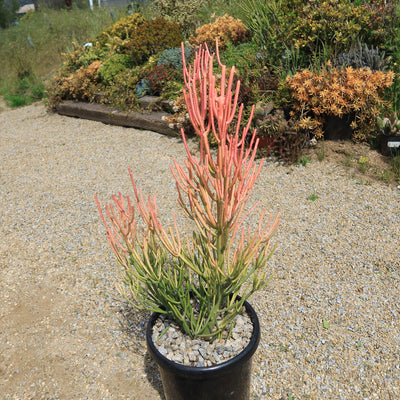
succulent firestick

succulent firestick Pencil Cactus

Sale price$18.10 Regular price$20.11
Save 10%

Pay in installments of $5.03 with ShopPay, AfterPay and Klarna

Shipping Estimate
USA
  • USA
  • CAN

Ships within 48 hours · Estimated delivery Aug 5 - Aug 10

Promo Codes Available:

For Your Every Summer RSVP, with Code: SUMMER15

Description

succulent firestick Pencil CactusIntroducing the Pencil Cactus, botanically known as Euphorbia tirucalli Fire Sticks (also called Sticks on Fire), a striking succulent prized for its sea coral like appearance and vibrant, loosely branching pencil thin stems that develop brilliant shades of green, orange, and red. Native to Southern Africa, this unique succulent belongs to the Euphorbiaceae (spurge) family, not the cactus family (Cactaceae), though it is commonly referred to as Pencil

Introducing the Pencil Cactus, botanically known as Euphorbia tirucalli ‘Fire Sticks’ (also called Sticks on Fire), a striking succulent prized for its sea coral-like appearance and vibrant, loosely branching pencil-thin stems that develop brilliant shades of green, orange, and red.

Native to Southern Africa, this unique succulent belongs to the Euphorbiaceae (spurge) family, not the cactus family (Cactaceae), though it is commonly referred to as “Pencil Cactus” because of its cactus-like form and upright growth habit. It is also known by several other common names, including fire sticks plant, sticks on fire succulent, fire plant, red pencil tree, milk bush, and Euphorbia tirucalli ‘Rosea’.


When exposed to direct sunlight, the tips turn red, which is why they are also called firesticks.

This fast growing evergreen succulent can grow up to 30 feet tall and 10 feet wide, forming a thicket of brilliantly colored vertical stems with loose branches.

The unusual stems of this firestick plant, which are as thin as pencils, have a reddish-golden hue that becomes yellow in the summer and red again in the winter.

The pencil cactus flowers boast vibrant yellow, pink, or orange blooms in the summer and spring, making them a true showstopper in any garden.

The pencil cactus is extremely drought tolerant and hard to kill, and as a result, is a great, low-maintenance, easy-care plant for your home or garden.

You can grow your pencil cactus indoors year-round as a houseplant. If planting outdoors, it's best to do so in the spring when temperatures are warm and stable. This cactus grows faster than many other cacti, making it a striking addition to your garden or home.

If you cut your pencil cactus, be careful—the thick, white sap is toxic and can cause skin irritation, burns, or severe eye irritation if it gets into your eyes. While highly irritating, some cultures have historically used it in traditional medicine for treating growths like warts and tumors, though it is not safe for home remedies. Always wear gloves when handling the plant and wash your hands thoroughly if you come into contact with the sap.

When and How to Water Your Pencil Cactus 

This pencil cactus firestick plant can withstand droughts and doesn't need to be watered frequently to survive. Watering these perennial succulents should be done every 3–4 weeks or when the soil feels dry. Let the soil completely dry out between waterings, and if in doubt, give your fire plant a little more time before watering again.  Less water is needed for humid locations and indoor spaces. Pay attention to how the pencil cactus looks and adjust the watering accordingly.

Remember that succulents in the desert can go for weeks or even months without water, so water them sparingly during their rest phase and moderately during their active growing season.

Pro Tip

Most people like to see the red tips that give this Euphorbia tirucalli its firestick name. Note that it is stress that causes the tips to go red. So, the art is to stress the firestick plant a bit, but not too much. So, give it a lot of light and water it less than other succulents, so it is thirsty but not dying of thirst.

Overwatering can also cause the Euphorbia tirucalli 'Firesticks' tips to turn red, but it can also lead to root rot and other problems. So, if your pencil cactus is not turning red in full sun, it's possible that it's not experiencing enough stress to produce the anthocyanin pigments or that it's receiving too much water.

Light Requirements - Where to Place Your Pencil Cactus 

Like most succulents, indoors, the Euphorbia tirucalli firesticks need bright, indirect sunlight to thrive, so choose the brightest area in the house.

Potted indoor pencil cacti require four hours of direct sunlight, which can be achieved by locating them on a sunny south or west-facing windowsill. 

If you are growing these firestick succulents outdoors, make sure that they receive at least six hours of direct sunlight per day.

Partial shade may be tolerated as long as your pencil cactus gets the majority of the sunlight that it needs when it's planted outside. This succulent plant won't thrive if left in the shade for a long time. Its colors become more vibrant the more sunlight it receives.

In order to avoid sunburn, it is preferable to acclimatize your pencil cactus first before moving it outdoors or increasing the amount of sunlight it receives.

Optimal Soil & Fertilizer Needs 

The firestick Euphorbia is a succulent plant that likes very airy, porous, nutrient-rich soil with a pH of 5.5–6.5. Succulents require fast-draining soil that dries completely between waterings. Ideally, you want to use our specialized potting mixGo to soil cactus mix blend 1 gal 4 qt cacti succulent dirt compost growing media that contains 5 natural substrates and organic mycorrhizae to promote the development of a strong root system that helps your Euphorbia firesticks Pencil Cactus to thrive. 

When it comes to fertilizing your pencil cactus plant, it only needs a small amount of fertilizer applied once a year in spring. Cacti prefer a fertilizer with lower doses of NPK, with a maximum ratio of 5-10-5 that is higher in phosphorus than nitrogen.

Hardiness Zones & More 

When growing indoors as a houseplant, the Euphorbia firestick can tolerate temperatures between 65 °F and 75 °F. Your Euphorbia firestick plant performs well in temperatures above 30 °F. However, it can withstand temperatures below that, but only for short periods of time.

In the United States, the Euphorbia tirucalli is mostly an indoor plant, but if you live in southern Florida or Hawaii then you can cultivate it outdoors in USDA zones 10 -11.

Growing these pencil cacti in containers is the best option if you live in an area with harsh winters.

By doing this, you can bring your Pencil Cactus indoors during the winter or any time there's a chance of frost or snow. Normal house humidity is fine for this Euphorbia, but it prefers dry conditions. 

Wildlife - Euphorbia tirucalli Attracts the Following Friendly Pollinators

The Euphorbia tirucalli flowers attract a variety of pollinators, such as bees, butterflies, and hummingbirds, with their bright colors and sweet nectar. These pollinators play a crucial role in the ecosystem by helping to fertilize plants and promote biodiversity.

Butterflies
Bees
Hummingbirds
Lady Bugs
Multi Pollinators
Other Birds

According to ASPCA, the Euphorbia tirucalli 'Firesticks' is mildly toxic to humans and pets. It can irritate the skin, eyes, and gastrointestinal tract. However, it is safe to touch as long as precautions are taken to avoid contact with the sap. Wear gloves when handling this plant to prevent any potential skin irritation.

How to Propagate Your Pencil Cactus

When it comes to pencil cactus propagation, one common method is through stem cuttings. Simply take a cutting from a healthy pencil cactus, let it dry for a few days, and then place it in well-draining soil. Another method is through division, where you carefully separate the offsets or side shoots from the main plant and plant them individually.

Key Takeaways

  1. The stems of firesticks are as thin as pencils (hence the name) and turn a fire-red in the winter.
  2. Euphorbia Firesticks is a stunning variety that changes color with the seasons, turning bright red or orange tips in cooler temperatures or full sun.
  3. This succulent has a rapid growth rate, reaching up to 30 feet tall when grown outdoors, with a branching, upright form.
  4. During the spring and summer, the yellow flowers bloom in clusters on the end of the branch, usually for just a few days.

The Bottom Line

Overall, the pencil cactus (Euphorbia Firesticks) is a unique and striking succulent plant that adds a touch of elegance to any space. With its slender, pencil-like stems and vibrant green color, this sticks-on-fire cactus can truly be a showstopper. However, it's important to remember that the pencil cactus is not a true cactus but rather a succulent. It requires minimal care, preferring bright light and well-draining soil. By providing proper pencil cactus care, you'll have a beautiful and unique Euphorbia firestick plant that will thrive for years to come. 

Shipping Notes
  • Free Standard Shipping on $100+ Orders to the USA.
  • Except Preorder products are shipped in 48 hours.
  • Delivery to the USA:
  1. Standard Shipping : 3-10 business days
  • If time is of the essence, please consider selecting expedited delivery for faster service.
Exchange/Return Notes
  • We offer a 30-day return/exchange service after receiving.
  • Final sale items are not eligible for returns or exchanges.
  • To process your return/exchange, please contact us at [email protected]
  • Please click here for more details>>> Return & Exchange Policy
SKU: 3232165674

Discover Niche Categories That Outsell succulent firestick

Top-Converting Item to Boost Your Average Order

4.5 ★★★★★
Based on 20 reviews
Sort
Highest Rating
Newest First
Oldest First
Product Reviews
N
Verified Purchase
NehSin
Lexington, US
★★★★★ 5
Must read - Insightful and Trusted
Format: Paperback
Reading “Reshuffle” was both intellectually energizing and personally relevant for me. Sangeet Paul Choudary’s work is more than just a business strategy manual, it’s a lucid roadmap for thriving amid constant change. Having spent the past decade steering our teams through multiple waves of technological disruption, I recognized my own journey in Choudary’s stories of platform transformation. His concepts of “connectors” and “combinators” spoke directly to challenges I’ve faced: breaking down silos, fostering creative recombination of ideas, and unlocking new sources of value in our organization. There were moments while reading when I paused, reflected on recent strategy sessions, and realized how much we could benefit from the frameworks outlined here. What truly set “Reshuffle” apart for me was Choudary’s ability to tie cutting-edge AI trends to everyday executive decisions. When he wrote about the collision between legacy content pipelines and new generative workflows, it echoed conversations I’ve had with other executives. “Reshuffle” reminded me that constant evolution isn’t just a necessity, it’s an opportunity to lead with optimism and vision. Choudary’s voice is empathetic, insightful, and refreshingly practical, making the book feel like advice from a trusted colleague as much as a renowned thought leader. In short, “Reshuffle” is a must-read for anyone tasked with steering a tech company through turbulent times. For me, it has become a personal touchstone for navigating and embracing what’s next.
WAS THIS REVIEW HELPFUL?YesReportShare
Reviewed in the United States on August 20, 2025
R
Verified Purchase
Renato Beninatto
Carnegie, US
★★★★★ 5
Finally, a framework that makes sense of AI's impact on knowledge work
Format: Kindle
Most books about AI focus on task automation and productivity gains. Reshuffle does something different: it explains how AI restructures entire systems through three constraints: tasks, coordination, and risk. For someone working in the language services industry, this book was revelatory. It helped me understand why so many conversations about AI and translation feel misdirected. We debate whether AI will replace translators when the real question is: how will AI reshuffle who creates value in language services? Choudary's central insight is that when AI removes old constraints (like scarcity of expertise), value doesn't disappear. It migrates to new coordination and risk management challenges. This applies across all knowledge professions, not just translation. Section 2 on knowledge work is particularly strong. It shows that lawyers, consultants, accountants, and translators are all experiencing the same fundamental transformation. We're not uniquely vulnerable; we're part of a larger reshuffling of how knowledge creates value. If you're trying to position yourself or your organization for what's coming, this book offers the clearest framework I've found. It's not about having better AI tools. It's about understanding where value pools are forming in the new system. Recommended for anyone in knowledge work who wants to move beyond surface-level AI discussions.
WAS THIS REVIEW HELPFUL?YesReportShare
Reviewed in the United States on January 25, 2026
A
Verified Purchase
Amazon Customer
Bozeman, US
★★★★★ 5
Not like any other how-to book on AI--Eric Swanson's Review
Format: Kindle
Reshuffle is not another “how to use AI” guide. It’s a powerful, big-picture look at how AI is reshaping the very foundations of the knowledge economy. Sangeet doesn’t just explore tools—he reveals the tectonic shifts in how knowledge is created, distributed, and valued. Most people use AI to improve old systems; this book shows why the winners will be those who understand and adapt to entirely new ones. Using powerful examples from history, like the bar code, container boxes and the Maginot Line, Sangeet creates powerful frames for new ways of thinking. Insightful, clear, and compelling, Reshuffle is essential reading for anyone who wants to lead in the age of AI
WAS THIS REVIEW HELPFUL?YesReportShare
Reviewed in the United States on July 23, 2025
P
Verified Purchase
PG
Dallas, US
★★★★★ 5
Would your card still be in the deck after the AI reshuffle?
Format: Paperback
AI’s impact on knowledge workers, and on enterprises, is immense. “Good enough” and inexpensive answers now abound, and the premium once commanded by knowledge workers seems to be slipping away. Enterprises are pinning their hopes on AI-driven efficiencies to stay competitive and relevant. Emotions surrounding this technological breakthrough range from doom and gloom to glee and hope. Sangeet’s Reshuffle helps build a mental model to understand, navigate, and survive this change, and even thrive in it. It’s a refreshing departure from the usual first-order effects and fallacies that dominate social and print media. For knowledge workers, staying relevant is becoming increasingly difficult, especially as the very definition of “relevance” evolves. Simply acquiring AI skills may not suffice if the underlying value of those skills has shifted. Judgment, systems thinking, and coordination will become more valuable. Remaining well-paid and autonomous will require protecting and growing contextual and economic value within this transformed system. Simple, but not easy. At the enterprise level, applying AI for task-based efficiencies in one area often shifts constraints elsewhere. Using systems thinking and positioning AI as the engine, not merely a tool, for innovation and coordination across the value chain will give enterprises a fighting chance to stay competitive. While the metaphorical pie may grow, simply “playing the same game better” won’t earn you a proportional share of it. Existing systems will be unbundled and re-bundled into offerings that solve emerging constraints. Coordinating across the value chain and taking responsibility for delivering customer outcomes will be key to unlocking outsized gains.
WAS THIS REVIEW HELPFUL?YesReportShare
Reviewed in the United States on October 29, 2025
S
Verified Purchase
Saar Ben-Attar
Birmingham, US
★★★★★ 5
A great addition to my Kindle library and a candidate to our Best Book Picks of 2025.
Format: Kindle
In setting the scene, Sangeet reminds us that, in the 1960s, Singapore was a struggling port city with limited natural resources and a rather tenuous future. It's hard to imagine but true. A strategic location in South East Asia. But such location meant little if it could not draw talent and capital to develop the infrastructure needed to grow, and here a deceptively simple and modular invention helped - the shipping container. Harvard Professor Carliss Y. Baldwin, in her book Design Rules, shared with us how technology shapes organisations, indeed entire industries and societal structures, and so, as we envision and put a technology to use, who decide how organisations are shaped, who governs them, and where power and agency lies.  Yet AI is not just any other technology. We are not in full control of the technology and its power to learn, re-shape itself, and its impact on the nature of work therefore extends well beyond the individual using AI tools. This is where Sangeet takes us, into a hugely relevant and timely discussion of how AI presents immense opportunities as well as grave risks to the knowledge economy, as we know it today. The questions raised are profound: among these... - How would power shift from the current ways of work we are accustomed to, towards autonomous networks that make decisions and learn on their own (and faster than us)? - Which organizational models best capture the shifts towards AI-supported value creation? and what path could such a transition follow? - How would these impact the opportunities and risks for collaboration, within and beyond the enterprise?  A whole chapter is dedicated to strategy, and deservedly so. AI in itself does not provide a competitive advantage. Let’s not rush to appoint a Chief AI Officers or draw-up a so-called AI-strategy, for what is essentially a set of widely distributed and accessible technologies. We need a business strategy that acknowledges the deep impacts AI is and will continue to make. Before we rush to layer AI on top of org. processes and models that have served us in previous generations, let’s take an ecosystem-wide view and ask - where are we now? What is fundamentally changing, and Where can we harness its trends towards an advantage? Having read Sangeet's book, my advice is this - seize the opportunity, invite others to the conversation and be open to new forms of power and control, as the organisations that win tomorrow are already experimenting in doing things differently today. A great addition to my Kindle library and a candidate to our Best Book Picks of 2025.
WAS THIS REVIEW HELPFUL?YesReportShare
Reviewed in the United States on August 15, 2025

recommand products