SKU: 37615823027
philodendron hederaceum vine

philodendron hederaceum vine Philodendron hederaceum var. oxycardium – Foliage Factory

Sale price$26.84 Regular price$29.82
Save 10%

Pay in installments of $7.46 with ShopPay, AfterPay and Klarna

Shipping Estimate
USA
  • USA
  • CAN

Ships within 48 hours · Estimated delivery Aug 24 - Aug 29

Promo Codes Available:

For Your Every Summer RSVP, with Code: SUMMER15

Description

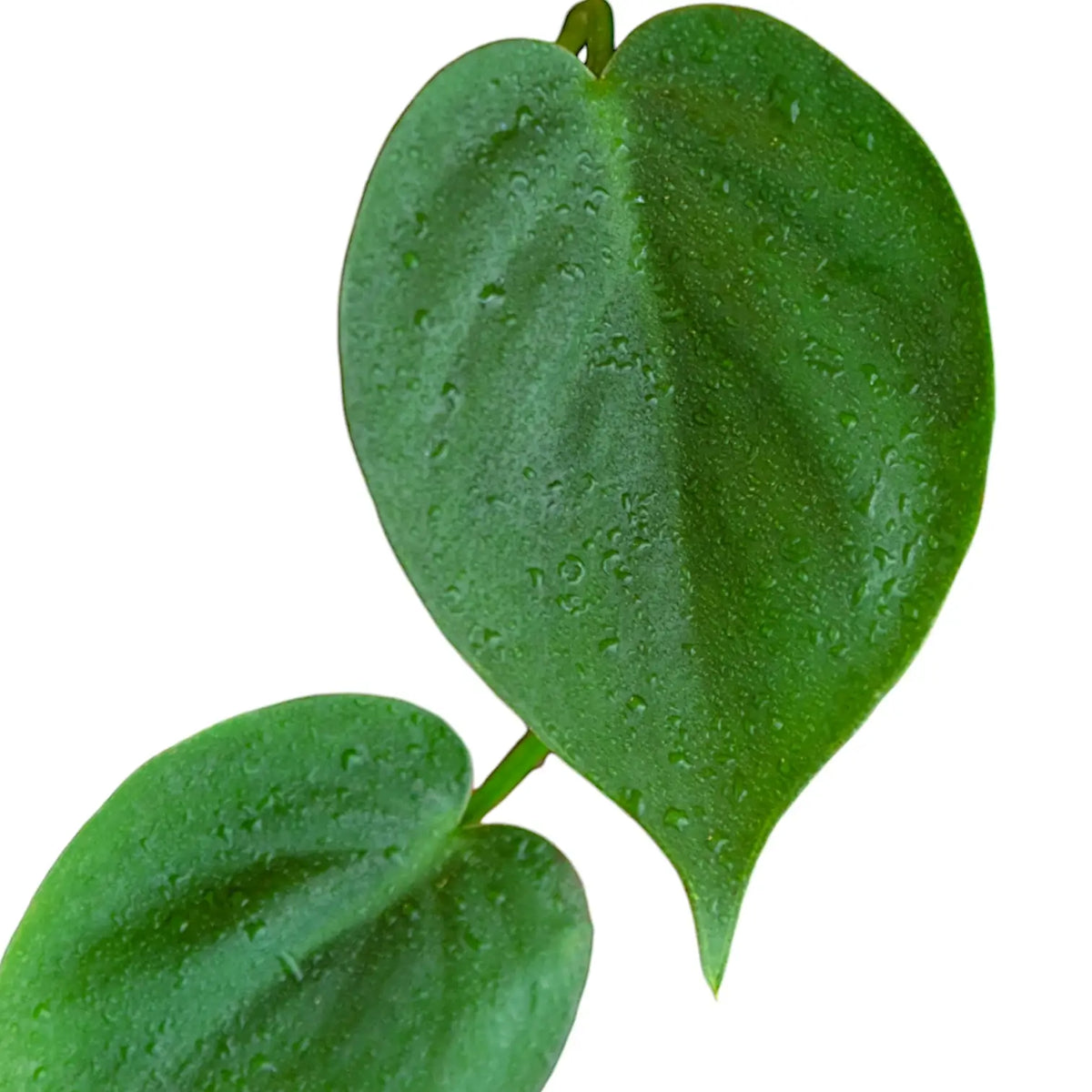
philodendron hederaceum vine Philodendron hederaceum var. oxycardium – Foliage FactoryPhilodendron hederaceum var. oxycardium Philodendron hederaceum var. oxycardium is a green heartleaf Philodendron with slim flexible vines and glossy cordate leaves that taper to a pointed tip. The stems can trail from a hanging pot, extend along a surface or climb when aerial roots find support. The leaves are usually medium to dark green, cordate at the base and pointed at the tip. Young plants make smaller leaves on loose stems, while older vines

Philodendron hederaceum var. oxycardium

Philodendron hederaceum var. oxycardium is a green heartleaf Philodendron with slim flexible vines and glossy cordate leaves that taper to a pointed tip. The stems can trail from a hanging pot, extend along a surface or climb when aerial roots find support.

The leaves are usually medium to dark green, cordate at the base and pointed at the tip. Young plants make smaller leaves on loose stems, while older vines can produce broader leaves when warmth, root health and upward growth stay steady.

Glossy pointed leaves on flexible green vines

  • Glossy green leaves with a cordate base and pointed tip.
  • Flexible stems can trail, cascade or climb when given a pole, plank or trellis.
  • Long vines can be shortened above a node to encourage side shoots.
  • Visible nodes make stem cuttings and pruning cuts easy to place.
  • Several cuttings in one pot can produce denser growth from the base.

From juvenile heart leaves to broader climbing foliage

Philodendron hederaceum is an epiphytic climber in Araceae, the aroid family, with a broad native range from Mexico through Tropical America. Philodendron hederaceum var. oxycardium is native from Mexico to Honduras and grows as a climber in the wet tropical biome.

Philodendron hederaceum var. oxycardium has glossy green leaves, pointed tips and flexible vining stems. The epithet oxycardium refers to the pointed heart shape of the leaf blade.

Steady care for green heartleaf Philodendron

  • Light: Place in bright indirect light for tighter internodes; it tolerates softer light but may grow longer, thinner vines.
  • Substrate: A loose aroid mix gives the fleshy roots oxygen and reduces the risk of wet-root yellowing.
  • Watering: Water when the upper mix has dried, then let excess water leave the pot completely.
  • Temperature: Keep above 18 °C for steady growth and avoid cold glass or draughts.
  • Humidity: Moderate indoor humidity is usually suitable, but very dry air can make new tips smaller or slower to open.
  • Repotting: Repot when roots have filled the pot, using a container with drainage and only a modest size increase.
  • Fertilizing: Feed lightly during active growth with a balanced houseplant fertiliser; steady green vines do not need heavy feeding.
  • Propagation: Stem cuttings root from nodes, especially when each cutting has at least one healthy leaf and one visible node.
  • Semi-hydroponics: The plant can adapt to inert or mineral substrates if roots are transitioned carefully and kept oxygenated.
  • Placement: Place it where the vines have room to trail or climb, away from cold air movement and harsh direct sun.
  • Climbing setup: A pole, plank or trellis lets the stems climb and can encourage broader leaves on established vines.
  • Maintenance: Cut long stems above a node to encourage new side shoots; rooted cuttings can be planted back into the pot for denser growth.
  • Growth rate: Growth is usually moderate to fast in warmth, bright indirect light and a loose, evenly managed root zone.

Bare stems, yellow leaves and node pests

  • Leggy growth: Usually linked to low light or long unsupported stems; prune and move to brighter indirect light.
  • Yellow leaves near the base: Check for overwatering, blocked drainage or old compacted substrate.
  • Small leaves on older vines: Add support or prune back to a stronger node if trailing stems have become too long.
  • Brown tips: Look at watering consistency, salt buildup and dry air before changing several conditions at once.
  • Pest clusters at nodes: Inspect under leaves and along stems, especially where vines overlap in a dense hanging pot.

Safety

This heartleaf Philodendron contains insoluble calcium oxalate crystals. Keep it away from pets that chew plants and avoid touching your eyes after pruning or handling cut stems.

Published variety and pointed leaf name

Philodendron hederaceum var. oxycardium was published as Philodendron hederaceum var. oxycardium (Schott) Croat in World Checklist and Bibliography of Araceae in 2002. The variety is based on the earlier name Philodendron oxycardium Schott. Philodendron comes from Greek roots for fondness and tree, hederaceum refers to ivy-like growth, and oxycardium combines pointed with heart.

Philodendron hederaceum var. oxycardium brings glossy green heart-shaped leaves to a flexible vine that can stay trailing or climb into broader, more mature growth.

Shipping Notes
  • Free Standard Shipping on $100+ Orders to the USA.
  • Except Preorder products are shipped in 48 hours.
  • Delivery to the USA:
  1. Standard Shipping : 3-10 business days
  • If time is of the essence, please consider selecting expedited delivery for faster service.
Exchange/Return Notes
  • We offer a 30-day return/exchange service after receiving.
  • Final sale items are not eligible for returns or exchanges.
  • To process your return/exchange, please contact us at [email protected]
  • Please click here for more details>>> Return & Exchange Policy
SKU: 37615823027

Discover Niche Categories That Outsell philodendron hederaceum vine

Top-Converting Item to Boost Your Average Order

4.2 ★★★★★
Based on 8 reviews
Sort
Highest Rating
Newest First
Oldest First
Product Reviews
S
Verified Purchase
Shannon S.
Waukegan, US
★★★★★ 3
Be ready to question everything and everyone…
Format: Kindle
We Used to Live Here definitely nails the creeping sense of dread and paranoia throughout the story. I constantly questioned whether Eve was truly unraveling or if she was the only person actually sensing danger, and the added news articles, interviews, and scientific discussions throughout the book made the atmosphere even more unsettling. I also connected with Eve’s struggles surrounding anxiety, people-pleasing, and past religious experiences, which added an emotional layer to the horror for me. That said, the pacing felt super uneven. Most of the story takes place over only a couple of days, but it dragged at times and honestly felt like it would work better as a movie than a book. Things finally picked up around the 70% mark, but the ending left me wanting much more explanation and payoff than we as the readers received. Overall, this was an eerie, anxiety-inducing read with a fantastic atmosphere, even if the execution didn’t fully land for me.
WAS THIS REVIEW HELPFUL?YesReportShare
Reviewed in the United States on May 19, 2026
A
Verified Purchase
Amazon Customer
Massapequa, US
★★★★★ 4
read-this-book-now
Format: Paperback
I liked the pace, the story and the characters. Sadly I found it at the end a bit confusing. I think the book needed more edition work. Otherway, it is a recommendable book if you want horror with a bit of science fiction. Be advised you'll need to use your imagination to understand certain pasages.
WAS THIS REVIEW HELPFUL?YesReportShare
Reviewed in the United States on February 13, 2026
A
Verified Purchase
angela
Draper, US
★★★★★ 2
Not even a good read. Pass it.
Format: Paperback
Unfortunately, this book was basically a whole lot of nothing. It was not what I was hoping for, which was on the edge of your seat scary. It was not even alittle scary. Left me with unanswered questions and confused. Sorry..I did not like this book at all.
WAS THIS REVIEW HELPFUL?YesReportShare
Reviewed in the United States on March 6, 2026
J
Verified Purchase
Jennybee
Waukegan, US
★★★★★ 5
Easy to read and fall in love with
Format: Hardcover
one of those books that feels less like a story and more like an experience. Ray Bradbury captures the magic of summer, childhood, and all the little things in life we take for granted. I loved the way it blended nostalgia with those bittersweet moments of growing up. It’s slow at times, but that’s the beauty of it — it makes you stop and notice the small details, just like the characters do. For me, it felt like stepping back into a simpler time, but with all the emotions and lessons that still matter today. It’s warm, reflective, and beautiful. A book you don’t just read — you feel.
WAS THIS REVIEW HELPFUL?YesReportShare
Reviewed in the United States on September 20, 2025
K
Verified Purchase
Kindle Customer
Lake Worth, US
★★★★★ 5
Vintage Bradbury
Format: Hardcover
Ray Bradbury August 22nd 1922 - June 5th, 2012 When Ray Bradbury died reactions came from everywhere including from President Obama. Surprising to me, few mentioned the one of his works that meant so much to me and affected my life so deeply. While he was most known to the general public for his science fiction, I found his mostly autobiographical novel Dandelion Wine to be the most impactful. At the same time it best illustrated Bradbury’s incredible command of the language, his ability to stir the imagination, and the way in which he could open windows on life. I couldn’t count the number of times I would reread a single sentence and become overwhelmed with admiration and envy at how he used words to create images in the mind’s eye. All this was particularly on display in Dandelion Wine and its sequel, Farewell Summer. For Bradbury, it couldn’t be just water. “Nothing else would do but the pure waters which had been summoned from the lakes far away and the sweet fields of grassy dew on early morning, lifted to the open sky, carried in laundered clusters nine hundred miles, brushed with wind, electrified with high voltage, and condensed upon cool air. This water, falling, raining, gathered yet more of the heavens in its crystals. Taking something of the east wind and the west wind and the north wind and the south, the water made rain and the rain, within this hour of rituals, would be well on its way to wine.” Essentially, Dandelion Wine is the story of a summer in the life of a twelve year old boy as he comes to understand what it means to be alive. But it is also a time capsule for the year 1928 of life in a small town when everyone’s world was much smaller and more compact. There is horror, love, comedy, wonder, nostalgia, and human relations. Bradbury could find unique ways to describe them all. I first read Dandelion Wine in 1957 when I wasn’t much older than Douglas Spaulding, the central character. It helped me put life in perspective as I was leaving high school. I read it the second time in the early ‘80s when I introduced my daughter to it. Kelly and I sat on our front porch swing one warm summer evening and I read aloud to her the story of Bill Forrester and Helen Loomis. It was all I could do to finish it and when I did we both had tears streaming down our cheeks. Such was the power of imagination and Bradbury’s ability to stroke it to life using just words. I read it the third time in preparation for reading the sequel, Farewell Summer, written 55 years after Dandelion Wine. Like a fine wine, it had only gotten better with age. Appropriately, Farewell Summer was given to me by Kelly and I read it on summer’s eve 2012. It was the perfect beginning for yet another summer. In both books the ravine in Green Town, Illinois, based on Waukegan, Illinois where Bradbury grew up was a central feature. I couldn’t resist going to Googlearth to see if the ravine was real. It was. And, it is still there even after Waukegan had changed from a small town to a satellite of Chicago. I was pleased to simply find I could locate it. But when I zoomed in and highlighted the little tree symbol I found the ravine is now Ray Bradbury Park. Perfect! Dan Winters June 29, 2012
WAS THIS REVIEW HELPFUL?YesReportShare
Reviewed in the United States on October 24, 2013

recommand products