Pay in installments of $5.21 with
 ,
,
 and
and

Shipping Estimate
USA
- USA
- CAN
- USA
- CAN
Ships within 48 hours · Estimated delivery Oct 10 - Oct 15
 Promo Codes Available:
For Your Every Summer RSVP, with Code: SUMMER15
Description
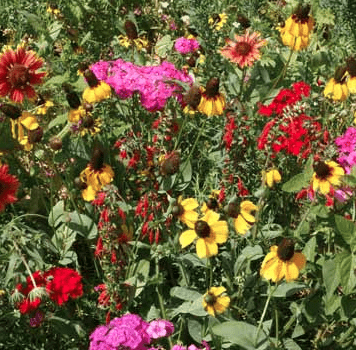
southeast native wildflower seeds Southeast Native Wildflower Seed MixThese wildflower seed mixtures were developed for specific areas of the United States and Canada. These wildflower seed mixtures are composed of annual and perennial wildflowers that are native to the region, and when available, are from seed sourced from that region to insure maximum adaptability. Use these wildflower seed mixes for projects where 100 percent native species are required or preferred.~~~ These wildflower seed mixtures were developed
These wildflower seed mixtures were developed for specific areas of the United States and Canada. These wildflower seed mixtures are composed of annual and perennial wildflowers that are native to the region, and when available, are from seed sourced from that region to insure maximum adaptability. Use these wildflower seed mixes for projects where 100 percent native species are required or preferred.~~~
These wildflower seed mixtures were developed for specific areas of the United States and Canada. These wildflower seed mixtures are composed of annual and perennial wildflowers that are native to the region, and when available, are from seed sourced from that region to insure maximum adaptability. Use these wildflower seed mixes for projects where 100 percent native species are required or preferred.
Product Information
- Application or Use: Ornamental, Lawn, Cover Crop, Erosion Control
- Germination Time: 14 - 21 days, under optimal conditions
- Growing Locations: Warm Season, Transition Zone
- Height: 2 - 4 feet
- Sunlight Requirements: 8+ hours, full sun for best results
- Advantages: Help your local pollinator population by planting native wildflowers!
- When to Plant: See Instructions Tab.
This mix contains:
- Partridge Pea
- Indian Blanket
- Lanceleaf Coreopsis
- Purple Coneflower
- Clasping Coneflower
- Lemon Mint
- Scarlet Sage
- Drummond Phlox
- Marsh Blazing Star
- Black-Eyed Susan
- Red Corn Poppy
- Plains Coreopsis
This mix may vary based on availability.
More on wildflower mixtures and plantings...
Our wildflower mixtures are formulated on the basis of climatic conditions (rainfall, temperature range, humidity) and elevation. Most species in our mixtures adapt readily to different soil types provided climate and elevation are suitable. Annuals have been included to establish cover quickly and to give color the first year; some may produce new plants the following year (the biennials may also reseed). Perennial plants live for more than two years, and most flower from the second year onward.
In general, our mixtures are formulated to contain approximately equal numbers of seeds of each species. This varies somewhat because of costs, availability and/or climatic conditions. For example, in the Moist Mixture we have given less seed of species that are particularly aggressive. We strive for a balance of the highest quality for each geographic area.
Mixtures may vary occasionally from the indicated listing, based on availability of individual species.
Seed Quality
Most wildflower seeds and mixtures have a purity of 95-99% and total viable seed percentages of between 70-95%. The total viable seed percent is the germination percent, plus the hard seed or dormant seed percent. Hard seeds have impermeable seed coats and cannot imbibe water during seed testing. Dormant seeds are viable seeds that have specific physical or physiological conditions that prevent the seed from germinating at the time of seed testing. The PLS (Pure Live Seed) is obtained by multiplying the percent purity by the percent total viable seed and then dividing by 100.
What to Expect
Wildflowers can provide an excellent, low cost alternative in large-scale, high maintenance situations, as well as a satisfying change from traditional urban landscaping. However, during their initial establishment period, wildflowers require as much maintenance as traditional plantings.
A smooth, weed- and vegetation-free planting bed is important for good seed-soil contact and prompt germination. Avoid seeding more than the recommended rate since overseeding can result in crowded conditions the first year and poor establishment of perennials. Cover seeds lightly to protect them from drying out during germination, and to prevent them from being eaten by birds. Consistent moisture is important for 4 - 6 weeks after planting.
A wildflower planting requires the same weed control measures as traditional landscaping. Effective measures include site preparation prior to planting and a post-germination maintenance program.
Most of our wildflower mixes contain annual, biennial and perennial species. The annuals, which may not be native to your area, are included to assure maximum color during the first season and to act as a nurse crop for the slower-growing perennials. Annuals germinate quickly when conditions are favorable, providing a quick ground cover and competition against weeds. Natural reseeding of annuals ranges from significant to minimal, depending on the species, climate, soil texture and other factors. Most perennial and biennial species begin to bloom the second season, but not as profusely as annuals. Therefore, wildflower plantings look noticeably different after the first year.
Sometimes it is desirable or even necessary to sow seed in second and subsequent years. Reseeding may be necessary if establishment of wildflowers is spotty or poor. It is possible to reseed bare areas with the original mixture. Loosen soil of bare areas and provide adequate weed control and supplemental irrigation as needed. Where natural reseeding of annuals is minimal, sowing annuals each spring can produce a magnificent annual and perennial display throughout the growing season.
If desired, wildflowers may be mowed in the fall following seed set. Mow to a height of 4-6 inches, and leave the residue on the ground because it is a reservoir of viable seeds
*Product packaging may appear different than what is pictured.~~~
Wildflower Planting Time Based on Region:
Southeast
- Fall, Winter: Sowing wildflowers in Fall/Winter is the ideal time in the Southeast, with October 1 – December 31 being the best dates. The weather is ideal for starting seeds, and seedlings can grow and harden off before frost.
- Spring: A good time to plant wildflowers, especially annual species that flower quickly. Plant after the last frost date when soil temperatures have warmed to around 55°F, typically occurring within a month or so after the final frost of winter; this ensures the seeds can germinate properly without being affected by cold weather.
- Summer: You can plant wildflower seeds in the summer, but the hot sun can dry out the soil and stress your seedlings. Summer is a good time to plant quick-growing annual wildflowers.
Southwest
- Fall: A good time to plant spring wildflowers in the desert Southwest. Fall's cooler temperatures and seasonal rains help seeds germinate. In the mountains, you can plant after spring frosts.
- Winter: In areas that get snow, winter seeding can give seeds an advantage in the spring.
- Spring: A popular time to plant wildflowers in most states. You can plant after the last frost and when the soil temperature is at least 55°F. In warmer climates, you can plant at the end of the rainy season.
- Summer: You can plant wildflower seeds in the summer, but the hot sun can dry out the soil and stress your seedlings. Summer is a good time to plant quick-growing annual wildflowers.
Northeast
- Fall, Winter: The best time to plant wildflowers in the Northeast is in late fall, after the first frost but before heavy snow. This is known as dormant seeding and can take place from November to December. Cold temperatures and damp soil during the winter help wildflower seeds germinate.
- Spring: Plant in early spring, after the ground has thawed and soil temperatures reach around 55-65°F. This is a popular time to plant wildflowers because it's typically rainier, which helps water seedlings.
- Summer: You can plant wildflower seeds in the summer, but the hot sun can dry out the soil and stress your seedlings. Summer is a good time to plant quick-growing annual wildflowers.
Midwest
- Fall, Winter: Plant in late fall (November–December) after the first frost. The seeds will overwinter and germinate in the spring. Fall planting is a good option for cooler climates and can give the seeds an early start in the spring.
- Spring: Plant in early spring (April–May) after the last frost when the soil temperature is consistently above 55°F. Spring is a popular time to plant because the soil is usually moist from rain, and you can see the wildflowers grow right away.
- Summer: You can plant wildflower seeds in the summer, but the hot sun can dry out the soil and stress your seedlings. Summer is a good time to plant quick-growing annual wildflowers.
Western
- Fall, Winter: Plant in late fall (November–December) after the first frost. The seeds will overwinter and germinate in the spring. Fall planting is a good option for cooler climates and can give the seeds an early start in the spring.
- Spring: Plant in early spring (April–May) after the last frost when the soil temperature is consistently above 55°F. Spring is a popular time to plant because the soil is usually moist from rain, and you can see the wildflowers grow right away.
- Summer: You can plant wildflower seeds in the summer, but the hot sun can dry out the soil and stress your seedlings. Summer is a good time to plant quick-growing annual wildflowers.
Pacific Northwest
- Fall, Winter: Plant in late fall (November–December) after the first frost. The seeds will overwinter and germinate in the spring. Fall planting is a good option for cooler climates and can give the seeds an early start in the spring.
- Spring: Plant in early spring (April–May) after the last frost when the soil temperature is consistently above 55°F. Spring is a popular time to plant because the soil is usually moist from rain, and you can see the wildflowers grow right away.
- Summer: In cooler zones with higher elevation, you can plant wildflowers in late spring to early summer, after the risk of frost has passed. You can plant wildflower seeds in the summer, but the hot sun can dry out the soil and stress your seedlings. Summer is a good time to plant quick-growing annual wildflowers.
Instructions:
Planting Rate: 11-22 lbs. per acre, 8 oz. per 1000 sq. ft.
Site Selection
Sowing wildflower seeds without care and planning usually produces unsatisfactory results. Here are some important factors to consider: (1) Does the site support plants now? If you have a site where nothing, including weeds, is growing, that site is unlikely to support wildflowers. (2) Will there be adequate moisture during germination and establishment? Can you supply supplemental water, if necessary? (3) What weed seeds are likely to be present in the soil? Will weeds spread to your site from adjacent areas? Assessment of these factors will enable you to make a realistic choice of a site where wildflowers will prosper and to decide what action will be necessary to ensure your success.
Planting Rates
Each wildflower mixture has a recommended minimum and maximum planting rate. The planting rates for some mixtures are adjusted higher due to the presence of small-seeded, nonaggressive species. In general however, the minimum planting rates are based on 60-70 seeds per square foot (4 to 12 pounds per acre), which is usually sufficient to establish a good stand of wildflowers on prepared soil when adequate weed control can be maintained. Maximum planting rates are based on 120-140 seeds per square foot (8 to 24 pounds per acre), and are recommended when adequate soil preparation and weed control are not possible, or when maximum color is required. Avoid using more than the recommended rates since poor perennial establishment may result.
When to Plant
The best time to plant in your area depends on the climate and rainfall patterns as well as the species you are planting. In cool climates, plant annuals, perennials or mixtures of annuals and perennials in spring, early summer or late fall. Fall plantings should be late enough so that seeds do not germinate until spring. Perennials can also be sown in early fall provided that there are at least 10-12 weeks of growing time before the plants go dormant for the winter. Late fall plantings are advantageous when supplemental irrigation cannot be provided and adequate rainfall is anticipated in the spring.
In mild climates, plant during the cooler months of the year, fall through spring, for best results. Fall plantings done prior to periods of rainfall will insure an early display of flowers the following spring.
Uses of Grasses
Wildflowers can be sown alone or with grasses. For most areas of the United States, we recommend using one of our native grass mixtures. For specific requirements, individual species may be preferred. Hard Fescue or Sheep Fescue work well in most areas of the United States. However, in the southeastern states of Alabama, Florida, Georgia, Louisiana, Mississippi and South Carolina, we recommend warm-season grasses; Hard and Sheep Fescue will not thrive in these climates.
Warm-season grasses to consider include Gramas, Buffalo Grass and Bluestems. These grasses grow very slowly and are planted for aesthetic and ecological reasons rather than prompt stabilization of soil.
Aggressive grasses should be avoided because they will crowd out most wildflowers; these grasses include Kentucky Bluegrass, Smooth Brome, Crested Wheatgrass, Bermuda Grass, and Annual Rye. If wildflowers must be used with these grasses, the flowers should be planted in high-density patches as accents to the grassed areas. Or the flowers may be sown with the grasses if the planting rates of the grasses are reduced significantly.
Site Preparation
Proper site preparation is important for prompt germination of seed and healthy growth of seedlings. Best results will be obtained by planting on cleared ground. Remove existing vegetation to avoid competition from other plants. This may be done by pulling, tilling under, spraying with a general herbicide, or by a combination of these methods, depending upon the size of the area, type and density of vegetation and other factors. Loosen soil by scraping, tilling or scarifying. Tilling should be utilized only when soil is very compacted and further weed control measures can be taken. Specific recommendations are given under the heading, Weed Control.
Seed Application
Method of application depends on the size of the area and the terrain. On small areas, broadcast seeds evenly either by hand or by use of a drop or cyclone spreader. It is helpful to mix a carrier such as clean, dry sand with the seed; sand adds volume and aids in even distribution. We recommend using a ratio of 1 or 2 parts sand to 1 part seed. Rake in lightly, covering seeds to a maximum depth of 2-3 times their thickness. Or drag the area lightly with a piece of chain link fence to mix the seed into the surface of the soil. For seeding large areas, i.e., over one acre, specially designed drills are most effective. Drill to a maximum of 1/4 inch and firm soil with a cultipacker; this maximizes seed/soil contact. Hydroseeders are also effective, especially for steep slopes, rocky terrain and other areas where conditions make it impractical for other methods of seed application.
Hydroseeding is the application of a slurry of seed and water to soil. The slurry may also contain mulch (hydromulching), a tackifier and fertilizer. Mulches are made of wood fiber, paper or excelsior, and their purpose is to hold seeds in place, help retain moisture and provide protection from erosion; mulches are usually dyed green as a visual aid in even distribution. Rates of application for most mulches are between 1500 and 23 00 pounds per acre. In general, hydroseeding/hydromulching is most successful in moist climates or in irrigated areas.
Most authorities agree that germination is better when seed is applied first with 5-10% of the mulching fiber—the balance of the mulch being applied separately as a second step. This approach ensures optimal seed/soil contact; otherwise, many seeds are wasted because they become suspended in the fiber.
It is important that proper procedures are followed to minimize the amount of time that seed is circulated through pumps or paddles prior to application. Over-circulation may damage the seed.
Moisture
All seeds, including wildflowers, need ample moisture to germinate and to develop into healthy seedlings. Best results will be obtained by soaking the planted areas thoroughly and maintaining consistent moisture for 4-6 weeks — then gradually reducing waterings. In non-irrigated situations, plant in the spring or before periods of anticipated rainfall. After seedlings are established, watering may be reduced depending on the climate and rainfall. In arid climates or during drought conditions, up to 1/2 inch of supplemental water per week may be required to maintain an optimal display. If weeds are present, remember that they benefit from moisture as much as the wildflowers and may dominate overwatered areas.
Fertilization
Many wildflowers benefit from some fertilization if the soil does not have adequate nutrients. Some wildflowers do fine in poor soils, while others require a more fertile environment. We recommend that a soil test be performed when soil quality is unknown. If the soil needs improvement, use a low nitrogen fertilizer with a 5-10-10 ratio or add organic matter such as weed-free straw or grass clippings, well-rotted compost, peat moss, or leaf mold. In addition to adding nutrients, organic materials enhance soil structure and encourage beneficial microorganisms. Avoid over-fertilizing which may promote weed growth and lush foliage rather than flowers.
Weed Control
Weed control is the biggest problem facing plant establishment and one which has no easy solution. Weed seeds are present in many situations and lie dormant, but viable, for long periods. A weedy area converted to wildflowers will have a large reservoir of weed seeds in the soil, ready to germinate when conditions are favorable. In most cases, it is advisable to consider weed control in two phases—as part of site preparation prior to planting, and as an important component of the post-germination maintenance program.
Before planting, remove existing weeds by pulling, tilling under, applying a glyphosate herbicide such as Roundup®*, or by a combination of these methods. For additional weed control after site preparation, a soil fumigant may be used, or the area may be irrigated to encourage weed growth and then sprayed with a general herbicide.
In very weedy areas, the following method is suggested: (1) Till soil or spray vegetation with Roundup®*. When using an herbicide, allow vegetation to die, then rake out the dead debris. If perennial weeds such as bindweed are present, using an herbicide is more effective than tilling. (2) Irrigate to encourage germination of weed seeds near the surface; most seeds will germinate within two weeks if consistent moisture is available. Do not till the soil again because this will bring even more weed seeds up to the surface. (3) Spray any new growth with Roundup®*. (4) After raking out dead vegetation, allow soil to recover for 3-4 weeks before planting seed. From our experience, a recovery period of this duration is advisable because extensive use of glyphosate herbicides may cause a delay in germination and in the vigorous growth of seedlings.
Once the seeds have germinated, further weed control is usually necessary. If practical, pull all weeds as soon as they can be identified.
Other successful techniques are spot-spraying with a general herbicide or selectively cutting weeds with a string trimmer. Be sure to remove weeds before they reseed.
Many unwanted annual and some perennial grasses can be controlled with the herbicides Grass-B-Gon®*, Ornamec®* and Fusilade®*. These post-emergents do not affect broad-leaved plants so they can be applied over existing flowers; they are most effective when sprayed on new growth and young plants. Take care to avoid treating areas with desirable native grasses or fescues.
*Observe all precautions and follow manufacturer’s recommendations for application.
Shipping Notes
- Free Standard Shipping on $100+ Orders to the USA.
- Except Preorder products are shipped in 48 hours.
- Delivery to the USA:
- Standard Shipping : 3-10 business days
- If time is of the essence, please consider selecting expedited delivery for faster service.
Exchange/Return Notes
- We offer a 30-day return/exchange service after receiving.
- Final sale items are not eligible for returns or exchanges.
- To process your return/exchange, please contact us at [email protected]
- Please click here for more details>>> Return & Exchange Policy