SKU: 39126726849
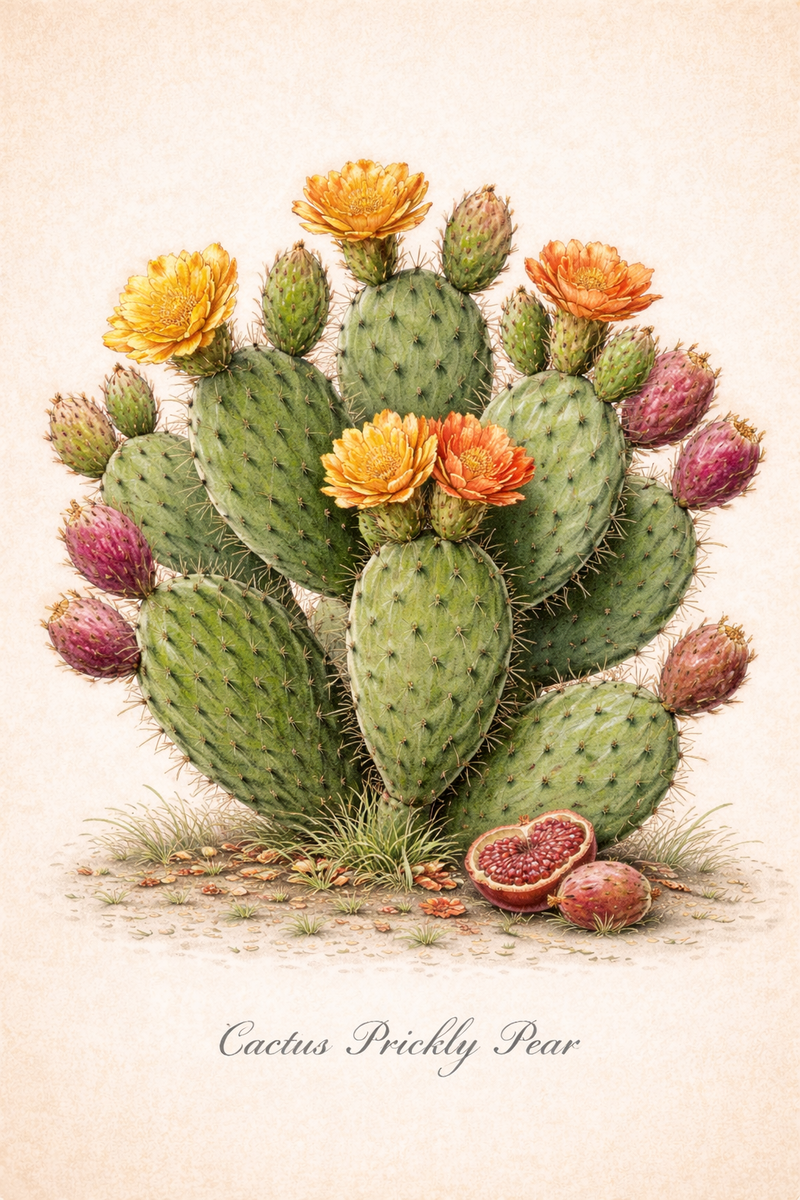
cactus aka prickly pear

cactus aka prickly pear Cactus Prickly Pear – Texas Tree Farms

Sale price$26.21 Regular price$29.12
Save 10%

Pay in installments of $7.28 with ShopPay, AfterPay and Klarna

Shipping Estimate
USA
  • USA
  • CAN

Ships within 48 hours · Estimated delivery Oct 7 - Oct 12

Promo Codes Available:

For Your Every Summer RSVP, with Code: SUMMER15

Description

cactus aka prickly pear Cactus Prickly Pear – Texas Tree FarmsThe Prickly Pear Cactus (Opuntia spp.) is an iconic symbol of the American West. Known for its flat, paddle like stems (cladodes) and delicious fruit (tunas), it is one of the most versatile plants in the worldserving as an ornamental, a food source, and a formidable security hedge. Scientific Name Opuntia (many species, such as O. ficus indica or O. humifusa) Foliage: Evergreen The "pads" are actually modified stems. In winter, cold hardy varieties

The Prickly Pear Cactus (Opuntia spp.) is an iconic symbol of the American West. Known for its flat, paddle-like stems (cladodes) and delicious fruit (tunas), it is one of the most versatile plants in the world—serving as an ornamental, a food source, and a formidable security hedge.

Scientific Name

Opuntia (many species, such as O. ficus-indica or O. humifusa)

Foliage: Evergreen

The "pads" are actually modified stems. In winter, cold-hardy varieties may shrivel and look "deflated" to protect themselves from freezing; they plump back up in the spring

Flowers: In late spring, they produce large, showy, bowl-shaped flowers in vibrant colors—usually bright yellow, orange, or hot pink.

Fruit (Tunas): After the flowers fade, they produce egg-shaped fruits that turn deep red or purple when ripe. These fruits are edible and used for jellies, candies, and margaritas.

Two Types of Spines: Most Prickly Pears have large, visible thorns, but they also have glochids. These are tiny, hair-like prickles that are often more irritating because they are hard to see and easily lodge in the skin.

Mature Height

1-15 feet (species dependent; most garden types are 3-4 feet)

Mature Width (Spread)

3-10 feet (spreading habit)

Growth Rate

Moderate

USDA Zone

4-11 (Varies by species; some survive Canadian winters)


Plant Care & Characteristics

Light Requirements: Full Sun. It requires at least 6–8 hours of direct sunlight. In lower light, the pads will become thin, elongated, and pale, and the plant will fail to produce flowers or fruit.

Water Requirements: Low. Very water-efficient. During the first summer, water every 2 weeks to help roots establish. Once mature, natural rainfall is usually sufficient.

Drought Resistance: Extreme. It is designed to survive months without water by storing moisture in its thick, succulent pads.

Soil Type: Sandy, Gritty, or Rocky. Like the Cholla, it requires excellent drainage. It will quickly rot in heavy, soggy clay. It is very tolerant of alkaline and poor soils.

Deer Resistance: High. Most deer avoid it due to the spines. However, in extreme droughts, some deer or javelina may eat the pads despite the thorns to reach the water inside.

Prickly Pear is a "two-for-one" food plant:

Nopales: The young, tender green pads (with spines removed) are eaten as a vegetable.

Tunas: The sweet, magenta fruits are harvested in late summer.

Shipping Notes
  • Free Standard Shipping on $100+ Orders to the USA.
  • Except Preorder products are shipped in 48 hours.
  • Delivery to the USA:
  1. Standard Shipping : 3-10 business days
  • If time is of the essence, please consider selecting expedited delivery for faster service.
Exchange/Return Notes
  • We offer a 30-day return/exchange service after receiving.
  • Final sale items are not eligible for returns or exchanges.
  • To process your return/exchange, please contact us at [email protected]
  • Please click here for more details>>> Return & Exchange Policy
SKU: 39126726849

Discover Niche Categories That Outsell cactus aka prickly pear

Top-Converting Item to Boost Your Average Order

4.7 ★★★★★
Based on 20 reviews
Sort
Highest Rating
Newest First
Oldest First
Product Reviews
M
Verified Purchase
Mike M.
Whiting, US
★★★★★ 5
Very relevant
Format: Hardcover
Good research on the subject
WAS THIS REVIEW HELPFUL?YesReportShare
Reviewed in the United States on March 8, 2026
J
John Divito
Battle Creek, US
★★★★★ 4
Helpful Insights about Modern Masculinity and the Social Goodness of Biblical Masculinity
Format: Hardcover
In the midst of contemporary debates about masculinity and femininity in America and the West, Nancy R. Pearcey seeks to bring clarity through tracing the historical development of modern masculinity and explaining the social goodness of biblical masculinity in her book The Toxic War on Masculinity: How Christianity Reconciles the Sexes. Throughout this work, she contrasts the difference between the Good Man versus the "Real" Man, and urges us to embrace the true masculinity of the Good Man instead of the toxic masculinity of the "Real" Man. Pearcey establishes her argument through the lenses of a biblical worldview of Creation, Fall, and Redemption, which was practiced by Protestants since the Reformation in their relationship between men and women. But the Industrial Revolution removed men from the home and away from their families, and this shift led to a change in the conception of masculinity (and femininity). As she summarizes: "The Industrial Revolution became a watershed in the social definition of masculinity. By taking husbands and fathers out of the home, industrialization created the material conditions that made it more difficult to fulfill a biblical ideal of manhood. Men were no longer physically present enough to be fully engaged husbands and fathers. They spent most of their time in the public realm, which was growing increasingly secular. The Industrial Revolution thus became a catalyst for the acceptance of secular views of masculinity" (101). Therefore, a transition took place from communal manhood to personal, self-interested manhood. As a result, the values and lifestyles of men changed into what is now recognized as toxic masculinity. So the problem we face today is not the result of Christianity and its teaching of biblical manhood, but the perversion of true masculinity through modern secularized individualism and the abusive twisting of male headship and female submission among largely nominal Christians. This means that our solution is returning to God's revealed ideal for the sexes in Scripture, which is how God intended for his image-bearers to relate to each other. I appreciated Pearcey's historical overview of how masculinity developed from Puritanism to today. It was both informative and challenging, causing me to consider how much my own understanding of masculinity has been influenced by my culture rather than by God's Word. As a self-confessed devotee of Francis Schaeffer, I can see how much of an impact he has had in her thinking and writing. And like Shaeffer, Pearcey may be criticized for an overly simplistic tracing of ideas through history. But the general contours of her survey seem accurate enough, and help us to identify what has led to contemporary troubles with masculinity. At the same time, I would have appreciated more emphasis on biblical exposition when explaining the Christian worldview as it applies to men and women. While I recognize that she was not intending a Bible study, she often quotes Scripture and draws conclusions which at times I found questionable or could have been clarified by a more thorough treatment of the text. Other relevant passages from God's Word on the relationship between men and women were also left unaddressed. The result is that I have reservations and disagreements with some of Pearcey's conclusions. Furthermore, I sensed a strong influence of Neocalvinist transformationalism, especially as it related to the cultural mandate. Thus, I would find myself differing from the author in some of her assessment and application. Nevertheless, I wouldn't want these cautions to keep anyone from reading her book. She clearly wants us to engage her arguments, and she provides and important voice in today's debates surrounding masculinity. So I will be encouraging anyone thinking through what it means to be masculine or how to raise boys in today's world to read Pearcey's timely book. Read it carefully and with discernment. I hope that the Lord uses it to help us reconcile the sexes through Christ.
WAS THIS REVIEW HELPFUL?YesReportShare
Reviewed in the United States on November 29, 2023
R
Verified Purchase
rodboomboom
Cuba, US
★★★★★ 5
Another Pearcey Vital and Engaging Book The World Needs Now
Format: Hardcover
I must disclose from the outset that this reviewer is a real Pearcey fan! Not only have I read most all of her books, but in addition I had the pleasure years ago of interviewing her several times on Worldwide KFUO radio BookTalk and Cross Defense programs. She is an outstanding Christian thinker and writer and this new volume is the latest evidence of her God-given talents. What in my mind sets this book apart from her previous ones is this quote from the book: "When I began to write this book, I did not anticipate that it would become the most controversial book I have ever written. The term masculinity has become a trigger word." That is because it hits very sensitive spots in our culture which need Christ's healing touch of the Gospel. Pearcey achieves this necessary cultural corrective not only in the public square but in the Christian church as well. And she does so by a very effective and somewhat unique style of asking pertinent questions and then answers them by her very thorough and probing research skills. What opened this reviewer eyes was the enormous amount of historical and sociological studies which back her premise that The Good Man of previous times has been displaced by the Real Man script that is so pervasive in America now. She does not leave this problem's disclosure just for the reading, but provides the church definitive corrective suggestions which are biblically based. Cannot recommend this enough for your purchase. Devour it as I did. You'll be blessed! Gift it, share it, talk about it at your church, within your family, with your circle of contacts.
WAS THIS REVIEW HELPFUL?YesReportShare
Reviewed in the United States on July 11, 2023
L
Verified Purchase
Lonnie
Whiting, US
★★★★★ 5
The book gave me more understanding of what has brought this country to the crisis that we are in.
Format: Hardcover
I was first struck by the books detail of the history of the family and masculinity. I knew there was something wrong with families here in the U.S. , but it is hard to put a finger on the roots of the problem. Nancy's book has made it clear to me that the roots of the destruction of the family unit began long ago. I also learned what a good or bad father looks like although we always want to love our fathers. The privatization of faith to the home and the workplace to secular also has wreaked havoc on the family unit. Nancy has addressed the subject of masculinity well. I am thrilled about the proper statistics about devout Christian men and have quoted the wrong statistics without knowing that there was a difference in the statistics when it comes to nominal Christian men.
WAS THIS REVIEW HELPFUL?YesReportShare
Reviewed in the United States on June 30, 2023
W
Verified Purchase
Wayneshia
Los Angeles, US
★★★★★ 5
First time
Works like a champ
WAS THIS REVIEW HELPFUL?YesReportShare
Reviewed in the United States on May 24, 2026

recommand products