SKU: 40835121485
philodendron araceae family

philodendron araceae family Philodendron pastazanum – Foliage Factory

Sale price$24.59 Regular price$27.32
Save 10%

Pay in installments of $6.83 with ShopPay, AfterPay and Klarna

Shipping Estimate
USA
  • USA
  • CAN

Ships within 48 hours · Estimated delivery Sep 27 - Oct 2

Promo Codes Available:

For Your Every Summer RSVP, with Code: SUMMER15

Description

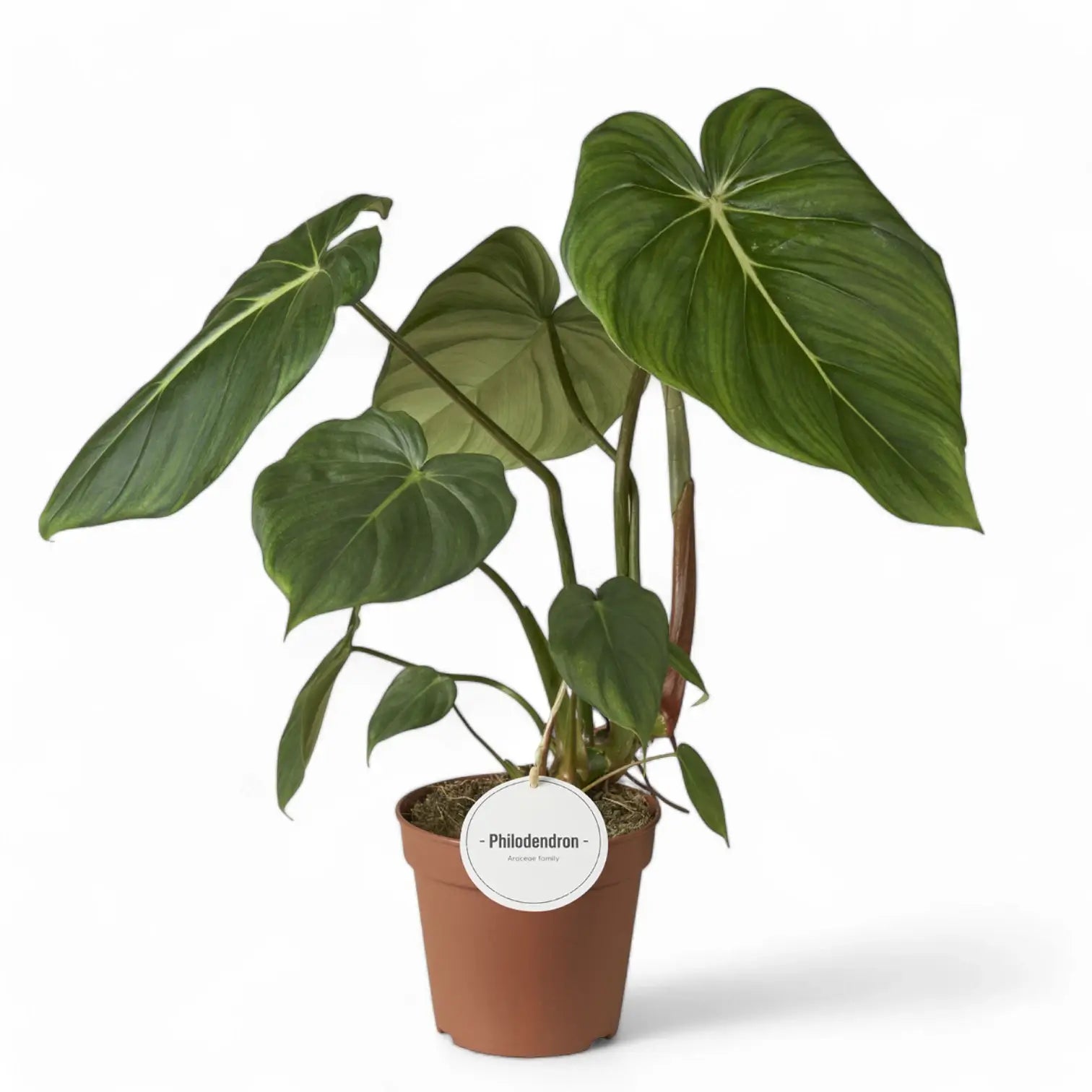
philodendron araceae family Philodendron pastazanum – Foliage FactoryPhilodendron pastazanum Philodendron pastazanum is a ground creeping species in the Araceae family, with broad green leaves, long petioles and thick stems that move across the substrate surface. Mature leaves become large and broadly ovate to peltate, with visible venation and a wide blade held above the creeping stem. The repent stem travels over the substrate and needs surface room as new leaves develop. A wide pot allows the plant to extend

Philodendron pastazanum

Philodendron pastazanum is a ground-creeping species in the Araceae family, with broad green leaves, long petioles and thick stems that move across the substrate surface. Mature leaves become large and broadly ovate to peltate, with visible venation and a wide blade held above the creeping stem.

The repent stem travels over the substrate and needs surface room as new leaves develop. A wide pot allows the plant to extend naturally while keeping the growth point above the mix.

  • Leaf shape: Broadly ovate to peltate green blades with a wide base.
  • Venation: Strong basal and lateral veins become clearer as leaves size up.
  • Growth habit: Thick creeping to repent stem that travels across the substrate surface.
  • Native range: Ecuador to Peru, associated with wet tropical forest.

Philodendron pastazanum care for creeping growth

Use a wide, stable pot for Philodendron pastazanum and keep the creeping stem visible above the mix. The roots need moisture and oxygen at the same time, so a chunky aroid substrate is safer than a dense, water-retentive potting soil.

  • Pot choice: A wide pot gives the creeping stem space to extend without being buried.
  • Light: Bright indirect light, with protection from direct sun that can mark the broad leaf surface.
  • Water: Water when the upper substrate has started to dry, then let the pot drain fully.
  • Humidity: Moderate to higher humidity helps large leaves expand with fewer dry edges.
  • Temperature: Keep warm and stable, ideally above 18 °C, and protect the root zone from cold wet conditions.
  • Substrate: Use a coarse aroid mix with bark, mineral structure and fibre around the roots.
  • Repotting: Repot when the creeping stem reaches the pot edge, roots fill the container, or the substrate starts to break down.
  • Fertilising: Feed lightly during active growth with a balanced houseplant fertiliser at diluted strength.
  • Growth rate: Growth is usually steady indoors, with larger leaves developing when the stem has room to travel.

Philodendron pastazanum pruning, propagation and mineral substrates

  • Pruning: Remove damaged leaves close to the petiole base and keep the creeping stem above the substrate surface.
  • Propagation: Propagate from stem sections with at least one node and healthy root or aerial-root tissue.
  • Semi-hydro: Suitable for mineral or semi-hydro substrates if the rhizome-like stem stays above the medium and the roots remain oxygenated.
  • Training: Guide the stem across the pot surface rather than burying it into the mix.

Philodendron pastazanum stem, roots and broad-leaf issues

  • Soft creeping stem: Check whether the stem is buried or sitting against wet, compact substrate.
  • Yellowing leaves: Inspect roots if the mix stays wet deep in the pot.
  • Damaged leaf edges: Large leaves can mark from dry air, irregular watering or physical contact.
  • Root issues: Slow growth with yellowing leaves often points to poor drainage, compacted substrate or cold wet roots.
  • Pests: Check the leaf undersides, petioles and new growth for spider mites, thrips, mealybugs and scale.

Philodendron pastazanum safety and botanical background

Keep Philodendron pastazanum away from pets and children because its tissues contain calcium oxalate crystals. Sap may irritate sensitive skin.

Heinrich Wilhelm Schott published Philodendron in Wiener Zeitschrift für Kunst 3: 780 in 1829; the genus name comes from Greek-derived roots meaning “tree-loving.” Philodendron pastazanum was described by Kurt Krause in Notizblatt des Botanischen Gartens und Museums zu Berlin-Dahlem 15: 42 in 1940. The epithet pastazanum is formed from Pastaza with the Latinized ending -anum, meaning “of” or “from” Pastaza.

In a wide container, mature Philodendron pastazanum develops broad peltate leaves above a thick creeping stem that stays visible at the surface.

Shipping Notes
  • Free Standard Shipping on $100+ Orders to the USA.
  • Except Preorder products are shipped in 48 hours.
  • Delivery to the USA:
  1. Standard Shipping : 3-10 business days
  • If time is of the essence, please consider selecting expedited delivery for faster service.
Exchange/Return Notes
  • We offer a 30-day return/exchange service after receiving.
  • Final sale items are not eligible for returns or exchanges.
  • To process your return/exchange, please contact us at [email protected]
  • Please click here for more details>>> Return & Exchange Policy
SKU: 40835121485

Discover Niche Categories That Outsell philodendron araceae family

Top-Converting Item to Boost Your Average Order

4.2 ★★★★★
Based on 30 reviews
Sort
Highest Rating
Newest First
Oldest First
Product Reviews
C
Verified Purchase
Cl21
Lake Worth, US
★★★★★ 5
Nice little book
Format: Paperback
My son thinks it's great
WAS THIS REVIEW HELPFUL?YesReportShare
Reviewed in the United States on January 3, 2022
M
Verified Purchase
Michael Valdivielso
Chelsea, US
★★★★★ 5
Three books in one....
Format: Paperback
This is a three books in one. Could You Survive The Cretaceous Period, Could You Survive The Jurassic Period, and Could You Survive The Ice Age? It’s a LOT of fun. The last book is, in fact, split into three stories. As you get to try to survive in North America, Europe, and Australia. I enjoyed all the setting. Though I have to be honest I failed to return to the modern time from the Jurassic period. Trapped!!!! And…my friends in the book had a kid. I hope that does not destroy the timeline. But I enjoyed it. It reminded me a lot of the old Time Machine books.
WAS THIS REVIEW HELPFUL?YesReportShare
Reviewed in the United States on January 11, 2023
S
Verified Purchase
Sara
Grantham, US
★★★★★ 5
They choose reading over screen time!
Format: Paperback
The nephews (10 & 8) love these kinds of books! I bought the prehistoric one as well and after they were done they swapped to continue their adventures! They're asking for more and choose the books over screen time! I'd say thats a win for the Aunt!
WAS THIS REVIEW HELPFUL?YesReportShare
Reviewed in the United States on April 7, 2026
R
Verified Purchase
Reading Writing And Me
Birmingham, US
★★★★★ 5
Awesome!
Format: Hardcover
This was an awesome book with a focus on friendship and family which isn't seen often enough in YA. If you liked Who's That Girl, you'll love this music infused book. I have a full review for this book posted on my blog: Reading, Writing, And Me.
WAS THIS REVIEW HELPFUL?YesReportShare
Reviewed in the United States on February 2, 2018
D
Destiny B.
Belleville, US
★★★★★ 3
She starts the book off fairly amusing and relateable with an excellent depiction of anxiety and paranoia
Format: Paperback
This was actually a 3.5 star read for me, but the more I pondered it over the two-day span between finishing it and reviewing it, I realized it wasn't quite remarkable enough for me to round up. Here We Are Now tells the story of Taliah, a biracial white/Arabic teen who's never met her father. She's only working on an educated guess that he might be Julian Oliver, rockstar sensationalist, when the man shows up at her door one day to tell her that her assumptions were correct - and he wants to take her to meet his family, including his dying father. Tal isn't the most enjoyable narrator in the beginning of the story. She starts the book off fairly amusing and relateable with an excellent depiction of anxiety and paranoia, but those feelings quickly morph into a level of snark and distrust that's not pleasant to read through. Despite the fact that Julian's entire existence points blatantly to a million lies Tal's mother has fed her throughout her life, Tal refuses to place any blame on her mother. The nice thing about Taliah, however, is how much she grows; throughout the story, through a handful of "tough love" scenarios from multiple friends and family members, she learns that life isn't as black and white as she thinks it is. She grows to slowly trust people and open up, and is forced to come to terms with her unhealthy level of possessiveness over her best friend, Harlow. The most unexpected thing about Here We Are Now was how quickly and how much I fell in love with Tal's father, Julian. From the opening of the story, I honestly expected him to be this flighty, dirtbag sort of stereotypical rockstar who would show up, get her hopes up, and then shatter her dreams a few times before disappearing again at the end of the book. That is totally not Julian at all, though. From the beginning, he's awkward, uncertain, and a little bit shy about learning he's Taliah's father. I won't spoil the fine details for you, but we learn that Julian hasn't been half bad enough to deserve some of the events of the past, and he's actually a pretty well-meaning guy. His banter with Tal is so enjoyable, and I loved the way the we got to see the past through his memories, but they were written in Lena's (Tal's mother) perspectives. Harlow is Tal's childhood best friend, who happens to be a lesbian. I loved the idea of Harlow to bits: she's obsessed with baking, she's sassy, she's proud of her sexuality, and she's got a good head on her shoulders. Unfortunately, her actual interactions with Tal and the other characters in the story are cringe-y most of the time, and her "tough love" spiel about not relying on only one person would have been a lot better if it hadn't been laced with her breaking a promise to Tal so she could hang out with her girlfriend. The romance in this book was one hundred percent the biggest disappointment in the entire story. It felt so incredibly lackluster and out of place that I probably would have rounded up to 4 stars if I could have somehow gone through and edited out the entire existence of this friend-of-the-family character. He's not a bad kid, but it would be so nice to see a YA contemporary every now and then that doesn't end in a couple forming, and this book would have been perfect for that! Totally a missed opportunity. First of all, I am not Muslim - or religious at all - and I cannot speak for how good this rep was. I do know, however, that Jasmine Warga identifies as a Middle Eastern/American woman, so the POC rep is own-voice and was so enjoyable to read. Tal's mother's perspectives frequently reflect on her Muslim beliefs and family, as well as how incredibly homesick she is for Jordan. She frets constantly that she is letting her parents down if she doesn't make a name for herself in the States, and there is even a solid bit of conversation about hijab-wearing and eating habits! Of course, there is also the lesbian rep that I mentioned in Harlow's case, which I found really enjoyable. Harlow is out and proud and has no questions about her sexuality. There are no tropes, or painful moments we commonly see through queer characters in YA contemporary titles. All in all, Here We Are Now was a fun read, but nothing spectacular. Had it not been for the romantic aspect, I would have given this 4 stars, but it was such a downer that I couldn't justify rounding up the rating. If you're looking for a fun YA contemporary story about family, with some nice diverse representation thrown in, or if you're already a Jasmine Warga fan, I'd recommend picking it up.
WAS THIS REVIEW HELPFUL?YesReportShare
Reviewed in the United States on November 9, 2017

recommand products