Pay in installments of $5.09 with
 ,
,
 and
and

Shipping Estimate
USA
- USA
- CAN
- USA
- CAN
Ships within 48 hours · Estimated delivery Oct 2 - Oct 7
 Promo Codes Available:
For Your Every Summer RSVP, with Code: SUMMER15
Description
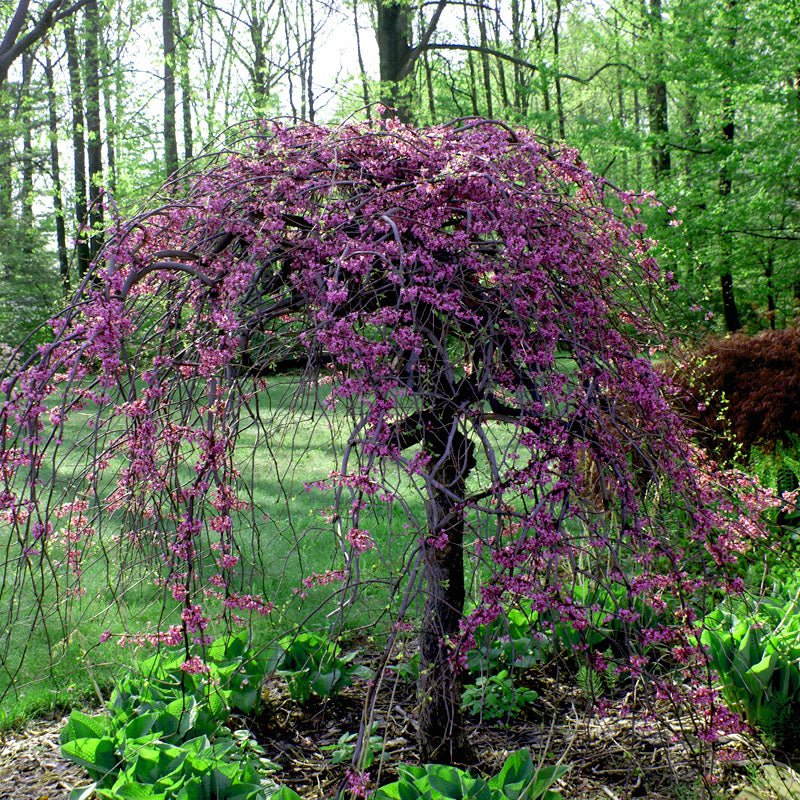
kew red lavender plants for sale Lavender Twist Weeping RedbudForm and Flowers Lavender Twist Weeping Redbud Small, Cascading Accent Tree Beautiful Pink Flowers in Spring Amazing Fall Color Attracts Butterflies & Hummingbirds Versatile in the Landscape Living Sculpture! Heart Shaped Leaves Unique Zig Zag Stems Easy Care Full Sun to Part Shade It's nearly impossible to resist the charm of this tiny, adorable tree. With its amazing spring and fall color and unique umbrella shape, the Lavender Twist Weeping Redbud
Form and Flowers Lavender Twist® Weeping Redbud
- Small, Cascading Accent Tree
- Beautiful Pink Flowers in Spring
- Amazing Fall Color
- Attracts Butterflies & Hummingbirds
- Versatile in the Landscape
- Living Sculpture!
- Heart-Shaped Leaves
- Unique Zig-Zag Stems
- Easy-Care
- Full Sun to Part Shade
It's nearly impossible to resist the charm of this tiny, adorable tree. With its amazing spring and fall color and unique umbrella shape, the Lavender Twist® Weeping Redbud tree (Cercis canadensis 'Covey') packs a lot of interest into a small plant!
The impact is accentuated by the weeping, twisted branches tipping towards the ground. This tiny tree explodes in the spring with electric lavender flower clusters cascading along the bare, weeping branches in early spring.
You'll be amazed how quickly hummingbirds and butterflies will flock to its fragrant branches. They'll adore the early nectar source!
As the season transitions into summer, the density of the Lavender Twist®s canopy becomes another very attractive feature. Large, dark, heart-shaped leaves cover the plant all through the growing season.
The leaves have a glossy upper surface and will shimmer in the sunlight. The brilliant yellow fall color adds another highlight to the performance.
No matter how large - or how small - your landscape is, there is always room for a Lavender Twist® or two.
We sell out of this fabulous tree every single year. If you see it in stock, order today to avoid disappointment!
How to Use Lavender Twist® Weeping Redbud in the Landscape
It's easy to use this versatile, endearing tree in many places in the landscape. It makes an incredible focal point as a living sculpture. It can also be used as a very effective accent tree.
Use Lavender Twist® to block out unwanted low views in the garden. You can think of it as a cute, little screen to give strategic privacy.
You'll love the way this pretty plant helps you relax on your patio. Plant it behind a loveseat or near a side door to boost your sense of space. Even if you can't plant it in the ground, it will do well when grown in a container. Use one of the enormous commercial-grade containers available now for decades of enjoyment.
Include one or more in your front yard. It's wonderful as a small tree in a foundation planting. Try it at the corner of your house, situated 15 feet away from the exterior wall. It will be a graceful accent to welcome guests.
Plant several Lavender Twist® along a rocky slope, then, simply allow the branches to grow long and cascade down to soften the wall. This tree can add a bold touch of drama without much extra care beyond providing water as needed.
Or, use 3, 5, or 7 in a berm (large raised mound) planting. We would advise grouping them into smaller clusters for the most natural look. If you use 7, for instance, try a group of 3 in a loose triangle. Then, give breathing room between another group of 4.
This tree has such a sculptural look with its twisting and turning branches. Give each one some breathing room with at least 10 feet between each plant.
Before you plant, draw out your plan on paper. Once your plants arrive, take another moment to place each tree while it's still in the container.
You'll also want to study each of your plants. Decide which trees you'll partner up together. Decide which direction you want each tree to face.
You really, truly can't go wrong or make a mistake with the Lavender Twist® Weeping Redbud.
For a unique screen, plant a row of them 6 - 8 feet apart and let the branches grow down to the ground. This will be an interesting feature all year long. Even in winter, the zigs and zags of the branches will draw your eye.
No matter where you place them, they will look amazing and add so much character. Order now and enjoy!
#ProPlantTips for Care
Lavender Twist® Weeping Redbud tree does require well-drained soil. If puddles remain on your soil after a rain or watering, consider elevating the planting area. Add 18 - 24 inches of soil above the native soil line and plant your tree directly in that mound.
Please don't plant your tree too low in the soil. For container plants, plant at the same level as the nursery soil line. For bareroot trees, look for the color change (soil line) and plant at that depth.
For best results in warm, dry climates, give protection from the hot afternoon sun. Provide a 3-inch deep layer of mulch. You'll start about 2 inches away from the trunk and apply mulch thickly all around the tree to a distance of 3 feet outside the canopy. This will keep the root system nice and cool.
Give it regular summer watering. This is especially important in hardiness Zones 9 - 10.
In the fall, you'll appreciate how quickly the leaves drop once the plant goes dormant. This makes fall cleanup a breeze.
Staking Tips for Young Trees
This beautiful plant naturally grows as a 5-foot-high groundcover, spilling over the ground if left to its own devices. It will spread out over a wide area and can cascade over walls.
But the expert growers at Nature Hills will field train the plant into a small tree with a sturdy trunk that grows upright. The head of the tree will be comprised of downward cascading branches.
Staking Lavender Twist® as a young plant will help continue to develop the height of the trunk. Train it to grow as tall as you'd like.
We do recommend that you keep it staked until the trunk is at least 4 to 5 feet tall. You can even keep it tied to a 10-foot bamboo pole until the trunk is 8 feet tall.
Check the tying tape regularly to ensure it doesn't grow too tight. Retie if you need to as your tree trunk thickens up in caliper.
You can also influence the look of the branches with easy pruning techniques.
Pruning Tips for Lavender Twist® Weeping Redbud
Prune your tree after flowering to direct the spring growth and allow airflow into the canopy.
As the plant matures, fall pruning is required to remove dead, weak, or crossed limbs inside the dense canopy. This will help maintain good airflow.
You also need to decide how long you want to let the branches grow.
Some people allow the cascading limbs to grow to the ground, where they spread out as ground cover around the base of the tree. This bold look grabs attention in any landscape, especially if you have a slope or rock wall.
Lavender Twist® also looks incredible when the straight trunk is exposed. You can prune the lowest branches right back to the main trunk. You can create a manicured umbrella tree by pruning the weeping laterals at the same length all around.
Any way you want to grow it, Lavender Twist® creates a spectacular look in the garden. Place your order now!
Explore More from Nature Hills
If you're drawn to the unique charm of the Lavender Twist® Weeping Redbud, consider exploring other redbud trees and flowering trees that bring spring color to your landscape. For comprehensive care guidance, check out our #ProPlantTips: Best Redbud Tree Varieties & Care Guide and Magical Weeping Trees & How To Care For Them! for specialized advice on weeping varieties. You might also appreciate browsing our collection of native plants to complement this North American beauty in your garden design.
Shipping Notes
- Free Standard Shipping on $100+ Orders to the USA.
- Except Preorder products are shipped in 48 hours.
- Delivery to the USA:
- Standard Shipping : 3-10 business days
- If time is of the essence, please consider selecting expedited delivery for faster service.
Exchange/Return Notes
- We offer a 30-day return/exchange service after receiving.
- Final sale items are not eligible for returns or exchanges.
- To process your return/exchange, please contact us at [email protected]
- Please click here for more details>>> Return & Exchange Policy