SKU: 42958893829
philodendron brasil scientific name

philodendron brasil scientific name Shop 'Philodendron brasil' Care and Growing Guide

Sale price$24.81 Regular price$27.57
Save 10%

Pay in installments of $6.89 with ShopPay, AfterPay and Klarna

Shipping Estimate
USA
  • USA
  • CAN

Ships within 48 hours · Estimated delivery Aug 7 - Aug 12

Promo Codes Available:

For Your Every Summer RSVP, with Code: SUMMER15

Description

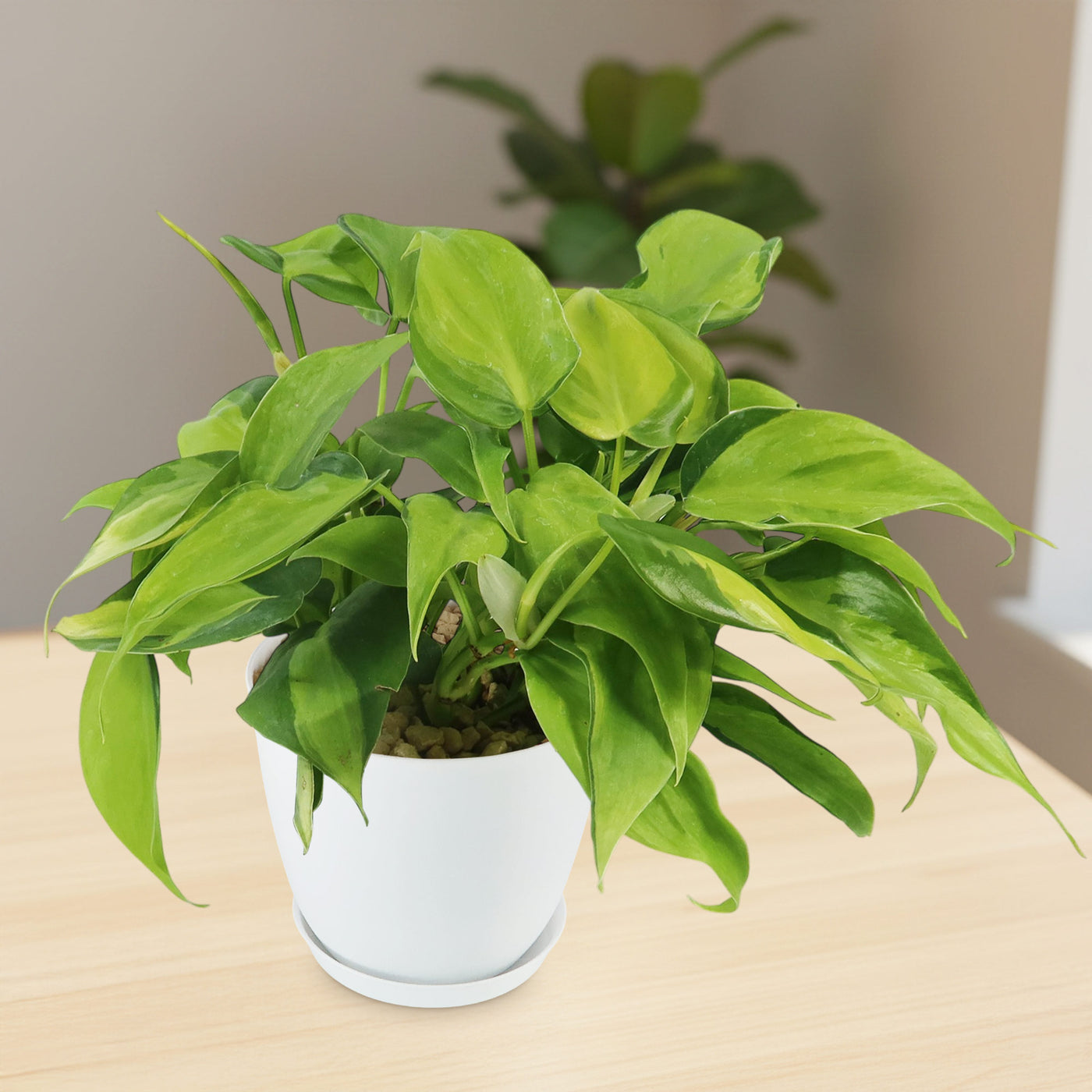
philodendron brasil scientific name Shop 'Philodendron brasil' Care and Growing GuideThe Brasil Philodendron brasil, also known as Philodendron hederaceum brasil, is a popular and easy care houseplant known for its colorful, variegated leaves and vining growth habit. It gets its name for its resemblance to the colors of the Brazilian flag. The brasil plant boasts heart shaped leaves with vibrant green and lime yellow stripes that brighten up any indoor space. Its often featured in modern interior designs, bringing life and color to

The Brasil Philodendron brasil, also known as Philodendron hederaceumbrasil’, is a popular and easy-care houseplant known for its colorful, variegated leaves and vining growth habit. It gets its name for its resemblance to the colors of the Brazilian flag. The brasil plant boasts heart-shaped leaves with vibrant green and lime-yellow stripes that brighten up any indoor space. It’s often featured in modern interior designs, bringing life and color to spaces with its cascading vines.  

The ‘brasil’ is also well-known for its air-purifying qualities, as it can help filter toxins from indoor air, contributing to a healthier home environment. It is a member of the Araceae family, the Philodendron brasil is often mistaken for pothos due to its similar vining habit and heart-shaped leaves. However, its unique coloration and adaptability make it a prized choice for indoor gardeners looking to add a touch of the tropics. 

Native to Central and South America, Philodendron brasil thrives in tropical rainforests, where it naturally grows as a climbing or trailing plant.

In its natural habitat, it uses aerial roots to attach itself to tree trunks, which allows it to reach for dappled light through the dense canopy. This tropical origin makes it particularly well-suited for warm, humid indoor environments, where it can easily adapt to lower light levels and grow lush, cascading vines.

Its natural adaptability to both climbing and trailing forms makes it a versatile choice for hanging baskets, shelves, or as a table-top vine.

The Philodendron brasil has heart-shaped leaves with a soft, smooth texture and unique variegation, featuring deep green edges with bright, lime-green and chartreuse streaks running down the center. Each leaf varies in its pattern, giving the plant a dynamic, multi-toned look.

As it matures, the plant can grow vines that reach several feet in length, creating a beautiful cascading effect when grown as a hanging plant. With a mature height of about 2 feet in container settings and trailing vines that can extend to 6 feet or more, it’s a perfect fit for indoor spaces looking to achieve a lush, tropical look. 

Philodendron ‘Brasil’ rarely flowers indoors; however, in its natural environment, it produces small, insignificant flowers typical of the philodendron family. These blooms, while not particularly showy, appear as spathes and are designed to attract pollinators. 

Its popularity has grown alongside a surge in demand for variegated and tropical plants, making it a favorite for both beginner and seasoned plant collectors. With its forgiving nature and bold coloration, it’s frequently recommended as a top choice for those looking to start their plant journey.

When and How to Water Your Brasil Philodendron 

This is a pretty chill plant when it comes to watering – it's quite drought-tolerant, which means it can handle a bit of neglect when it comes to watering. It should never be kept in soggy soil for long, because Philodendron brasil is sensitive to excessive watering.

In the spring and summer growing season, water your Philodendron Brasil thoroughly when the top inch or two of soil feels dry, usually about once a week for established plants. This plant is somewhat drought-tolerant, so if it’s mature and well-rooted, it can handle slightly extended periods between waterings if needed. Just be sure to allow any excess water to drain from the pot to prevent waterlogging and protect against root rot. 

As the plant enters its dormant season in the fall and winter, you'll want to reduce the frequency of watering. During this time, let the soil dry out a bit more between waterings, but still ensure that the plant doesn't completely dry out. It's best to water less often during the dormant season to mimic the plant's natural growth cycle. Overall, aim to water your Philodendron brasil moderately, ensuring the soil is consistently moist but not waterlogged, to keep this lovely plant happy and thriving. 

Light Requirements – Where to Place Your Philodendron brasil Plant

When it comes to Philodendron brasil indoor care, it thrives in bright, indirect light. Place your Philodendron brasil near a window where it can receive plenty of filtered sunlight throughout the day.

Avoid direct sunlight as it can scorch the leaves. If you notice the variegated leaves losing their vibrant colors, it may be an indication that the plant is not receiving enough light.

For outdoor cultivation, it’s essential to find a spot that offers filtered sunlight or partial shade. This climbing plant can handle some morning sun or dappled sunlight but should be protected from harsh afternoon sun, which can cause leaf burns.

Ensure it's in a location where it can benefit from gentle sunlight without being exposed to intense rays for extended periods. By providing the right balance of light indoors and outdoors, you can help your Philodendron brasil thrive and show off its beautiful foliage.

Optimal Soil & Fertilizer Needs 

For the Philodendron brasil, it's essential to use well-draining soil that retains some moisture but doesn't become waterlogged. A good mix for this plant would be a blend of peat moss, perlite, and regular potting soil to provide adequate drainage while retaining some water for the plant's roots. This type of soil will help prevent overwatering and root rot, allowing your brasil plant to thrive. Ideally, you want to use our specialized potting mix, opens in a new tab that contains 5 natural substrates and organic mycorrhizae to promote the development of a strong root system that helps your brasil plant to thrive. 

When it comes to fertilizer, you can feed your climbing Philodendron brasil with a balanced liquid NPK fertilizer with an equal ratio of 5-10-5, during the growing season in spring. Fertilize your plant once a year to provide it with the necessary nutrients for healthy growth and vibrant foliage. During the dormant season in fall and winter, you can reduce or stop fertilizing since the plant's growth slows down during this period. By following a consistent fertilizing schedule and using well-draining soil, you can ensure that your Philodendron brasil remains healthy and happy. 

Hardiness Zones & More 

When growing indoors, the Philodendron brasil thrives in typical indoor temperatures ranging from 65-85°F. It prefers average to high humidity levels, so it's beneficial to provide some extra humidity through methods like misting the leaves or using a humidifier, especially during dry winter months when indoor air tends to be drier. Maintaining a comfortable temperature and humidity level indoors will help your Philodendron brasil grow lush and healthy. 

For outdoor cultivation, this plant is typically suitable for outdoor growth in USDA zones 10 to 11, where temperatures generally stay above 30°F. In these zones, the Philodendron brasil can thrive in a shaded or partially shaded area with warm temperatures and high humidity levels. By ensuring the plant is protected from cold drafts and extreme temperature fluctuations, you can help it flourish in an outdoor setting within the appropriate hardiness zones. 

Philodendron brasil prefers high humidity levels, ideally between 60-80%. If outdoor humidity levels are lower, consider misting the plant regularly or using a humidifier to create a more suitable environment for growth.

Wildlife – Brasil Plant Attracts the Following Friendly Pollinators 

The Philodendron brasil is known to attract pollinators by heating up its flowers such as bees, butterflies, beetles, and hummingbirds with its vibrant foliage and unique variegation. While the primary method of pollination for Philodendron plants is through wind and self-pollination, having these pollinators around can still benefit the plant and contribute to a healthy ecosystem. The attractive leaves of the Philodendron brasil can catch the eye of pollinators, adding beauty to your indoor or outdoor space. 

Butterflies
Bees
Hummingbirds
Lady Bugs
Multi Pollinators
Other Birds

Toxicity: According to the ASPCA, the brasil plant is considered mildly toxic to pets and humans. The plant contains calcium oxalate crystals, which can cause irritation and discomfort if ingested by animals. But it is safe to touch and handle, as long as the sap is not ingested.

How to Propagate Philodendron brasil 

To propagate your Philodendron brasil, you can use stem cuttings. Choose a healthy stem with a few leaves and make a clean cut just below the node. Place the cutting in water or a well-draining soil mix, ensuring the node where the leaf meets the stem is submerged or buried. Keep the cutting in a warm, humid environment with indirect light, and roots should start to develop in a few weeks. Once the roots are established, you can transplant the cutting into a pot with potting soil to continue growing your Philodendron brasil collection. 

Key Takeaways 

  1. Philodendron brasil is moderately drought-tolerant, making it resilient in low-water conditions and perfect for those who may occasionally forget to water.
  2. Known for its air-purifying qualities, Philodendron brasil helps filter toxins such as formaldehyde and benzene from indoor air, contributing to a healthier home environment.
  3. This plant adapts well to lower light conditions, making it ideal for indoor spaces with indirect or diffused light.
  4. With a straightforward propagation process via stem cuttings, the brasil plant is easy to multiply, allowing plant enthusiasts to share it or expand their collections.
  5. Its unique, heart-shaped leaves are variegated with green and bright yellow, giving it a striking appearance that adds vibrant greenery to any indoor setting.

The Bottom Line

Overall, the Philodendron ‘brasil’ is a stunning, low-maintenance popular houseplant prized for its heart-shaped leaves with striking variegation in shades of deep green and vibrant yellow, resembling the colors of the Brazilian flag. This vining plant not only adds a tropical touch to any indoor space but is also remarkably easy to care for, making it an excellent choice for beginners and experienced plant enthusiasts alike. It thrives in bright, indirect light but can adapt to lower light conditions, maintaining its unique color patterns with minimal sunlight. Regular watering to keep the soil lightly moist and occasional feeding during the growing season helps this philodendron flourish, while it tolerates periods of dryness if needed. With its air-purifying qualities and fast-growing vines, the Philodendron ‘brasil’ is a versatile, eye-catching addition to homes and offices, perfect for trailing from shelves or as a climbing accent on plant supports.

Shipping Notes
  • Free Standard Shipping on $100+ Orders to the USA.
  • Except Preorder products are shipped in 48 hours.
  • Delivery to the USA:
  1. Standard Shipping : 3-10 business days
  • If time is of the essence, please consider selecting expedited delivery for faster service.
Exchange/Return Notes
  • We offer a 30-day return/exchange service after receiving.
  • Final sale items are not eligible for returns or exchanges.
  • To process your return/exchange, please contact us at [email protected]
  • Please click here for more details>>> Return & Exchange Policy
SKU: 42958893829

Discover Niche Categories That Outsell philodendron brasil scientific name

Top-Converting Item to Boost Your Average Order

4.4 ★★★★★
Based on 13 reviews
Sort
Highest Rating
Newest First
Oldest First
Product Reviews
A
Amazon Customer
Natrona Heights, US
★★★★★ 5
Great book
Format: Paperback
Got this for my son and helped him finish coding his game although it takes some time to learn it I definitely recommend this book
WAS THIS REVIEW HELPFUL?YesReportShare
Reviewed in the United States on September 21, 2024
T
Verified Purchase
Tyler Backus
Houston, US
★★★★★ 1
Out of date and just plain not good instruction
Format: Kindle
This has problems that I have seen from many non-educators when they write an instructional book (so I hope she is not an actual educator). The book makes leaps of faith of knowledge and has a belief that they have shown you well enough to do one thing (which it doesn't) and that you can extrapulate from that knowledge to do something completely different. They makes these leaps of faith in the first couple hours, when people are just getting used to coding in this language. This book also fails to even tell you what different parts of the code are doing, so that you can make those leaps of knowledge. I also find this happens a lot when people write coding books. They know how to code, so they figure if they just show you parts of a code you will figure out why it did what it did, instead of explaining to you what different parts of code actually do when you put them together. I made it almost through hour two before I gave up trying to decipher all the nonsense that was written in this book. In hour two they have you make a sphere, but never actually show you how to make the sphere, but then start telling you how to create dialog for the sphere. Apparently in hour 1, even though it was never explained, I was supposed to understand how to make a lava field with objects.
WAS THIS REVIEW HELPFUL?YesReportShare
Reviewed in the United States on May 11, 2024
J
Verified Purchase
Josh D
Lexington, US
★★★★★ 5
Must-read book for everyone (not just Ai proponents)
Format: Paperback
I realize I say this about every AI book I read, but this one really is the best (so far), and most important in my view."Atlas of AI" by Kate Crawford is a well-researched work that should appeal to AI enthusiasts and opponents alike; not because it flatters either side, but because it challenges both to think beyond the usual narratives. Whether you see Ai as a revolutionary tool for progress or a dystopian force of unchecked power, there’s no denying that it it is shaped by real-world systems of labor, industry, and politics.This book makes it clear: Ai is not just about algorithms and efficiency. It is about power: who wields it, who profits from it, and who is left to bear its costs. For those who celebrate Ai’s potential (like me), Atlas of AI offers a sobering look at the material and ethical realities behind the inertia and hype.For those who critique AI as a damaging or dystopian force, the book provides a well-researched (eye-opening) foundation for those concerns.What makes it especially compelling is that it doesn’t fall into the trap of alarmism OR blind optimism. Instead, Crawford takes us on a deep, methodical journey through the infrastructures that sustain artificial intelligence, revealing the hidden costs (labor, environmental, political) that come with EVERY so-called innovation.**Deconstructing the Myths of AI**One of the book’s greatest strengths is its ability to cut through the persistent myths surrounding artificial intelligence. Crawford systematically dismantles the notion that AI is a purely immaterial, frictionless technology. She examines the vast mining operations necessary to produce hardware, the exploitative labor practices behind data annotation, and the enormous energy demands of AI training model. Ai, in her analysis, is not an autonomous or inevitable force—it is an industrial system deeply intertwined with capitalism, surveillance, and environmental degradation (much of her research applies to Big Tech, and not just Ai). This perspective is crucial in an era where Ai is often presented as a revolutionary technology that exists outside of history and politics.Crawford makes it clear that Ai is not “just math” but a political tool wielded by those in power, often reinforcing existing inequalities. The Ethics of Extraction and Control: One of Crawford's most compelling arguments is the framing of AI as an extractive industry: one that harvests resources, labor, and data in much the same way as colonial enterprises have in the past.The book traces how Ai development is dependent on resource-intensive practices, from lithium mining for hardware to the invisible armies of low-wage workers tasked with cleaning and labeling data. Crawford argues Ai is a system built on the extraction of value from the most vulnerable populations, whether they be gig workers, Amazon's "Mechanical Turk" laborers, or the communities living in the shadow of server farms that consume enormous amounts of water and energy.Crawfors cites numerous examples of how corporations like Google and Amazon, and even the government, skirt the system to save on taxes, while promising better futures to the resource-rich communities they exploit. The theme of extraction extends beyond the physical to the digital realm.Crawford shows how personal data is commodified under the guise of “training AI,” reinforcing the asymmetrical relationship between those who generate data and those who profit from it.The book’s critique aligns with broader concerns about surveillance capitalism, demonstrating how Ai is often wielded as a means of control rather than liberation. (I learned some sad truths about local community policing and Ai) AI and the Politics of Classification Crawford explores how classification systems, often presented as objective/neutral, are deeply embedded with biases. Ai systems are trained on datasets shaped by human prejudices, yet are frequently deployed as infallible arbiters of truth. Crawford examines how facial recognition, predictive policing, and automated hiring systems encode and reinforce racial, gendered, and socioeconomic biases, often amplifying systemic discrimination. This analysis is particularly relevant in today’s discussions on AI ethics. Crawford’s work underscores that Ai bias is not simply a technical glitch to be fixed, but rather a feature of the broader political and economic structures that Ai is designed to serve. A Necessary and Timely Intervention For those who have followed debates on Ai ethics, surveillance capitalism, and data justice, Atlas of AI provides a well-researched and compelling synthesis of these concerns, free from the noise we commonly hear on social media outlets. It is particularly valuable in challenging the mainstream, corporate-driven narratives that portray Ai as an inevitable and benign technological force. Crawford’s writing is insightful, well-documented, and accessible, making complex ideas understandable without sacrificing depth. While the book is critical in tone, it does not merely scold Ai developers; rather, it offers a crucial intervention in ongoing discussions about how Ai is developed, deployed, and governed.The book had a surprisingly anti-capitalist/anti-technocratic tone, that inspired me to continue learning/aligning under the anti-fascist flag so many of us wield. For artists, researchers, and technologists (especially those working at the intersection of Ai and creative expression) Atlas of Ai serves as a stark and vital reminder that technology is never neutral. It invites us to think critically about the systems we engage with and the ethical implications of our participation in Ai-driven ecosystems (and really, all major technologies). Atlas of AI is an essential read for anyone interested in understanding the broader implications of artificial intelligence beyond the hype. It moves beyond discussions of algorithms and model accuracy to examine the power structures that shape Ai’s impact on society. By reframing AI as a material and political phenomenon rather than a disembodied technological marvel, Crawford provides a necessary course-correction to the dominant narratives surrounding Ai. This book is not just for AI skeptics but for anyone who wants to engage in a deeper, more nuanced conversation about the technology shaping our present and future. If we are to meaningfully confront the challenges AI presents, we need more books that challenge us to think critically, demand accountability, and advocate for more just and equitable technological futures. For those of us who engage with AI,whether as artists, researchers, developers, or critics, Atlas of AI should serve as a wake-up call. Too often, Ai artists defend the technology out of pride or personal investment, dismissing valid ethical concerns as fear-mongering. On the other side, anti-AI voices often resist engagement with nuance, preferring to frame Ai as an existential threat rather than a tool shaped by human systems of power. Both of these stances miss the point. Crawford makes it clear that the real battle isn’t Ai vs. artists or progress vs. tradition, it’s about who controls the technology, who benefits from it, and who is left to suffer the consequences. If we are serious about the future of art, technology, and creative autonomy, we must move beyond our egos and engage critically with the systems that shape Ai. This book gives us all a foundation to unify under, not in opposition to Ai itself, but in opposition to the unchecked power structures that exploit it and us.
WAS THIS REVIEW HELPFUL?YesReportShare
Reviewed in the United States on February 6, 2025
J
Verified Purchase
Jeff Jenner
Fort Morgan, US
★★★★★ 5
I wish Americans could read Kate Crawford’s book
Format: Kindle
It is a sad bit of irony that the “information revolution” has created a society in which the vast majority of Americans don’t know where their food or water come from. “I don’t get all this talk about drought. You just turn on the faucet and get all the water you want.” It’s no wonder that we’ve created an entire generation of Americans who have no idea where their computing resources come from. “I don’t get all this ‘cost of AI’ talk. ChatGPT is free. Just open your iphone and it will answer any question you have.” While Crawford’s Atlas of AI is a bit sesquipedalian, it is a comprehensive, well-organized, impeccably researched story of where all our miraculous computing power actually comes from. For all the Doomer talk of AI someday making humans extinct, Crawford shows that the way the most powerful American corporations are implementing AI is ALREADY causing vast harm to humans globally, and it will only continue to get worse. Not from some mythical science fiction robot suddenly becoming smarter than people, but from mass ignorance of the slow but steady human-driven global natural resource depletion and exploitation of the most vulnerable people. It’s doubly sad that our polarized culture war politics prevents most Americans from asking the critical questions that Crawford explores in her journey through the landscape of AI creation and production. This book is neither Marxist nor anti-capitalist. It simply argues that, just like there are better ways of managing our water and food resources, there is a better way to manage our computing resources—the first step being a common understanding that there is a natural resource and human cost to every floating point operation that a computer performs. I wish that Americans were able to read, understand, and appreciate such an important analysis of the biggest problem that will confront humans in the next few decades.
WAS THIS REVIEW HELPFUL?YesReportShare
Reviewed in the United States on December 3, 2025
T
Verified Purchase
Thomas
West Palm Beach, US
★★★★★ 4
Removing data from databases or datasets.
Format: Kindle
If the share a video or photo option was working I would share the screenshot. However, I'll quote it. "Most of the adults on the list had never been charged, but once they were included, ther was no way to have their name removed." This needs more clarification as you can delete data from a database. Especially if web based, there should be CRUD principles added. If that was not the case there's still ways to delete the data or even change it's classification. I will give benefit of the doubt that there's an underlying reason it was said there was no way to remove or that I even misunderstood the context around it. Just seems a little like reaching by this point. Also, I do like this book and a fresh perspective on data collection even though at times it seems to read a little emotional for what I was expecting of an Atlas. Regardless looking past the verbiage of emotions, this is a great book that does point out a lot of history with AI. Thank you for creating this book! Also giving more data to the internet to be used for.... AI... lol
WAS THIS REVIEW HELPFUL?YesReportShare
Reviewed in the United States on November 27, 2024

recommand products