round leaf succulent Paddle Plant ‘Kalanchoe thyrsiflora’The Paddle Plant, also known as Kalanchoe thyrsiflora, is a distinctive succulent admired for its compact rosette of thick, rounded, paddle shaped leaves. Its sculptural form and soft, powdery foliage make it a popular choice among succulent collectors, xeriscape gardens, and low maintenance houseplant enthusiasts. This species is especially valued for its ability to thrive in dry conditions with minimal care, making it highly suitable for arid and
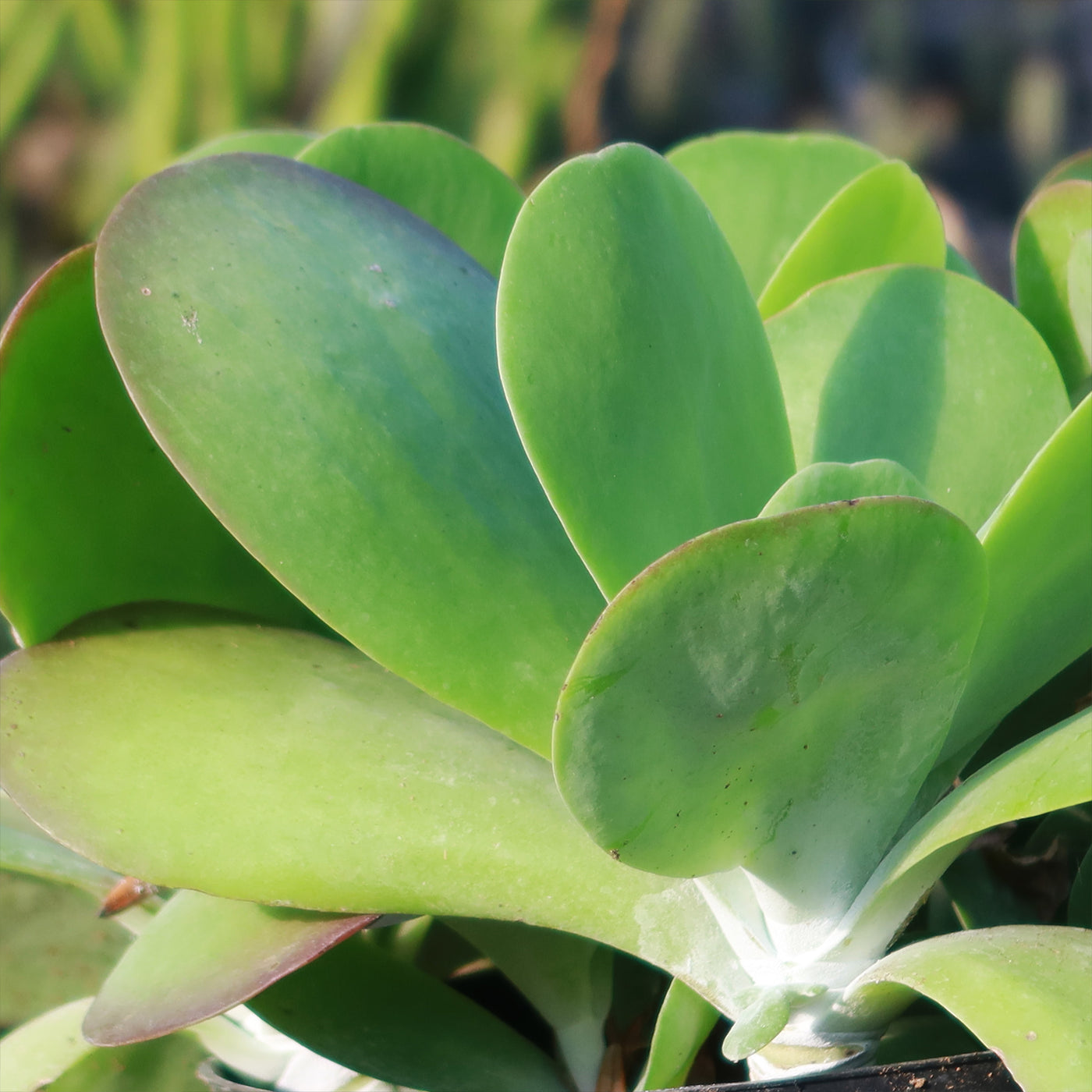
The Paddle Plant, also known as Kalanchoe thyrsiflora, is a distinctive succulent admired for its compact rosette of thick, rounded, paddle-shaped leaves. Its sculptural form and soft, powdery foliage make it a popular choice among succulent collectors, xeriscape gardens, and low-maintenance houseplant enthusiasts. This species is especially valued for its ability to thrive in dry conditions with minimal care, making it highly suitable for arid and water-wise landscapes.
In addition to the common name Paddle Plant, this species is sometimes referred to as the dog tongue, desert cabbage, Flapjack Plant due to its flattened, overlapping leaves that resemble a stack of pancakes.
Native to South Africa, this succulent features smooth, rounded leaves covered in a white, powdery coating (farina) that helps protect it from intense sunlight and reduces water loss.
The foliage remains primarily light to medium green and may develop a faint reddish or pinkish blush under strong sun exposure, but it does not typically produce the deep red margins often seen in misidentified forms.
These Kalanchoe thyrsiflora maintain a compact, symmetrical rosette growth habit, making it ideal for container planting, rock gardens, and succulent arrangements.
It is a slow-growing but highly resilient plant that can reach a moderate size while maintaining a neat, structured appearance. The Paddle Plant is a relatively small succulent that grows up to 18 inches tall and spreads up to 8 inches wide.
In late winter to early spring, mature plants produce a tall flower spike that can reach up to 3 feet in height. The blooms are tubular and yellow, attracting pollinators such as bees.
After flowering, the main rosette may naturally decline, but the plant often continues its life cycle through offsets that develop around the base, ensuring ongoing growth and propagation.
When and How to Water Your Paddle Succulent
The paddle succulent plant is a drought-tolerant succulent that prefers to dry out fully between waterings, making it far more forgiving if you forget to water than if you overdo it.
The paddle plant should be watered every 2 to 3 weeks during the growing season, with watering reduced to about once every 4 to 6 weeks during the dormant season, keeping moisture very light.
In the spring and summer, always allow the soil to dry out completely before watering again. This soak and dry approach helps prevent root rot, which is one of the most common issues with this plant.
In the fall and winter, your paddle plant needs even less water as growth slows down. Since cooler temperatures and lower light reduce evaporation, it is best to hold back on watering and only add a small amount when the soil is fully dry.
Flapjack Plant ‘Kalanchoe luciae’
It is the true flapjack succulent, often mistaken for the paddle plant due to their similar flat, rounded leaves. It stands out with thicker, more vibrant foliage that develops rich red edges in bright sunlight, making it both distinctive and easy to recognize.
Learn more →
Light Requirements – Where to Place Your Paddle Plant
When growing indoors, your Paddle kalanchoe thrives in bright, indirect light, which is a key part of proper paddle plant care.
It should be placed near a sunny window, preferably one facing south or west, where it can receive at least 4 to 6 hours of bright light daily.
If natural sunlight is limited, supplement with a grow light to maintain healthy growth and prevent leggy, stretched stems.
Insufficient light can cause the plant to lose its vibrant red margins and slow down its overall growth.
When growing outdoors, the Paddle Plant prefers the full sun to partial shade. Ideally, it should receive 6 to 8 hours of direct sunlight daily.
Morning sunlight is preferable to intense afternoon sun, which can scorch the leaves if temperatures are excessively high. If growing in hot climates, consider providing some afternoon shade to prevent sun damage, especially during heat waves.
For both indoor and outdoor growth, it is essential to gradually acclimate the plant to increased sunlight exposure to avoid sunburn. When moving from indoors to outdoors, introduce it to direct sunlight over a week or two, starting with a few hours per day.
Optimal Soil & Fertilizer Needs
The Kalanchoe thyrsiflora prefers a very well-draining, sandy or gritty soil mix, along with light fertilization once a year in spring. Planting it in heavy or moisture-retaining soil can lead to compacted roots, poor growth, and eventually root rot, so it is best to use a specialized succulent potting mix with organic mycorrhizae can also support a stronger, healthier root system and help your plant grow more efficiently.
When it comes to fertilizing your kalanchoe plant, apply a balanced, low-strength NPK fertilizer once a year in spring to maintain steady and healthy growth. For best results, use a diluted fertilizer with an NPK ratio around 5-10-5, where slightly higher phosphorus supports stronger roots and fuller leaves.
During fall and winter, when the plant enters dormancy, fertilizing should be avoided completely. Growth slows down during this time, and adding nutrients can build up in the soil and damage the roots.
Hardiness Zones & More
In the United States, this is mostly an indoor plant, but if you live in southern Florida or Hawaii, then you can cultivate it outdoors in USDA zones 9-11.
It prefers temperatures between 60-80°F and moderate humidity levels.
Always provide full to partial sun exposure for the best growth and coloration.
If you live in cooler regions, it is best grown in containers as it is not frost tolerant, and temperatures below 30°F can damage or even kill it. Even light frost can leave marks on the leaves or cause them to become soft and mushy.
How to Grow as a Houseplant
Growing your paddle plant indoors is easy as long as you give it the right environment. It prefers warm conditions, ideally between 60°F to 85°F. It does not handle cold well, so keep it away from drafts, air conditioners, or chilly windows during cooler months. In terms of humidity, it thrives in low to average indoor humidity, which makes it a great match for most homes since it does not need extra misting or moisture in the air.
Set your paddle plant succulent in a bright spot with plenty of indirect sunlight, like near a south or west-facing window. If your space is a bit dim, you may notice slower growth and less vibrant color, so aim for the brightest area you have without exposing it to intense, prolonged direct rays.
Wildlife – Paddle Plant Flowers Attract the Following Friendly Pollinators
The Paddle plant produces tall, yellow, tubular flowers that attract friendly pollinators such as bees, butterflies, and hummingbirds. These flowers typically appear in late winter or early spring and provide an essential nectar source for beneficial insects.
Butterflies
Bees
Hummingbirds
Lady Bugs
Multi Pollinators
Other Birds
According to the ASPCA, the Kalanchoe thyrsiflora is considered mildly toxic to cats, dogs, and birds. If ingested in a large amount, it can cause mild to moderate symptoms, including vomiting, drooling, and digestive upset. However, it is safe to touch and handle, making it a popular choice for indoor plants.
How to Propagate Your Kalanchoe thyrsiflora
The Paddle plant kalanchoe can be propagated through leaf cuttings or offsets. To propagate through leaf cuttings, simply remove a healthy leaf from the plant and allow it to callous before placing it in well-draining soil. The easiest method is separating offsets that naturally grow at the base of mature plants. Gently remove them, allow the cut ends to callous for 24-48 hours, then plant them in well-draining soil. Keep the soil lightly moist until roots establish.
Key Takeaways
- Kalanchoe thyrsiflora is a unique indoor houseplant with thick, paddle-shaped leaves that form a compact, low-growing rosette, making it ideal for bright windows and container displays.
- Unlike Kalanchoe luciae, the true Paddle Plant does not develop strong red margins, typically maintaining soft gray-green foliage even in bright light.
- As a drought-tolerant succulent, it stores water in its leaves and thrives with simple, low-maintenance care, making it a great choice for busy plant owners.
- When mature, it produces a 3-foot-tall flower stalk with fragrant, tubular yellow blooms that attract pollinators like bees and butterflies.
- It adapts well to indoor environments, especially when placed in bright, sunny spots where it can maintain its compact shape and healthy growth.
The Bottom Line
Overall, the Paddle Plant (Kalanchoe thyrsiflora) is a visually stunning and low-maintenance succulent that adds a bold, modern aesthetic to any garden or home. Its stunning red-tinged leaves and attractive yellow flowers make it a popular choice for succulent lovers. With proper watering, light exposure, and temperature considerations, this plant can be grown successfully indoors and outdoors. Whether grown in a container, rock garden, or xeriscape landscape, the Paddle Plant is a resilient and rewarding addition that brings beauty and texture to any space.
 ,
,
 and
and

 Promo Codes Available: