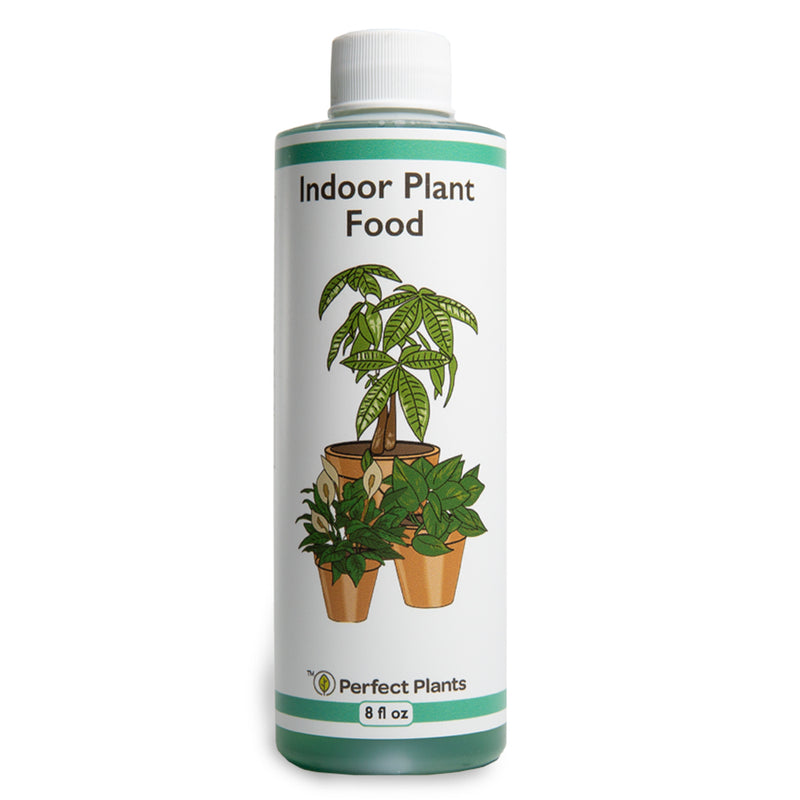
SKU: 43882361990
high nitrogen fertilizer for indoor plants

high nitrogen fertilizer for indoor plants Liquid Houseplant Fertilizer - 8 fl oz

Sale price$21.77 Regular price$24.19
Save 10%

Pay in installments of $6.05 with ShopPay, AfterPay and Klarna

Shipping Estimate
USA
  • USA
  • CAN

Ships within 48 hours · Estimated delivery Jul 31 - Aug 5

Promo Codes Available:

For Your Every Summer RSVP, with Code: SUMMER15

Description

high nitrogen fertilizer for indoor plants Liquid Houseplant Fertilizer - 8 fl ozFeed Your Entire Indoor Plant Jungle with One Fertilizer Balanced 9 3 6 Formula Nourishes Foliage, Roots, and Flowers for Healthy Growth Simplify plant care with our Liquid Fertilizer for Indoor Plants. With a 9 3 6 NPK ratio and added micronutrients, this all in one plant food keeps every houseplantleafy greens, flowering favorites, and everything in betweenhealthy, vibrant, and growing strong. If you love houseplants, you probably have more than

Feed Your Entire Indoor Plant Jungle with One Fertilizer

Balanced 9-3-6 Formula Nourishes Foliage, Roots, and Flowers for Healthy Growth

Simplify plant care with our Liquid Fertilizer for Indoor Plants. With a 9-3-6 NPK ratio and added micronutrients, this all-in-one plant food keeps every houseplant—leafy greens, flowering favorites, and everything in between—healthy, vibrant, and growing strong.

If you love houseplants, you probably have more than one! When your home looks like a lush jungle of greenery, keeping track of every plant’s needs can be difficult. That’s why you need one perfectly balanced fertilizer to make every plant happy and keep your to-do list simple!

Our liquid indoor plant food has a 9-3-6 NPK ratio. The high nitrogen promotes healthy, green foliage while the other nutrients encourage roots to grow strong and flowering plants to produce buds. This fertilizer is also a great source of other nutrients your plants need to be healthy. It has calcium, magnesium, sulfur, copper, iron, manganese, and zinc, all of which will promote your plants’ overall growth and health.

This indoor plant food can be prepared the same way for all your indoor plants, but the frequency you need to apply it will vary for each plant. You’ll need to keep track of what each plant needs, but you’ll only have to prepare one fertilizer for all of them.

How to Use Liquid Fertilizer for Indoor Plants

You can prepare a large portion of liquid plant food at once if you need to feed many plants. Mix one teaspoon of fertilizer per one gallon of water. If you have any leftovers, you can store them in a container with a lid and keep them for up to six months.

To feed your plants, water them according to your regular watering schedule but occasionally replace the water with the fertilizer based on each plant’s needs.

How Often to Fertilize Indoor Plants

While this plant food is suitable for all plants, the frequency each plant will need it every month will vary depending on the plant.

Fast-growing plants usually need fertilizer every 2-3 weeks in spring and summer and less often in the winter. Slow or moderate-growing plants usually only need fertilizer once or twice every month in spring and summer and may not need it at all during the winter. 

You can determine if your plants are getting enough nutrients based on how much you water them. Different plants will have different signs of not receiving enough water, but the most common signs are wilting, dropping leaves, or the development of crunchy brown leaves. Dehydration is challenging to reverse, but once you give your plants enough water, it will promote new growth. Brown leaves won’t be able to turn green again, so you’ll need to remove those.

A common sign of too much water is yellowing leaves. Leaves will start to turn yellow on the tips and edges until the entire leaf is yellow. Some plants may wilt or drop leaves if they receive too much water. The best way to tell if your plant is overwatered is to check the soil. If it’s wet, you may be overwatering it, or there may not be drainage holes in the container.  

Why Buy Plant Food from Perfect Plants?

Since 1980, Perfect Plants has been family-run and grower-direct, raising premium plants under the Florida sun. Our expert care ensures every product we offer, from live trees to fertilizers, arrives ready to help your plants flourish indoors and out.

Shipping Notes
  • Free Standard Shipping on $100+ Orders to the USA.
  • Except Preorder products are shipped in 48 hours.
  • Delivery to the USA:
  1. Standard Shipping : 3-10 business days
  • If time is of the essence, please consider selecting expedited delivery for faster service.
Exchange/Return Notes
  • We offer a 30-day return/exchange service after receiving.
  • Final sale items are not eligible for returns or exchanges.
  • To process your return/exchange, please contact us at [email protected]
  • Please click here for more details>>> Return & Exchange Policy
SKU: 43882361990

Discover Niche Categories That Outsell high nitrogen fertilizer for indoor plants

Top-Converting Item to Boost Your Average Order

4.8 ★★★★★
Based on 22 reviews
Sort
Highest Rating
Newest First
Oldest First
Product Reviews
P
Carnegie, US
★★★★★ 4
An important contribution
The historiography of secession is a complex one. For much of the last century there had been a tendency for historians to underplay the importance of slavery as a cause of the American civil war. Certaintly neo-Confederate apologists have sought to euphemize the cause of the conflict to an issue over tariffs, to matters of states rights, or to the "extremism" of the abolitionists. It is quite clear that these excuses will not survive a reading of this book. Sinha clearly shows, in her examination of South Carolina secessionism from nullifaction to fort Sumter, that slavery was the essence of its concerns. To show this she looks at the nullification crisis, the Mexican war, the Compromise of 1850, the South Carolinian movement to reopen the slave trade, and the secession crisis, based on exhaustive research of no less than 137 sets of private papers and diaries. But Sinha wishes not simply to refute the academically unimportant group of neo-Calhounites. She wishes to argue something broader. The South Carolinian defense of slavery was not, as many serious historians suggest today, simply the working out of the Southern American view of liberty. Increasingly, Sinha argues, South Carolina pro-slavery thought was not the expression of Southern Republicanism, but increasingly its very negation. It was not a coincidence that secessionism was strongest in South Carolina, the only state by 1832 where presidential electors and the governor were not popularly elected, where the legislature was crudely malapportioned, and where local offices were limited by the state government. It was also not a coincidence that slaves were a majority of South Carolinians, and slaveholders nearly a majority of South Carolinian whites. And it certainly was not a coincidence that non-slaveholders were noticeably less enthusiastic for nullification, secession in 1851 and secession in 1861. But although Southern nationalist discourse was clearly elitist and pro-slavery, does Sinha show that it was counter-revolutionary? A certain opposition to democracy was evident after all in the many, perhaps most, of the founding fathers. But as Sinha points out leading Carolinians like Calhoun, Senator James Chesnut and the creepy, incestuous James Hammond all sneered at the Declaration of Independence. She quotes one bravado warping PatricK Henry to declare "Give me Slavery or give me death." Notwithstanding the views of some historians to the contrary the South Carolinians criticized the North less for its oppression of wage laborers than the possiblity that those laborers could vote themselves into power. They did not condemn Lincoln as an intolerant Protestant but as a dangerous socialist and feminist. Moreover, they were not slow to raise the Nativist card against the immigrants who were bolstering the North's population. Calhoun's idea of a concurrent majority was not a thoughtful protection of minority rights, but a way to prevent one minority, his own, from ever being outvoted. Once the Confederacy was set up the elite dispensed with political parties. Looking at South Carolina they also began to dispense with competitive elections, while its ruthless elite certainly did not act sentimentally (or even decently) towards opinions on slavery. In conclusion there have been many frauds and bullies in American political life: the Nixons, the Hoovers, the McCarthys, the Tillmans and the Bilbos. But much of their malignancy was purely personal and they never threatened the core ideals of the republic. Calhoun was different, very different. Extremely intelligent, he was also utterly principled, and absolutely ruthless in carrying out that one principle. The problem was that the principle, despite all the complications of honor and paternalism, was slavery. More so than anyone else, Calhoun was the greatest enemy of liberty and freedom the United States ever had. Sinha's book is an important contribution to understanding that.
WAS THIS REVIEW HELPFUL?YesReportShare
Reviewed in the United States on December 29, 2000
A
Verified Purchase
Annie Hinson
Grantham, US
★★★★★ 5
Great information on an understudied area
Format: Paperback
Thanks for an insight to the other side. Students of Southern history -- this is a must read. Pick it up
WAS THIS REVIEW HELPFUL?YesReportShare
Reviewed in the United States on August 1, 2013
B
Verified Purchase
Big Jim
Lexington, US
★★★★★ 5
good deal
Format: Paperback
It was the book my Daughter needed for a course...saved money
WAS THIS REVIEW HELPFUL?YesReportShare
Reviewed in the United States on October 8, 2015
L
Verified Purchase
Laura Kerber
Draper, US
★★★★★ 5
Wow, this book was so useful
Format: Paperback
This book is so practical, so clearly laid out, so full of useful things. I am honestly in awe that someone took the time to make a book that is this helpful-- I can't imagine how many hours it must have taken to distill all of this knowledge and then present it in a readable way. I am a geologist but not a petrologist, and I had to become a petrologist in a real hurry for a project that I was doing. I was really stumbling through the dark there until this book turned on the light. Never knew I could feel so grateful and indebted to a book about geochemistry.
WAS THIS REVIEW HELPFUL?YesReportShare
Reviewed in the United States on September 2, 2021
V
Verified Purchase
VIcaballero
Chelsea, US
★★★★★ 5
Excelente guía
Format: Paperback
El contenido y la presentación es excelente para mi trabajo, cubre tanto geoquímica de rocas duras como geoquímica sedimentaria, para mi es muy util este último tema y como utilizar la data para interpretar cambios y correlacionar
WAS THIS REVIEW HELPFUL?YesReportShare
Reviewed in the United States on March 1, 2022

recommand products