Pay in installments of $6.40 with
 ,
,
 and
and

Shipping Estimate
USA
- USA
- CAN
- USA
- CAN
Ships within 48 hours · Estimated delivery Sep 28 - Oct 3
 Promo Codes Available:
For Your Every Summer RSVP, with Code: SUMMER15
Description
elephant ear plant with striped stem Alocasia zebrinaAlocasia zebrina Alocasia zebrina is a Philippine Alocasia with glossy arrow shaped leaves and unmistakable striped petioles. The pale green stems carry dark zebra like markings and remain visible below the lifted leaves. It grows as an upright corm forming Alocasia with a narrow base, lifted leaves and a bright defined leaf shape indoors. The species is grown worldwide as a foliage plant, with its origin tied to the Philippines. Mature plants produce
Alocasia zebrina
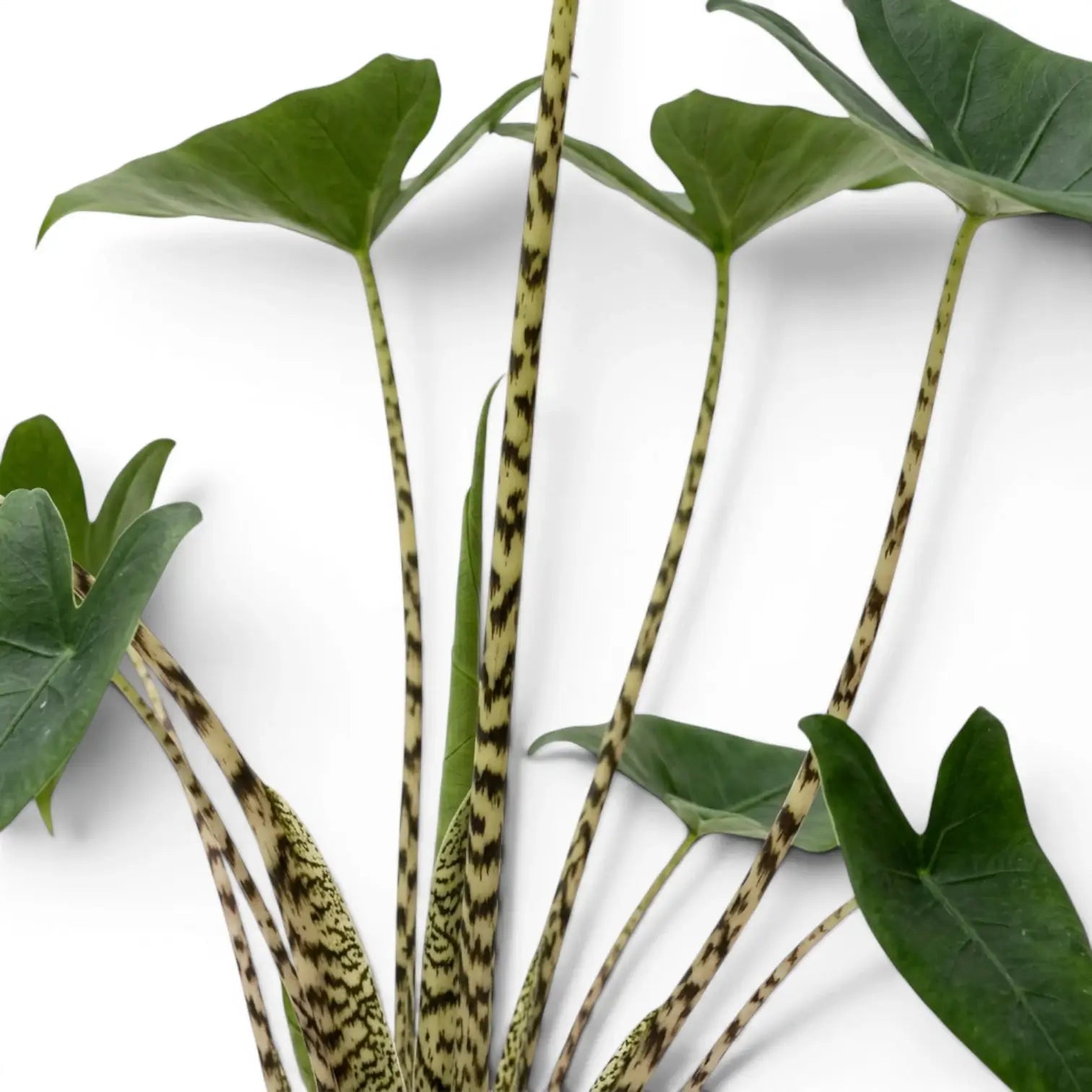
Alocasia zebrina is a Philippine Alocasia with glossy arrow-shaped leaves and unmistakable striped petioles. The pale green stems carry dark zebra-like markings and remain visible below the lifted leaves. It grows as an upright corm-forming Alocasia with a narrow base, lifted leaves and a bright defined leaf shape indoors.
The species is grown worldwide as a foliage plant, with its origin tied to the Philippines. Mature plants produce long petioles with green, brown or blackish striping and glossy sagittate leaves that rise above the base. The plant’s height comes from the combination of slender stems, marked petioles and glossy green leaves held high above the pot.
Striped petioles and arrow leaves
Alocasia zebrina is built around its petioles. Each stem is pale green to yellow-green and marked with irregular dark bands, dots and broken stripes. Those markings vary naturally from stem to stem, so a mature plant often shows several patterns at once. The leaves are glossy, green and sagittate, with pointed front lobes and long posterior lobes that give the blade its arrow form.
New leaves emerge from a folded spear, then rise as the petiole elongates. The blade opens once the stem has already created height, giving Alocasia zebrina its distinctive upright growth pattern. Indoors, well-rooted plants become medium to tall as the corm and roots gain warmth, light and container space.
- Leaf shape: glossy sagittate leaves with pointed front lobes and a lifted presentation.
- Petiole pattern: pale stems marked by dark zebra-like bands, dots and irregular striping.
- Growth habit: upright, corm-forming growth with leaves carried above a narrow base.
- Indoor scale: medium to tall in pots when established.
- Foliage detail: marked petioles, vertical growth and glossy green leaves.
Philippine wet-tropical origin and pot growth
Alocasia zebrina is accepted as a Philippine species in Araceae. It grows primarily in the wet tropical biome. Its care is shaped by warmth, humidity, filtered brightness and moisture that moves through the substrate after watering.
In a home, the species behaves like a warm-growing Alocasia with a strong corm and tall petioles. It needs enough light to hold the stems upright and enough warmth to keep roots active in the lower pot. A loose, airy mix protects the corm, while regular moisture during active growth lets new leaves expand fully. The tall petioles also make pot balance important as the plant matures.
Zebrina light and watering
- Light: bright, indirect light keeps petioles upright and leaf blades firm. Gentle morning sun can suit acclimated plants, while hot midday sun can scorch glossy leaves.
- Water: water deeply after the upper 25–35% of the mix has dried and the pot feels lighter. The corm grows strongly when even moisture is followed by free drainage.
- Substrate: use a chunky aroid mix with bark, pumice or perlite, coco fibre and a small moisture-holding fraction. The mix needs to stay open below the base.
- Humidity: aim for 60–80% humidity for smoother leaf expansion and fewer crisp tips. A humidifier or grouped warm growing area gives consistent moisture around the leaves.
- Temperature: keep active growth warm, around 20–28 °C, and avoid cool nights around the corm. Cold windowsills can slow the corm quickly.
- Feeding: use diluted complete fertiliser while striped-petiole growth is active. Reduce feeding when the plant pauses or the mix dries slowly.
Potting height and leaf turnover
Alocasia zebrina grows tall on comparatively narrow petioles, so a weighted outer pot helps keep the plant balanced. The inner pot still needs drainage. Repot when roots fill the container or the mix begins to collapse, moving up by one measured pot size to keep moisture close to active roots.
Older leaves can yellow as new leaves form. This is common in Alocasia growth, especially after travel, repotting, winter slowdown or a shift in light. Remove a yellowing leaf once most of the petiole has softened and the plant has withdrawn energy from it. Cutting firm green tissue early removes energy the corm can still use.
Propagation is by offsets or corms that form near the base of mature plants. Separate only firm offsets with active roots or visible growth points. Young plants establish fastest in warm, humid conditions, filtered daylight and a small airy pot where moisture can be managed closely.
Striped petiole changes
- Drooping stems: sudden droop can follow dry roots, saturated lower mix, cold exposure or shipping stress. Feel below the surface before adjusting water.
- Yellow leaves: several yellow leaves together point to root stress, cool conditions or excess moisture. Check base firmness and drainage first.
- Crisp margins: low humidity, heat spikes or salt build-up can mark the glossy blades. Increase humidity and flush the substrate with plain water if salt build-up is suspected.
- Long weak petioles: low light can stretch stems and reduce leaf size. Shift the plant into brighter filtered conditions in small steps.
- Pest marks: thrips and mites can hide under leaves and in the folded spear. Inspect new growth and petiole bases regularly.
Zebrina leaves in home placement
Alocasia zebrina contains irritating calcium oxalate crystals in its leaves, petioles and corm. Chewed tissue can irritate the mouth, tongue, lips and throat, with drooling, swelling, vomiting or swallowing difficulty possible. Keep it away from pets and children, and wash hands after pruning or division.
Zebrina and striped petioles
Alocasia zebrina G.W.Johnson & R.Hogg was first published in 1862 and belongs to Araceae. The epithet zebrina refers to the zebra-like pattern on the petioles, the feature that defines the species in cultivation. The plant is native to the Philippines and belongs to the wet-tropical Alocasia group with corm-based growth and striking petiole variation.
Striped petioles and glossy green arrow-shaped leaves give Alocasia zebrina its stem-and-leaf contrast.
Shipping Notes
- Free Standard Shipping on $100+ Orders to the USA.
- Except Preorder products are shipped in 48 hours.
- Delivery to the USA:
- Standard Shipping : 3-10 business days
- If time is of the essence, please consider selecting expedited delivery for faster service.
Exchange/Return Notes
- We offer a 30-day return/exchange service after receiving.
- Final sale items are not eligible for returns or exchanges.
- To process your return/exchange, please contact us at [email protected]
- Please click here for more details>>> Return & Exchange Policy