SKU: 44977598900
rubber tree lifespan

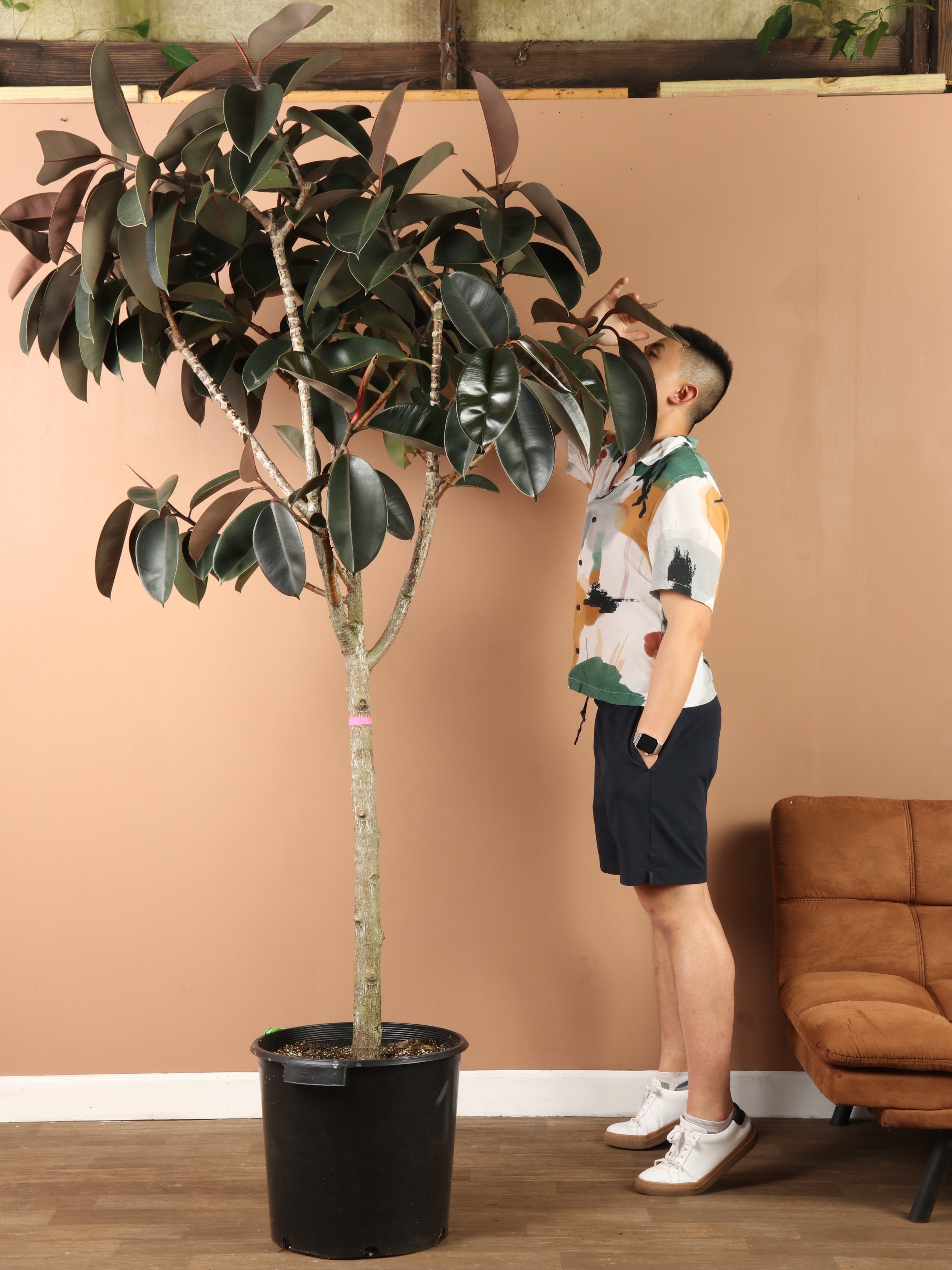
rubber tree lifespan 7-10 FT Rubber Tree Std

Sale price$24.60 Regular price$27.33
Save 10%

Pay in installments of $6.83 with ShopPay, AfterPay and Klarna

Shipping Estimate
USA
  • USA
  • CAN

Ships within 48 hours · Estimated delivery Aug 23 - Aug 28

Promo Codes Available:

For Your Every Summer RSVP, with Code: SUMMER15

Description

rubber tree lifespan 7-10 FT Rubber Tree StdDescription On the hunt for authentic rainforest vibes? Like your houseplants a little bigger than the average? Then you need the Rubber Tree in your life. Smooth bark and glossy leaves, all ready to turn your room into a botanical sanctuary. Originally from the Amazon rainforests, the Hevea brasiliensis is the very species that revolutionized the world with natural latex. Now, they bring their historical significance and impressive stature indoors to

Description

On the hunt for authentic rainforest vibes? Like your houseplants a little bigger than the average? Then you need the Rubber Tree in your life. Smooth bark and glossy leaves, all ready to turn your room into a botanical sanctuary. 


Originally from the Amazon rainforests, the Hevea brasiliensis is the very species that revolutionized the world with natural latex. Now, they bring their historical significance and impressive stature indoors to offer your guests a huge conversation starter.


Care 

Is a rubber tree a good indoor plant? 

So the rubber tree needs a little more room than your average house plant, but it also makes an exceptional statement. If you’ve got the ceiling height, then it’s the perfect botanical museum specimen meets living sculpture.


Are rubber trees hard to keep alive? 

Rubber trees do need consistent attention to be happy indoors. They’re not impossibly demanding, but they appreciate stable conditions: steady temperatures, regular watering, and bright light. Get that right, and this Amazonian native will be happy in his adopted environment.


How often should I water a rubber plant? 

When you need to water your rubber tree, think about recreating that perfect rainforest floor dampness in your container - consistently moist without being waterlogged. Top it up when the top 2-3 inches (5-8 cm) of soil dry out.


Where should I place a rubber tree in my house?

When you need to water your rubber tree, think about recreating that perfect rainforest floor dampness in your container - consistently moist without being waterlogged. Top it up when the top 2-3 inches (5-8 cm) of soil dry out.


Can rubber tree plants live in bathrooms? 

If you like company when you’re brushing your teeth, you’re in luck. Rubber trees can thrive in large, bright bathrooms with excellent ventilation and substantial space for growth. They love the humidity, as long as it comes with headroom!


What fertilizer should I use for a rubber tree? 

Think of your rubber tree as a botanical athlete preparing for its next growth spurt marathon. It needs consistent nutrition - rather than irregular gorging. So feed it with balanced liquid fertilizer monthly during its spring and summer growing seasons.


What does rubber tree plant care involve? 

To properly care for your rubber tree, you’ll need to provide bright light, consistent moisture, high humidity, and regular feeding during the growing season. It’ll also appreciate occasional misting and leaf cleaning - think spa treatment for your magnificent Amazonian houseguest-turned-permanent-resident.


Does a rubber tree need sunlight? 

Your rubber tree absolutely needs bright, indirect sunlight for optimal growth - and that means at least 6 hours daily. But think dappled rainforest canopy light, rather than blazing tropical beach conditions, as harsh afternoon rays can scorch leaves.


Pet-friendly?

The rubber tree isn’t pet-friendly. Its latex sap contains ficin and other irritating things that are toxic to your pets. Best to keep out of their reach.


Are rubber tree plants toxic to dogs? 

Rubber trees are toxic to dogs because their latex sap contains ficin compounds that cause gastrointestinal upset, drooling, and oral irritation. If your little pooch gets a little snack-happy then you should head straight to the vet.


How toxic is a rubber plant to cats? 

The rubber tree is toxic to cats. Its latex sap causes oral irritation, drooling, vomiting, and tummy problems. If your feline housemate has got too friendly with your rubber tree, get in touch with your vet immediately.

Factoids

What is the difference between a rubber plant and a rubber tree? 

The rubber tree (Hevea brasiliensis) produces commercial latex and grows massive, while the rubber plant (Ficus elastica) is a smaller ornamental houseplant. Our authentic rubber tree has genuine Amazonian heritage - even if you’re not using it to make tires!


Do rubber trees make rubber? 

Rubber trees absolutely make rubber! Hevea brasiliensis produces the latex used in everything from tires to medical gloves. Even if yours won't be tapped, you're literally growing the species that changed modern manufacturing - how's that for a conversation starter?


Does a rubber tree purify air? 

While it might not be as effective as some houseplants, your rubber tree’s large leaves will contribute to air purification. It’ll create oxygen and improve humidity levels, essentially bringing a piece of the Amazon's legendary "lungs" into your space. 


What is the lifespan of a rubber tree? 

Indoor rubber trees can live several decades with proper care, and wild specimens reach 100 years. Think about it: This tree might outlast your mortgage, witness multiple home renovations, and even outlive mom jeans being in fashion!


Do they still use rubber trees to make rubber? 

Although we’ve found synthetic ways of making rubber, Hevea brasiliensis remains the world's primary natural rubber source, with massive plantations across Southeast Asia. So most of your tires, footwear, and elastic bands are still coming from trees like yours. 


What is the spiritual meaning of a rubber tree? 

The rubber tree symbolizes resilience, adaptability, and abundance across cultures - which makes sense given its economic impact worldwide. Indigenous Amazonian peoples considered it sacred, representing the forest's generosity. Modern interpretations link it to flexibility and bouncing back from life's challenges. 


Is the rubber tree fruit edible? 

Sorry to disappoint, but the rubber tree fruits aren’t edible. They’re more capsules containing seeds than fleshy fruit. These explode when ripe, shooting seeds impressive distances (nature's catapult!). But indoor specimens rarely fruit, focusing their energy on leaf growth instead.


Buy a Rubber Tree

Make the ultimate botanical statement with your own rubber tree. You can bring genuine Amazonian majesty to your (large) space. If what you need is unmatched presence, historical significance, and conversation-starting appeal, then allow us to start or expand your rainforest collection.

From its smooth bark to impressive height potential, the rubber tree proves that sometimes you need to think bigger to create truly memorable interiors. You can get on a video call with us and choose your very own rubber tree. Your grand space deserves this living piece of botanical history!

Shipping Notes
  • Free Standard Shipping on $100+ Orders to the USA.
  • Except Preorder products are shipped in 48 hours.
  • Delivery to the USA:
  1. Standard Shipping : 3-10 business days
  • If time is of the essence, please consider selecting expedited delivery for faster service.
Exchange/Return Notes
  • We offer a 30-day return/exchange service after receiving.
  • Final sale items are not eligible for returns or exchanges.
  • To process your return/exchange, please contact us at [email protected]
  • Please click here for more details>>> Return & Exchange Policy
SKU: 44977598900

Discover Niche Categories That Outsell rubber tree lifespan

Top-Converting Item to Boost Your Average Order

4.6 ★★★★★
Based on 7 reviews
Sort
Highest Rating
Newest First
Oldest First
Product Reviews
K
K Alex
Houston, US
★★★★★ 5
Perfect!!!
This is exactly what I needed. Fits perfectly for my 2018 Honda Accord as well as being very easy to install. This is coming from someone who has no idea about doing anything on my car. Provides the best function, just as it would coming from a dealer or other auto shop. The quality is great as well, and this is exceptional value for the money. If you are looking to save money and not get bombarded with the filter replacement question when getting an oil change then this is the one for you.
WAS THIS REVIEW HELPFUL?YesReportShare
Reviewed in the United States on August 4, 2025
T
T. Isaacson
Fort Morgan, US
★★★★★ 5
Fit is good.
Filters fit and look essentially the same as the filters I’ve purchased and the official types from the dealer. I live in an area where wildfires occur almost every year,  so it’s good to have an extra set of filters to change them out after a run of smoky days. 
WAS THIS REVIEW HELPFUL?YesReportShare
Reviewed in the United States on July 1, 2025
C
Charles
New York, US
★★★★★ 5
Priced affordable, easy installation, fits snug and perfect and seems durable!!
This cabin air filter and engine air filter seems to be made of high quality materials, installation was a breeze, fitment seems to be perfectly snug affordably priced for a cabin air filter and an engine air filter combined, as for functionality, Only time will tell on its durability.
WAS THIS REVIEW HELPFUL?YesReportShare
Reviewed in the United States on July 2, 2025
P
Verified Purchase
Philip and Lucy
Phoenix, US
★★★★★ 5
Fits Toyota 2010 FJ cruiser
Perfect fit for a Toyota 2010 FJ cruiser. Install might have been the easiest cabin filter I've done in any car that new. Remove glove box, pull out the cover and replace it. Fits great and takes odors out from it sitting for 6 months in the driveway. No notice to less airflow when on any level of fan speed.
WAS THIS REVIEW HELPFUL?YesReportShare
Reviewed in the United States on May 30, 2026
S
Verified Purchase
S
Cuba, US
★★★★★ 5
Comparison with POTAUTO filter: Very similar but cheaper
I bought a POTAUTO MAP 1033C and EPAuto CP846 cabin air filter to compare them for use in my 09 Legacy (gen 4). They both seemed comparable and are cheaper than most other, similar filters, though the POTAUTO was and still is ~33% more expensive than the EPAuto. Both seem built well-enough, considering they're only being used as relatively low-flow cabin filters. That said, the EPAuto is slightly better, mainly due to the white trim piece being unattached along one side on the bottom of the POTAUTO filter. Almost certainly nothing that will affect its performance or longevity, but it is interesting considering it's the more expensive of the two. However, it must be kept in mind that this is an incredibly small sample size. In one of my very scientific tests (/s), I held them up side by side and looked through them toward the sun (obviously being careful) to judge thickness/density and uniformity. Neither had any thin spots that I noticed, and they were pretty similar overall. One of them blocked slightly more light than the other, indicating more filtration, but I unfortunately don't remember which one. I feel like it was the EPAuto, but I don't really want to speculate as I could very well be wrong. What I do remember is that the difference was so minor that all else being equal, it wouldn't justify the cost difference between the two. In other words, even if the POTAUTO were the slightly better one, it wouldn't be worth the extra few dollars for the minimal amount of extra filtration. In another test, I compared the filters to each other and the old filter (which I'm pretty sure was OEM, but certainly not a charcoal filter, so it was significantly thinner) by blowing air from a compressor through them. I held the nozzle at roughly the same distance from each on one side of the filters, and I held my other hand at roughly the same distance from each on the other side. The old filter, unsurprisingly, let much more air flow through. Both charcoal filters were much more restrictive due to their extra thickness, leading me to feel much less air coming through. Both were roughly the same. Both filters also held up just fine to the strong blasts of air. I bought a couple other filters that I was going to cut to fit to use one or both with these filters as a pre-filter and/or additional charcoal layer. After the airflow test, I decided against this, as these are a lot more restrictive than OEM already, and I didn't want to push it, since that could at best cause issues with getting good airflow into the car, and at worst could damage the blower. If not for the fact many, many people have been using these and similar filters for a long time without apparent issue caused by this, I would hesitate to even use these. I haven't noticed a decrease in the airflow, but it's doubtful I would since I rarely turn the fan up past the first couple settings (usually have it on the first) if I have it running at all, and I have the center vents pulled out (to access the inside of the dash) which causes the flow at the vents to be reduced slightly. TL;DR - Both the POTAUTO and EPAuto charcoal filters appear to be a good choice, with the EPAuto having a slight edge on build quality (based on my limited sample size of one each) and a cheaper price. Filtration appears to be very similar between the two, certainly not enough of a difference to warrant the extra price for the POTAUTO over the EPAuto. Flow is significantly more restrictive than OEM filter but doesn't appear to be an issue. I give the EPAuto 5 stars and the POTAUTO 4 stars, only because the value of the POTAUTO is a good bit less (very similar or possibly even inferior quality for 33% more money). I can't speak to their longevity or performance, but I don't imagine either should prove to be an issue. -------------------------------------------------- As a side note relating specifically to the Legacy: replacing the cabin filter in this car is a PITA. It's not overly difficult per se, but a serious pain and certainly not something you're going to do when you have a spare few minutes. I'd rate it probably around a 3.5/10 in difficulty and a 7/10 for annoyance. While you can sort of access it by removing the manual compartment, you can't remove the tray through that. So you need to actually take the whole glove box out, which requires removing the side panel, unhooking the string/loop that keeps it from falling all the way down, and removing a few plastic screws, which can be a bit of a pain (and apparently Subaru loves them since they're all over the car). A stubby Philips driver will be helpful. Once you have the glove box out of the way, you have to unscrew several more of those plastic screws to remove the plastic cover between the glove box and the filter. This hole is where you gain access. Be careful when removing the old filter as loose dirt and debris may fall out and make a bit of a mess. You don't really want to get any in the fan below it if you can help it. Reverse the steps to reassemble it, and remember to reattach the string. Getting the glove box back in its track can be a bit of a challenge; in my experience from doing it multiple times I've found you sort of half force it and half don't. That is, it'll likely offer some resistance even if it's lined up, so if you try to baby it you'll probably be there a while, but also play with the alignment a bit to see if you can get it without marring up the tab and the slot on the right side too much. All in all, expect to spend anywhere from 15-45 minutes on this, and make sure you have a standard length as well as a shorter or stubby Philips screwdriver. I have to say, when it comes to air filters, this car is horrible. The air intake filter is a pain to change, too--much worse than most if not all other cars I've done. -------------------------------------------------- Keywords: Subaru Legacy, fourth gen, fourth generation, 4th gen, 4th generation, 03, 04, 05, 06, 07, 08, 09, 2003, 2004, 2005, 2006, 2007, 2008, 2009
WAS THIS REVIEW HELPFUL?YesReportShare
Reviewed in the United States on September 29, 2017

recommand products