Pay in installments of $5.74 with
 ,
,
 and
and

Shipping Estimate
USA
- USA
- CAN
- USA
- CAN
Ships within 48 hours · Estimated delivery Sep 28 - Oct 3
 Promo Codes Available:
For Your Every Summer RSVP, with Code: SUMMER15
Description
is the pink princess philodendron rare Philodendron Pink Princess 'Galaxy'Products > Description (HTML view) ============================================================ > Products > SEO section > The Philodendron Pink Princess 'Galaxy' is among the most celebrated and coveted collector's aroids in the world and it earns every bit of that reputation. A cultivar of Philodendron erubescens, native to the humid rainforests of Colombia, 'Galaxy' takes the already extraordinary Pink Princess and elevates it further. Where the
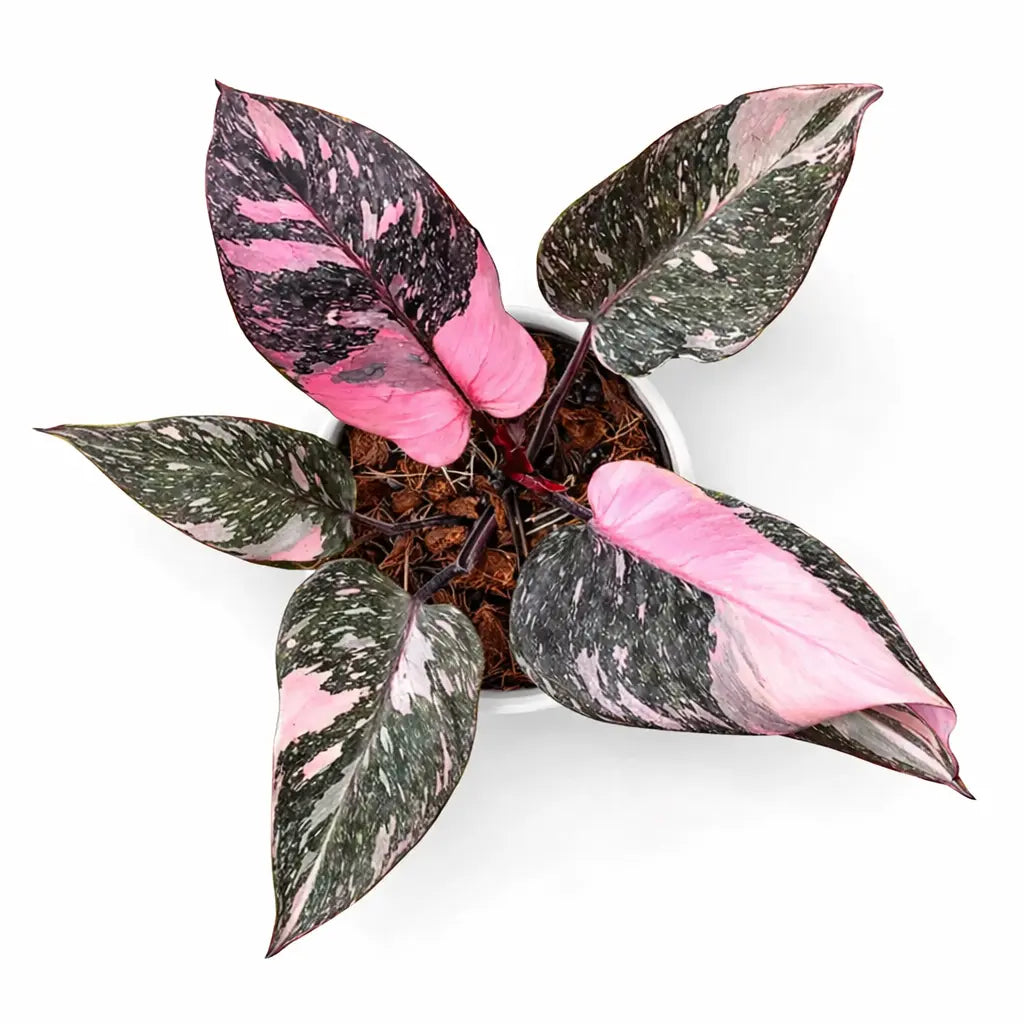
The Philodendron Pink Princess 'Galaxy' is among the most celebrated and coveted collector's aroids in the world — and it earns every bit of that reputation. A cultivar of Philodendron erubescens, native to the humid rainforests of Colombia, 'Galaxy' takes the already extraordinary Pink Princess and elevates it further. Where the original Pink Princess features bold sectoral blocks of pink variegation, 'Galaxy' adds something more — a constellation of scattered pink speckles and splashes scattered across deep green to near-black leaves, creating an effect that genuinely resembles a galaxy painted on living foliage. New leaves emerge with rich, deep pink variegation that matures into lighter, more complex patterns. No two leaves are ever the same.
The plant itself is a climbing aroid with heart-shaped, glossy, leathery leaves that grow on distinctive pinkish-red stems — the stem colour alone sets it apart from most other Philodendrons. Provided with a moss pole or trellis to climb, it grows with purpose and increasing drama — each new leaf larger and more elaborately marked than the last. Without support it trails gracefully from shelves or hanging baskets. It thrives in bright indirect light, high humidity, and a chunky, free-draining aroid mix — and in the right conditions, rewards its owner with one extraordinary new leaf after another, each one a unique, unrepeatable work of natural art.
Light
▾
Bright, consistent indirect light — this is non-negotiable for maintaining vivid pink variegation. An east or west-facing window is ideal. A south-facing window with a sheer curtain works well. Avoid harsh direct afternoon sun which scorches the pink sections. Equally avoid dim or low-light spots which cause reversion to plain green. If natural light is insufficient, a full-spectrum grow light for 12–14 hours daily is an excellent substitute and can produce exceptional results.
Watering
▾
Water when the top 3–5 cm of soil feels dry — then water thoroughly until it drains freely from the bottom. Never allow the plant to sit in standing water. The pink and white variegated sections contain less chlorophyll and therefore less water-storage capacity than fully green leaves, making this plant slightly more sensitive to drought stress than plain-leafed philodendrons. In summer, check every 5–7 days. In winter, reduce to every 10–14 days. Consistent, not excessive, moisture is the goal.
Humidity
▾
High humidity — 60% and above — is strongly preferred for lush, healthy leaf emergence. New leaves unfurl from a sheath; in low humidity the sheath can dry out before the leaf fully opens, causing misshapen or damaged new growth. Mist the foliage daily, place on a pebble tray with water, or use a humidifier nearby. In India's naturally humid climate it will thrive outdoors in a sheltered position. Indoors, keep away from AC vents and fans.
Growing Media
▾
A chunky, well-draining aroid mix is essential — roots need both moisture retention and excellent aeration. Mix 40% quality potting soil, 25% orchid bark or coarse bark chips, 20% perlite, and 15% coco coir or peat. pH: 5.5–7.0. Avoid dense, water-retaining mixes — soggy roots rot quickly. Repot every 1–2 years in spring, moving up one pot size at a time. The plant performs best slightly root-bound rather than in an oversized pot. Always use a pot with drainage holes.
Feeding & Fertilization
▾
Feed monthly during spring and summer with a balanced liquid fertilizer (20-20-20 at half strength). A fertilizer with added calcium and magnesium supports healthy leaf development and vibrant variegation. Avoid over-fertilizing — salt build-up causes root burn and leaf tip browning; flush the soil with plain water every 2 months. Do not feed in winter. Organic options such as worm castings worked into the top layer of soil every 3 months are an excellent gentle supplement.
🌿 Supporting the Climb — Moss Pole vs Trailing
Given a moss pole or trellis to climb, Philodendron Pink Princess 'Galaxy' produces larger, more dramatically variegated leaves as it matures — this is its natural growth habit in the wild, climbing forest trees toward the light. The aerial roots that emerge from the stem nodes actively attach to a moist moss pole and draw in additional moisture and nutrients. Keep the moss pole damp for best results. Without support, the plant trails gracefully — leaves will be smaller but the plant still looks beautiful. For maximum leaf size and variegation drama, climb it.
✂️ Pruning for Better Variegation
Prune leaves that have very little or no pink variegation — predominantly green leaves will push the plant toward producing more green growth. Use clean, sharp scissors and cut just above a node. This is counterintuitive but documented: removing low-variegation leaves encourages the plant to produce more highly variegated new growth. Conversely, if the plant produces predominantly pink leaves with little green (half-moon leaves), allow some fully green leaves to remain to ensure adequate photosynthesis and energy production.
Pink Variegation Fading or Reverting to Green
▾
Insufficient light — move to a brighter spot immediately. The variegation is directly light-dependent; in low light the plant produces increasingly green leaves to compensate for reduced photosynthesis. If all new growth is plain green, prune back to the last highly variegated node and increase light. A grow light set to 12–14 hours daily is highly effective.
Brown Patches on Pink or White Sections
▾
Sun scorch — the pink and white sections have no chlorophyll and are far more sensitive to direct sun than the green areas. Move out of direct sunlight immediately. Existing brown patches are permanent. Prevent on new growth by ensuring only bright indirect light reaches the plant.
New Leaf Emerging Damaged or Misshapen
▾
Low humidity causing the protective sheath to dry out before the leaf fully unfurls. Increase humidity to 60%+ using a humidifier or pebble tray. Mist the emerging sheath gently with room-temperature water. Once damaged during unfurling, the leaf cannot be corrected — but the next leaf will emerge healthy in improved humidity.
Yellow Leaves
▾
Overwatering or root rot most likely — allow the soil to dry more between waterings and check that drainage is working freely. A single older lower leaf yellowing occasionally is normal. Widespread yellowing indicates overwatering; unpot, inspect roots, trim any soft or blackened ones, repot in fresh aroid mix, and reduce watering.
Spider Mites, Thrips or Mealybugs
▾
Inspect both leaf surfaces and stem nodes at each watering. Spider mites cause fine webbing and speckling; thrips cause silver streaking; mealybugs leave white cottony deposits. For all three: wipe down with a damp cloth, then spray thoroughly with diluted neem oil or insecticidal soap every 5–7 days until resolved. Maintain high humidity to deter spider mites naturally.
Root Rot
▾
Caused by overwatering or a dense, poorly draining mix. Unpot the plant, remove all soft, blackened or mushy roots with clean scissors, dust cut surfaces with cinnamon or fungicide powder, and repot into a fresh chunky aroid mix in a pot with drainage holes. Allow soil to dry more significantly between waterings going forward.
📋 Quick Plant Profile
| Botanical Name | Philodendron erubescens 'Pink Princess Galaxy' |
| Common Names | Pink Princess Galaxy, PPP Galaxy, Galaxy Philodendron |
| Family | Araceae |
| Origin | Colombia, tropical South America (humid rainforest understory) |
| Plant Type | Climbing or trailing evergreen tropical aroid |
| Variegation Pattern | Sectoral pink chunks + scattered pink speckles on dark green to near-black base; every leaf unique |
| Stems | Distinctive pinkish-red; a visual feature in their own right |
| Light | Bright indirect (east or west window); no harsh direct sun; grow light effective |
| Watering | When top 3–5 cm is dry; water thoroughly; never leave in standing water |
| Humidity | 60%+ essential; humidifier strongly recommended |
| Soil pH | 5.5–7.0; chunky aroid mix essential |
| Temperature | 18°C–30°C ideal; do not expose below 12°C |
| Mature Size (Indoors) | 60–90 cm without support; 120–180 cm+ with moss pole |
| Support | Moss pole or trellis — produces larger, more variegated leaves when climbing |
| Growth Rate | Slow to moderate — each leaf is worth the wait |
| Ideal For | Collectors, Bright Indoor Rooms, Shelves, Moss Poles, Hanging Baskets |
| Care Level | Easy to Intermediate — rewarding with the right light and humidity |
Shipping Notes
- Free Standard Shipping on $100+ Orders to the USA.
- Except Preorder products are shipped in 48 hours.
- Delivery to the USA:
- Standard Shipping : 3-10 business days
- If time is of the essence, please consider selecting expedited delivery for faster service.
Exchange/Return Notes
- We offer a 30-day return/exchange service after receiving.
- Final sale items are not eligible for returns or exchanges.
- To process your return/exchange, please contact us at [email protected]
- Please click here for more details>>> Return & Exchange Policy