Pay in installments of $6.48 with
 ,
,
 and
and

Shipping Estimate
USA
- USA
- CAN
- USA
- CAN
Ships within 48 hours · Estimated delivery Oct 1 - Oct 6
 Promo Codes Available:
For Your Every Summer RSVP, with Code: SUMMER15
Description
burrito succulent care Burro’s Tail SucculentIntroducing the burro's tail succulent, known as Sedum morganianum Burrito (or Sedum burrito), which is a perfect choice among gardeners. Native to Southern Mexico, this Sedum burrito plant is like a superstar hanging from your ceiling, with its mesmerizing trailing stems. While it may resemble a donkey tail plant at first glance, this gorgeous burrito sedum has shorter stems and smaller, more rounded leaves than the donkey tail succulent. This
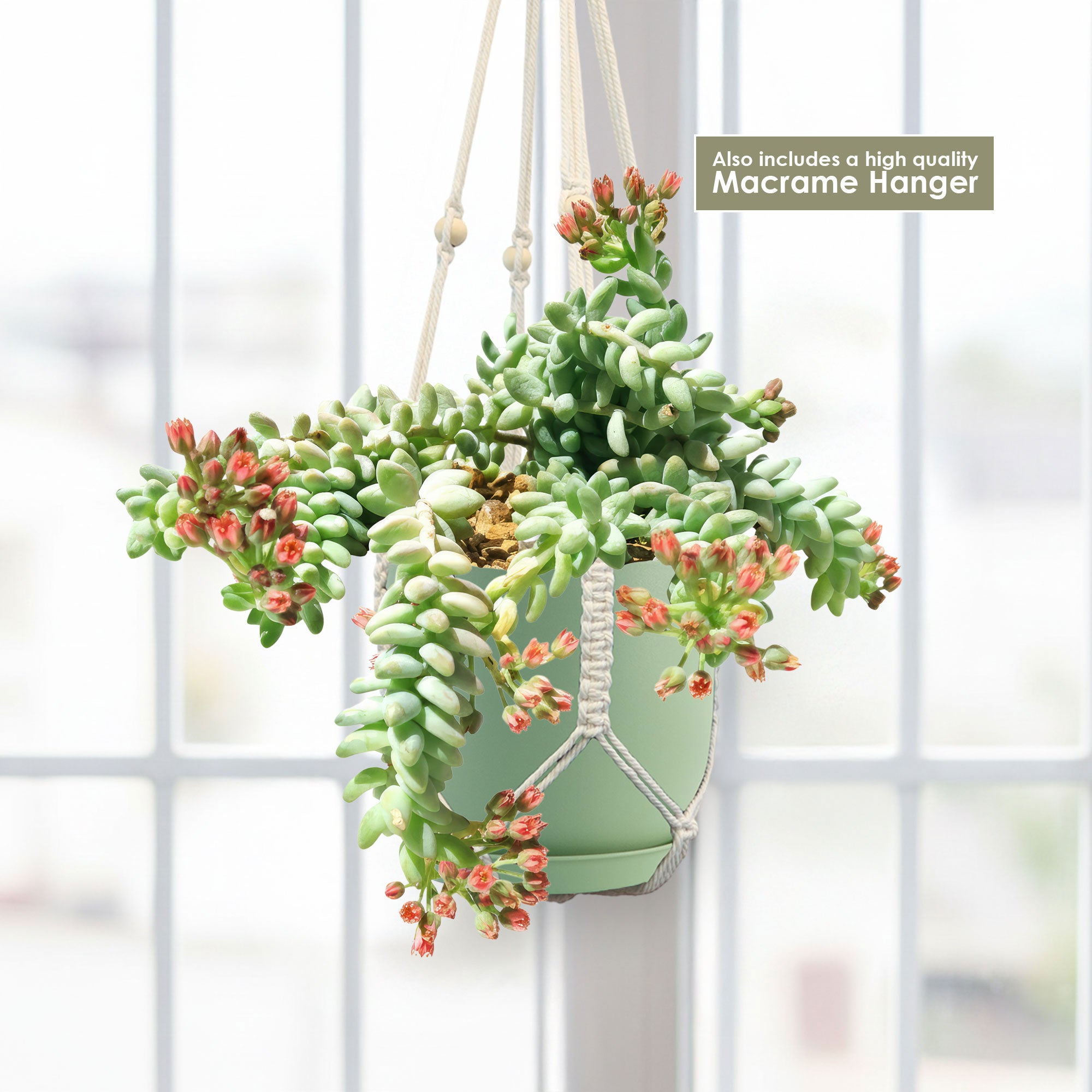
Introducing the burro's tail succulent, known as Sedum morganianum ‘Burrito’ (or Sedum burrito), which is a perfect choice among gardeners.
Native to Southern Mexico, this Sedum burrito plant is like a superstar hanging from your ceiling, with its mesmerizing trailing stems. While it may resemble a donkey tail plant at first glance, this gorgeous burrito sedum has shorter stems and smaller, more rounded leaves than the donkey tail succulent.
This burro's tail succulent gets its scientific name, Sedum 'Burrito', from its long, oval- or tear-drop-shaped leaves that grow down the stem, and look like the tail of a burro.
When mature, these large burro's tail plants trailing stems reach 3–4 feet long.
The stems of the burro tail plant are covered in small, fleshy, blue-green leaves that grow in a spiral pattern along the length of the stem. The leaves are about 1 inch long and are arranged in pairs along the stem.
The flowers of Burro's tail plant bloom in spring with little star-shaped pink or red burro’s tail flowers that will burst into bloom with bright yellow stamens.
To propagate Sedum burrito, it is best to take stem cuttings or leaf cuttings during the spring or summer months when the plant is actively growing. Place the cuttings in a well-draining soil mix and keep them in a bright, indirect light location to encourage root development. However, the burro's tail care is less fragile overall, making it a great choice if you're new to growing succulents in hanging baskets.
Plus, it is safe for humans but can be mildly toxic for pets if consumed. So, keep it away from pets and children.
Watering Needs
One of the coolest features of the burro's tail plant is the way it stores excess water in its leaves. That means you don't have to water this succulent plant as frequently as you might think; just make sure the topsoil is completely dry before giving it another drink to help its roots develop properly. This helps avoid overwatering and keeps your plant healthy and happy!
During the spring and summer, this drought-tolerant Sedum burrito should be watered about once a week. During the winter dormant period, the sedum plant can be watered less frequently, about once every two weeks. It's important to make sure the soil is well-draining, as the burro's tail succulent is susceptible to root rot if it sits in water for too long, which affects the root growth.
Remember, keep the soil moist but not soggy by misting it frequently whenever you notice the surface of the soil drying out.
Light Requirement
To grow your burro's tail indoors, a bright windowsill or a location near a sunny window is a great place for the burro's tail succulent. It should be placed about 12 inches away from the grow light and should receive about 12–16 hours of light per day.
If the burro tail doesn't receive enough bright light, it can become leggy, and the leaves may fall off. The Burro's tail Sedum burrito can also be grown under artificial light, such as a grow light. This is a great option for people who live in areas with insufficient light or who want to grow succulents indoors.
For outdoor cultivation, your burro's tail prefers full sun to partial sun. The sedum plants should be placed in a sunny spot in a location where they can receive plenty of bright light but not too much direct sunlight. As direct sunlight can cause the leaves to burn, it's important to protect them from the hot afternoon sun.
Optimal Soil & Fertilizer Needs
The Burro's tail prefers well-draining potting soil that is rich in organic matter. A succulent soil mix is a great choice for the burro's tail succulent, as it provides the drainage that succulents need. The soil should be allowed to dry out completely between waterings, as the plant is susceptible to root rot if it sits in water for too long. Ideally, you want to use our specialized succulent potting mix that contains 5 natural substrates and organic mycorrhizae to promote the development of a strong root system that helps your burro tail succulent thrive.
The sedum burrito doesn't require a lot of fertilizer, but it can benefit from a light application of a balanced, natural fertilizer with an equal mix of NPK (5-10-5) during the growing season in the spring. It's important to avoid over-fertilizing the burro tail, as this can cause the leaves to become soft and weak. Overall, the Burro's tail is a low-maintenance succulent that doesn't require a lot of fertilizer to thrive.
Hardiness Zone & More
When growing indoors, your Sedum burrito burro's tail prefers temperatures between 60 and 75°F. The baby burro's tail succulent doesn't require much humidity, but it can benefit from occasional misting during the dry winter months.
When growing outdoors, it is hardy in USDA zones 10–11, which means it grows and can tolerate temperatures as low as 30°F. The burro's tail succulent prefers warm temperatures and can be grown outdoors in full sun or partial shade. The burro's tail is a hardy plant that can tolerate a wide range of temperatures and humidity levels.
Final Thoughts
Overall, the burro's tail succulent (Sedum burrito), with its cascading stems and plump, trailing leaves, adds a distinct and eye-catching element to any space. This succulent is not only visually appealing but also easy to care for. Its ability to store water in its leaves allows it to withstand periods of drought, making it a low-maintenance choice for plant enthusiasts. Whether you choose to hang it on a macramé hanger or let it spill over the edges of a pot, the burro's tail succulent is sure to bring a touch of natural beauty and charm to your home or rock garden.
Shipping Notes
- Free Standard Shipping on $100+ Orders to the USA.
- Except Preorder products are shipped in 48 hours.
- Delivery to the USA:
- Standard Shipping : 3-10 business days
- If time is of the essence, please consider selecting expedited delivery for faster service.
Exchange/Return Notes
- We offer a 30-day return/exchange service after receiving.
- Final sale items are not eligible for returns or exchanges.
- To process your return/exchange, please contact us at [email protected]
- Please click here for more details>>> Return & Exchange Policy