SKU: 48076441957
aloe vera plant mix

aloe vera plant mix Your Plant Bitch's Rare Aloe Seed Mix ~ Drought Resistant ~ Easy ~ Med

Sale price$18.53 Regular price$20.59
Save 10%

Pay in installments of $5.15 with ShopPay, AfterPay and Klarna

Shipping Estimate
USA
  • USA
  • CAN

Ships within 48 hours · Estimated delivery Aug 7 - Aug 12

Promo Codes Available:

For Your Every Summer RSVP, with Code: SUMMER15

Description

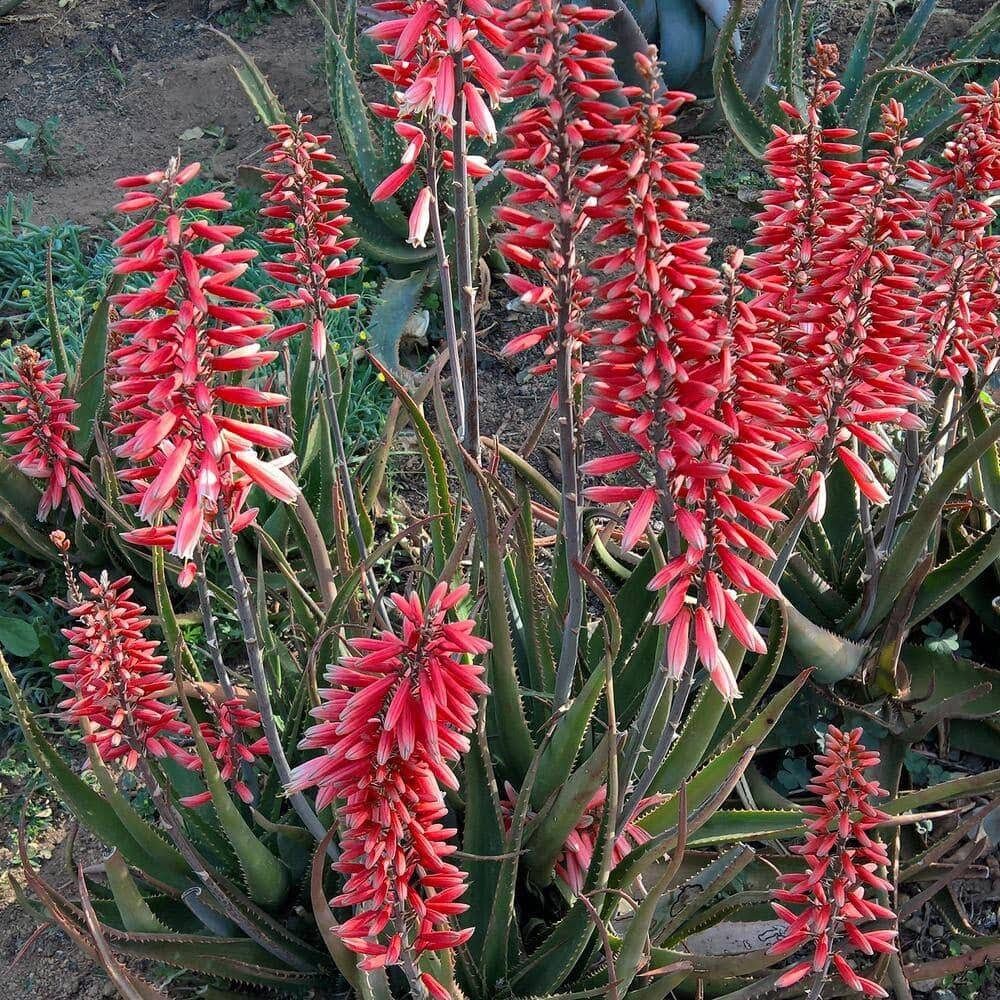
aloe vera plant mix Your Plant Bitch's Rare Aloe Seed Mix ~ Drought Resistant ~ Easy ~ MedAloe vera, commonly grown as a houseplant, is known for its leaves which contain a soothing gel used on sunburns and other skin irritations. With over 300 species (the most common being Aloe barbadensis miller), this tropical succulent features fleshy lance shape leaves with jagged edges that grow out from a basal rosette. Given the right growing conditions, spiky flowers will appear on the end of stalks in shades of yellow, red, or orange. ~ Includes

Aloe vera, commonly grown as a houseplant, is known for its leaves which contain a soothing gel used on sunburns and other skin irritations. With over 300 species (the most common being Aloe barbadensis miller), this tropical succulent features fleshy lance-shape leaves with jagged edges that grow out from a basal rosette. Given the right growing conditions, spiky flowers will appear on the end of stalks in shades of yellow, red, or orange.

~ Includes ~

~ 10 Seeds.

~ Grow and Care Instructions.


❤️My Aloe Grow and Care Instructions❤️

~ Grow Instructions ~

Sow seed in regular greenhouse conditions or indoors in a warm and light location. Use 4 inch square pots filled with potting soil composed of 50% sifted compost and 50% coarse, sharp sand or pumice. Add a small amount of wood ash. Commercial cactus mix or standard potting soil are both acceptable, although mixing your own potting soil using good organic compost is preferable. Horticultural grade white pumice is one of the most critical ingredients for growing and potting.

Plant 5 seeds or more per pot (Aloes love crowding in the seedling stage). Place seed on soil surface and cover with 1/8 inch of coarse, sharp sand or grit (horticultural grit or the poultry grit sold at a feed store for giving to chickens). Then, cover with an additional 1/4 inch layer of white pumice. The grit holds the seed in place and keeps the seed from floating when being watered. The pumice shades the germinating seed and  props up the fat little Aloe seedlings once they germinate and elongate. Tamp well and water once or maybe twice daily, keeping the planting warm and somewhat shaded. Water by misting from above. This grower does not use “bottom watering” as pots, pumice and seeds can easily float and the entire planting can be ruined.

Place the pots or flat on a shaded bench in the greenhouse or in a very warm place indoors. Dappled sunlight is preferred to heavy shade. Optimal temperature is about 70 to 75 degrees F. Bottom heat tends to be brutal and is not really recommended. Water flats daily. Germination occurs in 1 to 3 weeks. At this point, keep warm, somewhat shaded and water a bit more sparingly (once every two or three days), allowing the surface to dry out between waterings. If the seedlings darken to a bronze color, this means they are getting too much light and possibly not enough or too much water. Adjust light level and watering schedule until seedlings green up again. Grow seedlings closely together for 3 months to a year, then individuate to pots. To plant (any) bare-rooted Aloe, first cover the hole in the bottom of the pot with a pot shard, put a layer of coarse, sharp sand or poultry grit in the bottom of the pot (2 inches or so deep), dangle the aloe seedlings down onto this bottom layer and then put a 2 inch or so layer of sifted organic compost or any kind of humusy potting soil around the roots of the aloe, then finish off with pumice or more sand on top of the compost and fill up to around the crown of the plant. Tamp all around to hold the seedling firmly upright. Do not water after transplanting–leave the plants for a week or 2 without watering at all. The seedlings will send down roots at this time, roots that would be discouraged by the presence of too much moisture. Watering to much and too soon after transplant will rot the plant. Once the plants have rooted in, water once a week or so during the summer, less frequently during the winter. Aloes do best outdoors in the rock garden (depending of course on winter temperatures and the cold tolerance of the particular species you are planting), or indoors on the windowsill with a northerly or easterly exposure. Aloes live on and on.


~ Care Instructions ~

  • Lighting: Place in bright, indirect sunlight or artificial light. A western or southern window is ideal. Aloe that are kept in low light often grow leggy.
  • Temperature: Aloe vera do best in temperatures between 55 and 80°F (13 and 27°C). The temperatures of most homes and apartments are ideal. From May to September, you can bring your plant outdoors without any problems, but do bring it back inside in the evening if nights are cold.
  • Fertilizing: Fertilize sparingly (no more than once a month), and only in the spring and summer with a balanced houseplant formula mixed at 1/2 strength.
  • Repotting: Repot when root bound, following the instructions given in “Planting,” above. 


💕Please visit me at YourPlantBitch.com to explore all of my collections including my newest items (not available here). Rest assured, my main concern is my customers always!!! I try to provide the best customer service and strive to create a positive shopping experience for my customers. I’m always available to answer any questions or concerns you may have before and after your purchase. Custom orders are welcome!!! I can even include a handwritten gift card for no additional cost. Feel free to send me an offer since I will always do my absolute best to work with my customer’s offers. Contact me with any questions or if you’re interested in my sold~out items or need different quantities.

✨ Follow Me ✨

Instagram: YourPlantBitch

Facebook: Your Plant Biitch

Thank you so very much for supporting my small business!!! 🪴Happy Planting🪴

💚 Best Wishes, Your Plant Bitch (Quinn)

Shipping Notes
  • Free Standard Shipping on $100+ Orders to the USA.
  • Except Preorder products are shipped in 48 hours.
  • Delivery to the USA:
  1. Standard Shipping : 3-10 business days
  • If time is of the essence, please consider selecting expedited delivery for faster service.
Exchange/Return Notes
  • We offer a 30-day return/exchange service after receiving.
  • Final sale items are not eligible for returns or exchanges.
  • To process your return/exchange, please contact us at [email protected]
  • Please click here for more details>>> Return & Exchange Policy
SKU: 48076441957

Discover Niche Categories That Outsell aloe vera plant mix

Top-Converting Item to Boost Your Average Order

4.6 ★★★★★
Based on 11 reviews
Sort
Highest Rating
Newest First
Oldest First
Product Reviews
R
Verified Purchase
Ryan
Lowell, US
★★★★★ 1
One Star
Format: Paperback
Exactly the same as the free PDF I downloaded online for my student, only this costs $26 plus tax.
WAS THIS REVIEW HELPFUL?YesReportShare
Reviewed in the United States on April 3, 2017
C
Verified Purchase
Christopher West
Omaha, US
★★★★★ 5
A Treasure Trove for Aspiring Game Developers! From Concepts to Mastery!
Format: Paperback
As someone who has spent nearly two decades deep within the intricate world of C# software development, delving into game development was like stepping into a new dimension, filled with its unique set of challenges and learning curves. It’s an entirely different ball game, albeit an exciting one. My preference for Unity, primarily because of its compatibility with C#, brought me to Scott Tykoshi’s "Mastering Game Design with Unity 2021," and what an enlightening journey it has been! Bridging the Knowledge Gap: The book acts as a bridge between my extensive experience in software engineering and the nuances of game development. Scott has a talent for making complex concepts accessible, and the depth of knowledge shared in this book is invaluable for anyone willing to expand their horizons within the game development ecosystem. Comprehensive and Well-Structured: This book isn’t just a guide; it’s a comprehensive repository of information. It meticulously covers a myriad of topics such as immersive workflows, visual scripting, physics engine, GameObjects, player progression, and publishing. The structured approach helps in assimilating each concept thoroughly before moving on to the next, allowing for a gradual and solid build-up of knowledge. Enlightening Insights into Unity: Being a C# aficionado, Unity was my platform of choice, and this book has only deepened my appreciation for it. It's enlightening to see the seamless integration and the versatility that Unity offers, especially through Scott’s detailed and clear explanations. The practical insights and the in-depth exploration of Unity’s capabilities have empowered me to leverage the platform to its fullest potential. Practical Approach to Learning: Scott Tykoshi’s method of blending theory with practical examples is a boon for learners. The real-world applications and practical exercises resonate well with my learning style, providing a hands-on experience that is crucial for mastering game design. The examples are well-thought-out, relevant, and inject a dose of reality into the theoretical aspects, making the learning process engaging and effective. From Novice to Master: "Mastering Game Design with Unity 2021" lives up to its name, taking the reader on a journey from the basics to the advanced intricacies of game design. Whether it’s understanding the nuances of player progression or getting to grips with visual scripting, the book lays out a clear path for achieving mastery in game design. Conclusion: For seasoned software engineers like myself, making the transition into game development can seem daunting, but "Mastering Game Design with Unity 2021" by Scott Tykoshi has been a beacon of knowledge, guiding me through uncharted territories with ease and clarity. It’s more than just a book; it’s a mentor, a guide, and a companion in the thrilling journey of game development. If Unity and game design are on your radar, consider this book your roadmap to mastery. Whether you’re just dipping your toes in or ready to dive deep, Scott’s insights will illuminate your path and elevate your game design skills to new heights.
WAS THIS REVIEW HELPFUL?YesReportShare
Reviewed in the United States on September 22, 2023
A
Verified Purchase
Aurélien
Charlottesville, US
★★★★★ 5
Great Book for Project-Based Learning
Format: Paperback
As a Unity Instructor I can say the book is really amazing I was expecting that I'd face a basic book, but instead, the book is very complete, even having AR and VR chapters totally adapted to the new version of Unity, which makes it one of the best books to master Unity (if not the best).
WAS THIS REVIEW HELPFUL?YesReportShare
Reviewed in the United States on December 19, 2022
B
Bradley Wardell
Houston, US
★★★★★ 5
Thorough and approachable
Format: Paperback
Mastering Game Design with Unity is a must-have for any developer looking to use Unity as their platform for developing a video game for today's audience. What makes this book particularly compelling is that it goes through the entire game design and development process. From UI design to audio to graphics, this is a book that provides a one-stop shop of knowledge for developers. If you're already a developer or just looking for a book at act as the heart of your Unity development, this is the book to get.
WAS THIS REVIEW HELPFUL?YesReportShare
Reviewed in the United States on February 20, 2023
M
Verified Purchase
Mike Athey
Lexington, US
★★★★★ 2
Content seems good, but support files/code are insufficient, and the code seems illogical in places
Format: Paperback
This books starts out great and the content/approach seems solid. But I ran into several issues when the coding portions were introduced, notably when it came to collisions and destroying enemy game objects. There's scripting to set up a bullet behavior, but from the outset the behavior is buggy, and when the "explosion" behavior is introduced, there's no coding to actually destroy the object you're introducing the explosion behavior to. On top of that, the explosion behavior is tied to the playerObj's "onDeath" function, so ... I'm not sure how any of that ties into destroying an enemy game object. This is about 150 pages in. The go-to method in these cases is, of course, to reference the support files, but these files only include the code and the book images. What's really needed is the Unity project files to ensure the code is being implemented in the components of the game objects and seeing the core structure there. With only the scripts, you can only check your scripts against those, but you can't be sure you're utilizing them correctly and tying it all together in Unity. Granted, I'm still learning the platform, but things like where you're expected to fire a bullet that has no "destroy gameObject" function into an enemy gameObject that also has no such behavior ... and the behavior is tied to the player? There's definitely something amiss. All the while you're dealing with "soft locks" in the test gameplay that could have been immediately addressed, but aren't. And you can't really move forward with such core inconsistencies in place because you fear the problems would just compound from there.
WAS THIS REVIEW HELPFUL?YesReportShare
Reviewed in the United States on July 31, 2023

recommand products