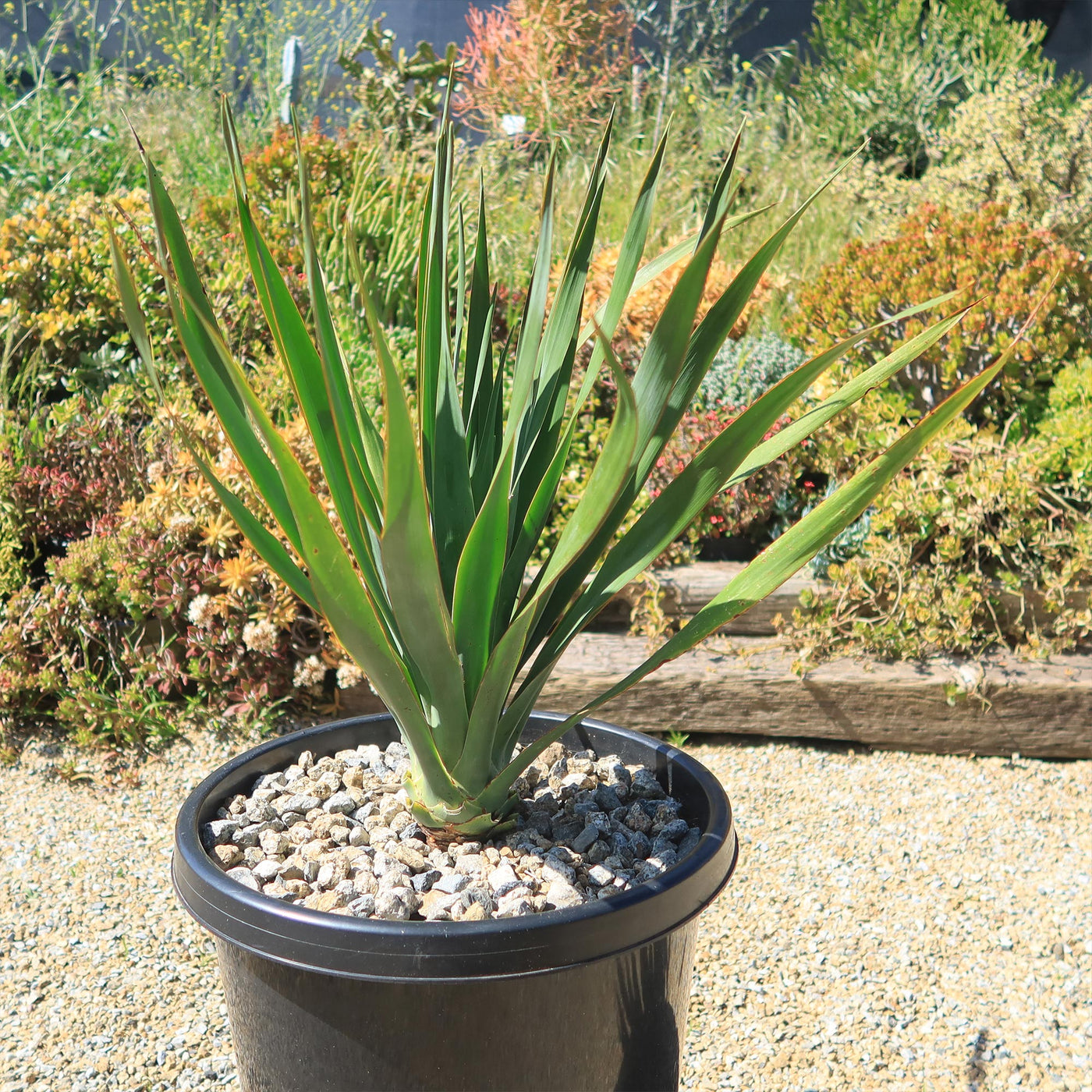
SKU: 49835009903
dracaena draco dragon's blood tree

dracaena draco dragon's blood tree Shop 'Dragon Tree

Sale price$18.95 Regular price$21.06
Save 10%

Pay in installments of $5.26 with ShopPay, AfterPay and Klarna

Shipping Estimate
USA
  • USA
  • CAN

Ships within 48 hours · Estimated delivery Sep 18 - Sep 23

Promo Codes Available:

For Your Every Summer RSVP, with Code: SUMMER15

Description

dracaena draco dragon's blood tree Shop 'Dragon TreeIntroducing the Dragon Tree, also known as Dracaena draco. The Greek word "drkaina," which means "female dragon," gave rise to the name "dracaena." This refers to the 'Draco' kind of brilliant red resin. The name "dragon tree" is believed to have originated from the red sap that oozes from the trunk when cut, resembling a dragon's blood. This unique characteristic has contributed to its mythical and intriguing reputation. Hailing from Madagascar, it

Introducing the Dragon Tree, also known as Dracaena draco. The Greek word "drákaina," which means "female dragon," gave rise to the name "dracaena." This refers to the 'Draco' kind of brilliant red resin. 

The name "dragon tree" is believed to have originated from the red sap that oozes from the trunk when cut, resembling a dragon's blood. This unique characteristic has contributed to its mythical and intriguing reputation.


Hailing from Madagascar, it is also known as the Madagascar dragon tree and goes by many other common names such as dragon blood tree, corn plant, ribbon plant, Asparagus Draco, and dragon's blood plant.

The dragon tree, a tall, cylindrical tree with sword-shaped leaves, grows tall in the landscape, whereas the houseplant is shorter but has identical leaves.

This dragon tree stands tall and can grow up to 15 feet tall in its natural habitat.

If grown indoors, it can grow up to 4 feet boasting a thick cylindrical trunk adorned with stunning rosettes. These rosettes are no ordinary ones either; they are crowned with magnificent sword-shaped leaves that will make you feel like you've stepped into a mythical kingdom.

The dragon plant flowers bloom from late winter to early spring, with white flowers, which are produced in clusters on the tips of its branches. The flowers emit a strong, sweet fragrance that attracts pollinators such as bees and butterflies. The blooming period is relatively short, lasting only a few weeks.

Interesting Facts

  1. The dragon tree has a thick, gnarled trunk that adds a touch of character and charm to its overall appearance.
  2. It has a long lifespan and can live for several decades, becoming a cherished part of your home.
  3. Its sap is a vibrant red color, giving it a dramatic and eye-catching appearance.
  4. The Dragon Tree is believed to bring good luck and positive energy to its surroundings, according to ancient folklore.

Propagation of the dragon tree can easily be done by stem cuttings. Simply take a cutting from the stem of the healthy plant and allow it to dry out before planting it in well-draining soil. Keep the cutting in a warm, humid environment to encourage root growth.

With its show-stopping presence, this dragon blood tree will undoubtedly add to the landscape of your lovely home. Plus, this slow-growing plant is perfect for those who want to add something truly special to their collection.   

Watering Needs 

The dragon blood tree is a succulent shrub that definitely stands out from the rest. Since it is a drought-tolerant plant, it does not need much water, but should not be overwatered or underwatered. But here's a fun fact - unlike most trees, dragon trees do not tolerate prolonged drought well. 

In fact, during the scorching summer months, it might require watering once a week to keep those arms perky and looking their best. Keep the soil moist but not saturated.

If you ever notice your dragon blood plant gradually curling towards the center, don't freak out! That just means they're thirsty and in need of some water. So, make sure to water them thoroughly when you see this happen (but be careful not to let them stand in watery soil), or else risk facing root rot - yikes! 

Stay on top of your watering game with this quirky dragon plant and watch as they continue to thrive and turn heads with their unique appearance. 

Light Requirements 

If growing indoors, place your Dracaena tree a few feet away from the south-facing window. If they don't receive enough light for a long period, their stems may grow leggy and become paler and their spines will shorten; so, make your house plant happy and give it plenty of light. 

For outdoor cultivation, the dragon tree requires a lot of light and should be grown in either full sun or part shade. New plants can get burned in the full sun as they were probably grown in a greenhouse; therefore, dragon blood tree exposure to sunlight gradually increases. If the sun is too bright and is burning your plant's leaves, consider purchasing a sunshade or moving the plant to a more shaded location.  

The dragon tree can also thrive in filtered or low-light conditions. It can also grow in areas that are partially shaded, but not in those that receive direct sunlight. The plant is vulnerable to exposure to the full sun. 

Optimal Soil & Fertilizer Needs 

Dracaena plant favors very airy, sandy soil that drains well. Planting them in ordinary soil will result in compacted roots, stunted growth, and most likely root rot. Instead, make or buy a well-draining regular potting soil, or ideally use Soil Cactus Mix Blend 1 Gal 4 Qtour specialized potting mix that contains over 5 natural substrates and mycorrhizae to promote the development of a strong root system that helps your blood tree to thrive. 

When it comes to fertilizing your dragon blood trees, it only needs a tiny bit applied once a year in the spring growing season with a balanced liquid fertilizer that has lower doses of NPK (5-10-5). No harsh chemicals here, folks - just pure, natural goodness that lasts longer and encourages nutrient absorption, so your succulent stays happy as a clam.  

So go ahead and give your Dragon's blood plant some love with a good natural fertilizer because when it comes to soil and fertilizers, through experience, we know what works best!  

Hardiness Zones & More 

When growing indoors, the Dragon Tree prefers average room temperatures ranging from 6°F to 75°F. It can tolerate slightly cooler temperatures, but it's best to avoid extreme temperature fluctuations. It is adaptable and can tolerate average indoor humidity levels. However, it appreciates a slightly higher humidity level, so misting the leaves occasionally or placing a humidifier nearby can be beneficial, especially during dry winter months.

For outdoor cultivation, the Dragon Tree is best suited for USDA hardiness zones 9 to 12, which are regions with mild winters and warm climates. The Dragon Tree can tolerate temperatures as low as 30°F for short periods but prefers temperatures above 50°F. It's important to protect it from frost and extreme temperature fluctuations, as they can damage the plant.

Final Thoughts

Overall, the Dragon Tree (Dracaena draco), is a stunning indoor plant with spiky foliage that adds a touch of exotic beauty to any space. It's known for its easy care, making it perfect for beginners. This plant thrives in bright, indirect light and can tolerate lower light conditions too. It likes average room temperatures and can handle normal indoor humidity levels. Just water it when the top inch of soil is dry, and mist the leaves occasionally for a little extra humidity. 

We think you will love this dragon plant – order your very own Dracaena draco - Dragon blood tree for sale and start enjoying its beauty in no time!  

Shipping Notes
  • Free Standard Shipping on $100+ Orders to the USA.
  • Except Preorder products are shipped in 48 hours.
  • Delivery to the USA:
  1. Standard Shipping : 3-10 business days
  • If time is of the essence, please consider selecting expedited delivery for faster service.
Exchange/Return Notes
  • We offer a 30-day return/exchange service after receiving.
  • Final sale items are not eligible for returns or exchanges.
  • To process your return/exchange, please contact us at [email protected]
  • Please click here for more details>>> Return & Exchange Policy
SKU: 49835009903

Discover Niche Categories That Outsell dracaena draco dragon's blood tree

Top-Converting Item to Boost Your Average Order

4.4 ★★★★★
Based on 23 reviews
Sort
Highest Rating
Newest First
Oldest First
Product Reviews
A
Verified Purchase
Amazon Customer
Port Orchard, US
★★★★★ 5
USE THIS 3 yr old-10yr old cars But it is not for use for classic muscle car-flat tappet cams
Style: Restore & Protect, Size: 5 QT, Configuration: 5W-30
Valvoline has come up with a tested, amazinng engine oil for not the newest cars..but for cars say 3-10 years old that may have some varnish-sludge build up..works slowly enough over time so it doesnt suddently clog the filter, but DO change oil and filter at 3500, not more. In fact 3500 to 4K max for ANY car, any time. DO NOT go longer as some mfg or oil say you can. Tests show that sludge builds up. This oil is NOT for classic muscle cars with flat tappet cams.
WAS THIS REVIEW HELPFUL?YesReportShare
Reviewed in the United States on May 20, 2026
G
Verified Purchase
gillabyte
Alexandria, US
★★★★★ 5
Amazing Oil!
Style: Restore & Protect, Size: 5 QT, Configuration: 5W-30
So far after first oil change it made my Toyota Tundra 5.7L with 255k miles run smoother and quieted the timing chain tensioner knock that I was quoted $5k and up to repair! Will be using from now on to 500k miles plus!
WAS THIS REVIEW HELPFUL?YesReportShare
Reviewed in the United States on May 14, 2026
K
Verified Purchase
Katharine Dow
Boise, US
★★★★★ 5
A fascinating glimpse into the undoing of the Confederacy
Format: Paperback
This dense and and well-written book includes some really interesting insights into how the Confederacy was formed, but then ultimately challenged and destroyed by some of the people it excluded. In Confederate Reckoning, we get to learn about the epic political battle in which White women and slaves in the South helped to undermine the Confederacy and determine the outcome of the Civil War.
WAS THIS REVIEW HELPFUL?YesReportShare
Reviewed in the United States on November 29, 2025
D
Verified Purchase
Darrell Criswell
Carnegie, US
★★★★★ 5
Excellent book!
Format: Paperback
I think this is a fabulous book. I have always been interested in the causes of the civil war and this book presents an interesting, almost fascinating perspective, which I havent' seen in other books. I have also been reading James Oakes fabulous "Freedom National" and the two books complement each other extremely well. McCurry's book is not of the quality that Oakes book is but not much is. I cannot understand the criticism of her writing. I find her writing to be very good...admittedly some of the sentences are too long and a few ill defined names but this is a very well written book. Although we have all studied some version of much of this material before I find it hard to believe that almost anyone won't be astonished by the magnitude of the task the confederacy was attempting to take and its inherent stupidity or maybe a better description would be craziness of these people. Good book!
WAS THIS REVIEW HELPFUL?YesReportShare
Reviewed in the United States on May 21, 2013
G
Verified Purchase
gloine36
Waukegan, US
★★★★★ 4
Outstanding exploration of the Confederacy's domestic divisions which helped contribute to its ultimate defeat.
Format: Paperback
This is an extremely powerful interpretation of the political forces at play in the Civil War South. Like it or not, Stephanie McCurry delivers a careful exploration of the domestic forces which were occurring during the Civil War in the Confederacy. The result is illuminating and exposes issues with great depth that have been overlooked in the study of the conflict. Much as domestic issues influenced government policies in the United States during the war as well as constantly in US history, domestic issues played an important role in influencing the actions of the Confederate government. Despite the Confederacy being an attempt to create an elite class system of rule, those without a voice in government found a way to be heard partly through their own actions, but also due to the democratic nature of American government. McCurry, the Christopher H. Browne Distinguished Professor of History at the University of Pennsylvania has definitely opened a can of worms with the release of this book. It was a finalist for the Pulitzer Prize for History in 2011 losing out to Eric Foner’s The Fiery Trial: Abraham Lincoln and American Slavery, itself a great work on the Civil War. Just how important were the actions of women and slaves in the Confederacy during the Civil War? McCurry states that their actions helped drive government policies. Based upon her work as well as others I would say she was correct. Others disagree. I think the thing to consider here is that the Confederacy, despite setting up a government ruled by the elite class of slave owners, was still responsive to the majority of the people inhabiting it. While it was an attempt to create a new nation, it was still required to adhere to some of the principles of the American Revolution. In order to establish the nation, the slave owners were going to have to wage an insurrection and for that they needed the help of the non-slave owners who would compose the majority of its armies. McCurry notes this and shows that this was just the first example of the elites compromising to achieve their goals. No matter what the elites desired, it could only happen with the support of the people in the Confederacy. It would be that support which was critical for the survival of the Confederacy. Without it, the Confederacy had no chance. This is often overlooked. First, many people think the Confederacy enjoyed the support of the people of the slave states. They did not. Of the 15 slave states in 1860, only 11 would join the Confederacy. Of those 11 states, a full third of the white men in them actually opposed secession. From the very beginning, the Confederacy had to deal with an active resistance inside its borders from whites who rejected their authority and slaves who would contribute as little as possible to the Confederate war effort. Later, soldier wives would riot as well as shield deserters. McCurry wrote extensively about these features. Just how much these factors played in the ultimate defeat of the Confederacy is going to be a guess and is open to debate. Did they cause the Confederacy to lose? Not of their own accord, but they did contribute to the defeat of the South over time. There is no doubt that the use of slaves by the Confederate armies was challenged from the very beginning of the war to the final end of it. The facts are undeniable on this matter and McCurry is not the first historian to note this nor will she be the last. The inability of the Confederacy to use its manpower to the maximum capacity was a crippling factor. The issue of slave labor and slave soldiers reflects the deep divisions within the Confederacy and exposes the rotten foundation which the slave owners tried to build their nation upon. All in all I liked the book. As some of the other comments show, the writing style could have been better. She repeated herself in multiple spots. This I think is a reflection of her still emerging writing style. Confederate Reckoning is only her second published book. She has written many articles, but those are different methods of writing compared to books. It takes some time for historians to really find their voice when writing monographs. She does have a Coursera course available, “The History of the Slave South,” which was offered in both 2014 and 2015. I think McCurry does a good job in opening up our eyes to the domestic issues on the Confederate home front. The real question which will be debated is just how much impact they had. I suspect that will be the argument for many.
WAS THIS REVIEW HELPFUL?YesReportShare
Reviewed in the United States on December 13, 2015

recommand products