SKU: 5141230161
air plant with holder

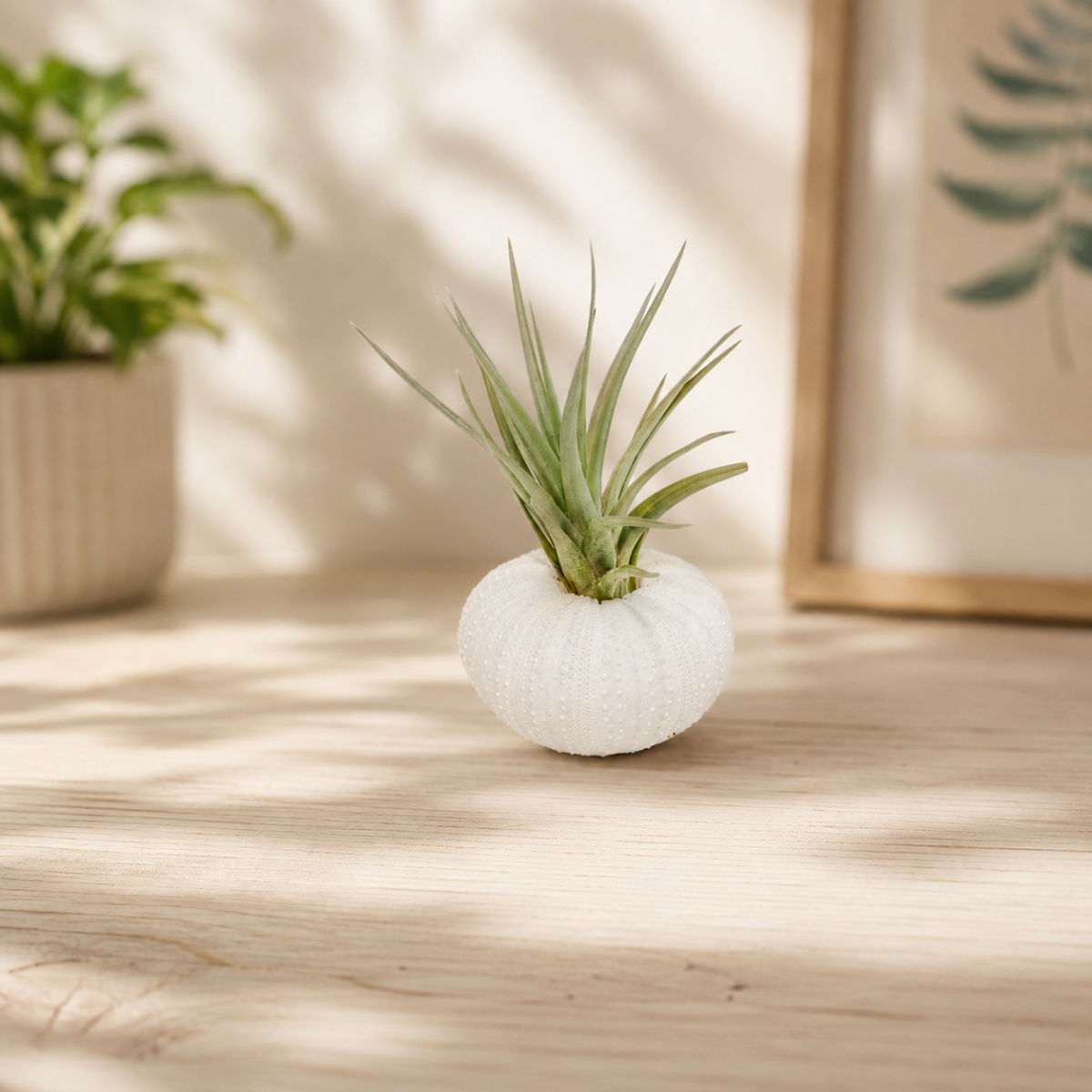
air plant with holder White Urchin with Tillandsia Air Plant, No Soil Needed, Easy Care by Succulents Box

Sale price$22.82 Regular price$25.36
Save 10%

Pay in installments of $6.34 with ShopPay, AfterPay and Klarna

Shipping Estimate
USA
  • USA
  • CAN

Ships within 48 hours · Estimated delivery Sep 29 - Oct 4

Promo Codes Available:

For Your Every Summer RSVP, with Code: SUMMER15

Description

air plant with holder White Urchin with Tillandsia Air Plant, No Soil Needed, Easy Care by Succulents BoxDescription Light Soil Water Hardiness The White Urchin with Tillandsia Air Plant is a creative pairing of a natural sea urchin shell and a living Tillandsia, a genus of epiphytic plants in the bromeliad family native to Central and South America and the southern United States. Tillandsias are commonly called air plants because they require no soil to grow, drawing moisture and nutrients directly from the air around them. This combination turns an

  • The White Urchin with Tillandsia Air Plant is a creative pairing of a natural sea urchin shell and a living Tillandsia, a genus of epiphytic plants in the bromeliad family native to Central and South America and the southern United States. Tillandsias are commonly called air plants because they require no soil to grow, drawing moisture and nutrients directly from the air around them. This combination turns an organic coastal keepsake into a miniature living display.

    The white sea urchin shell serves as a natural vessel, its rounded, textured form contrasting beautifully with the soft, arching green to silvery-green leaves of the Tillandsia nestled inside. The spiky, rosette-shaped air plant typically stays compact, reaching just a few inches in width, making it ideal for small shelves, windowsills, terrariums, or as a standalone accent piece on a desk or tabletop.

    This arrangement makes a charming gift and fits effortlessly into coastal, bohemian, or minimalist home decor. Because it needs no soil or pot, it is wonderfully versatile and easy to move around the home. This plant is best placed away from curious cats and dogs, and kept out of reach of young children to protect the delicate shell and plant.
  • Tillandsia air plants thrive in bright, indirect light. Place yours near a sunny window where it receives several hours of filtered light each day. Avoid prolonged direct afternoon sun, which can scorch the delicate leaves. Fluorescent or full-spectrum grow lights also work well if natural light is limited in your space.

    Water by misting the leaves thoroughly two to three times per week, or by gently removing the plant from the shell and soaking it in room-temperature water for 20 to 30 minutes once a week. After soaking, shake off any excess water and allow the plant to dry completely within four hours before returning it to the shell. Standing water trapped in the base of the leaves can cause rot, so good airflow after watering is essential.

    No soil is needed for Tillandsia air plants. They absorb water and nutrients through tiny structures on their leaves called trichomes. The sea urchin shell simply acts as a decorative holder. If you ever want to display the plant differently, it can rest on any clean, dry surface or be placed in a terrarium, on driftwood, or mounted with safe adhesive.

    Tillandsias prefer temperatures between 50 and 90 degrees Fahrenheit (10 to 32 degrees Celsius). They appreciate good air circulation, so avoid placing them in sealed containers or stuffy corners. Keep them away from heating or air conditioning vents, which create dry, harsh airflow that can stress the plant. Normal household humidity levels are generally sufficient, though occasional misting helps in drier climates.

    Feed your Tillandsia once a month using a bromeliad or air plant fertilizer diluted to one quarter of the recommended strength. Apply it by misting the leaves directly with the diluted solution. Fertilizing is optional but encourages healthier growth and can prompt the plant to produce its colorful bloom when it reaches maturity.
  • USDA Hardiness Zones 9-11 | Minimum temperature: 25°F (-4°C)

    In zones 9 through 11, Tillandsia air plants can be displayed outdoors in a sheltered spot with bright, filtered light and good airflow during warm months. Bring them indoors when temperatures drop below 50 degrees Fahrenheit (10 degrees Celsius), as they are sensitive to cold and cannot tolerate frost. In cooler zones, they are best grown year-round as indoor plants near a bright window.

Shipping Notes
  • Free Standard Shipping on $100+ Orders to the USA.
  • Except Preorder products are shipped in 48 hours.
  • Delivery to the USA:
  1. Standard Shipping : 3-10 business days
  • If time is of the essence, please consider selecting expedited delivery for faster service.
Exchange/Return Notes
  • We offer a 30-day return/exchange service after receiving.
  • Final sale items are not eligible for returns or exchanges.
  • To process your return/exchange, please contact us at [email protected]
  • Please click here for more details>>> Return & Exchange Policy
SKU: 5141230161

Discover Niche Categories That Outsell air plant with holder

Top-Converting Item to Boost Your Average Order

4.7 ★★★★★
Based on 8 reviews
Sort
Highest Rating
Newest First
Oldest First
Product Reviews
S
Verified Purchase
S. Max
Pawtucket, US
★★★★★ 2
Not a Scripting Book. Wrong title, should read " Learn Godot for Beginners"
Format: Paperback
The book was not designed to focus on GDscript, it had a snippets for basic game interactions, but was primarily a make a simple game in Godot. I returned it.
WAS THIS REVIEW HELPFUL?YesReportShare
Reviewed in the United States on June 13, 2025
Y
Yumin
Los Angeles, US
★★★★★ 5
Excellent guide for those seeking to learn.
Format: Paperback
I highly recommend this book if you are getting into Godot and want something tangible to sift through. the Book does an excellent job of explaining and curating a good foundation by explaining and stepping you through the Nodes and their purposes and potential usage. it touches on multiplayer(client synchronization, etc), and other fantastic aspects like object pools and a brief intro into state machines that reflect a professional environment that respects your intelligence but still graceful enough for beginners to digest, understand and grow their own creative projects from these roots.
WAS THIS REVIEW HELPFUL?YesReportShare
Reviewed in the United States on June 10, 2024
C
Verified Purchase
Colin MacLeod
Chelsea, US
★★★★★ 5
Masterful, Hilarious, and Insightful
Format: Hardcover
The writing style reminded me at times of Michael Lewis ("The Big Short", "The New New Thing") in the way Jason Schreier captures the madness of gaming executives trying to succeed despite their bosses. The way the book describes various antics often had me chuckling or even laughing out loud: "As Pardo's responsibilities grew and his time became stretched between projects, he became known for what many of his subordinates called seagull management: He would swoop down, poop on ideas, and then fly away." It's full of insight about what makes a good game, or even a good remake of a game: "One tenet, adapted from legendary Civilization designer Sid Meier, was that one-third of the units should return from the old game, one-third should be modified versions, and one-third should be brand-new." This book is masterful. I found it impossible to put down: one of the very best books I've ever read about a games company, or any company for that matter. If you are in the games industry, you like reading about crazy businesses or you just like games, get it.
WAS THIS REVIEW HELPFUL?YesReportShare
Reviewed in the United States on April 19, 2026
E
Verified Purchase
Exterminator
Charlottesville, US
★★★★★ 4
"Inside Blizzard: The Creativity, Crunch, and Corporate Clash in Play Nice”
Format: Hardcover
Positive: "Play Nice" by Jason Schreier is a fun, eye-opening dive into the highs and lows of Blizzard Entertainment. Schreier does a fantastic job unpacking the tension between Blizzard's creative magic and the corporate pressures that started to shift the company’s culture, especially after its merger with Activision. It's filled with juicy insider stories that give you a sense of what it’s really like to work at a powerhouse game studio. For any gamer or industry enthusiast, it’s a fascinating look behind the curtain that also feels relatable for anyone who's had their passion collide with corporate demands. Negative: On the downside, the book sometimes gets a bit repetitive. Schreier really drills in on the company's struggles with work-life balance and workplace culture, which are important but can feel like they’re hitting the same notes over and over. And while the insider jargon adds authenticity, it can be a little hard to keep up if you’re not already familiar with game dev lingo. But honestly, these are minor gripes in what’s otherwise a great read about the complex, often messy reality of making games.
WAS THIS REVIEW HELPFUL?YesReportShare
Reviewed in the United States on November 2, 2024
K
Verified Purchase
Kyle
Omaha, US
★★★★★ 5
From Pixels to Problems! Great read!
Format: Hardcover
“Play Nice” offers an enjoyable deep dive into the tumultuous history of Blizzard Entertainment, chronicling its journey from a ragtag group of brilliant college students to its evolution under corporate ownership and its current state. Schreier provides fascinating insights into the antics of Blizzard’s early employees, showcasing their outlandish attitudes, relentless work ethic, and tight-knit camaraderie. The book explores how Blizzard transitioned from a company renowned for producing high-quality, polished games that left competitors in the dust to one struggling to preserve its heart and soul amid mounting corporate pressures. While the corporate side and C-suite executives are often cast in a negative light, Schreier thoughtfully examines the motivations behind their decisions, offering perspectives from all levels of the company—from executives and middle management to QA testers. This balanced approach provides a refreshing take, avoiding oversimplified blame and instead considering multiple sides of the story. And while it’s easy to villainize the suits in the boardroom, Schreier does a great job showing why some decisions were made. From executives to QA testers, he pulls back the curtain to reveal a mess of perspectives, reminding us that every bad decision has some kind of reason behind it (even if it’s still a bad decision). The book also revisits the scandals that put some serious smudges on Blizzard’s reputation, offering new angles and fresh commentary. As someone who once lived for Blizzard games—cheering at Overwatch League matches and losing entire weekends to Diablo marathons—I can’t help but root for Blizzard to find its way back to glory. And hey, if it means waiting another decade for their next masterpiece, so be it. It’s done when it’s done.
WAS THIS REVIEW HELPFUL?YesReportShare
Reviewed in the United States on January 6, 2025

recommand products