SKU: 51593027928
anthurium longicaudatum

anthurium longicaudatum Anthurium longissimilobum – Elongated Strap Leaves

Sale price$20.83 Regular price$23.14
Save 10%

Pay in installments of $5.79 with ShopPay, AfterPay and Klarna

Shipping Estimate
USA
  • USA
  • CAN

Ships within 48 hours · Estimated delivery Sep 29 - Oct 4

Promo Codes Available:

For Your Every Summer RSVP, with Code: SUMMER15

Description

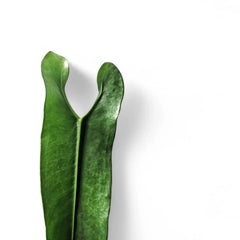
anthurium longicaudatum Anthurium longissimilobum – Elongated Strap LeavesAnthurium longissimilobum Anthurium longissimilobum is a Peruvian Anthurium species with long, narrow, triangular subhastate leaves and extended posterior lobes. The blade shape gives the plant a stretched, arrow like outline as it climbs, with the rear lobes forming a deep sinus behind the main blade. This is an appressed climbing epiphyte from the Hunuco region of Peru, where it was described from wet forest transitions around Tingo Mara. Indoors,

Anthurium longissimilobum

Anthurium longissimilobum is a Peruvian Anthurium species with long, narrow, triangular-subhastate leaves and extended posterior lobes. The blade shape gives the plant a stretched, arrow-like outline as it climbs, with the rear lobes forming a deep sinus behind the main blade.

This is an appressed-climbing epiphyte from the Huánuco region of Peru, where it was described from wet forest transitions around Tingo María. Indoors, its long lobes need space, vertical support and a root zone that stays airy after watering.

Leaf structure of Anthurium longissimilobum

  • Leaf architecture: Narrowly triangular-subhastate blades create a long, lean outline.
  • Posterior lobes: Very long rear lobes form the feature behind the species name.
  • Venation: Primary lateral veins can create a distinctive S-shaped pattern.
  • Growth form: Appressed-climbing epiphyte with short internodes.
  • Origin: Described from Peru, especially the Tingo María area in Huánuco.
  • Growing setup: Benefits from vertical support and a chunky epiphyte-style mix.

Long lobes, climbing growth and space

Anthurium longissimilobum develops its shape through length and narrow leaf architecture. The posterior lobes can extend close to the support, so the plant needs room behind and beside the leaf to keep the blade from creasing.

The climbing stem and short internodes suit a pole, plank or other vertical surface. A stable support keeps the growth upright and gives new leaves space to open without bending the narrow blade or marking the long lobes.

Habitat notes for Anthurium longissimilobum

This species is associated with Peruvian wet forest transitions between Premontane wet forest and Tropical moist forest. That background points to warm conditions, consistent moisture, strong drainage and stable humidity in an oxygen-rich root zone.

Care for Anthurium longissimilobum

  • Light: Give bright filtered light. Direct sun can scorch the extended leaf tissue.
  • Water: Keep the mix lightly moist, then let excess water drain fully so the root zone stays oxygenated.
  • Substrate: Use a coarse Anthurium or epiphyte mix with bark, fibre and mineral structure.
  • Support: Provide a pole or plank early so the climbing stem can hold a steady vertical line.
  • Humidity: Keep humidity stable while new leaves unfurl, especially as the long lobes extend.
  • Temperature: Maintain warm conditions and protect the roots from cold wet substrate.
  • Spacing: Leave enough clearance around the plant so the long posterior lobes do not crease or rub.

Common issues with Anthurium longissimilobum

  • Marked lobes: Long leaf sections can crease or tear when pressed against shelves, supports or neighbouring plants.
  • Distorted new leaves: Raise humidity stability and check that new growth is not caught against the support.
  • Root decline: Refresh compact substrate and improve drainage if the pot stays wet for too long.
  • Brown patches: Move the plant away from direct sun and check for heat buildup near glass.
  • Loose climbing stem: Tie new growth gently before the stem bends away from the support.

Safety for Anthurium longissimilobum

Anthurium longissimilobum contains irritating calcium oxalate crystals. Keep leaves, stems and cut sap away from pets, children and sensitive skin.

Botanical background

Anthurium longissimilobum was described by Croat in 2008. The epithet refers to the very long lobes, a direct match for the extended posterior lobes that shape the leaf.

Shipping Notes
  • Free Standard Shipping on $100+ Orders to the USA.
  • Except Preorder products are shipped in 48 hours.
  • Delivery to the USA:
  1. Standard Shipping : 3-10 business days
  • If time is of the essence, please consider selecting expedited delivery for faster service.
Exchange/Return Notes
  • We offer a 30-day return/exchange service after receiving.
  • Final sale items are not eligible for returns or exchanges.
  • To process your return/exchange, please contact us at [email protected]
  • Please click here for more details>>> Return & Exchange Policy
SKU: 51593027928

Discover Niche Categories That Outsell anthurium longicaudatum

Top-Converting Item to Boost Your Average Order

4.7 ★★★★★
Based on 8 reviews
Sort
Highest Rating
Newest First
Oldest First
Product Reviews
N
Verified Purchase
NoName
Natrona Heights, US
★★★★★ 5
This book will educate and inform! A+
Format: Paperback
Now in my 7th decade, I spent my entire career in the pharmaceutical manufacturing industry. I can attest to the veracity of Dr. Brawley's dissertation. The maxim that all physicians and surgeons promise is the essential promise to "First, do no harm." Dr. Brawley teaches that not all who purport to care for us and our loved ones adhere to this promise. Just ask a vet. On the battlefield virtually all medical care is superb. Here at home, alas, it is not so. Too often, not always, but way too often he is right. Here's the bottom line. If you're not comfortable with what your being told about your health, or that of a loved one, don't hesitate, find another MD who though you may not like what they may say to you, you trust them with your life. That is exactly what you're doing. Much of the seeming heroics in medicine/surgery are really about making or saving money for the drug industry, or hospital, or doctor, or insurance carrier, and not about saving your backside. Certainly not always, perhaps not even most of the time, but way too often. Read this book and you'll be radically better equipped to understand just what may be driving the responses of the health care systems to your malady, and how you can assure the appropriate care for yourself or a loved one. Are there great doctors and hospitals out there? You bet there are. There are also those who couldn't care less about quality health care for you and are only focused on their own backside. This book will educate and inform you.
WAS THIS REVIEW HELPFUL?YesReportShare
Reviewed in the United States on August 20, 2016
M
Verified Purchase
memyselfandi
Natrona Heights, US
★★★★★ 5
"More" is not "better"
Format: Kindle
I had the privilege of working with Otis during part of his training at the National Cancer Institute at a time that policies on PSA and mammography screening were being newly scrutinized with respect to risk/benefit. The notion that screening might actually do more harm than good was seen as absolute heresy and I fondly remember the wonder and amazement in Otis' eyes as he unraveled to me just how this counter-intuitive idea could be so. Twenty years later, the truths I learned from Otis back then are still not widely appreciated among patients, indeed even doctors more sadly. I eagerly snatched this book up not only because I knew Otis and expected a riveting review of healthcare but because my experience in pharmaceutical development has led me to participate unintentionally in some of the perverse systems of conflicts of interest that characterize our healthcare system. I am at a personal watershed and this book is a strong antidote for what ails me, i.e. I feel emboldened to take my career in the direction of a solution rather than continue to contribute to the problem. Written for the general audience, We Do Harm breaks the ranks of legions of doctors who are invested in perpetuating a broken but remunerative healthcare system by introducing specific and by no means isolated instances where patients have been harmed. This book is at once disparaging of blind trust of one's physician and optimistic in that some stars like Otis and microcosms like Grady Memorial can and do avoid patient-disadvantaged conflicts of interest. This book provides evidence and motivation for every person in every role they engage in in the healthcare system: patient, consumer, provider, insurer, politician. No one can escape the relevance and import of the key message of this book that "more" is not always "better." Until such time, if ever, that our healthcare system operates under transparency, this is a must read for all. That means you! Now! It can't wait! I am a believer that healthcare quality will come from the bottom up and not the top down and this book exemplifies this spirit; read it and be empowered to ask the hard questions as to who is motivated to provide what care and at what personal gain.
WAS THIS REVIEW HELPFUL?YesReportShare
Reviewed in the United States on January 14, 2013
T
Verified Purchase
Terry
Lake Worth, US
★★★★★ 5
I got what I needed.
Format: Paperback
I got the book I needed for school in a timely manner.
WAS THIS REVIEW HELPFUL?YesReportShare
Reviewed in the United States on June 9, 2021
J
Verified Purchase
Julie
Omaha, US
★★★★★ 5
Amazing recourse, even while in nursing school
Format: Paperback
I buy this for everyone I know how gets into nursing school. It helped me as a resource while in school. Topics are a few pages, unlike your textbook where they are 30-60 pages
WAS THIS REVIEW HELPFUL?YesReportShare
Reviewed in the United States on March 26, 2026
J
Verified Purchase
Jemia Jones
Los Angeles, US
★★★★★ 5
Helpful for nursing school and NCLEX
Format: Paperback
This book was helpful in my nursing school journey. I still use it and it breaks it all down in simpler terms to better understand the material. Highly recommend for med-surg nursing.
WAS THIS REVIEW HELPFUL?YesReportShare
Reviewed in the United States on January 10, 2025

recommand products