SKU: 51846482911
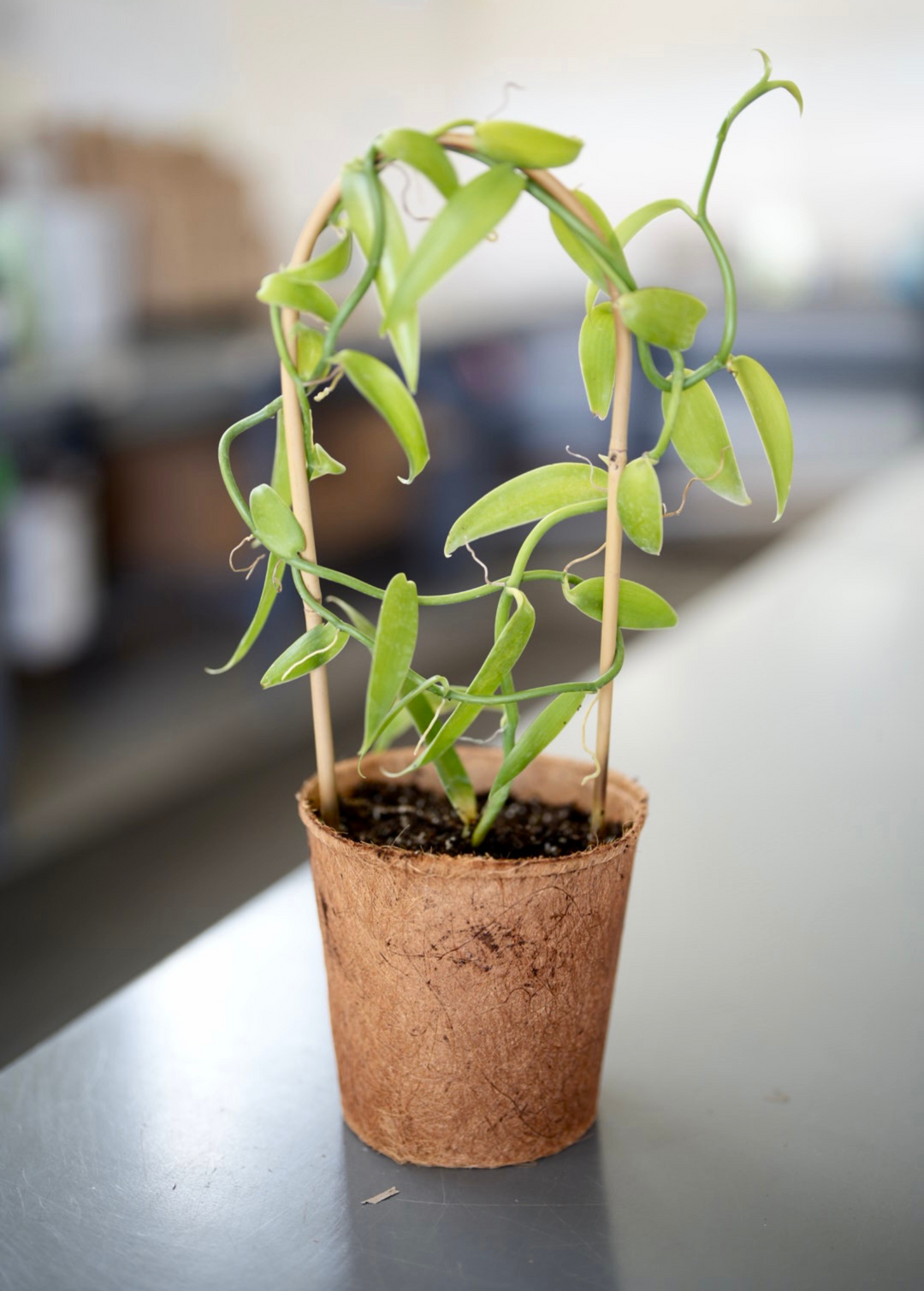
vanilla house plant

vanilla house plant Vanilla Bean Orchid | Rare Fruiting Vine

Sale price$22.14 Regular price$24.60
Save 10%

Pay in installments of $6.15 with ShopPay, AfterPay and Klarna

Shipping Estimate
USA
  • USA
  • CAN

Ships within 48 hours · Estimated delivery Sep 16 - Sep 21

Promo Codes Available:

For Your Every Summer RSVP, with Code: SUMMER15

Description

vanilla house plant Vanilla Bean Orchid | Rare Fruiting VineFragrant Tropical Orchid Vine & Source of True Vanilla The Vanilla Bean Orchid (Vanilla planifolia) is a tropical climbing orchid and the worlds primary source of natural vanillathe most beloved flavoring on earth. Native to Mexico and Central America, this lush, vining orchid produces thick, glossy leaves, pale green yellow flowers, and the long seed pods that become fragrant vanilla beans after a careful curing process. Cultivated by the Aztecs and

Fragrant Tropical Orchid Vine & Source of True Vanilla

The Vanilla Bean Orchid (Vanilla planifolia) is a tropical climbing orchid and the world’s primary source of natural vanilla—the most beloved flavoring on earth. Native to Mexico and Central America, this lush, vining orchid produces thick, glossy leaves, pale green-yellow flowers, and the long seed pods that become fragrant vanilla beans after a careful curing process. Cultivated by the Aztecs and treasured globally, vanilla has been a cornerstone of culinary tradition for centuries—used in chocolate, desserts, perfumes, and medicines. Growing your own vanilla orchid connects you to this rich history while bringing the beauty of an exotic orchid vine into your home or garden.

Why Grow Vanilla Bean Orchid?

  • The original source of natural vanilla beans
  • Ornamental climbing orchid with showy blooms and lush foliage
  • Rich culinary legacy—used in desserts, drinks, and perfumes worldwide
  • Grows well in tropical gardens, greenhouses, or indoors as a houseplant
  • A rewarding challenge for orchid and rare plant collectors

Growing Tips:

Vanilla orchids thrive in warm, humid, tropical conditions. Provide bright, indirect light or partial shade, and plant in a loose, well-draining orchid mix. Keep soil consistently moist but not soggy, and mist often to maintain humidity. Vanilla is a climbing orchid that needs a sturdy support or trellis. Flowers typically open one at a time and must be hand-pollinated outside their native range (where their natural pollinator, the Melipona bee, is absent). Once pollinated, pods take 8–9 months to mature and must then be cured and dried to develop their famous aroma. Hardy in USDA Zones 9–11 or as a greenhouse/container plant in cooler zones.

Cultural & Culinary Significance

The Aztecs were the first to cultivate vanilla, blending it with cacao to create their sacred chocolate drinks. Later, Spanish explorers introduced vanilla to Europe, where it became one of the world’s most treasured flavors. Today, the cured seed pods of Vanilla planifolia remain essential in baking, ice cream, beverages, and perfumes. Beyond its culinary role, vanilla has also been used in traditional medicine for its calming and aphrodisiac qualities. Growing a Vanilla Bean Orchid at home offers not just a rare botanical experience, but a living link to centuries of global food and cultural history.

Shipping Notes
  • Free Standard Shipping on $100+ Orders to the USA.
  • Except Preorder products are shipped in 48 hours.
  • Delivery to the USA:
  1. Standard Shipping : 3-10 business days
  • If time is of the essence, please consider selecting expedited delivery for faster service.
Exchange/Return Notes
  • We offer a 30-day return/exchange service after receiving.
  • Final sale items are not eligible for returns or exchanges.
  • To process your return/exchange, please contact us at [email protected]
  • Please click here for more details>>> Return & Exchange Policy
SKU: 51846482911

Discover Niche Categories That Outsell vanilla house plant

Top-Converting Item to Boost Your Average Order

4.4 ★★★★★
Based on 26 reviews
Sort
Highest Rating
Newest First
Oldest First
Product Reviews
S
Verified Purchase
S. Langley
Battle Creek, US
★★★★★ 4
A
This is a great resource. I thought I created great presentations before. Reading this made me realize the mistakes I was making and have me a process for really improving my decks
WAS THIS REVIEW HELPFUL?YesReportShare
Reviewed in the United States on August 29, 2014
J
Verified Purchase
Judith Priddy
Phoenix, US
★★★★★ 5
So glad that I have bought these books from Amazon
Format: Paperback
Still working on getting through, I try and read more each day
WAS THIS REVIEW HELPFUL?YesReportShare
Reviewed in the United States on November 5, 2025
A
Verified Purchase
Adam C. Driver
Birmingham, US
★★★★★ 5
Must read
Format: Paperback
Impressive second book by Justin Driver.
WAS THIS REVIEW HELPFUL?YesReportShare
Reviewed in the United States on October 1, 2025
J
Verified Purchase
james p. whitters III
Massapequa, US
★★★★★ 5
Excellent!
Format: Paperback
Excellent read!
WAS THIS REVIEW HELPFUL?YesReportShare
Reviewed in the United States on October 5, 2025
B
Big Pumpkin
Whiting, US
★★★★★ 1
A Disconnected and Legally Shaky Defense of Racial Preferences
Format: Paperback
While this book raises some thought-provoking points, it ultimately reads like a product of self-righteous elites disconnected from reality and from the American public. 1. Ignores public opinion. The author never acknowledges that polls consistently show Americans oppose racial preferences in college admissions. Proposition 16—which would have allowed such preferences—was defeated by a wide margin in 2020 in California, one of the nation’s most liberal states. A Brookings poll found that virtually all racial groups, including Black respondents, supported the Supreme Court’s Students for Fair Admissions (SFFA) decision. 2. Starts with a strange premise. The first chapter claims conservatives will “regret” the SFFA ruling because universities will continue racial preferences covertly. But that sidesteps the real question: why shouldn’t colleges comply with the ruling’s letter and spirit? 3. Offers dubious legal advice. In Chapter Three, the author—himself a law professor—floats risky ideas for “working around” the Supreme Court’s decision. Many of these suggestions rest on shaky legal ground, as anyone familiar with the Second Circuit’s CACAGNY v. Adams, 116 F.4th 161 (2d Cir. 2024), would recognize. 4. Ignores proportionality and real-world outcomes. The book argues for “diversity” preferences without asking how much preference is justified. In reality, Asian American applicants face steep penalties. e.g. Stanley Zhong was rejected by five University of California campuses’ Computer Science programs as an in-state applicant—shortly before Google hired him for a full-time, Ph.D.-level software engineering position. Meanwhile, UC San Diego’s own freshman math-placement data show a surge of students—mostly “underrepresented minorities” favored by UC—placed into remedial courses, some testing at a 4th-grade level. It is hard to see how admitting these students is helping them other than allowing some elites to make themselves feel good or get a promotion. If this book represents what passes for legal scholarship at Yale, the state of American legal education should worry us all.
WAS THIS REVIEW HELPFUL?YesReportShare
Reviewed in the United States on October 12, 2025

recommand products