Pay in installments of $6.92 with
 ,
,
 and
and

Shipping Estimate
USA
- USA
- CAN
- USA
- CAN
Ships within 48 hours · Estimated delivery Oct 2 - Oct 7
 Promo Codes Available:
For Your Every Summer RSVP, with Code: SUMMER15
Description
echeveria metallica succulent Echeveria 'Metallica'Echeveria gibbiflora 'Metallica' Echeveria gibbiflora 'Metallica' is a broad leaved rosette succulent with thick, spoon shaped leaves that mature through green, glaucous, purplish and bronze tones. Each leaf adds size around the centre, building a broad, rounded rosette. The plant develops from a short stem and carries wide leaves that can look rounded near the tip. In bright cultivation, the leaf colour may deepen, while the waxy surface and fleshy
Echeveria gibbiflora 'Metallica'
Echeveria gibbiflora 'Metallica' is a broad-leaved rosette succulent with thick, spoon-shaped leaves that mature through green, glaucous, purplish and bronze tones. Each leaf adds size around the centre, building a broad, rounded rosette.
The plant develops from a short stem and carries wide leaves that can look rounded near the tip. In bright cultivation, the leaf colour may deepen, while the waxy surface and fleshy tissue show its water-storing Crassulaceae structure.
Broad leaves and metallic colour tones
- Large rosette: Builds a broad, substantial rosette with thick leaves arranged around a central growing point.
- Leaf shape: Broad spoon-shaped leaves have rounded tips and a small point at the end.
- Colour range: Green, glaucous, lilac-purple and bronze tones can appear as leaves mature.
- Stem habit: Forms a short-stemmed succulent rosette with visible height as the base develops.
- Flowering: Mature plants may produce tall flower stems with coral, orange or yellowish Echeveria-type flowers.
Gibbiflora-group growth and Mexican background
Echeveria gibbiflora is an accepted species in Crassulaceae and belongs to one of the larger, broad-leaved Echeveria groups. The species is associated with central Mexico, including areas from Michoacán toward the State of México and Morelos, with records connected to rocky volcanic landscapes between Mexico City and Cuernavaca.
The broad leaves and short-stemmed rosette give this plant a broad rosette that can become top-heavy in a container. As the lower leaves age, the base may become more visible, so stable potting and careful removal of fully dry leaves help keep the plant balanced and clean.
Care for broad-leaved rosettes
- Light: Give very bright light and gentle direct sun. Increase exposure gradually so broad leaves do not scorch.
- Watering: Soak the substrate, then let it dry through. The large leaves store water, so frequent small drinks keep the root zone too damp.
- Substrate: Use a sharply draining succulent mix with grit, pumice, lava or similar mineral components.
- Potting: Choose a stable pot with drainage holes. The wider rosette can become top-heavy as the short stem thickens.
- Temperature: Keep above 10 °C and dry through winter. Cold, wet roots are the main risk in indoor European conditions.
- Feeding: Use a weak succulent fertiliser during active growth only. Overfeeding can produce softer leaves and a loose centre.
- Grooming: Remove fully dry lower leaves to reduce hiding places for mealybugs and to keep air moving around the stem.
- Propagation: Offsets and stem sections can be rooted when available; allow cuts to callus before planting into dry mineral substrate.
Issues around broad Echeveria rosettes
- Loose centre: Wider gaps between new leaves usually signal weak light. Move the plant gradually into a brighter position.
- Soft stem base: Dark, soft tissue near the base points to excess moisture. Unpot, inspect the roots and remove rotted tissue.
- Scorched patches: Dry tan marks can follow sudden exposure to strong midday sun, especially behind hot glass. Acclimate slowly.
- Dry lower leaves: Some lower-leaf loss is normal as the stem ages. Rapid loss together with soft tissue needs a root check.
- Mealybugs: Check leaf bases and the stem where dry leaves collect. Treat early and repeat until new growth stays clean.
Handling and household safety
Echeveria gibbiflora 'Metallica' has smooth, fleshy leaves and no spines. Place it away from pets and small children that chew plants, and remove fallen leaves during routine grooming.
Botanical background behind 'Metallica'
Echeveria gibbiflora DC. was published by de Candolle in 1828 and belongs to Crassulaceae. The long-used name 'Metallica' is connected with cultivated material historically associated with Echeveria metallica. Echeveria gibbiflora places the plant within a broad-leaved Mexican species group in Crassulaceae.
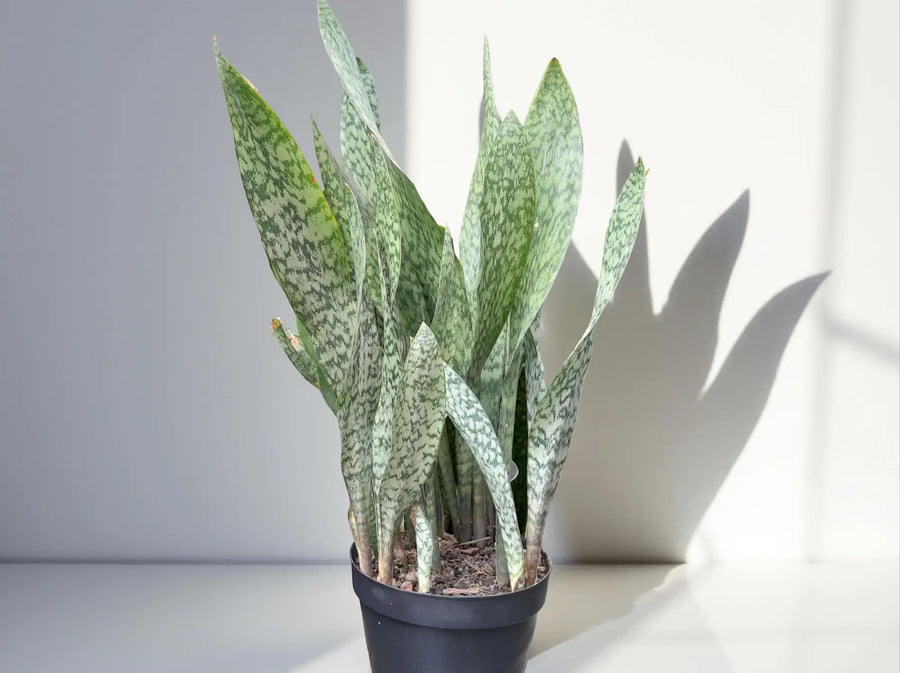
Echeveria gibbiflora 'Metallica' forms a larger rosette with broad leaves and bronze-purple tones.
Shipping Notes
- Free Standard Shipping on $100+ Orders to the USA.
- Except Preorder products are shipped in 48 hours.
- Delivery to the USA:
- Standard Shipping : 3-10 business days
- If time is of the essence, please consider selecting expedited delivery for faster service.
Exchange/Return Notes
- We offer a 30-day return/exchange service after receiving.
- Final sale items are not eligible for returns or exchanges.
- To process your return/exchange, please contact us at [email protected]
- Please click here for more details>>> Return & Exchange Policy