Pay in installments of $5.55 with
 ,
,
 and
and

Shipping Estimate
USA
- USA
- CAN
- USA
- CAN
Ships within 48 hours · Estimated delivery Jul 31 - Aug 5
 Promo Codes Available:
For Your Every Summer RSVP, with Code: SUMMER15
Description
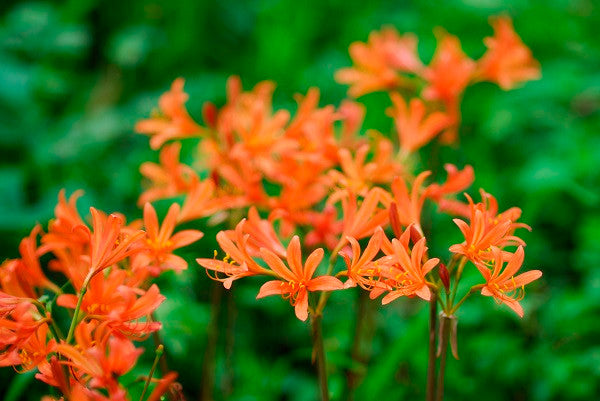
spider lily information Orange Spider Lily (Lycoris sanguinea)The Lycoris sanguinea is often called the "Orange Spider Lily." The blooms are a bright orange that bloom in late summer to fill your garden with color when most blooms in your garden are dying. They really work best in zones 5b 7a because they need a good winter freeze to help them prepare for the next growing season. How they bloom: Lycoris sanguinea "Orange Spider Lily" bulbs bloom differently than most flowers. Now is a perfect time to plant these
The Lycoris sanguinea is often called the "Orange Spider Lily." The blooms are a bright orange that bloom in late summer to fill your garden with color when most blooms in your garden are dying. They really work best in zones 5b-7a because they need a good winter freeze to help them prepare for the next growing season.
How they bloom: Lycoris sanguinea "Orange Spider Lily" bulbs bloom differently than most flowers. Now is a perfect time to plant these bulbs. These bulbs need 1-2 years after they are planted before presenting blooms. Your bulbs are developing a strong root system right now to support future foliage and eventually blooms. You should see the foliage this February - May, but don't be concerned if you don't. Most people still expect to see something growing during the summer months. You won't see anything. These bulbs are dormant in the summer. After 1-2 years, the flowers suddenly appear with the first later summer and early fall rains. One day there is nothing growing and then suddenly you have a surprise, a fully blooming flower! This bulb acts very similarly to red spider lilies, yellow spider lilies, and schoolhouse lilies. Simply put, they bloom in the fall, have foliage for the winter, and are dormant during the summer.
Foliage: Let's talk foliage for a moment. The "Orange Spider Lily's" strap-shaped long foliage will look great by itself in the spring or mixed in with spring blooms. We know that we all want to see the beautiful unusual blooms in the late summer, but the foliage is very important. The foliage is what allows the bulb to grow and multiply. Many people get very concerned if they don't see the bloom the first year that they plant it and believe that maybe the bulb isn't any good. A good rule for perennial bulbs....if the bulb is firm when you plant it, it is healthy and will eventually come up. The foliage is what you watch for since the bulbs aren't going to bloom for 1-2 years. The foliage will grow during the spring months, February - May, so be sure to plant the bulbs where they will receive at least 6+ hours of winter sun. Even if the foliage gets hit by a winter cold snap, it will have taken in nutrients for months! Always allow the foliage to die down naturally and don't cut it off. If you cut it, you are killing the bulb. Once the foliage is completely dead which is usually around the middle of May, this area can be mowed. Remember, it takes a lot of energy for the bulb to push that bloom up out of the ground and open wide. The more time the bulbs can take in nutrients, the more energy they will have for that fall bloom.
Just a thought...if it looks like you are going to have a cold snap and want to protect your foliage, you might consider covering it with a bucket and then removing the bucket once the daytime temperatures warm up.
Blooms: When talking about late-summer color, these orange blooms catch your eye. In late summer, each bulb sends up a 12-16 inch stem that holds several blooms. Each naked stem pops up out of the ground almost overnight. The orange petals are slightly reflexed displaying the yellow stamens within. The blooms will appear late August or early September on a naked stalk like the other Lycoris. It may take 1-2 years before the blooms appear, but the show it produces in late summer is unparrelled. Once established in your garden they are there for a lifetime! These blooms need water to bloom. They respond to the late summer rains well, but if there is a hard drought, be sure to begin watering the area around the beginning of July to help the bulbs have enough energy to bloom. A naked stalk will rise quickly and a few days later the landscape will burst with bright blooms.
Sun Requirements: The single most important thing about landscaping with Lycoris is the sun. They need at least 6+hours of WINTER sun. That means about 6-8 hours of sunlight during the winter months - they do great with full winter sun. Because they are dormant during the summer, the amount of summer sun doesn't usually matter; however, Lycoris sanguinea will keep some of their color better if they get some afternoon shade during their blooming time in August/September.
The Lycoris all have the same requirements of the sun. If you look at the photo above of the Lycoris squamigera "Naked Lady" blooms, you will see that they are in the shade of the trees. You can be sure that most, if not all, of those trees, will lose their leaves in the winter when the greenery needs sunlight. Lycoris put on their foliage during the winter (February - May) and that is when it takes in the nutrients it needs to produce the blooms in September. The winter foliage soaks up sun energy during winter as it prepares for summer dormancy. The foliage normally completely dies down around May.
Plant: Don't plant the bulb too deep. You will plant the bulbs 2-3 times deep the height of the bulb (so if your bulb is 1" tall, then you will plant it 2-3 inches deep). Because they bloom on a naked stalk, they look better when planted in groups. You can plant the bulbs close together (2-4 inches apart) to make the blooms look more natural or spread the bulbs out and allow 6-8 inches in between each bulb. The area will look sparse the first couple of years that the blooms come up, but the bulbs will multiply and fill in several years after that.
Lycoris bulbs really do well in any type of soil except full clay. They thrive in soil that has plenty of organic material mixed in but they do not require fertilizer. Newly planted bulbs would actually be harmed by exposure to fertilizer, so if you are going to apply nutrients, limit the application to established plants when the plants are producing their green leafy foliage during the winter. After planting the bulbs, water the soil thoroughly. Damp soil is ok, as long as the bulbs are in a spot where they will receive plenty of winter sun and the foliage is allowed to die down naturally in the spring. Standing water is not good. Once the summer season starts these bulbs will do best in soil that dries out a bit, as this facilitates its entry into the dormant stage when the leaves die back. This period is followed by its blooming season when it will reward daily watering with long-lasting blooms. Too much moisture in the soil will lead to the bulbs rotting.
Bulbs to use with Lycoris: There are an assortment of perennial flower bulbs that go well with Lycoris blooms. When the bloom appears in late August or early September, it will look great with rain lilies and other spider lilies. The foliage makes a great backdrop for spring bloomers like Narcissus Jonquils, campernelles, twin sisters, and snowflakes.
FUN FACTS:
POLINATORS: Bees, butterflies, and hummingbirds are attracted to the orange spider lily.
"Sanguinea" is a Latin word that means "blood-red" or "bloody" in English. It's often used to describe something that is a deep red color, reminiscent of the color of blood. This term is commonly used in various scientific fields to describe organisms, such as plants or animals, that have a reddish hue.
How to pronounce sanguinea...
- "san" sounds like "san" in "sand."
- "gwin" sounds like "gwin" in "gwinnett."
- "ee" sounds like the letter "e" in "see."
- "uh" sounds like "uh" in "duh."
So, when you put it all together, it's "san-gwin-ee-uh." The emphasis is on the second syllable, "gwin."
Shipping Notes
- Free Standard Shipping on $100+ Orders to the USA.
- Except Preorder products are shipped in 48 hours.
- Delivery to the USA:
- Standard Shipping : 3-10 business days
- If time is of the essence, please consider selecting expedited delivery for faster service.
Exchange/Return Notes
- We offer a 30-day return/exchange service after receiving.
- Final sale items are not eligible for returns or exchanges.
- To process your return/exchange, please contact us at [email protected]
- Please click here for more details>>> Return & Exchange Policy