Pay in installments of $6.52 with
 ,
,
 and
and

Shipping Estimate
USA
- USA
- CAN
- USA
- CAN
Ships within 48 hours · Estimated delivery Oct 5 - Oct 10
 Promo Codes Available:
For Your Every Summer RSVP, with Code: SUMMER15
Description
do peace lily plants clean the air Peace Lily House Plant | Natural Indoor Air PurifierIntroduction On NASA's Top 10 Air Cleaning Plants! Natural Air Purifier Removes Toxins from your home Symbol of Hope, Peace, Prosperity, Tranquility, and Purification A Lovely Gift for Sympathy, Get Well, Apology, etc Low Maintenance House Plant Description The botanical name of the Peace Lily, Spathiphyllum, means peace and prosperity. What a perfect name for this beautiful plant. The Peace Lily is a symbol of hope, tranquility, rebirth, and
Introduction
On NASA's Top 10 Air Cleaning Plants!
- Natural Air Purifier - Removes Toxins from your home
- Symbol of Hope, Peace, Prosperity, Tranquility, and Purification
- A Lovely Gift for Sympathy, Get Well, Apology, etc
- Low Maintenance House Plant
Description
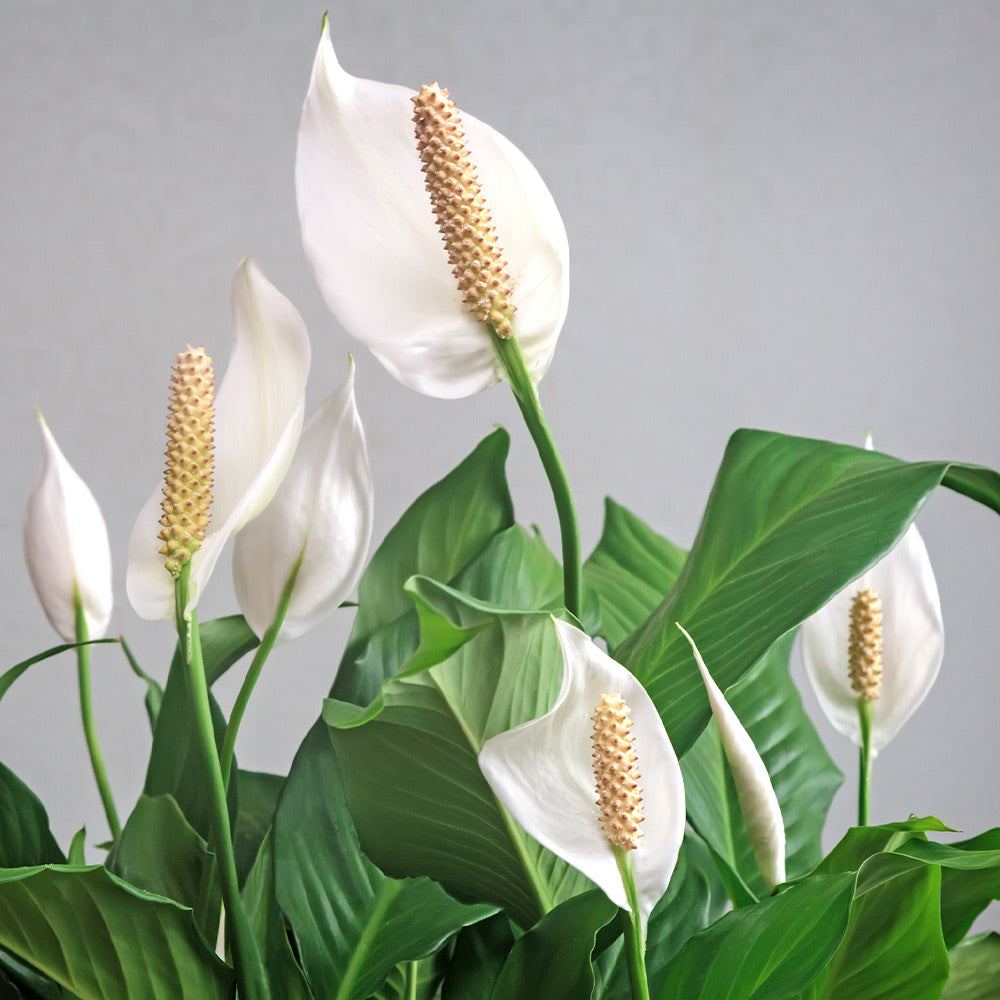
The botanical name of the Peace Lily, Spathiphyllum, means peace and prosperity. What a perfect name for this beautiful plant. The Peace Lily is a symbol of hope, tranquility, rebirth, and purification so it is a perfect sympathy, get well, or apology gift. Many even believe the white bract flowers known as spathes resemble the white flag of surrender or the sails of a ship.
The Peace Lily is on NASA's list of top 10 air-cleaning plants. This amazing natural air purifier doesn't just add oxygen to your home; it filters and removes toxins including benzene, formaldehyde, ethylene, and ammonia!
These chemical compounds are thought to be responsible for Sick Building Syndrome so order a Peace Lily or 3 for your workplace and your home! The Peace Lily even absorbs mold spores. This houseplant is perfect for your bathroom. It can help eliminate yucky mildew! Plus this plant loves humidity so you'll have a happy plant too.
Glossy, green leaves float in the air on top of shimmery thick stems. The white, flower-like spathes pop up above the lush foliage. This plant has an elegant and tropical look.
The Peace Lily is a low-maintenance houseplant. Simply water it when the soil begins to dry. This plant can grow in low light conditions but needs medium to bright filtered light in order to produce its flower-like spathes. Fertilize with our balanced slow-release fertilizer twice per year for best growth.
This plant can be grown outside as a patio plant but needs some protection from the sun. It will need to be treated as an annual or moved in before temperatures drop below about 50 degrees.
Whether it is a gift, a way to purify your air, or you just want a bit of tranquil life in your home, the Peace Lily is one of the best choices in houseplants. Order yours today!
How To Care
Look for an area with filtered high to low light. Peace Lilies grow well in low light conditions but will not flower.
Allow the soil to dry between waterings. Test the soil by pushing your finger about 1 inch below the surface. Water when it is dry to the touch. You are much more likely to overwater a Peace Lily that underwater.
Spathiphyllum likes a humid environment. So be sure to keep your houseplant away from drafts. If your home is very dry your plant may benefit from misting the leaves a couple of times per week. Even if you completely neglect your Peace Lily and the leaves are drooping, don't panic! Give it a good watering including the leaves. It will likely revive within a day.
Keep your houseplant fertilized with our slow-release fertilizer about twice per year. The fertilizer will feed the plant slowly over time and encourage growth.
Repot when you notice that the soil seems to be drying out every couple of days or you see roots coming to the surface. These are indicators that your plant is becoming rootbound. Peace lilies like to be somewhat rootbound though so don't give your plant too much room in a new pot.
If you want to prune back fading flower bracts, prune close to the base of the plant. Another flower will not be produced on that stem.
This plant can be grown outside as a patio plant but needs some protection from the sun. It will need to be treated as an annual or moved in before temperatures drop below about 50 degrees.
For additional options, check out our beautiful Calla Lillies.
Shipping Notes
- Free Standard Shipping on $100+ Orders to the USA.
- Except Preorder products are shipped in 48 hours.
- Delivery to the USA:
- Standard Shipping : 3-10 business days
- If time is of the essence, please consider selecting expedited delivery for faster service.
Exchange/Return Notes
- We offer a 30-day return/exchange service after receiving.
- Final sale items are not eligible for returns or exchanges.
- To process your return/exchange, please contact us at [email protected]
- Please click here for more details>>> Return & Exchange Policy