SKU: 5853401101
aglaonema live indoor plant

aglaonema live indoor plant Live Indoor Air Purifying Rotundum Hybrid 'Anjamani Red' Aglaonema Pla – GreenParadiseLive

Sale price$24.08 Regular price$26.76
Save 10%

Pay in installments of $6.69 with ShopPay, AfterPay and Klarna

Shipping Estimate
USA
  • USA
  • CAN

Ships within 48 hours · Estimated delivery Sep 24 - Sep 29

Promo Codes Available:

For Your Every Summer RSVP, with Code: SUMMER15

Description

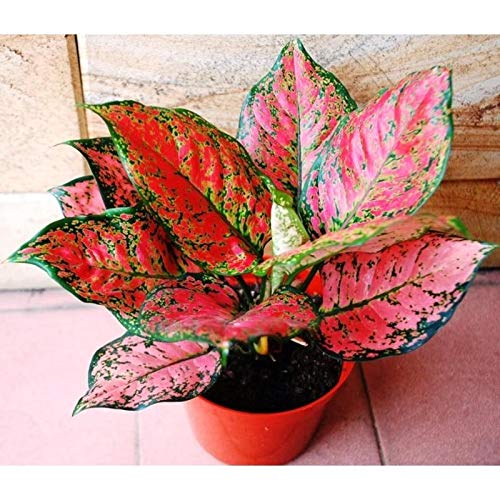
aglaonema live indoor plant Live Indoor Air Purifying Rotundum Hybrid 'Anjamani Red' Aglaonema Pla – GreenParadiseLiveGreen Paradise Beautiful Aglonema Palnt About Aglaonema Plant The pink aglaonema offers a perpetual touch of pink all year round. Keep soil moist and provide bright indirect sunlight. Beautiful Leaves Oxygen Giving Plant. Easy Growing Can be Grown In Total Indoor As Well. indoor plants offer the home and office many virtues, and Aglaonemas have almost every one of them. This is a wonderful low light houseplant and is among the easiest to maintain.


Green Paradise Beautiful Aglonema Palnt  

                         About Aglaonema Plant


The pink aglaonema offers a perpetual touch of pink all year round. Keep soil moist and provide bright indirect sunlight. Beautiful Leaves Oxygen Giving Plant. Easy Growing Can be Grown In Total Indoor As Well.

indoor plants offer the home and office many virtues, and Aglaonemas have almost every one of them. This is a wonderful low-light houseplant and is among the easiest to maintain. They are one of the only plants which can survive long periods of time in poorly lighted and badly ventilated areas. They have large, glossy oval-shaped leaves on short stems, which arch outward elegantly and can reach 10 inches or more in length. Light: Low light. Too much light may cause its leaves to fade. Water: Keep potting mix evenly moist. 

Aglaonema, also known as Chinese Evergreen, is a popular genus of flowering plants in the family Araceae. It is native to tropical and subtropical regions of Asia, particularly Southeast Asia. Aglaonema plants are cultivated for their attractive foliage and are commonly used as indoor ornamental plants.

The plants are known for their sturdy nature, low maintenance requirements, and ability to tolerate various light conditions. They typically have broad, lance-shaped leaves that come in various shades of green, often with patterns of silver, cream, or red. The variegated foliage adds a decorative touch to indoor spaces.

Aglaonema plants are valued for their air-purifying qualities, as they can remove toxins from the air, making them a popular choice for improving indoor air quality. They are often found in homes, offices, and other indoor environments.

In terms of care, Aglaonema plants prefer indirect or filtered light, as direct sunlight can scorch their leaves. They thrive in average room temperatures and moderate humidity levels. They should be watered regularly, allowing the soil to dry out slightly between waterings to prevent overwatering, which can lead to root rot.

Overall, Aglaonema plants are beautiful, adaptable, and relatively easy to care for, making them a favored choice among plant enthusiasts and beginners alike.


                 How To Grow Aglaonema Plant


To successfully grow an Aglaonema plant, here are some general guidelines to follow:


Lighting:

Aglaonema plants thrive in bright, indirect light. They can tolerate low light conditions, but their growth may slow down. Avoid placing them in direct sunlight as it can scorch the leaves.


Temperature:

Aglaonema plants prefer average room temperatures ranging from 65°F to 75°F (18°C to 24°C). They are sensitive to cold drafts, so keep them away from windows or doors that may cause temperature fluctuations.


Humidity:

While Aglaonema can tolerate normal household humidity, they appreciate slightly higher humidity levels. If the air in your home is particularly dry, you can increase humidity by placing the plant on a pebble tray filled with water or by using a humidifier.


Watering:

Water your Aglaonema plant when the top inch (2.5 cm) of soil feels dry. Avoid overwatering, as it can lead to root rot. Ensure proper drainage and discard any excess water that collects in the saucer.


Soil:

Aglaonema plants prefer well-draining soil that retains some moisture. A good mix can be achieved by combining potting soil with perlite or peat moss to improve drainage.


Fertilization:

Feed your Aglaonema plant with a balanced liquid fertilizer during the growing season (spring and summer) every 4-6 weeks. Follow the instructions on the fertilizer package for proper dilution and application.


Pruning:

Regularly remove any yellowed or damaged leaves to maintain the plant's health and appearance. You can also trim the tips of the plant to control its height and promote bushier growth.


Repotting:

Aglaonema plants prefer slightly crowded root conditions, so repotting is usually only necessary when the plant has outgrown its current container. Repot during the spring using a slightly larger pot with fresh potting soil.


Pests and Diseases:

Aglaonema plants are generally resistant to pests, but occasionally they may be susceptible to mealybugs, spider mites, or scale insects. Monitor your plant regularly and take appropriate measures if you notice any infestation. Also, be mindful of overwatering to prevent root rot.

By following these guidelines and paying attention to the specific needs of your Aglaonema plant, you can create a favorable environment for its growth and enjoy its beautiful foliage for years to come.

Shipping Notes
  • Free Standard Shipping on $100+ Orders to the USA.
  • Except Preorder products are shipped in 48 hours.
  • Delivery to the USA:
  1. Standard Shipping : 3-10 business days
  • If time is of the essence, please consider selecting expedited delivery for faster service.
Exchange/Return Notes
  • We offer a 30-day return/exchange service after receiving.
  • Final sale items are not eligible for returns or exchanges.
  • To process your return/exchange, please contact us at [email protected]
  • Please click here for more details>>> Return & Exchange Policy
SKU: 5853401101

Discover Niche Categories That Outsell aglaonema live indoor plant

Top-Converting Item to Boost Your Average Order

4.9 ★★★★★
Based on 25 reviews
Sort
Highest Rating
Newest First
Oldest First
Product Reviews
C
Verified Purchase
Charles H. Hooker Jr.
Waukegan, US
★★★★★ 5
Very enlightening for those who truly appreciate creativity more than cleverness!
Format: Paperback
I love how the author almost redefines creativity .and sheds new light (for me, at least!)on what what real-for-true creativity is and how it benefits individuals and society. It's far more than simply brightening up a room with new wallpaper and curtains -- it describes how genuine creativity requires a thorough working knowledge of the fundamentals of any given field before one can truly create something new or better, and it reveals how those of us who aren't capable of creating something ourselves can yet be part of the process by demonstrating appreciation and support for those who create, whether as sponsors, patrons, or even just ardent fans!
WAS THIS REVIEW HELPFUL?YesReportShare
Reviewed in the United States on July 4, 2023
D
Verified Purchase
Donald Walker
Lexington, US
★★★★★ 3
instructive but limited
The testimonies of creative people that give this book its flesh and blood provide fascinating examples of creative people at work. That said, if a journalist had written the book, it would be more readable, and I don't think any less of an intellectual contribution. Moreover, the definition of creativity is elitist and stunts the topic (as observed by other reviewers): "Creativity is any act, idea, or product that changes an existing domain, or that transforms an existing domain into a new one. And the definition of a creative person is: someone whose thoughts or actions change a domain, or establish a new domain. It is important to remember, however, that a domain cannot be changed without the explicit or implicit consent of a field responsible for it." Given the people interviewed, much more needs to be said about the function of social institutions in promoting creativity. Many of the accomplishments lauded in this book would never have happened without grant-making agencies (e.g., NSF, NIH, HHMI) or non-profit employers like research universities and hospitals. To offer just one obvious example of the difference made by one's institutional context, the author had advanced students to help him do his research for this book. The elitism of the definition is even clearer in the role that marketplace plays as a judge of creativity. None of us buys books from amazon.com because some official group validated amazon.com as a good idea. We didn't wait for computer programers to affirm and certify it. Amazon.com is not deemed successful because it impressed its peers. It is successful because millions of us purchase goods through it. Similarly, auto-executives did not make the minivan a successful idea, millions of shoppers did. (Obviously I don't think the marketplace fits into the author's definition of creativity. If 300 million American consumers comprise a domain with 300 million judges, then the word no longer has any useful meaning.) The definition also precludes that countless ephemeral acts of creativity that take place daily. I think instantly of two women I have worked with who were great at holidays. Their clever costumes or decorations brightened my day, adding a little element of surprise and delight. Their acts of creativity don't meet the definitions of this book. The way that creativity is defined in this book is simply a filtering mechanism by which the author selected the people he would interview. It is not a definition of creativity. It is only a description of a subsection of creativity, the kind where institutions provide paychecks to highly practiced individuals to work hard at what they love. I also found little new to take away and apply to my own social existence inside the organization where I work. Perhaps I can summarize my dissatisfaction by observing that the subtitle sets out an agenda for the psychology of creativity, but the definitional filter is intrinsically social. This disconnection sets the book up to fail. So, count this as a negative review, yes, but I did enjoy reading the testimonies of the people interviewed, and the author adds some value in the generalizations he draws. Still, much, much more could have been said.
WAS THIS REVIEW HELPFUL?YesReportShare
Reviewed in the United States on April 30, 2012
J
Verified Purchase
Judith R. Hert
Alexandria, US
★★★★★ 5
Wise and Complete
Format: Paperback
I've read a lot of books, too many, on creativity, and this is by far the best, the most complete, the most interesting. The idea that creativity comes out of immersion in a domain or field seems absolutely right and the idea missed by so many other writers. I'm a writer and a painter and I've learned that I'm not going to be any better than the work I've come to know and love, that I have to live in that work. If you want to be a better string player, play with a better ensemble. In many ways a creative person is someone who is in a conversation with what has come before, with work that excites her, teaches her, challenges her. This book makes that plain. But he has other insights as well, especially about the creative personality, the interesting dichotomies. Just read the book.
WAS THIS REVIEW HELPFUL?YesReportShare
Reviewed in the United States on February 22, 2015
C
Verified Purchase
Common Arts Farm
New York, US
★★★★★ 4
Creativity which has the power to change the world
A few caveats to those who are generally interested in creativity studies: Csikszentmihalyi's analysis and discussion of creativity does not directly relate to those who are personally creative. People who enjoy engaging in creative activities are not demoted, in his terms, but are simply not a part of the study. It is unfortunate that his language makes it seem this way; he distinguishes between the two by saying that Creativity has the power to shape a domain or the world, while creativity applies to those who enjoy coming up with new recipes, who are engaged in research that may not change a domain, but may "tweak" it, etc. What he is trying to discover are the underlying principles and traits of creativity in those whose work has made a significant change. Think Albert Einstein, Eleanor Roosevelt, Mark Strand: people who are either widely known for their influence, or who have been influential within their area or domain. This book provides an interesting view into the minds and work habits of Creative individuals, and concludes by offering general advice to those who wish to make their own lives and work more creative. It is a useful book, but one which requires a great deal of supplemental reading, in order to truly engage in creativity studies.
WAS THIS REVIEW HELPFUL?YesReportShare
Reviewed in the United States on January 29, 2003
T
Verified Purchase
Tracy Carvalho
Belleville, US
★★★★★ 5
Fun easy to read way to see how the wealthy stay wealthy
Format: Paperback
Mark Quann’s Be Smart Pay Zero Taxes is an eye-opening, engaging, and highly informative guide that challenges everything most of us think we know about taxes, wealth, and the financial system. With his "Buy, Borrow, Die" strategy, Quann presents a bold new way to build and preserve wealth—legally and ethically—while minimizing tax liability. One of the things that really stands out about this book is how approachable and enjoyable it is to read. Quann has a knack for breaking down complex financial concepts into bite-sized, digestible pieces. Whether you're a finance newbie or have been managing your own portfolio for years, you'll find the material easy to grasp and even fun to read. The tone is conversational, and the author's humor and wit shine through, making the book a far cry from the dry, overly technical finance books out there. What I loved most was how Quann exposes the ways in which the banking industry and the government have duped ordinary people into believing we have no choice but to pay exorbitant taxes. He takes a deep dive into the financial system and reveals how the wealthiest individuals have been using clever strategies for years to legally avoid paying significant taxes. The “Buy, Borrow, Die” method isn’t just some gimmick; it’s a smart and effective way to sidestep the tax traps most of us fall into. Quann’s perspective will make you question everything from your investment strategies to the way you think about saving and building wealth. This book empowers you with a strategy that not only helps you protect your wealth but also ensures that you're making the most of what you've worked so hard for. By the end, you’ll realize that we’ve been sold a false narrative about taxes and money, and there’s a much smarter way to approach wealth-building. Overall, Be Smart Pay Zero Taxes is a must-read for anyone who wants to get ahead financially. It’s a wake-up call wrapped in a fun and easy-to-read package. If you're ready to take control of your financial future and start building wealth like the ultra-wealthy, this book is the perfect place to start. Highly recommended!
WAS THIS REVIEW HELPFUL?YesReportShare
Reviewed in the United States on March 28, 2025

recommand products