SKU: 58603521205
red palm plant price

red palm plant price Green Paradise Red Palm Plant Cyrtostachys renda Live Plant – GreenParadiseLive

Sale price$22.34 Regular price$24.82
Save 10%

Pay in installments of $6.21 with ShopPay, AfterPay and Klarna

Shipping Estimate
USA
  • USA
  • CAN

Ships within 48 hours · Estimated delivery Aug 25 - Aug 30

Promo Codes Available:

For Your Every Summer RSVP, with Code: SUMMER15

Description

red palm plant price Green Paradise Red Palm Plant Cyrtostachys renda Live Plant – GreenParadiseLiveThe Majestic Red Palm Plant: A Green Marvel In the lush world of tropical flora, the Red Palm Plant stands as a regal sentinel, commanding attention with its striking appearance and an array of valuable attributes. Native to regions like Southeast Asia, the South Pacific, and Northern Australia, this botanical wonder has garnered admiration for centuries. Beyond its ornamental allure, the Red Palm boasts a rich history, impressive adaptability, and

The Majestic Red Palm Plant: A Green

Marvel

In the lush world of tropical flora, the Red Palm Plant stands as a regal sentinel, commanding attention with its striking appearance and an array of valuable attributes. Native to regions like Southeast Asia, the South Pacific, and Northern Australia, this botanical wonder has garnered admiration for centuries. Beyond its ornamental allure, the Red Palm boasts a rich history, impressive adaptability, and numerous practical uses, making it a cherished addition to both natural landscapes and human societies.


The Royal Appearance

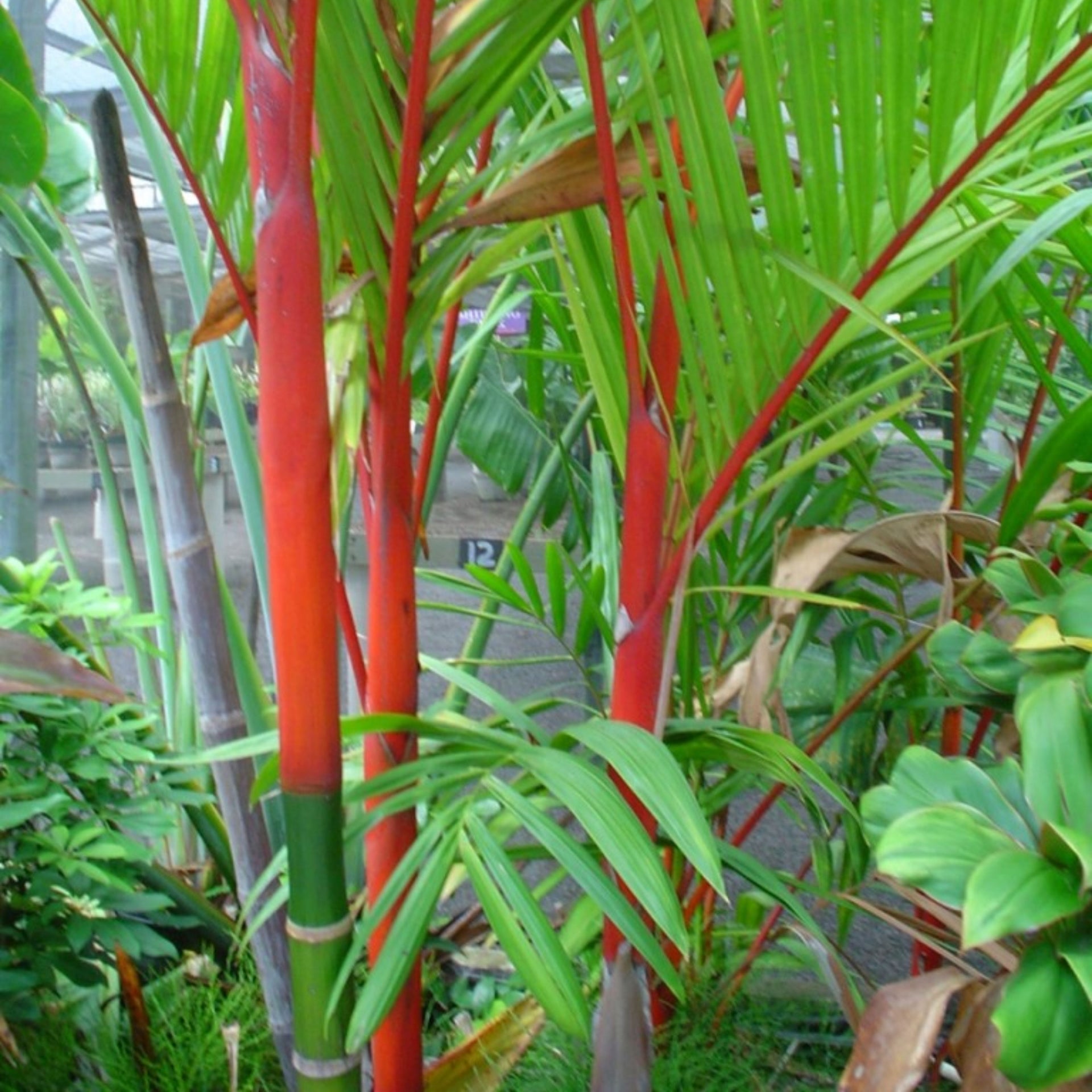
  • The Red Palm (Cyrtostachys renda), also known as the Sealing Wax Palm, is named after its vibrant red crownshaft.
  • This palm's most distinctive feature is its fiery red or maroon crownshaft, which acts as a protective sheath for emerging fronds.
  • This vivid hue sets it apart from the more commonly seen green palms and has earned it the nickname "Lipstick Palm."
  • The fronds themselves are a deep green, creating a striking contrast with the red crownshaft.
  • The Red Palm typically reaches a height of 20 to 30 feet, though in its native habitat, it can grow even taller.
  • Its slender trunk, covered in the remnants of old leaf bases, lends an elegant, columnar appearance.
  • As the palm matures, these leaf bases fall away, revealing the smooth, grayish trunk underneath.


A Storied Past

  • The Red Palm's history is as rich as its appearance.
  • It is native to the lowland rainforests of Malaysia, Thailand, and the Philippines, where it has been a part of the landscape for centuries.
  • In these regions, it holds cultural significance and is often used in traditional ceremonies and rituals.
  • Additionally, the Red Palm has found a place in modern landscaping and horticulture around the world.
  • Its stunning visual appeal makes it a popular choice for ornamental purposes.
  • It's often used as a focal point in gardens, parks, and botanical collections.


Remarkable Adaptability

  • One of the most remarkable characteristics of the Red Palm is its adaptability.
  • While it thrives in its native rainforest habitat, it can also be grown in a variety of climates and soils, making it a versatile choice for landscapers and gardeners.
  • It is well-suited to tropical and subtropical regions but can also tolerate some degree of drought once established.
  • The adaptability of the Red Palm is not limited to its growing conditions.
  • It is also quite resilient to pests and diseases, making it a low-maintenance choice for those looking to add a touch of tropical elegance to their surroundings.


Practical Uses

  • Beyond its aesthetic value, the Red Palm has practical uses.
  • The palm's wood is strong and durable, used in construction and making various tools and utensils in its native regions.
  • The leaves are often woven into baskets, mats, and thatch for roofs.
  • The fruit of the Red Palm is edible, and the sap can be tapped to make palm sugar, a staple in many Southeast Asian cuisines.
  • In traditional medicine, various parts of the Red Palm have been used to treat ailments.
  • The palm's heart, or apical bud, is a delicacy in some cultures and is said to have medicinal properties.


Conservation Concerns

  • Despite its adaptability and widespread cultivation, the Red Palm is not without its conservation concerns.
  • Habitat destruction due to deforestation and urbanization poses a threat to this majestic plant in its native range.
  • Additionally, illegal harvesting of wild Red Palms for the horticultural trade has put pressure on wild populations.
  • Efforts are underway to protect and conserve the natural habitats of the Red Palm, and sustainable cultivation methods are being encouraged to reduce the demand for wild specimens.


Cultivating the Beauty: A Guide on How to Grow the

Red Palm Plant


The Red Palm Plant, scientifically known as Cyrtostachys renda, is a stunning tropical palm species that captivates garden enthusiasts and interior decorators alike with its vibrant red stems and lush green fronds. Native to Southeast Asia, this striking plant can thrive both indoors and outdoors, making it a versatile addition to any green space. If you've been considering adding a touch of exotic elegance to your garden or home, read on to learn how to grow and care for the Red Palm Plant.


Understanding the Red Palm Plant


Before diving into the cultivation process, it's essential to familiarize yourself with the Red Palm Plant's characteristics:


Appearance

  • The Red Palm Plant is best known for its striking red or maroon-colored stems, which provide a vivid contrast to its lush, green, pinnate leaves.
  • The leaves are feather-like, growing in an arching fashion, creating an elegant and tropical aesthetic.


Size

  • When grown in optimal conditions, Red Palm Plants can reach heights of 6 to 12 feet.
  • As indoor plants, they typically stay on the shorter side, making them suitable for homes with various ceiling heights.


Requirements

  • Red Palm Plants are native to tropical rainforests, which means they thrive in warm, humid conditions.
  • They are considered suitable for USDA Hardiness Zones 10-11.
  • However, with proper care, you can also grow them in Zones 9 and even 8.


Now, let's delve into the steps to successfully cultivate this eye-catching plant.


Step 1: Selecting the Right Location

Whether you plan to grow your Red Palm Plant indoors or outdoors, choosing the right location is crucial:


Outdoor Growth


Sunlight:

Red Palm Plants love bright, indirect sunlight. If you're planting it outdoors, choose a spot with partial shade or dappled sunlight to protect it from scorching rays.


Soil:

Well-draining soil is essential. A mixture of organic compost and peat moss works well to provide the necessary nutrients and drainage.


Indoor Growth


Light:

Place your Red Palm Plant near a bright, filtered light source, such as a south or west-facing window. To maintain even growth, occasionally rotate the plant.


Humidity:

Maintain humidity levels by misting the plant regularly or placing a tray filled with water and pebbles nearby. This replicates the tropical conditions it thrives in.


Step 2: Planting Your Red Palm


Whether you choose to plant it in a pot or directly in the ground, ensure the following:


Spacing:

Space multiple Red Palm Plants at least 6 to 8 feet apart to allow for proper growth.


Prepare the soil:

by adding organic matter as an amendment. Ensure it drains well, as Red Palm Plants do not tolerate waterlogged conditions.


Step 3: Watering and Feeding


Keep the soil continuously moist but not saturated by watering it. Water sparingly during the winter months. Remember, it's better to let the soil dry out slightly between watering.


Fertilizing:

Use a balanced, slow-release fertilizer during the growing season (spring and summer). Reduce or stop feeding during the winter when growth slows down.


Step 4: Pruning and Maintenance


Pruning:

Remove dead or yellowing fronds to encourage new growth. Be cautious not to remove too many healthy leaves, as this can stress the plant.


Repotting:

If your Red Palm Plant outgrows its pot, consider repotting it into a slightly larger container every 2-3 years.


Step 5: Pests and Disease Management


  • While Red Palm Plants are generally resilient, be on the lookout for common indoor plant pests like mealybugs and scale.
  • Neem oil or organic insecticidal soap should be used immediately to treat any infestations.


Step 6: Enjoy Your Tropical Paradise


  • With proper care and attention, your Red Palm Plant will flourish, adding a touch of the exotic to your garden or interior space.
  • Its vibrant red stems and lush green fronds will transport you to a tropical paradise right in your own home.
  • Remember, gardening is as much an art as it is a science, so don't be afraid to experiment and adjust your care routine based on your plant's specific needs.
  • With patience and dedication, you'll be rewarded with the beauty and elegance of the Red Palm Plant gracing your surroundings. Happy growing!
Shipping Notes
  • Free Standard Shipping on $100+ Orders to the USA.
  • Except Preorder products are shipped in 48 hours.
  • Delivery to the USA:
  1. Standard Shipping : 3-10 business days
  • If time is of the essence, please consider selecting expedited delivery for faster service.
Exchange/Return Notes
  • We offer a 30-day return/exchange service after receiving.
  • Final sale items are not eligible for returns or exchanges.
  • To process your return/exchange, please contact us at [email protected]
  • Please click here for more details>>> Return & Exchange Policy
SKU: 58603521205

Discover Niche Categories That Outsell red palm plant price

Top-Converting Item to Boost Your Average Order

4.6 ★★★★★
Based on 17 reviews
Sort
Highest Rating
Newest First
Oldest First
Product Reviews
T
Verified Purchase
Thaumagnost
Omaha, US
★★★★★ 5
An Informative Introduction Based on Current Academic Studies of Western Esotericism
Format: Hardcover
This introductory text is the fruit of a fairly new field of recognized academic studies which developed as a result of the pioneering literary efforts of scholars such as D. P. Walker (1914 - 1985) and Frances A. Yates (1899 - 1981) who took the subject of Western esotericism seriously rather than denigrate it as an area filled with superstition and irrationalism as many earlier scholars in different specialized fields had done. Other scholars of esotericism who have contributed to this growing field include but are not limited to Henry Corbin, Francois Secret, Antoine Faivre, Arthur Versluis, Joscelyn Godwin, and Wouter Hanegraaff, the last being the senior editor of the landmark Dictionary of Gnosis and Western Esotericism (2005), a collaborative effort by many scholars. Goodrick-Clarke is also a recognized scholar in this field and introduces it to the reader in his own introduction which also addresses the question of how esotericism is defined by those dedicated to studying it. As clarified in the introduction, Western esotericism is rooted in the Hellenistic philosophy of classical paganism as expressed in Alexandrian Hermeticism, Neoplatonism, and Gnosticism which have syncretized with the three Abrahamic religions of Judaism, Christianity and Islam, leaving vital traces within each. Through the Italian Renaissance, a Hermetic revival occurred as a result of the rediscovery of ancient texts which further resulted in the development of magic, astrology, alchemy, and Cabala through prominent individuals such as Marcilio Ficino, Pico della Mirandola, Johannes Reuchlin, Johann Trithemius, Henry Cornelius Agrippa, John Dee, and Paracelsus, each given significant attention. The development of German Naturphilosophie, Christian theosophy through Jacob Boehme and his followers (such as Gichtel, Pordage and Law), and Pietism are also covered before thoroughly introducing us to Rosicrucianism in the early 17th century, high-grade Freemasonry and Illuminism in the 18th century, and the ideas and practices of Emanuel Swedenborg and Franz Anton Mesmer which significantly impacted esotericism. Within the context of Rosicrucianism, the content of the manifestos are discussed along with Johann Valentin Andreae and the Tubingen Circle; in England, Michael Maier, Robert Fludd, and Comenius and the Origins of the Royal Society are covered. The impact of Rosicrucianism and theosophy on Freemasonry are explored as well as the following types of Freemasonry: "Scottish" and Chivalric, German Templar, and Egyptian. Within the context of Freemasonry and Illuminism, the following are also discussed: Martines de Pasqually and the Elect Coens, Louis Claude de Saint-Martin, Martinesism, Martinism, Willermozism, The Illumines of Avignon, and Count Cagliostro. Not only are the ideas of Swedenborg and Mesmer presented but also how they contributed to spiritualism and healing movements in the 19th century, including the United States which birthed Andrew Jackson Davis as the main theologian for spiritualism; Phineas Parkhurst Quimby, Warren Felt Evans and others who developed the New Thought Movement; and Mary Baker Eddy who founded Christian Science. A separate chapter is dedicated to ritual magic from 1850 to the present. Within this chapter, one is introduced to Eliphas Levi and the French Occult Revival, the Hermetic Order of the Golden Dawn and its members, and special attention is given to the contributions of A. E. Waite, Aleister Crowley and Thelemic magick, and Dion Fortune and the Inner Light. I was, however, disappointed to see the section on Crowley end with the following: "Gerald Gardner (1884 - 1964), the founder of modern witchcraft, introduced Crowleyan magick into the neopagan Wiccan movement." For a better understanding of the influential role of Crowley and ritual magic, including the grimoires, on Wiccan practices, I recommend Wicca: Magickal Beginnings (2008) by Sorita d'Este and David Rankine. Helena Blavatsky and her Theosophical Society are given a separate chapter which expounds on her influences, travels, developing doctrines, and legacy. The last chapter titled "Modern Esotericism and New Paradigms" discusses theosophical heirs such as Annie Besant, Charles W. Leadbeater, and Rudolph Steiner (who developed his own religious system called "Anthroposophy"). It also has a section on Fourth Way Groups, introducing Gurdjieff and Ouspensky. Additionally, it covers the scientization of esotericism, New Age science, and Carl Jung's influence on esotericism. One individual I would have liked to see introduced within the context of Steiner is Valentin Tomberg who anonymously wrote Meditations on the Tarot: A Journey into Christian Hermeticism which is recognized by some, including esoteric scholar Antoine Faivre, as a masterpiece of 20th century esoteric/mystical literature. Goodrick-Clarke's book not only includes valuable footnotes and recommendations for further reading for each chapter, but also includes a helpful index as well as over 30 illustrations comprised of portraits, diagrams, plates, charts and other relevant pictures to supplement the text. This historical introduction to Western esotericism deserves wide readership.
WAS THIS REVIEW HELPFUL?YesReportShare
Reviewed in the United States on February 26, 2009
K
Verified Purchase
Kevin Fuller
Bozeman, US
★★★★★ 5
The Tradition Lives
Format: Hardcover
Throughout the Christian experience, Christianity has been a religion of the heart, perhaps best represented by the exoteric outer symbol and ritual of the Tradition. However, the Spirit will not go lacking, and there have been those individualistic and Protestant minded folks who have injected the Christian experience with Pagan influence in order to better satisfy the mind. Sources have included the towering Plato and Plotinus, while the Egyptian influence has been the quiter yet rangier philosophy of Hermes Trismegistus. Whereever the Christian Revelation has intersected with this Greek and Egyptian Rationalism, the product has resulted in Western Esotericism. The Tradition has quietly lived through millenia of possible persecution, martyrdom and certainly marginalization, yet has survived all the same. This book puts a glass to this Tradition and puts it in perspective, and expertly in my view. Major players are highlighted and minor counterparts are covered as well. Each participant, whether it by Mirandola compiling the Christian Kabbalah, or Paracelsus pushing past Galen to bring medicine to the door step of empiricism, all have added their own unique vision to the bigger picture of Western Esotericism. Though the Tradition has it's roots in Egyptian and Greek Mystery Schools, it has been preserved, since the fall of the Roman Empire by Secret Societies such as Rosicrucianism, Freemasonry and even Theosophy and proves to be a viable option yet today for those who seek a deeper more inner sacred experience than what perhaps their outer religious profession provides. Wondering? This is a good place to start.
WAS THIS REVIEW HELPFUL?YesReportShare
Reviewed in the United States on January 2, 2009
F
Verified Purchase
Florida Man
Charlottesville, US
★★★★★ 4
Serious[ly]
Format: Hardcover
This book is exactly what the title claims - a historical introduction. While although the author doesn't go into a great deal of depth, he more than makes up for it in breadth. The author starts with an attempt at defining what exactly esotericism is. After that, the book is arranged chronologically, starting with Hellenistic esotericism and proceeding through the Renaissance, the Enlightenment and up to the present. Each chapter centers on an individual or group of individuals who were influential thinkers in their time and place. At the end of each chapter, there is a list of books for further study, much like a textbook. It is serious; it is scholarly. It is most definitely not silly. If you are at all interested in a "Third Way", which is neither mainstream religion nor strictly empirical "scientism", this may be a gooding jumping-off point for you, as it was for me.
WAS THIS REVIEW HELPFUL?YesReportShare
Reviewed in the United States on February 18, 2014
J
Verified Purchase
JA
Lowell, US
★★★★★ 5
An amazing book that teaches a great history
Format: Kindle
This is a great book that takes the reader on an amazing journey through a part of Western history that is rarely taught. This book teaches the other side of the development of Western religion and after reading this book I now have a knew light on previous theological education. It is easy to understand but does not compromise on scholastic research and standards.
WAS THIS REVIEW HELPFUL?YesReportShare
Reviewed in the United States on March 12, 2014
G
Grant Hemingway
Alexandria, US
★★★★★ 5
Probably The Best Introduction to Western Esotericism Available
Format: Hardcover
I recently completed my MA in Western Esotericism at the University of Exeter and studied under Nicholas Goodrick-Clarke. He is the Director of the Exeter Centre for the Study of Esotericism (EXESESO) at the University of Exeter. This book is structured in the same fashion as the MA program at Exeter and provides a comprehensive overview of the key topics in the field of Western esotericism. The book is chronological and begins in ancient Alexandria, through the Italian Renaissance, post-Reformation Germany and into the Age of Enlightenment. Goodrick-Clarke covers complex topics such as Hermeticism, Neo-Platonism, Alchemy, Freemasonry, Rosicrucianism and Theosophy but makes it understandable even to novice readers. The underlying theme behind the subject of Western esotericism is the continuity in the different schools of thought that can be traced though the two thousand period from ancient Alexandria to the present day. This is a subject that has been overlooked for many years due to its association with the occult and magic. Thanks to the work of Goodrick-Clarke and scholars such as Antoine Faivre and Wouter Hanegraaff it is now being given the respect it deserves. This is an excellent starting point for anyone interested in learning more.
WAS THIS REVIEW HELPFUL?YesReportShare
Reviewed in the United States on October 24, 2011

recommand products