Pay in installments of $6.73 with
 ,
,
 and
and

Shipping Estimate
USA
- USA
- CAN
- USA
- CAN
Ships within 48 hours · Estimated delivery Sep 22 - Sep 27
 Promo Codes Available:
For Your Every Summer RSVP, with Code: SUMMER15
Description
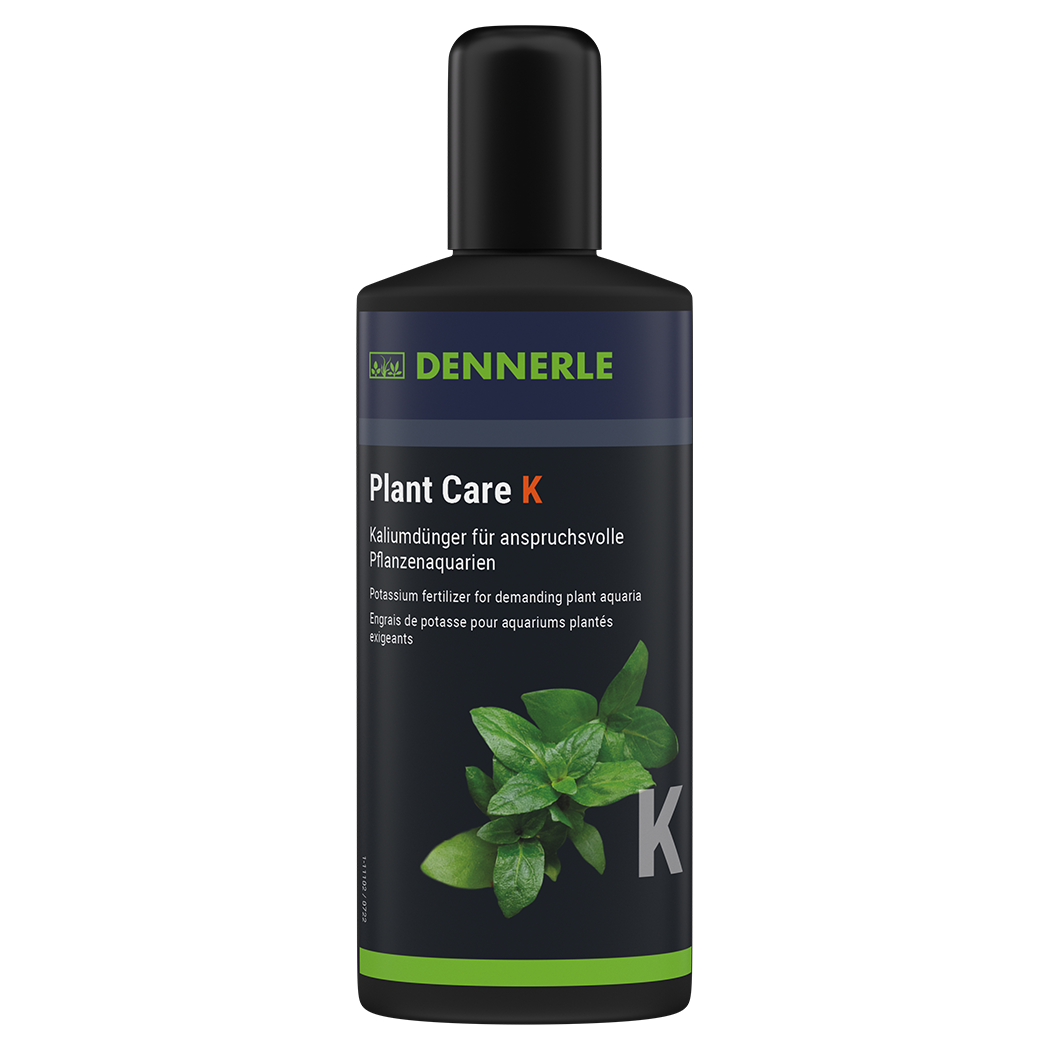
aquarium fertilizer for plants Dennerle Plant Care KAquarium plants need around 20 different nutrients to grow healthily. Potassium is particularly important. Potassium is a macronutrient and is required by plants in large quantities. Along with the macronutrients nitrate and phosphate, as well as light and CO 2, it is the most important prerequisite for balanced, healthy plant growth. What is potassium needed for in the aquarium? Potassium has a variety of functions in plants. It is present in high
Aquarium plants need around 20 different nutrients to grow healthily. Potassium is particularly important. Potassium is a macronutrient and is required by plants in large quantities. Along with the macronutrients nitrate and phosphate, as well as light and CO 2, it is the most important prerequisite for balanced, healthy plant growth.
What is potassium needed for in the aquarium?
Potassium has a variety of functions in plants. It is present in high concentrations both in the cells themselves and in the vascular system. Potassium is an osmotically active ion that is crucial for building up root pressure and cell pressure (turgor). It is also involved in various metabolic processes, e.g. the synthesis of sugars, starch, cellulose and lignin. Potassium can be stored in plant cells and transported within the plant when needed, e.g. from older to younger leaves. A certain amount of potassium is supplied by tap water. The harder the water, the more; the softer the water, the less. You can ask your local water supplier about the content. Potassium is only introduced into the aquarium in very small quantities via food and fish excrement. Good aquarium fertilizers (micronutrient fertilizers/complete iron fertilizers) such as Dennerle Plant Care Pro therefore always contain an appropriate amount of potassium. This is usually sufficient for normal, planted community aquariums. However, the situation is different for demanding plant aquariums (e.g. aquascaping aquariums, Holland aquariums). They have an above-average need for nutrients, especially macronutrients. Such plant aquariums are characterized by
- dense planting (more than 70 – 80 % of the soil surface)
- many fast-growing species
- lots of light (30 – 60 lumens/liter or more)
- CO 2 fertilization
- 30 – 50 % partial water change per week
- no or little fish stock (but with shrimp)
Detecting potassium deficiency in the aquarium
These types of aquariums can suffer from a potassium deficiency, particularly in soft water. It is primarily evident on the older leaves. When required, the element is transported from the older leaves to the younger leaves via the vascular system. Typical symptoms are yellowing (chlorosis), which can appear in dots or areas between the leaf veins or on the leaf edge. Later, the tissue dies in dots or areas (necrosis). Some plants are particularly sensitive to low potassium levels. Well-known examples are the parrot leaf ( Alternanthera ) and the cognac plant ( Ammania ). Growth can suddenly stop and the newly formed leaves are stunted. In the Indian water fern ( Hygrophila polysperma ), potassium deficiency is evident on the older leaves in the form of small black dots (necrosis).
Correcting Potassium Deficiency in the Aquarium
For this reason, with demanding plant aquariums it is a good idea to keep an eye on the potassium content and top it up if necessary. Each aquarium has a specific nutrient requirement depending on the number of plants, type of plant, animal population, feeding, water changes and growing conditions (amount of light/lighting time, CO2 addition, filter technology, etc.). The amount of fertilizer required should therefore be determined individually for each aquarium. If the aquarium needs all three macronutrients N, P and K, the use of Dennerle Plant Care NPK is recommended. The nutrient ratios have been chosen so that all macronutrients are absorbed by the plants in equal proportions. Even with long-term, regular use, deficiencies or disadvantageous accumulations of individual nutrients cannot occur. Biological balance is particularly important with macronutrients, i.e. the nutrients should always be present in a certain ratio to one another. Nutrient imbalances should be avoided as they usually lead to algae problems. If the potassium content in the tap water is too low - which is often the case with soft water - or the aquarium has an increased need for potassium, Dennerle Plant Care K should be used to specifically supply the plants with potassium. If you have measured and fertilized regularly for several weeks, you can see at what level the measured values settle and what amount of potassium the aquarium needs. You can then add the determined weekly dose of Plant Care K as standard and increase the measurement intervals to 2 to 4 weeks with a clear conscience. A macronutrient fertilizer must always be used in combination with a micronutrient fertilizer (complete iron fertilizer). For a complete supply of nutrients and the best possible plant growth, we recommend combining it with Dennerle Plant Care Pro . For magnificent plant growth and healthy fish and shrimp, we recommend a partial water change of 25% to 50% per week. This removes waste and inhibitors and avoids nutrient imbalances.
dosage
The fertilizer can be dosed precisely and accurately: 2 ml per 100 L adds 1 mg/L of potassium. The optimal potassium concentration is in the range of 10 - 20 mg/L. We recommend measuring the potassium content regularly and dosing Plant Care K accordingly. Plant Care K can be used as a weekly fertilizer or daily fertilizer.
Shipping Notes
- Free Standard Shipping on $100+ Orders to the USA.
- Except Preorder products are shipped in 48 hours.
- Delivery to the USA:
- Standard Shipping : 3-10 business days
- If time is of the essence, please consider selecting expedited delivery for faster service.
Exchange/Return Notes
- We offer a 30-day return/exchange service after receiving.
- Final sale items are not eligible for returns or exchanges.
- To process your return/exchange, please contact us at [email protected]
- Please click here for more details>>> Return & Exchange Policy