Pay in installments of $5.61 with
 ,
,
 and
and

Shipping Estimate
USA
- USA
- CAN
- USA
- CAN
Ships within 48 hours · Estimated delivery Sep 21 - Sep 26
 Promo Codes Available:
For Your Every Summer RSVP, with Code: SUMMER15
Description
mustard seeds plant Mighty Mustard Seed For soil fumigationBiofumigation for control of soil fungi and nematodes Kodiak is described as "mustard on steroids"! Produces 4 5 tons of organic matter per acre. Mow before plants set seed and incorporate into the soil immediately to have the best effect on these soil pests. With proper management, this crop may be used as an organic replacement for methyl bromide. Sow at 18 lb. acre. Blue label Certified seed. Avg. 180,000 seeds lb. Planting and care of mustard:
Biofumigation for control of soil fungi and nematodes
Kodiak is described as "mustard on steroids"! Produces 4-5 tons of organic matter per acre. Mow before plants set seed and incorporate into the soil immediately to have the best effect on these soil pests. With proper management, this crop may be used as an organic replacement for methyl bromide. Sow at 18 lb./acre. Blue label/Certified seed. Avg. 180,000 seeds/lb.
Planting and care of mustard:
Kodiak Mustard: 8-ounces per 1,000 sq ft.
- Rake in or very lightly till.
- Lightly irrigate.
- 6-8 weeks till flowering (depending on season).
- Chop mustard to break up cells to release glucosinolates.
- Till under and water to form a crust and release gas
- Must wait three weeks till planting another crop.
What is Biofumigation?
Is the suppression of various soil-borne pests and diseases through naturally occurring compounds. The higher the level of glucosinolates in mustard the better the biofumigant effect.
BENEFITS
Test results before application of Mighty Mustard
Test results after use of Mighty Mustard
What can Mighty Mustard® do for me?
- Suppress weeds
- Reduce harmful insects, nematodes and fungal disease
- Increase organic matter
- Recycle & redistribute nitrogen in the soil profile
- Reduce wind & water erosion
- Improve the long-term health of your soil
- Sequester carbon
- Provide an all-natural alternative to toxic chemicals
1. Suppresses weeds & soilborne pathogens
Mighty Mustard® contains high levels of glucosinolates, natural chemical agents that make certain members of the brassica family spicy. Mighty Mustard’s® glucosinolates deliver a deadly punch to many soilborne pathogens and weeds, making them an effective, all-natural alternative to chemical herbicides.
- Reduces insects
The all-natural glucosinolates in Mighty Mustard® are the basis for many commercial pesticides, including Vapam and Vorlex. Our mustards will not totally eliminate insects, as do some chemical treatments. But unlike chemicals, Mighty Mustard® provides multiple benefits while improving soil health.
- Increases organic matter
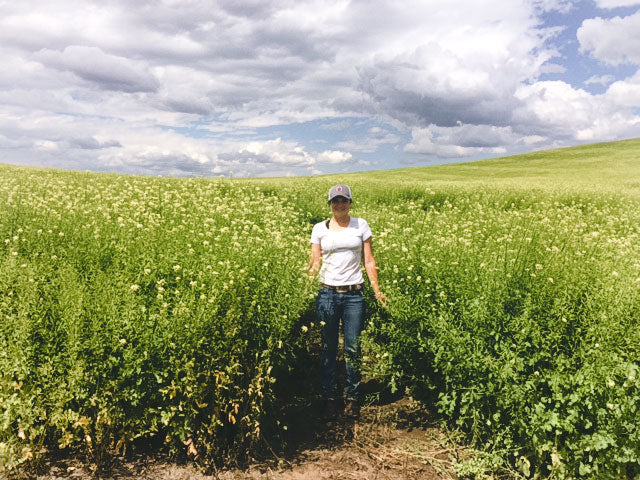
Mighty Mustard® is a fast-growing cover crop, with plant heights reaching up to 6 feet. Once you incorporate the above-ground plant material, or biomass, into your soil, the new organic matter will break down, supporting beneficial fungus and bacteria.
-
Recycles & redistributes nitrogen in the soil profile
Mighty Mustard® taproots can grow 2 to 6 feet, depending on the growing conditions. These taproots pull nitrogen from deep in the soil profile, and push it up into the plant's leaves. - Reduces wind & water erosion
During its growth cycle, the mustard’s root structure breaks the hardpan in soil, creating new pathways for water and the root expansion of future crops. Mighty Mustard’s® taproots, which can range from 2 to 6 feet in length, improve tilth and water infiltration, thereby reducing wind and water erosion.
- Improves the long-term health of soil
When you grow Mighty Mustard®, you add organic matter to your soil, as well as improve tilth, reduce wind & water erosion, and eliminate or reduce the use of toxic chemicals. You’re actually adding new life to your soil, feeding the beneficial microorganisms that support healthy soil. All of Mighty Mustard’s® benefits are cumulative, so the more often you grow it, the healthier your soil becomes.
- Sequesters carbon
Like all plants, Mighty Mustard® pulls carbon dioxide from the air into the soil. But our mustards go a bit farther. They help reduce or eliminate the need for petroleum-based chemical soil amendments. Mighty Mustard® also helps hold soil and water in the field, thereby reducing erosion.
- Verified Non-GMO by the Non-GMO Project:
Mighty Mustard® has undergone third-party evaluation and is verified non-GMO by the Non-GMO Project. Learn more about The Non-GMO Project here:http://www.nongmoproject.org/
- Non-toxic and safe to use around children & pets
Mighty Mustard® is non-toxic, untreated planting seed. However, due to its extreme spiciness, children and pets SHOULD NOT eat the mustard seeds or plants, or rub their eyes after touching the mustard seeds or plants.
10. Safe for organic and sustainable farms & gardens
Mighty Mustard® is not certified organic, but many certified organic growers petition to grow it. Why? Because to our knowledge, there are no organic mustard cover crops with comparable glucosinolate levels to Kodiak, IdaGold or Pacific Gold.
Shipping Notes
- Free Standard Shipping on $100+ Orders to the USA.
- Except Preorder products are shipped in 48 hours.
- Delivery to the USA:
- Standard Shipping : 3-10 business days
- If time is of the essence, please consider selecting expedited delivery for faster service.
Exchange/Return Notes
- We offer a 30-day return/exchange service after receiving.
- Final sale items are not eligible for returns or exchanges.
- To process your return/exchange, please contact us at [email protected]
- Please click here for more details>>> Return & Exchange Policy