Pay in installments of $5.83 with
 ,
,
 and
and

Shipping Estimate
USA
- USA
- CAN
- USA
- CAN
Ships within 48 hours · Estimated delivery Sep 23 - Sep 28
 Promo Codes Available:
For Your Every Summer RSVP, with Code: SUMMER15
Description
succulent with white spots Shop 'Zebra Plant - Haworthia fasciata' Care and Growing GuideThe Zebra Plant, also known as Haworthia fasciata, has large, thick, dark green leaves that grow in a rosette pattern and can live up to 50 years. It is adorned with striking white horizontal stripes that resemble zebra stripes. The Zebra Haworthia has other common names such as Zebra succulent, little zebra plant, Zebra Haworthia, or Zebra cactus. And don't let those bold markings fool you the inner side of each leaf is smooth as silk. The zebra
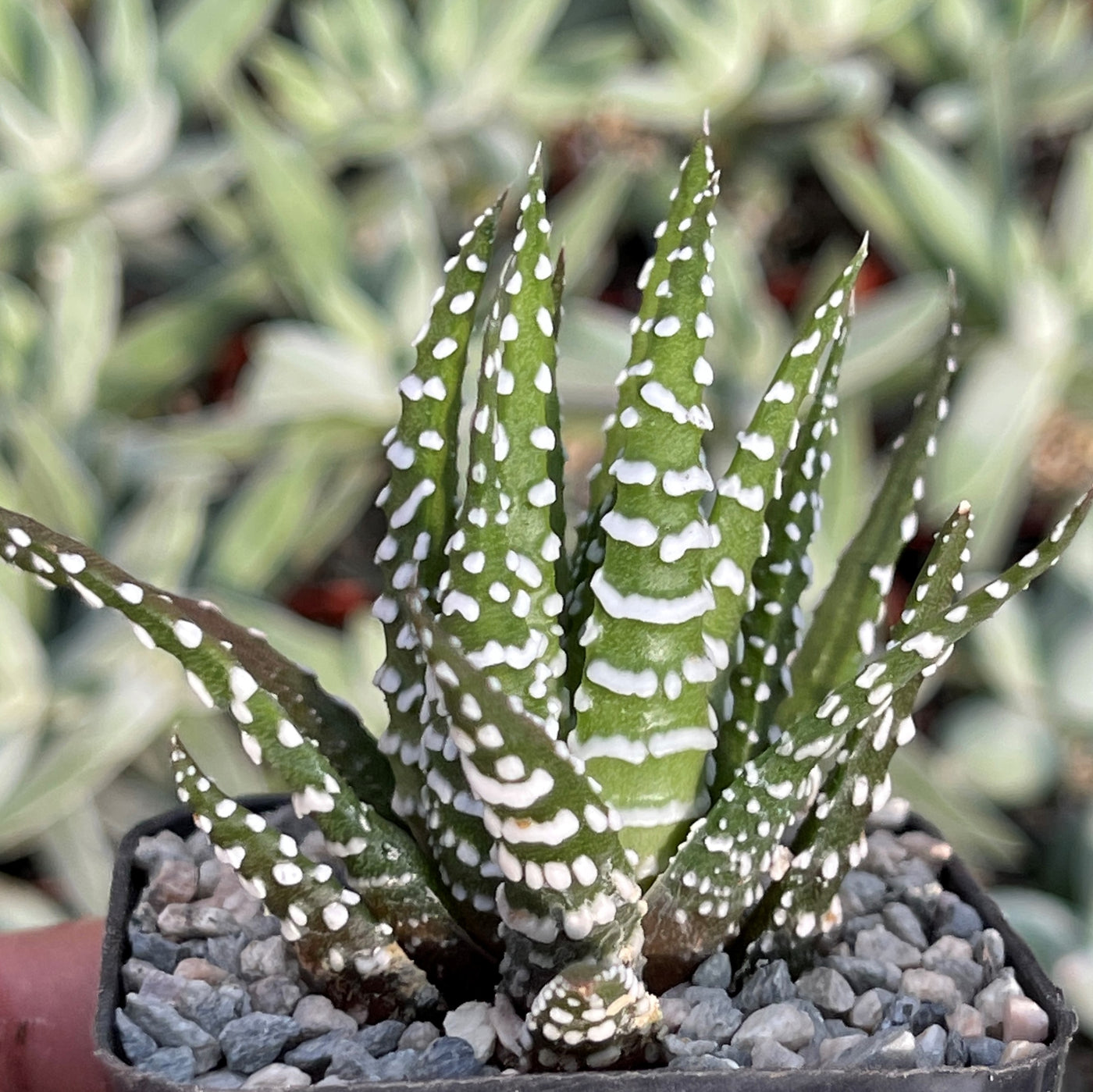
The Zebra Plant, also known as Haworthia fasciata, has large, thick, dark-green leaves that grow in a rosette pattern and can live up to 50 years. It is adorned with striking white horizontal stripes that resemble zebra stripes.
The Zebra Haworthia has other common names such as Zebra succulent, little zebra plant, Zebra Haworthia, or Zebra cactus. And don't let those bold markings fool you - the inner side of each leaf is smooth as silk.
The zebra Haworthia is a relatively slow-growing, small succulent, typically grows up to 8 inches tall and spreads to a similar width.
The leaves are triangular in shape and have distinct horizontal white stripes that resemble zebra stripes.
These stripes are actually translucent windows that allow light to penetrate deeper into the leaf, aiding in photosynthesis.
The zebra plant flowers bloom during the spring with tubular white or pale pink flowers on long stalks.
These flowers have a sweet fragrance that attracts pollinators such as bees and butterflies. The zebra plant's unique striped leaves make it a popular choice for indoor houseplants.
When and How to Water Your Zebra Plant
Like many drought-tolerant succulents, it stores water in its plump leaves and thrives best when kept on the dry side. In the spring and summer, water your Zebra Haworthia once every 7–10 days, only when the soil has completely dried out. Always make sure the potting mix dries thoroughly between waterings to avoid root rot.
In the winter dormant months, reduce watering significantly to once every 3–4 weeks or even less. Since the plant’s growth slows down, it needs very little moisture, and keeping the soil dry during this time helps prevent common winter issues like fungal infections and root decay.
Light Requirements - Where to Place Your Zebra Haworthia
When growing indoors, place your Zebra Haworthia where it receives at least 4–6 hours of bright, indirect sunlight daily.
Ideally, place your plant in front of an east-facing window or just a few feet away from a bright south-facing window for healthy growth.
Insufficient indoor light can cause your zebra succulent to become leggy, pale, and lose its compact, spiny appearance.
When growing outdoors, make sure your Zebra Haworthia receives at least 4–6 hours of full sun to partial shade every day.
Outdoor plants love bright conditions but benefit from a little afternoon shade in hotter climates to prevent scorching. If they don't receive enough light, their stems may grow leggy and become paler, and their spines will shorten, so make your zebra Haworthia happy and give it plenty of light.
Optimal Soil & Fertilizer Needs
The Zebra plants prefer sandy, well-drained soil, as excess moisture can promote root and stem rot. Planet Desert specializes in succulents and has specialized succulent potting soil that includes an organic substrate with mycorrhizae to help with the growth of a healthy root system to help your Zebra succulent plant thrive.
Fertilize your zebra plant once a year in spring with NPK fertilizer with an equal ratio of 5-10-5. Water your zebra plant thoroughly after fertilizing to help the nutrients penetrate the soil and promote healthy growth. Avoid over-fertilizing, as this can cause damage to the plant's roots.
Native to South African shrublands, this zebra plant is one of several in the Haworthiopsis family and is often confused with Haworthia attenuata plants for their similar appearance to Haworthia fasciata. But trust us when we say that nothing compares to the unique beauty of the popular and beloved Zebra Plant!
Hardiness Zones & More
Always keep your plant away from cold, drafty windows, air vents, or chilly indoor areas to avoid stress. When growing indoors as a houseplant, it prefers warm temperatures between 65°F and 80°F, and prefers humidity levels around 50–60%. If your home is very dry, you can lightly mist the plant or use a nearby humidifier to maintain ideal humidity.
In the United States, this is mostly an indoor plant, but if you live in southern Florida or Hawaii, then you can cultivate it outdoors in USDA zones 10-11.
However, these succulents are not frost-tolerant—if you live outside of these zones, grow them in containers so you can easily move them indoors during the colder months to protect them from freezing damage.
Zebra plants prefer high humidity levels, ideally between 50-60%. To increase humidity, you can mist the plant regularly or place a humidifier nearby.
Wildlife - Zebra Plant Attracts the Following Friendly Pollinators
The zebra plant attracts a variety of friendly pollinators such as bees, butterflies, and hummingbirds. Its vibrant flowers and nectar-rich blooms make it a popular choice for gardeners looking to attract wildlife to their outdoor spaces.
According to ASPCA, the zebra plant is non-toxic to both humans and pets. This makes it a safe and popular choice for indoor plant enthusiasts looking to add some greenery to their homes without worrying about potential harm to their furry friends.
How to Propagate Your Zebra Haworthia Plant
Haworthia fasciata can be propagated through offsets or leaf cuttings. Offsets, also known as "pups," are small plantlets that grow from the base of the mother plant. These can be carefully separated and planted in their own pots. Leaf cuttings can also be taken by removing a healthy leaf from the plant, allowing it to dry and callus for a few days, and then placing it in well-draining soil.
Key Takeaways
- Zebra Haworthia is known for its bold white striping and textured leaves, which resemble zebra patterns, making it one of the most eye-catching mini succulents for containers or desks.
- This drought-tolerant plant stores water in its thick leaves, requiring minimal watering and making it incredibly low-maintenance.
- Unlike many succulents, Zebra Haworthia remains compact and rarely outgrows its pot, making it perfect for small-space gardening or terrariums.
- It’s non-toxic to cats and dogs, making it a pet-friendly choice for succulent lovers with furry companions at home.
- It thrives in low-light conditions and is one of the best succulents for indoor spaces, making it ideal for offices, windowsills, and small apartments.
The Bottom Line
Overall, the Zebra Haworthia (Haworthiopsis fasciata) is a stunning succulent that captivates with its unique zebra-like stripes and compact size. It is a popular choice for indoor gardening and succulent arrangements due to its striking appearance. This plant also thrives in rock gardens, adding a touch of natural beauty to any landscape. As for care, it prefers bright, indirect light, well-draining soil, and sparing watering to prevent root rot. With its low-maintenance nature and eye-catching features, the Zebra Haworthia is a fantastic addition to any plant lover's collection.
We think you will love this plant – order your very own Zebra Haworthia plant today and start enjoying its beauty in no time!
Shipping Notes
- Free Standard Shipping on $100+ Orders to the USA.
- Except Preorder products are shipped in 48 hours.
- Delivery to the USA:
- Standard Shipping : 3-10 business days
- If time is of the essence, please consider selecting expedited delivery for faster service.
Exchange/Return Notes
- We offer a 30-day return/exchange service after receiving.
- Final sale items are not eligible for returns or exchanges.
- To process your return/exchange, please contact us at [email protected]
- Please click here for more details>>> Return & Exchange Policy