SKU: 65254174708
lavender plant leaves images

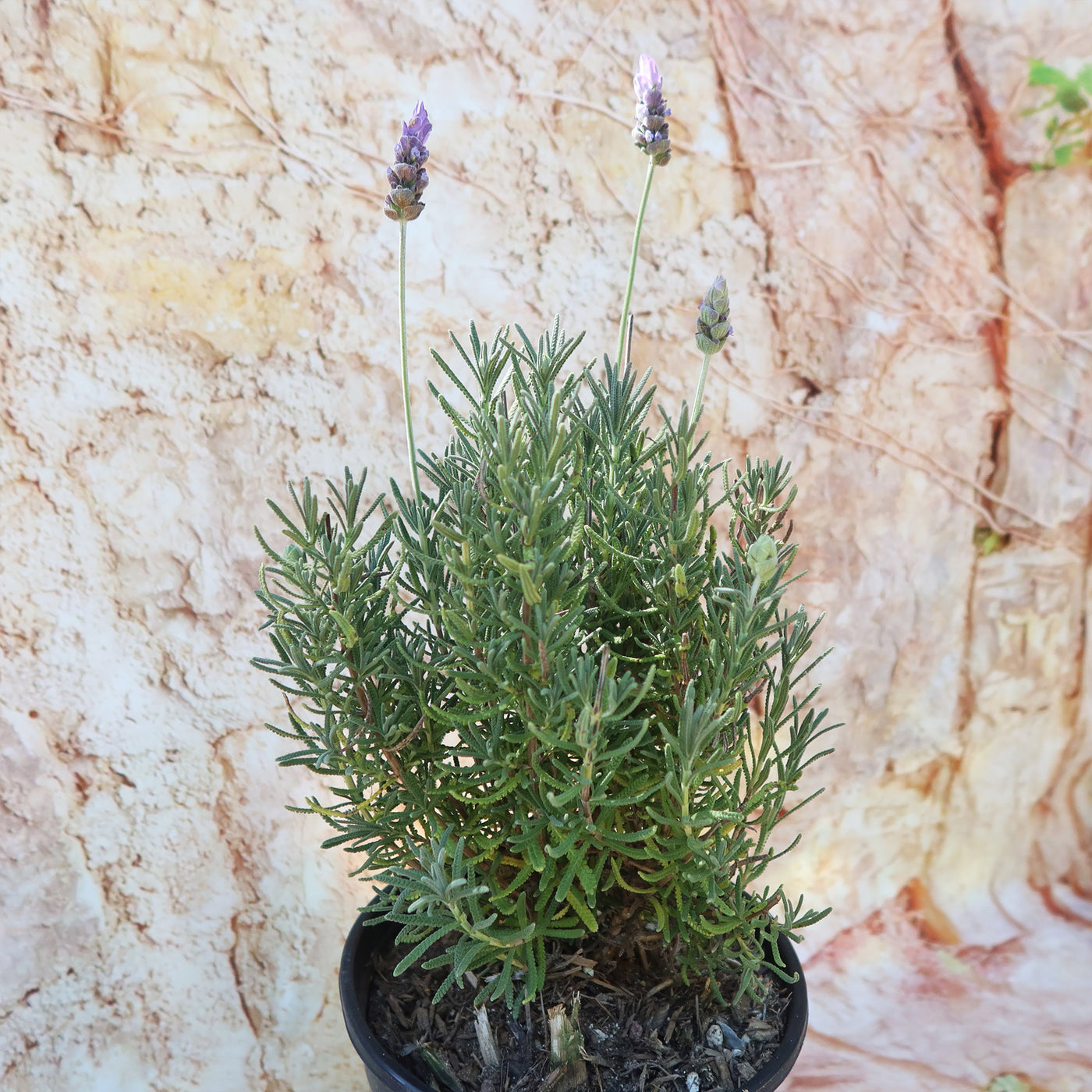
lavender plant leaves images French Lavender ‘Lavandula dentata’

Sale price$19.13 Regular price$21.26
Save 10%

Pay in installments of $5.32 with ShopPay, AfterPay and Klarna

Shipping Estimate
USA
  • USA
  • CAN

Ships within 48 hours · Estimated delivery Sep 28 - Oct 3

Promo Codes Available:

For Your Every Summer RSVP, with Code: SUMMER15

Description

lavender plant leaves images French Lavender ‘Lavandula dentata’The French lavender is known as Lavandula dentata; the term 'dentata' means "toothed" and refers to the scalloped leaves. It is extremely drought tolerant and renowned for its use as a popular essential oil, for culinary, cosmetic, and medicinal applications. It is famous for its iconic purple blooms with a calming scent and ruffled, serrated leaves; which results in its other common names such as Toothed Lavender or Fringed Lavender. Native to the

The French lavender is known as Lavandula dentata; the term 'dentata' means "toothed" and refers to the scalloped leaves. It is extremely drought-tolerant and renowned for its use as a popular essential oil, for culinary, cosmetic, and medicinal applications. 

It is famous for its iconic purple blooms with a calming scent and ruffled, serrated leaves; which results in its other common names such as Toothed Lavender or Fringed Lavender.

Native to the Mediterranean climates, the Lavandula dentata was once considered a subspecies of Spanish lavender (Lavandula stoechas), but it is now recognized as a distinct species.

Check the plant tag to ensure you're purchasing Lavandula dentata, as Spanish lavender is occasionally mistaken for French lavender.

French Lavender can typically grow up to 3 feet tall and spreads 2 feet. Its compact size makes it an excellent choice for borders, containers, or hedges.

The flowers of French Lavenders are its most striking feature. In frost-free, warm climates, they bloom year-round. In areas that receive frost, it blooms from early spring to fall. They appear in mid-summer and are a vibrant purple color with a distinctive "fringed" appearance due to the toothed edges of the petals. Although it is adorned with its famous purple flowers, Lavandula dentata is not as fragrant as English lavender (Lavandula angustifolia).  

Blooming Tip

Remember, it is critical to dead-head French lavender flowers throughout the summer because they bloom continuously from May to September. When pruning lavenders, make sure there is enough green on the plant so that new blooms can grow. With the spent flowers, you can make a new bouquet or let them air dry and create fragrant satchet bags to store in your dresser to scent your clothes.

How to Water French Lavender 

French Lavender is an extremely drought-tolerant plant that thrives in dry conditions, making it perfect for water-conscious gardeners or those who tend to forget to water their plants from time to time. Due to its adaptability to arid environments, it requires minimal watering, and you'll rarely need to water it unless faced with extreme heat and drought. 

Make sure the soil drains well to prevent root rot. Avoid overwatering, as this can lead to root rot and other problems. When watering Lavandula dentata, provide about 1-2 inches of water per week, either from rain or irrigation. Mulching around the base of the plant with gravel mulch can help retain moisture and reduce evaporation. However, avoid getting water on the leaves or crown to prevent fungal diseases. 

When first planted, new Lavender plants appreciate more frequent watering to establish a strong root system. However, once established, they become highly resistant to drought and require less water. In fact, watering every 2-3 weeks is sufficient until blooms appear, indicating the plant's readiness for more frequent hydration. 

As French Lavender blooms, increase watering to once a week or every 10-14 days to promote healthy growth and maximize flower production. After you pick or deadhead the flower, you can revert to the initial watering schedule. Remember, overwatering can harm your Lavender plant, so it's essential to strike the right balance and respect its love for dry conditions.

Seasonal Watering Needs 

  1. Spring: Water every 2-3 weeks as the plant produces new growth and prepares for blooming.
  2. Summer: Increase watering to once a week or every 10-14 days during hot weather, especially when blooms appear.
  3. Autumn: Reduce watering to once every 4-6 weeks as the plant prepares for dormancy.
  4. Winter: Water sparingly, only once every 2-3 months, as the plant is dormant.

During periods of extreme drought, French Lavender plant may drop its leaves or become dormant to conserve water. Don't worry! With regular watering, it will recover quickly. 

Light Requirements: Where to Put French Lavender 

When growing French Lavender indoors, it's essential to provide it with plenty of bright light to mimic its natural Mediterranean habitat. Place your Lavender plant in a south-facing window that receives direct sunlight for at least 4-6 hours a day.

If this isn't possible, east- or west-facing windows can also work, but avoid north-facing windows as they receive too little light. Supplement with grow lights if necessary to ensure your plant receives the light it needs.

Remember, your plant French lavender Lavandula dentata prefers bright, indirect light. Avoid placing it in a spot with low light, as this can lead to weak and spindly growth. If you're growing it indoors during the winter months, consider moving it to a brighter location or using grow lights to compensate for the shorter days. 

For outdoor cultivation, choose a location that receives full sun to partial shade. French Lavender plants love basking in direct sunlight for 6-8 hours a day, but they can tolerate some shade, especially in warmer climates. If you live in a hot, sunny area, consider providing some afternoon shade to prevent scorching. In cooler, cloudier climates, opt for a sunnier spot to encourage blooming.  

French Lavender’s Perfect Mix: Soil & Fertilizer 

The French lavender prefers well-drained alkaline soil, as excess moisture can promote root and stem rot. Avoid heavy clay or sandy soils, as they can lead to root rot or drought stress. Instead, opt for a mix specifically designed for Mediterranean plants like Lavandula dentata, which typically contains a blend of peat moss, perlite, and vermiculite. Planet Desert has specialized potting soil, opens in a new tab that includes an organic substrate with mycorrhizae to help grow a healthy root system and help your plants thrive. 

In terms of fertilizer, it requires minimal or no feeding. This plant thrives on very few nutrients, whereas too many nutrients can harm the plant, resulting in leggy, yellowed foliage and fewer flowers. 

If your French lavender plants aren't looking their best, nutrient deficiencies could be the cause. A balanced, water-soluble NPK fertilizer applied at half the recommended strength is sufficient. You can fertilize in the spring when new growth appears. 

When choosing a fertilizer for French Lavender, look for one that is high in potassium (K) and low in nitrogen (N). Potassium promotes root growth, flower production, and overall plant health, while excessive nitrogen can lead to weak stems and fewer blooms. A balanced fertilizer with a ratio of 5-10-10 (N-P-K) is suitable for Lavender.

It also benefits from a layer of compost or well-rotted manure around the base, which provides slow-release nutrients and improves soil structure.

Hardiness Zones & More  

When growing indoors, it prefers daytime temperatures between 65°F and 75°F and nighttime temperatures around 55°F. Maintain a consistent temperature, avoiding sudden drops or rises. They prefer relatively low humid climates, around 40-50%. You can achieve this by placing the pot on a tray with pebbles and water or using a humidifier. 

French Lavender can tolerate some fluctuations in temperature and humidity, but extreme conditions can lead to stress and poor growth. Avoid placing your plant near heating or cooling vents, fireplaces, or drafty windows. If you live in a hot and humid climate, consider using an air conditioner or dehumidifier to maintain a suitable environment for your Lavender. 

For outdoor cultivation, it thrives in USDA zones 8-11, meaning it can tolerate temperatures as low as 20°F and as high as 90°F. If you live outside these zones, consider growing French Lavender in containers that can be moved indoors during extreme weather conditions. It prefers full sun and ventilation, making it an excellent choice for gardens with good air circulation. In warmer climates, provide some afternoon shade to prevent scorching. It can tolerate some frost but may need protection during prolonged periods of extreme cold. Though this Lavender plant is typically planted in the spring, it can also be planted in the fall in areas with mild winters.  

Wildlife - French Lavender Attracts the Following Friendly Pollinators

French Lavender is well-known for attracting various pollinators, including bees, butterflies, and other beneficial insects. Its fragrant, purple flower spikes produce a sweet nectar that draws these pollinators, supporting the local ecosystem and aiding in the pollination of nearby plants.  

Butterflies
Bees
Hummingbirds
Lady Bugs
Multi Pollinators
Other Birds

Toxicity: French Lavender is generally considered non-toxic to humans and can be used in culinary and aromatic applications. It is also safe for deer and rabbits. However, it is mildly toxic to pets, such as cats and dogs.

Propagating French Lavender: Tips & tricks

The French Lavender can be propagated through various methods, including stem cuttings, layering, division, and seed. Stem cuttings are the most popular method, where 3–4-inch stem tips are cut, removed from lower leaves, and planted in well-draining soil. Keep the soil moist and warm until roots develop. Layering involves bending a long stem to the ground, securing it with a rock, and waiting for roots to form. Division involves separating established plants in the spring or fall, making sure each section has roots and foliage. Seed propagation is less common, as it can be unpredictable, but sow seeds indoors 6-8 weeks before the last frost, and transplant outside when weather permits. Regardless of the method, Lavender propagation requires patience, as it can take several months for new plants to establish themselves. 

Final Thoughts 

Overall, the French Lavender (Lavandula dentata) is a stunning and versatile addition to any garden or indoor space, offering beautiful purple blooms, silvery-gray foliage, and a calming scent. With its compact size, drought tolerance, and low maintenance requirements, it's perfect for busy gardeners or those new to plant care. By providing well-draining soil, full sun to partial shade, and regular pruning, you can enjoy the beauty and benefits of Lavandula dentata with minimal fuss. Whether you're looking to attract pollinators, create a relaxing atmosphere, or simply add a touch of elegance to your garden, it is an excellent choice. Don't miss out on this opportunity to add something truly exceptional to your garden. Order your very own French lavender plants for sale today!

Shipping Notes
  • Free Standard Shipping on $100+ Orders to the USA.
  • Except Preorder products are shipped in 48 hours.
  • Delivery to the USA:
  1. Standard Shipping : 3-10 business days
  • If time is of the essence, please consider selecting expedited delivery for faster service.
Exchange/Return Notes
  • We offer a 30-day return/exchange service after receiving.
  • Final sale items are not eligible for returns or exchanges.
  • To process your return/exchange, please contact us at [email protected]
  • Please click here for more details>>> Return & Exchange Policy
SKU: 65254174708

Discover Niche Categories That Outsell lavender plant leaves images

Top-Converting Item to Boost Your Average Order

4.1 ★★★★★
Based on 26 reviews
Sort
Highest Rating
Newest First
Oldest First
Product Reviews
A
Verified Purchase
anca n.
Louisville, US
★★★★★ 5
PA working in Immediate Care
Format: Paperback
I'm a PA and work in Immediate care, this is a great reference book for procedures! Especially those that you don't do daily and need a refresher on before proceeding. I would highly recommend - it is well written, thorough, and covers procedural skills as well as treatments and different options to consider.
WAS THIS REVIEW HELPFUL?YesReportShare
Reviewed in the United States on September 28, 2021
T
Verified Purchase
Theodore Zachariades
Louisville, US
★★★★★ 5
Nancy Pearcey finds true toxicity in the war on men!
Format: Hardcover
Nancy Pearcey has done it again. This work will prove to be a harbinger for a re-evaluation of the war on masculinity current in the Western world. Many are joining the bandwagon and spouting the mantras of "toxic masculinity." Particularly, that breed of “manhood,’ which is perceived to have its origins in the Church, is quite repugnant. Pearcey turns the tables on these folks to show that toxicity is, in reality, their own atmosphere of existence. With the use of widespread research and surprising statistics, Nancy Pearcey has provided in this volume a veritable course in gender issues. The work includes history, cultural evaluation, biblical insight, philosophical sophistication, and balanced classical apologetics. Far from being a partisan theological tirade, the book will bring needed clarity to people on various points on the spectrum. At the core of her thesis is distinguishing the authentic manly characteristics that throughout history have been applauded and found so necessary for the flourishing of Western civilization in contrast to the bravado and supposed "real man" macho type that is the stereotypical target of the so-called feminists. Here, in particular, Pearcey uncovers acute analysis and recorded available statistics for any that would do the spadework. For example, from the research of one study, entitled 'The Pentecostal Gender Paradox,' she shows "that evangelical forms of Christianity benefit women by 'morally restraining the traditional autonomy of the male and the selfish or irresponsible exercise of male power' " In another study, published in the New York Times, it was concluded that "the happiest of all wives in America are religious conservatives . . . Fully seventy percent of wives who hold conservative gender values and attend religious services regularly with their husbands have high quality marriages." Pearcey is so enthralled, she says, "Did you catch that? Let me repeat it . . ." In addition, the satisfaction that women in this demographic have extends to the bedroom as well. Due to these widespread findings, Pearcey says, citing Brad Wilcox, "Academics need to cast aside their prejudices about religious conservatives and evangelicals in particular." A telling conclusion! In this reviewer's opinion, the chapter on the Pioneers and Puritans was outstanding. No spoiler alert. Get the book and read it for yourself. This chapter alone is worth the cost of purchase. The discussion on the industrial age and the transition for men to become absentee fathers was a helpful reminder that political and economic emancipation brings with it some unexpected consequences. The Father, as the provider, now becomes engaged in a manner of individual competition for prestige and advancement. No longer surrounded by loved ones in a struggle to eke out a living in an agrarian world, the industrialization process reduced men to cogs in a machine. Profit for the owners of the means of wealth production, the proverbial bottom line, now was all that really mattered. As Pearcey elegantly puts it, "The new workplace fostered an economic philosophy of individualism, where workers were treated as so many interchangeable units to be plugged into the production process, each struggling to advance himself at the expense of others." Most importantly, Pearcey catches that underlying and emerging contrast in the following comment, ". . . the conflict between work and family did not involve just juggling time demands but also transitioning between two contrasting sets of character traits." Here also, Pearcey draws on her prior book Total Truth to examine the resultant separation of spheres where men began functioning differently in actual practice depending on what and where they were acting out their divided lives. There is so much ground covered in this fine work. I cannot recommend it highly enough. No doubt, as this reviewer found the occasional issue that would be worded differently or even contrastingly, the bulk of the book is endorsed wholeheartedly. Thank you, Nancy Pearcey for another book that will become a classic. I had received access to a pre-published edition of the book. I was under no compulsion to give a favorable assessment. Theodore Zachariades.
WAS THIS REVIEW HELPFUL?YesReportShare
Reviewed in the United States on June 27, 2023
T
Verified Purchase
The Rebecca Review
Fort Morgan, US
★★★★★ 5
An Exploration of Why Men are Evolving into Who they are Today! Well Researched and Convincing!
Format: Hardcover
What does a top intellectual woman have to say about the journey men have been on since the beginning of time? Nancy R. Pearcey understands the current secular view of masculinity and has the biblical understanding of how men can find true freedom in being who they were meant to become – good men who are willing to sacrifice for their wives and children. Some of the questions this book answers include: Who are the most loving men in America? What are the top positive traits of good men? What is the difference between a good man and a real man? Why should you attend church if you want a chance at a happy abuse-free marriage? How has the role of women changed over the centuries? Why is praying together as a couple such a major help in marriage? Does the health of the marriage rely on the husband or wife? While this book focuses mostly on men and what has happened to them as they have evolved into who they are today, there is also a lot of information on what has occurred to women. Nancy R. Pearcey beautifully brings clarity to Eve's role in Adam's life from the beginning. What struck me most deeply while reading was that men really respond to societal expectations. As the world had changed men have seemingly adapted in tandem and have pursued different directions than some women who love house and home would prefer. The motivation of men seems to be to maintain their own masculinity at any cost! There is an especially good section on how men should be encouraged to be good fathers as it benefits them as much as the child and helps to prevent suicide. There is also a chapter on the problem of abuse in marriage. This alerts women to the situation they may face in the future if they take no action or leave without protections in place! The section addresses suffering as a Christian woman but the author doesn't take the problem lightly and advises women to leave if they are in danger. It seems to me that ideas cause civilization to crumble or move forward with renewed power. Usually it is truth that sets people free whether they find it individually or collectively. This is a book who's time has come. I was so happy to read about the reality of men who take marriage seriously and also wives who show a meek and calm spirit leading their husbands to God. So this book is a history of men and why men are viewed either positively or negatively in our culture. This is one of the most important books you could ever read. I highly recommend it to pastors and counselors, men and women. The more people that read it, the more good it can do! Thanks for reading! :) ~The Rebecca Review
WAS THIS REVIEW HELPFUL?YesReportShare
Reviewed in the United States on November 1, 2023
D
Verified Purchase
DavidAyers
Louisville, US
★★★★★ 5
Timely and Highly Important Must-Read Book
Format: Hardcover
I had the wonderful opportunity of reading an advanced copy of this book over the past month, and of course also pre-ordered it here on Amazon. I read this book thinking it would be an analysis of the modern attack on masculinity and its impact on men and boys. As a Sociology professor of over 35 years who writes and teaches extensively on marriage and family issues, of course I also (a) try to keep up on new material relevant to my studies, and (b) am in a pretty good position to evaluate the author's handling of the research. This is so much more than I thought it would be. I never fully appreciated the long-term history and roots of the attack on masculinity until I read this. Pearcy's handing of diverse historical sources from across the ideological spectrum is masterful. I learned new things, and also perhaps even more loved her application of things I already knew to understanding the contemporary dilemma. She also uses incredible analogies. I especially liked comparing what masculinity was created to be and naturally is, versus what it has often been twisted into, to perfectly good software that has been attacked by a virus. We mistake the virus for the software. I also enjoyed the way she wove her own biography into the beginning and end of the book judiciously. Her analysis of the contemporary issues in the church, particularly the mishandling of Scripture and of abuse cases by pastors and elders, is valuable. I am very familiar with a church that went through a split over precisely this kind of thing -- elders protecting an elder who had been abusing his wife for years while gaslighting the wife and even family members who affirmed this woman's complaints, treating a problem with the elder as if it was a marital issue with "two sides," and so on. This is a too-familiar story. I recommend this book without hesitation. I am already personally recommending it to others to buy and read. I will consider making this required reading in my next Family class. And this would be a fantastic choice of a book to do a Sunday School class or church bible study around. The length makes it perfect for a semester of reading, and Pearcy writes incredibly well, free of jargon, beautiful flow.
WAS THIS REVIEW HELPFUL?YesReportShare
Reviewed in the United States on June 28, 2023
J
Verified Purchase
Jen
Omaha, US
★★★★★ 5
Fascinating and important history of masculinity in Americz
Format: Hardcover
Our boys are not ok. Our families are not ok. “Despite the growing evidence that boys are falling behind, many people resist proposals to help young males. After all, they say, men still end up in most positions of power. And it’s true that men are more likely than women to be presidents, CEO’s, film directors, Fortune 500 board members, and Silicon Valley entrepreneurs. But while we focus on the maybe 10 percent of powerful, successful alpha males, we have been blinded to the fact that on average men are doing worse than in the past. Men are more likely than women to be homeless, to suffer mental illness, to wind up in prison, to commit suicide, to be murdered, to be addicted to drugs or alcohol…in recent years, men’s life expectancy has even gone down, while women’s has remained the same” (page 25) Nancy Pearcey uses decades of social science data and historical research to demonstrate how and when the cultural script for masculinity turned toxic - from one that reflected the biblical definition of manhood (provide, protect, and serve wife, family, and community as Christ served his church) to one that has become nearly the exact opposite- and how it has fueled the ever widening rift between the sexes. Spoiler alert: the Industrial Revolution, Post-modernism, and Darwinism played major roles in turning the script for masculinity toxic. This book has the most concise and beautiful explanations of biblical manhood, womanhood, and marriage - including defining headship and submission- that I have read. Pearcey shows through hard data how communities have flourished under God’s plan for marriage and how society denigrates the further it strays from that plan. Men and women were made to be “co-heirs in the kingdom of God” (Peter 1:3) not fighting a battle of the sexes. While the problem has been a drastic move from the biblical definition of manhood, the author chronicles how the church in many cases has been implicit in allowing this toxic and unbiblical version of manhood. Interestingly, Pearcey herself grew up in a Christian home with an abusive father, causing her to become agnostic (and feminist) until later in her life when she found Christ. A large part of the book addresses domestic abuse and how many churches have empowered entirely unbiblical male dominance. She also sets forth practical solutions for both families and churches on how to reclaim the script of masculinity that lifts up and empowers not just men but also women and communities. One way is to make the career more flexible to allow men to take more active roles in the family. This is a really important book for a time when “children with absent fathers account for 63 percent of youth suicides, 90 percent of homeless and runaway children, 85 percent of children who exhibit behavioral disorders, 71 percent of high school dropouts, and 85 percent of youths sitting in prisons.” P.193
WAS THIS REVIEW HELPFUL?YesReportShare
Reviewed in the United States on July 7, 2023

recommand products