Pay in installments of $5.69 with
 ,
,
 and
and

Shipping Estimate
USA
- USA
- CAN
- USA
- CAN
Ships within 48 hours · Estimated delivery Oct 19 - Oct 24
 Promo Codes Available:
For Your Every Summer RSVP, with Code: SUMMER15
Description
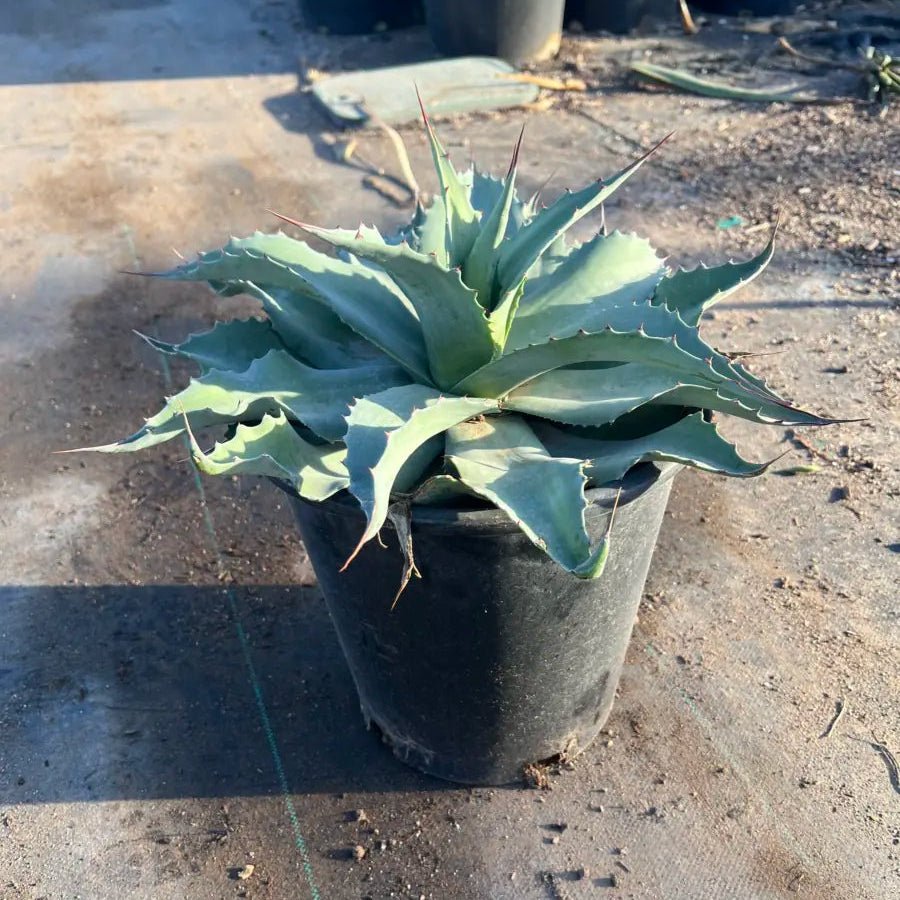
whale pot plant Buy Whale's Tongue Agave Phoenix | Agave ovatifoliaPhoenix's Most Sculptural Blue Gray Agave Bold, Beautiful, and Built for the Desert Whale's Tongue Agave (Agave ovatifolia) is one of the most visually striking agaves available for Phoenix landscapes instantly recognizable by its extraordinarily broad, cupped, powdery blue gray leaves that form a dense, perfectly symmetrical rosette. Unlike most agaves with narrow, pointed leaves, Whale's Tongue leaves are wide and rounded at the base resembling, as
Phoenix's Most Sculptural Blue-Gray Agave — Bold, Beautiful, and Built for the Desert
Whale's Tongue Agave (Agave ovatifolia) is one of the most visually striking agaves available for Phoenix landscapes — instantly recognizable by its extraordinarily broad, cupped, powdery blue-gray leaves that form a dense, perfectly symmetrical rosette. Unlike most agaves with narrow, pointed leaves, Whale's Tongue leaves are wide and rounded at the base — resembling, as the name suggests, a whale's tongue. Growing 3–5 feet tall and 4–6 feet wide, it's a bold focal point for any desert garden. Whether you're designing a sleek modern landscape in Scottsdale, a resort-style xeriscape in Chandler, or a sculptural garden in Mesa — Whale's Tongue Agave turns every landscape into a statement.
Whale's Tongue Agave Plant Details
| Attribute | Detail |
|---|---|
| Scientific Name | Agave ovatifolia |
| Common Names | Whale's Tongue Agave, Whale's Tongue Century Plant |
| Mature Height | 3–5 feet |
| Mature Width | 4–6 feet |
| Growth Rate | Moderate — well-suited to Phoenix's warm growing seasons |
| Sun | Full sun (6+ hrs). Tolerates intense reflected heat from walls and pavers. |
| Water | Very low once established. One of the most drought-tolerant agaves available. |
| USDA Zones | 7–11 (Phoenix is Zone 9b–10a) — exceptionally cold-hardy for an agave |
| Soil | Well-draining. Highly adapted to Arizona caliche soils. |
| Foliage | Evergreen — powdery blue-gray year-round |
| Flower Color | Greenish-yellow to white — tall bloom spike (monocarpic) |
| Cold Hardiness | Hardy to 5°F — one of the most cold-tolerant agaves |
Whale's Tongue Agave Uses in Phoenix Landscapes
Dramatic Landscape Focal Point
Whale's Tongue Agave is unmatched as a specimen plant in Phoenix-area landscapes. Its wide, cupped leaves and powdery blue-gray color create an instant focal point that draws the eye from across the yard or street. Plant it solo in a circle of dark gravel, against a white stucco wall in Scottsdale, or at the center of a formal desert garden in Paradise Valley. Give it 5–6 feet of space to achieve its full, dramatic spread.
Modern Desert and Xeriscape Design
The sculptural perfection of Whale's Tongue Agave makes it the anchor plant of choice for modern desert gardens across the Phoenix Valley. Its cool blue tones contrast beautifully with warm-toned decomposed granite, red boulders, and terracotta containers. Pair it with Blue Elf Aloe, Red Yucca, and ornamental grasses for a layered, water-wise composition in Gilbert, Peoria, or Tempe.
Large-Scale Xeriscape and Commercial Landscaping
Available in sizes from 1 gallon up to 36" box, Whale's Tongue Agave is an excellent choice for large commercial properties, resort hotels, and HOA common areas across the Phoenix Valley. Its massive presence fills large landscape beds efficiently, and its cold hardiness (to 5°F) makes it dependable even in higher-elevation Phoenix suburbs. Use 3–5 plants in staggered groupings for maximum commercial landscape impact.
Cold-Hardy Desert Garden
Whale's Tongue Agave is one of the most cold-hardy agaves available — rated to USDA Zone 7 and surviving temperatures down to 5°F. This makes it an exceptional choice for higher-elevation Phoenix-area communities like Cave Creek, Carefree, and Fountain Hills, where occasional hard freezes can damage less cold-tolerant agave varieties.
Best Time to Plant Whale's Tongue Agave in Phoenix
Fall (October–November) is the ideal planting window — warm soil temperatures encourage root development while cooler air reduces transplant stress. Your agave gets a critical 6–8 month head start before its first Phoenix summer. Spring (February–April) is also excellent. If you must plant in summer, provide shade cloth for the first 2–3 weeks and water every 1–2 days during initial establishment. Whale's Tongue Agave is cold-hardy enough for winter planting as well, though fall or spring are preferred.
How to Plant Whale's Tongue Agave
- Dig wide, not deep — 2–3x the root ball width, same depth as the nursery container.
- Check for caliche — break through any hardpan layer with a breaker bar to ensure proper drainage.
- Backfill with native soil — a 20% organic amendment is fine; avoid heavy clay backfill.
- Spacing — 5–6 ft apart as individual specimens; 4 ft for grouped plantings.
- Water basin — build a 3–4 inch earthen ring to direct irrigation to the root zone.
- Mulch — 2–3 inches of decomposed granite or bark mulch helps retain moisture and regulate soil temperature.
Watering Whale's Tongue Agave in Phoenix
First Year Watering Schedule
- Weeks 1–2: Every 1–2 days, deep and slow (20–30 min per session)
- Months 1–2: Every 3–4 days
- Months 3–6: Every 7–10 days (every 5–7 days during peak summer heat)
- After Year 1: Every 2–3 weeks in summer; monthly in winter
Drip Irrigation
Place drip emitters 18–24 inches from the base of the plant. Use 1–2 GPH emitters for established plants. Once fully established (typically 12–18 months), Whale's Tongue Agave is extremely drought-tolerant and can thrive on Phoenix's minimal rainfall with only occasional supplemental deep watering during the hottest summer months.
How fast does Whale's Tongue Agave grow in Phoenix?
Whale's Tongue Agave grows at a moderate pace in Phoenix, adding several inches per year. It can reach its mature 3–5 foot size in approximately 5–8 years under good Phoenix growing conditions — faster with consistent watering during establishment.
Is Whale's Tongue Agave safe around kids and pets?
Whale's Tongue Agave leaves have small marginal teeth and a terminal spine. While safer than large-toothed agaves, the leaf tips should be treated with awareness around high-traffic areas. It's a good idea to plant it slightly away from main walkways. For a completely smooth-margined alternative, see our Smooth Edge Agave or Toothless Murphey's Agave.
How cold-hardy is Whale's Tongue Agave?
Whale's Tongue Agave is one of the most cold-hardy agaves available — rated to USDA Zone 7 and surviving temperatures down to approximately 5°F. This makes it significantly more cold-tolerant than most ornamental agaves and ideal for higher-elevation Phoenix Valley communities prone to occasional hard freezes.
Does it produce pups?
Whale's Tongue Agave typically produces few to no offsets during its life — it puts most of its energy into growing the main rosette. After many years, it produces a spectacular bloom spike and then slowly declines. This makes each plant a long-lived, single-rosette specimen rather than a spreading clump.
What size should I buy for immediate impact?
For immediate landscape impact, we recommend the 15 or 25 gallon size. These established specimens are large enough to make a statement right away while still acclimating easily to their new location. The 36" box size creates an instant landmark specimen. Smaller sizes (1–5 gallon) are the most economical way to start a collection.
You May Also Like
- Mateo's Agave — Another rare, wide-leaved blue agave with a refined silver-blue rosette form.
- Artichoke Agave — A tightly packed, symmetrical rosette with an architectural, globe-like form.
- Parry's Agave — A symmetrical blue-gray native agave with striking bud-print markings on the leaves.
- Blue Glow Agave — A compact hybrid agave with glowing blue-green leaves and vivid red margins.
- Sisal Agave — A large tropical-inspired agave with tall, upright blue-green sword leaves.
How Many Whale's Tongue Agave Do I Need?
At 3 to 5 ft tall and 4 to 6 ft wide, this is a bold single-rosette specimen agave. It is built to stand alone as a focal point, or to anchor an odd-numbered group with each rosette given room to show its full cupped form. Space by mature width using the guide below.
| Planting Use | Spacing | Plants Needed |
|---|---|---|
| Solo focal point | Single plant, 5 to 6 ft clear | 1 |
| Staggered specimen group | 5 to 6 ft on center | 3 to 5 grouped |
| Commercial or xeriscape run (24 ft) | 5 to 6 ft on center | 4 to 5 |
Whale's Tongue Agave Season-by-Season in Phoenix
- Spring (Feb to Apr): Steady new-growth flush as soil warms. Strong second planting window and the time the powdery blue color is at its richest.
- Summer (May to Sep): Thrives in full sun and reflected heat off walls and pavers. Handles monsoon rain well in fast-draining soil: just keep added water light so the crown never sits wet.
- Fall (Oct to Nov): Prime planting season. Warm soil plus cooling air give 6 to 8 months of root growth before next summer.
- Winter (Dec to Jan): Fully evergreen and unbothered by Valley cold. Hardy to about 5°F, it shrugs off the hard freezes that damage tender agaves, making it dependable in Cave Creek, Carefree, and Fountain Hills.
At a Glance
✔ Heat-Loving (Reflected-Heat Tolerant) ✔ Drought-Tolerant ✔ Evergreen ✔ Low-Maintenance ✔ Deer & Rabbit-Resistant ✔ Cold-Hardy to 5°F
Plant It With
- Mateo's Agave: another wide-leaved silver-blue rosette that echoes the bold form at a refined scale.
- Parry's Agave: compact blue-gray rosette with bud-print markings for layered blue tones.
- Blue Glow Agave: smaller glowing-margin agave for foreground contrast.
- Artichoke Agave: tight globe-like rosette that complements the cupped leaves nearby.
Is Whale's Tongue Agave Right for Your Yard?
It thrives in full sun with reflected heat, in caliche soil broken open for drainage, and its exceptional cold hardiness makes it one of the most dependable specimen agaves across the whole Valley, including the colder foothill communities. It is not a fit right against a busy walkway or pool, since the leaves carry small marginal teeth and a terminal spine: set it back from high-traffic edges, or choose a smooth-margined agave for those spots.
Shipping Notes
- Free Standard Shipping on $100+ Orders to the USA.
- Except Preorder products are shipped in 48 hours.
- Delivery to the USA:
- Standard Shipping : 3-10 business days
- If time is of the essence, please consider selecting expedited delivery for faster service.
Exchange/Return Notes
- We offer a 30-day return/exchange service after receiving.
- Final sale items are not eligible for returns or exchanges.
- To process your return/exchange, please contact us at [email protected]
- Please click here for more details>>> Return & Exchange Policy