Pay in installments of $7.31 with
 ,
,
 and
and

Shipping Estimate
USA
- USA
- CAN
- USA
- CAN
Ships within 48 hours · Estimated delivery Aug 5 - Aug 10
 Promo Codes Available:
For Your Every Summer RSVP, with Code: SUMMER15
Description
is cercestis mirabilis a philodendron Cercestis mirabilisCercestis mirabilis Cercestis mirabilis is a tropical African aroid with a climbing liana habit and juvenile leaves that often show pale silver green markings in cultivation. Young plants usually carry thick green blades with a slightly embossed surface. As stems climb, the leaves can become larger, greener and less heavily marked. The species uses stems and aerial roots to move upward through humid forest vegetation. In a pot, a moss pole, coir pole
Cercestis mirabilis
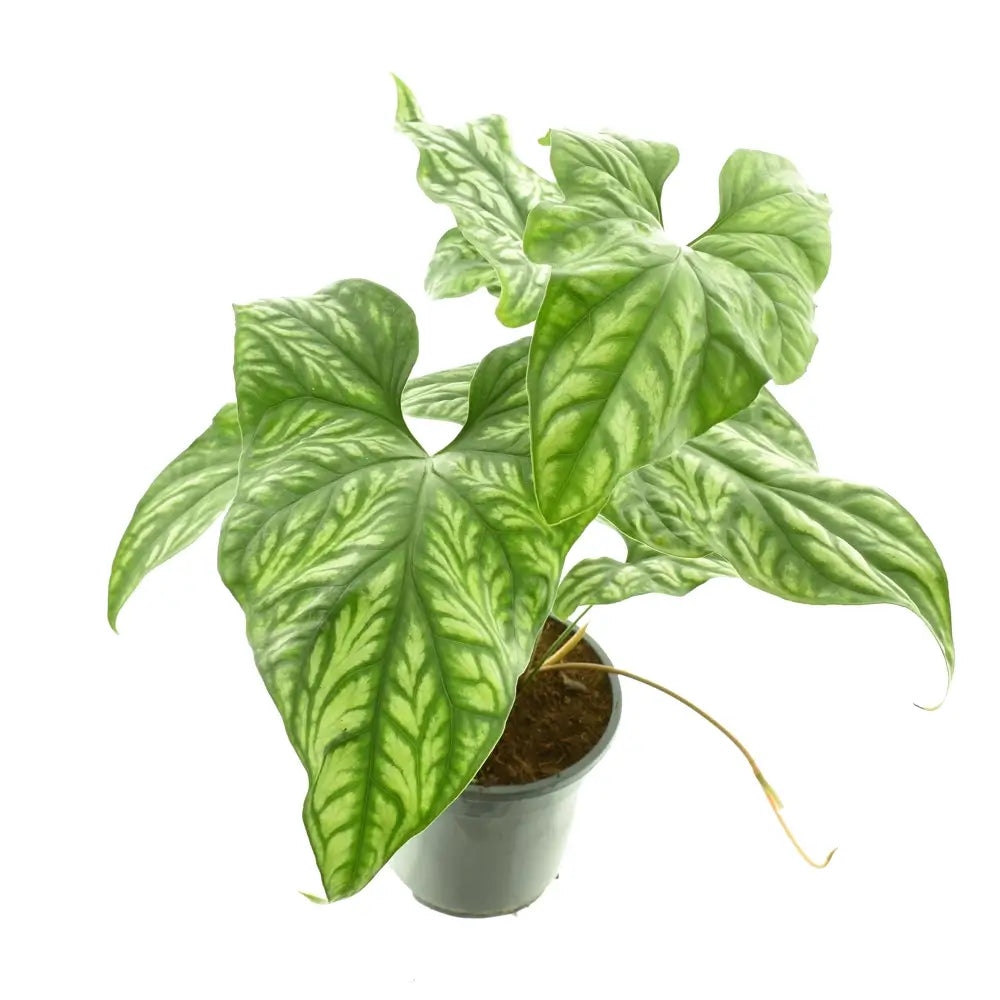
Cercestis mirabilis is a tropical African aroid with a climbing liana habit and juvenile leaves that often show pale silver-green markings in cultivation. Young plants usually carry thick green blades with a slightly embossed surface. As stems climb, the leaves can become larger, greener and less heavily marked.
The species uses stems and aerial roots to move upward through humid forest vegetation. In a pot, a moss pole, coir pole or board gives the nodes a surface to grip as the vine rises.
Silver-patterned Cercestis details
- Climbing African aroid with stems that attach by aerial roots
- Juvenile leaves often marked with pale silver-green patterning
- Matures with larger, greener foliage as the vine climbs
- A vertical board or pole gives aerial roots a surface to attach as the stem climbs
- Native to wet tropical African forests
Climbing habit, origin and leaf changes
Cercestis mirabilis is native across parts of tropical Africa, from West Africa into Central and East Africa, where it grows in wet tropical forest conditions. Its liana stems attach and extend through surrounding vegetation as the plant develops.
The juvenile stage shows pale markings and a textured leaf surface. Young leaves are usually more patterned, while mature growth can become larger, greener and less heavily marked. This shift is part of the plant’s natural development, so tall growth, warmth and steady humidity matter more than constant pruning.
Care for Cercestis mirabilis indoors
- Light: Provide bright filtered light. A bright position keeps new blades firmer, while harsh midday sun through glass can scorch the leaves.
- Watering: Start watering once the top of the mix begins to dry, with the inner root zone still lightly moist. The roots need both moisture and oxygen, so let excess water leave the pot freely.
- Substrate: Use an airy aroid mix with bark, perlite or pumice, coco chips and a smaller amount of moisture-holding material. The roots need oxygen as well as moisture.
- Climbing surface: Add a moss pole, coir pole or board while stems are young. Tie new growth loosely until aerial roots grip the surface.
- Humidity: Moderate to high humidity helps new leaves expand with fewer dry edges, especially during warm active growth.
- Temperature: Hold steady warmth around 20–28 °C and avoid cold draughts or cold windowsills.
- Feeding: Use a mild balanced foliage fertiliser during active growth. Slow growth usually needs better light, warmth and rooting conditions before stronger feeding.
- Repotting: Move to a fresh pot once roots fill the container or the mix has compacted. Keep the climbing surface fixed in place so the stem stays aligned.
- Propagation: Stem cuttings need at least one node and warm, humid conditions. Rooting is usually more reliable in lightly moist propagation medium.
Leaf, root and pest signals
- Small or weak new leaves: Check light level, warmth, root health and whether the vine has a vertical surface to climb.
- Yellowing leaves with soft petioles: Inspect the root zone for wet, compacted substrate. Refresh the mix if it smells sour or stays wet for too long.
- Dry or torn new growth: Low humidity, interrupted watering or pest pressure can affect expanding leaves. Check the newest growth points and improve humidity stability.
- Greener mature leaves: Mature leaves can show less juvenile patterning as the plant develops. Assess new growth quality, stem strength and root health together.
- Mealybugs or scale: Check stem nodes, leaf bases and the area where stems touch the pole or board. Treat early, since pests can hide around the climbing stem.
Training the climbing stems
Cercestis mirabilis shows its juvenile leaves clearly when the vine has a visible vertical route. A flat board holds the young patterned blades facing outward, while a taller pole gives the stem room to continue into its mature growth phase. Keep pruning minimal unless a stem is damaged or the plant needs shaping, because each node can produce roots or new growth.
Aroid safety note
Cercestis mirabilis is an aroid and should be treated as irritating if chewed or eaten. Position it beyond reach of pets and children, and wash hands after handling cut stems or sap-sensitive tissue.
Name origin and classification
The accepted name is Cercestis mirabilis (N.E.Br.) Bogner, in the family Araceae. The species epithet mirabilis means remarkable or wonderful, referring to the plant’s distinct juvenile foliage and changing mature form.
Cercestis mirabilis develops angular juvenile leaves, pale markings and an upright liana form when grown on a pole or board.
Shipping Notes
- Free Standard Shipping on $100+ Orders to the USA.
- Except Preorder products are shipped in 48 hours.
- Delivery to the USA:
- Standard Shipping : 3-10 business days
- If time is of the essence, please consider selecting expedited delivery for faster service.
Exchange/Return Notes
- We offer a 30-day return/exchange service after receiving.
- Final sale items are not eligible for returns or exchanges.
- To process your return/exchange, please contact us at [email protected]
- Please click here for more details>>> Return & Exchange Policy