Pay in installments of $6.45 with
 ,
,
 and
and

Shipping Estimate
USA
- USA
- CAN
- USA
- CAN
Ships within 48 hours · Estimated delivery Oct 2 - Oct 7
 Promo Codes Available:
For Your Every Summer RSVP, with Code: SUMMER15
Description
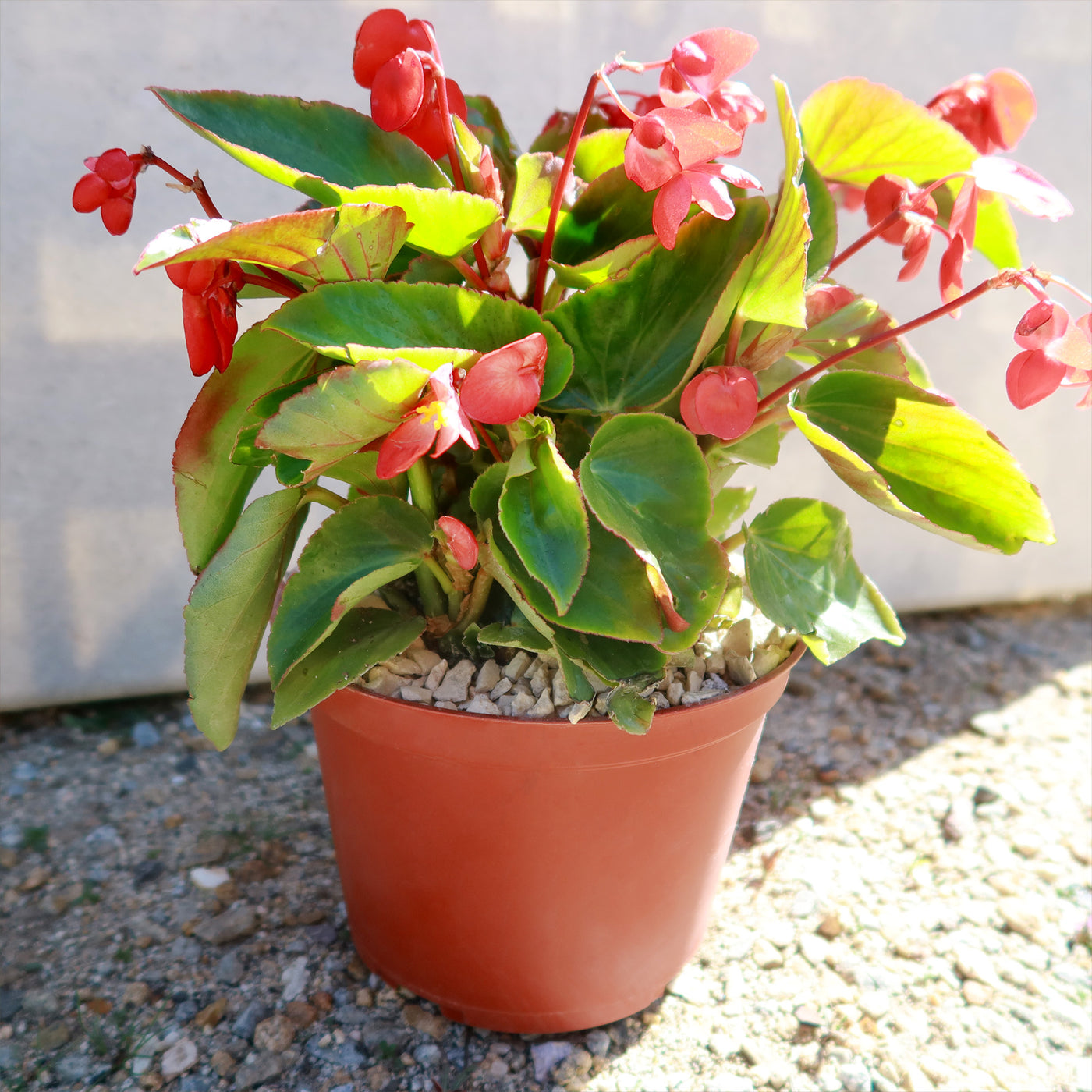
angel wing begonia house plants Red Begonia Plant ‘Dragon Wing Begonia’The Red Begonia Plant, also known as Dragon Wing Begonia, is prized for its attractive angel wing leaves and clusters of long lasting scarlet red flowers. Its a favorite for hanging baskets, window boxes, containers, and shaded garden beds. The plants ability to bloom continuously from spring to fall is one of the main reasons it has become a favorite in landscapes and patios alike. One of its most admired features is its glossy, angel wing shaped
The Red Begonia Plant, also known as Dragon Wing Begonia, is prized for its attractive angel wing leaves and clusters of long-lasting scarlet red flowers. It’s a favorite for hanging baskets, window boxes, containers, and shaded garden beds. The plant’s ability to bloom continuously from spring to fall is one of the main reasons it has become a favorite in landscapes and patios alike.
One of its most admired features is its glossy, angel-wing-shaped leaves that range from medium to deep green. These leaves are often lightly serrated along the edges and have a semi-succulent texture, giving them a lush and tropical feel.
The plant has a bushy, mounding habit and can grow 24 inches tall and wide, creating an elegant cascading shape when planted in hanging baskets or elevated planters.
The Begonia flowers truly steal the spotlight with their abundant clusters of long-lasting bright red blooms (from spring until the first frost).
Each scarlet Begonia flower has a waxy texture and a slight shimmer under sunlight.
A begonia in a hanging basket suspended from the ceiling adds a touch of elegance to any room.
The cascading blooms create a beautiful focal point and bring a pop of color to your space.
For gardeners seeking a low-maintenance yet highly ornamental plant, ‘Dragon Wing’ Begonia is an excellent choice. Its striking red flowers, lush foliage, and adaptability make it a standout among flowering hybrids, offering both color and elegance throughout the growing season.
When and How to Water Your Begonia Plant
The Red ‘Dragon Wing’ Begonia is moderately drought-tolerant once established, especially when grown in containers or partially shaded outdoor beds. It holds moisture well in its thick stems and can go for a few days without watering in warm weather. However, it performs best when the soil is kept consistently moist but not soggy, so allow the top 1 inch of soil to dry out before watering again.
In the spring and summer, during the growing season, dragon Wing begonias should be watered every 7-9 days, or whenever the top inch of soil feels dry. You can check this by using the two-finger technique—insert your index and middle finger about an inch into the soil; if it feels dry at that depth, it's time to water. To avoid overwatering, let the soil dry between waterings. Established plants may only require watering once a week, especially if it has not rained and the soil is dry.
During dormancy, which lasts from late fall to winter, reduce watering frequency to once every 2-3 weeks, just enough to prevent the soil from going completely dry.
Light Requirements – Where to Place Your Dragon Wing Begonia
When grown indoors as a houseplant, place your ‘Dragon Wing’ Begonia in a location that receives bright, indirect light for about 4 to 6 hours per day.
Ideal spots include near an east-facing window or several feet away from a bright south- or west-facing window with sheer curtains.
Avoid placing it in direct sunlight indoors, which can scorch its leaves.
If natural light is limited, supplement with a grow light for 12–14 hours per day.
For outdoor growth, place the plant in partial shade, where it receives morning sunlight and afternoon shade, or filtered sun throughout the day.
Direct afternoon sun can be too intense and may burn the foliage, especially in hot climates. In cooler climates, the plant can tolerate a few hours of direct sun, but 3 to 5 hours of bright light daily is ideal for encouraging flowering without leaf damage.
Too much sun can cause scorched or faded leaves, while too little light can cause lanky growth and less blooming. Adjust placement as needed to find the sweet spot for healthy growth.
Optimal Soil & Fertilizer Needs
Use a well-draining potting mix rich in organic matter. A combination of peat moss, perlite, and compost or high-quality potting soil works well. Avoid heavy, clay-rich soils that retain too much moisture, as this can cause root rot. Planet Desert has specialized potting soil that includes an organic substrate with mycorrhizae to help with the growth of a healthy root system to help your succulents thrive. Ensure all pots or containers have proper drainage holes at the bottom.
Fertilize the red Begonia plant once a year during the growing season with a balanced, water-soluble NPK fertilizer. For heavy bloomers, a formula with a higher phosphorus number (e.g., 5-10-5) can encourage more flowers. Do not fertilize in the winter or while the plant is dormant. Overfeeding during this time can lead to salt buildup or force weak growth that’s prone to pests and disease.
Hardiness Zones & More
When grown indoors as a houseplant, the ‘Dragon Wing’ Begonia prefers temperatures between 60–75°F and does best in environments with moderate to high humidity (40% or higher). Avoid placing it in areas with cold drafts, heat vents, or AC units. Maintain bright, indirect light for 4–6 hours per day for healthy foliage and blooms.
In the United States, this Dragon wing Begonia red is mostly an indoor plant, but if you live in southern Florida or Hawaii, then you can cultivate it outdoors as a tender perennial in USDA Zones 9–11.
It should only be planted outside after the last frost date and when nighttime temperatures consistently remain above 55°F.
It prefers part shade to filtered sun, and consistent humidity helps keep the foliage lush and full.
If your climate is too dry, occasional misting or mulching around the base can help maintain soil moisture. In colder zones, bring it indoors before the first frost or treat it as a seasonal annual.
Wildlife – Begonia Flowers Attract the Following Friendly Pollinators
The ‘Dragon Wing’ Begonia is known to attract friendly pollinators, especially bees, hummingbirds, and butterflies, due to its bright red blooms and extended flowering season. When planted in garden beds, it can help support local pollinator activity and enhance garden biodiversity.
According to the ASPCA, all Begonia species are mildly toxic to cats and dogs, particularly the underground tubers. Ingesting parts of the dragon wing plant can lead to symptoms like drooling, vomiting, and mouth irritation. However, it is safe to touch and handle, making it a popular choice for indoor and outdoor gardens.
How to Propagate Your Begonia Plant
The Dragon Wing Begonia propagation can be done through stem cuttings. Choose a healthy, non-flowering stem and cut a 4–6-inch section just below a leaf node. Remove the lower leaves to leave the bottom inch or two bare.
For water propagation: Place the stem in a jar with the lower nodes submerged. Keep it in bright, indirect light and change the water every few days. Roots should appear in 1–2 weeks.
For soil propagation: Dip the cut end in rooting hormone (optional), and plant it into moist, well-draining soil. Cover loosely with a plastic bag to maintain humidity. Mist occasionally and keep in indirect light. Once roots develop (typically in 2–3 weeks), transplant the cutting into a larger pot and resume regular care.
Key Takeaways
- The Dragon Wing Begonia produces vibrant, long-lasting red blooms that last from spring until the first frost, offering continuous color without deadheading.
- This Red Begonia plant thrives in a variety of settings, including hanging baskets, window boxes, patio containers, and shaded garden beds.
- The foliage of the Dragon Wing Begonia is lush and glossy, with attractive angel-wing-shaped leaves that add a tropical feel to any space.
- The Dragon Wing red Begonia becomes drought tolerant once established, making it a low-maintenance choice for gardeners in warmer regions.
- This begonia tolerates high heat and humidity well, continuing to bloom and flourish even during intense summer conditions.
The Bottom Line
Overall, the Red ‘Dragon Wing’ Begonia is a vibrant, easy-care plant ideal for both indoor and outdoor settings. With its arching stems, glossy green leaves, and striking long-lasting red blooms, it delivers color from spring through fall. It tolerates short dry spells, thrives in partial light, and is perfect for hanging baskets or containers. Just give it moderate humidity, rich soil, and light feeding, and it will reward you with months of lush growth and stunning flowers. A perfect option for both new and seasoned gardeners!
Shipping Notes
- Free Standard Shipping on $100+ Orders to the USA.
- Except Preorder products are shipped in 48 hours.
- Delivery to the USA:
- Standard Shipping : 3-10 business days
- If time is of the essence, please consider selecting expedited delivery for faster service.
Exchange/Return Notes
- We offer a 30-day return/exchange service after receiving.
- Final sale items are not eligible for returns or exchanges.
- To process your return/exchange, please contact us at [email protected]
- Please click here for more details>>> Return & Exchange Policy