SKU: 71779451601
prickly pear cactus lowes

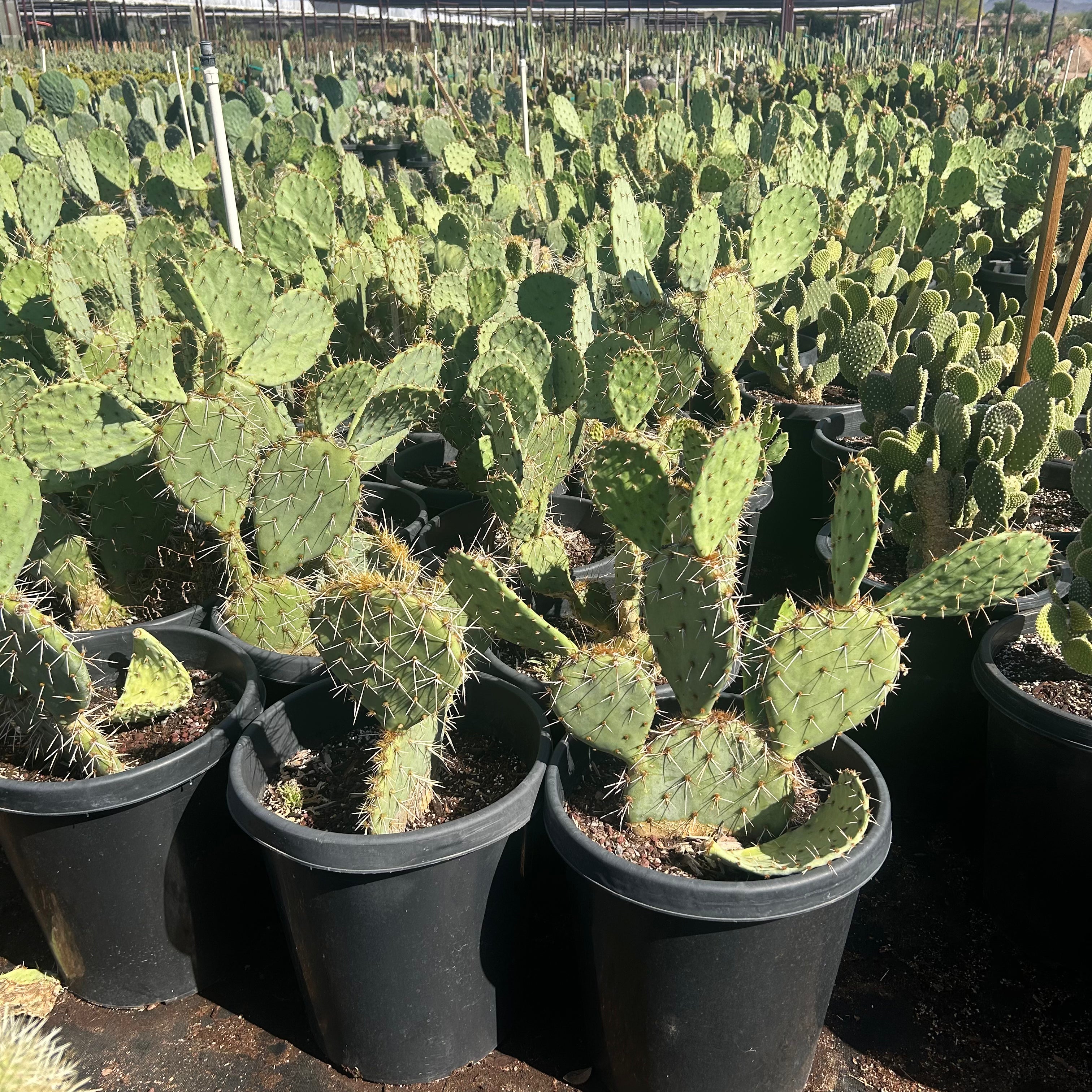
prickly pear cactus lowes Buy Engleman's Prickly Pear Phoenix, AZ | Opuntia engelmannii

Sale price$22.85 Regular price$25.39
Save 10%

Pay in installments of $6.35 with ShopPay, AfterPay and Klarna

Shipping Estimate
USA
  • USA
  • CAN

Ships within 48 hours · Estimated delivery Aug 8 - Aug 13

Promo Codes Available:

For Your Every Summer RSVP, with Code: SUMMER15

Description

prickly pear cactus lowes Buy Engleman's Prickly Pear Phoenix, AZ | Opuntia engelmanniiArizonas Toughest Native Prickly Pear for Authentic Desert Landscapes Englemans Prickly Pear (Opuntia engelmannii) is the quintessential Arizona native cactus the one you see across every hillside, wash, and natural desert area in the Phoenix Valley. Its broad blue green pads, showy yellow spring flowers, and deep red fruit (tunas) make it one of the most visually dynamic plants in the Sonoran Desert. For homeowners in Scottsdale, Mesa, Chandler,

Arizona’s Toughest Native Prickly Pear for Authentic Desert Landscapes

Engleman’s Prickly Pear (Opuntia engelmannii) is the quintessential Arizona native cactus — the one you see across every hillside, wash, and natural desert area in the Phoenix Valley. Its broad blue-green pads, showy yellow spring flowers, and deep red fruit (tunas) make it one of the most visually dynamic plants in the Sonoran Desert. For homeowners in Scottsdale, Mesa, Chandler, Gilbert, Tempe, and Glendale who want an authentic native landscape, Engleman’s Prickly Pear delivers the real Arizona look with zero fuss.

Engleman’s Prickly Pear Plant Details

Attribute Detail
Scientific Name Opuntia engelmannii
Common Names Engleman’s Prickly Pear, Cactus Apple, Desert Prickly Pear
Mature Height 3–6 feet
Mature Width 4–8 feet
Growth Rate Moderate — 1–2 new pads per season in Phoenix
Sun Full sun (6+ hrs). Handles reflected heat from walls and pavement.
Water Extremely low. Survives on rainfall alone once established.
USDA Zones 8–11 (Phoenix is Zone 9b–10a)
Soil Any well-draining soil. Thrives in Arizona caliche and rocky native soil.
Foliage Evergreen — blue-green pads year-round
Bloom Bright yellow flowers in April–May, followed by red-purple fruit
Native Status Native to Arizona and the Sonoran Desert

Engleman’s Prickly Pear Uses in Phoenix Landscapes

Native & Restoration Landscapes

As a true Arizona native, Engleman’s Prickly Pear is the cornerstone of authentic desert landscaping. Plant it alongside Palo Verde trees, Desert Spoon, and Brittlebush for a landscape that looks like it’s always been there. It’s the top choice for HOA-approved native plant palettes in Scottsdale, Cave Creek, and Fountain Hills.

Wildlife & Pollinator Gardens

The spring flowers attract native bees, butterflies, and hummingbirds. The red fruit feeds Gila woodpeckers, cactus wrens, and other desert birds through summer and fall. Javelina, rabbits, and tortoises also feed on the pads. If you want a landscape that supports local wildlife in Mesa, Gilbert, or Chandler, this is your plant.

Xeriscape Borders & Property Lines

A mature Engleman’s Prickly Pear creates a natural, thorny barrier that discourages foot traffic. Plant 4–5 feet apart along a property line or fence for a low, sprawling native border. The spines and glochids make it an effective (and beautiful) natural deterrent.

Desert Rock Gardens

Pair with Golden Barrel, Mexican Fence Post, and Purple Prickly Pear for a diverse cactus garden with contrasting shapes, colors, and textures. The broad, flat pads of Engleman’s contrast beautifully with the round barrels and tall columns.

Best Time to Plant Engleman’s Prickly Pear in Phoenix

Fall (October–November) is ideal — warm soil and cooler air give roots time to establish before summer. Spring (February–April) is the second-best window. This native cactus can actually be planted year-round in Phoenix, but avoid the peak heat of June–August for best results.

How to Plant Engleman’s Prickly Pear

  1. Dig wide, not deep — excavate 2–3x the root ball width at the same depth as the container.
  2. Check for caliche — break through any hardpan layer for drainage, though prickly pear is more tolerant of poor drainage than most cacti.
  3. Backfill with native soil — no amendments needed. This cactus grows in pure desert soil.
  4. Spacing — 4–6 feet apart for a natural grouping; 3 feet for a denser border.
  5. Water basin — build a 3–4 inch soil ring to direct water to roots during establishment.
  6. Mulch with gravel — 2–3 inches of natural desert rock or decomposed granite.

Watering Engleman’s Prickly Pear in Phoenix

First Year Watering Schedule

Weeks 1–2: Water every 5–7 days, deep and slow. Month 1–3: Every 10–14 days. Month 3–6: Every 2–3 weeks. After Year 1: Little to no supplemental water needed. This native survives on Phoenix rainfall alone.

Drip Irrigation

Place one 1 GPH emitter 12–18 inches from the base for the first year only. After establishment, remove or cap the emitter. Overwatering is the #1 killer of prickly pear in irrigated landscapes — once established, leave it alone.

How fast does Engleman’s Prickly Pear grow?
Expect 1–2 new pads per growing season. A 1 gallon plant will fill out to a 3–4 foot clump within 3–4 years. Our larger sizes (10/15G and 25G) give you an established, multi-pad specimen from day one.

Is it messy? Do pads fall off?
Prickly pear pads can detach in strong wind or if bumped by animals. Fallen pads often root where they land — which is how the cactus naturally propagates. Plant away from walkways and play areas to avoid accidental contact with spines and glochids.

Are the fruit edible?
Yes! The red-purple fruit (tunas) are a traditional Sonoran Desert food. They’re sweet and can be used in jams, syrups, and agua fresca. Harvest with tongs and burn off the glochids before handling.

What’s the difference between Engleman’s and Purple Prickly Pear?
Engleman’s has blue-green pads year-round with yellow flowers and red fruit. Purple Prickly Pear (Opuntia santa-rita) has pads that turn vibrant purple in cold weather and drought stress, with yellow flowers and purple fruit. Both are native — Purple is showier, Engleman’s is more robust.

You May Also Like

Purple Prickly Pear — A showier native prickly pear with dramatic purple pads in winter. Great companion planting for color variety.
Golden Barrel (Bareroot) — Round golden-spined barrel cactus that contrasts perfectly with flat prickly pear pads.
Mexican Fence Post — Tall columnar cactus for vertical accent behind sprawling prickly pear.
Parry’s Agave — A compact silvery-blue native agave that complements the blue-green tones of Engleman’s.
Foxtail Agave — A graceful arching agave that adds a different texture alongside the broad pads of prickly pear.

How Many Engleman's Prickly Pear Do I Need?

Engleman's Prickly Pear spreads wide, so space it generously. For a natural thorny barrier or property-line screen, plant on 5 foot centers, measured to the broad 4 to 8 foot mature width. For a looser native grouping, space 6 feet apart and plant in odd numbers so the clumps read naturally. Keep all plantings at least 3 to 4 feet back from walkways, drives, and pool decks because of the spines and glochids.

Run Length Spacing Plants Needed
10 ft barrier 5 ft on center 2 to 3
20 ft barrier 5 ft on center 4 to 5
40 ft barrier 5 ft on center 8 to 9

Engleman's Prickly Pear Season-by-Season in Phoenix

  • Spring (Feb to Apr): The showcase season. Bright yellow flowers open in April and May, drawing native bees, butterflies, and hummingbirds, and new pads begin to push. Strong secondary planting window.
  • Summer (May to Sep): Built for Valley heat and reflected sun, thriving on rainfall once established. Red-purple fruit ripens through summer and the monsoon, feeding desert birds. Avoid overwatering, which is the main risk in irrigated yards.
  • Fall (Oct to Nov): Prime planting season and continued fruiting. This native can go in nearly year-round, but fall gives the easiest establishment.
  • Winter (Dec to Jan): Evergreen blue-green pads hold through winter. Exceptionally cold-hardy for the Valley, shrugging off normal frost without protection.

At a Glance

✔ Arizona Native   ✔ Heat-Loving (Reflected-Heat Tolerant)   ✔ Drought-Tolerant   ✔ Pollinator-Friendly   ✔ Hummingbird-Friendly   ✔ Edible   ✔ Evergreen   ✔ Low-Maintenance   ✔ Fire-Wise   ✔ Cold-Hardy to 15°F

Plant It With

  • Giant Prickly Pear: a larger blue-green Opuntia that builds depth in a native prickly-pear grouping.
  • Mexican Fence Post: tall columns that give vertical contrast behind the sprawling pads.
  • Golden Barrel: round golden globes that play off the flat pad shapes.
  • Desert Spoon: a silvery native accent that softens the cactus textures and ties the bed to the Sonoran palette.

Is Engleman's Prickly Pear Right for Your Yard?

This native thrives in full sun and reflected heat, in any well-draining native or caliche soil, with the open space its 4 to 8 foot spread needs. It is the cornerstone plant for authentic Sonoran landscapes, wildlife gardens, and natural barriers, and it lives on rainfall once established. It is not a fit close to walkways, patios, or play areas, where the spines and glochids are a hazard, and note that rabbits and javelina will browse the pads, so it is not a good choice where that wildlife pressure is heavy and unwanted.

Shipping Notes
  • Free Standard Shipping on $100+ Orders to the USA.
  • Except Preorder products are shipped in 48 hours.
  • Delivery to the USA:
  1. Standard Shipping : 3-10 business days
  • If time is of the essence, please consider selecting expedited delivery for faster service.
Exchange/Return Notes
  • We offer a 30-day return/exchange service after receiving.
  • Final sale items are not eligible for returns or exchanges.
  • To process your return/exchange, please contact us at [email protected]
  • Please click here for more details>>> Return & Exchange Policy
SKU: 71779451601

Discover Niche Categories That Outsell prickly pear cactus lowes

Top-Converting Item to Boost Your Average Order

4.8 ★★★★★
Based on 25 reviews
Sort
Highest Rating
Newest First
Oldest First
Product Reviews
A
Verified Purchase
Anonymous B
Belleville, US
★★★★★ 5
Rich
Format: Paperback
A wonderful book that illuminates the reality of the God of Israel compared to the ANE deities.
WAS THIS REVIEW HELPFUL?YesReportShare
Reviewed in the United States on May 28, 2026
F
Verified Purchase
F. Gwin
Lowell, US
★★★★★ 5
Excellent. An invaluable resource!
Format: Paperback
Recently I have been reading a lot of books that have told me that the Bible's story of Adam and Eve plus the Exodus etc. are all myths that are extremely similar. Therefore, we should rethink the Bible and change our understanding of it to a more modern worldview that incorporates this knowledge and denies any sort of originality in the biblical account. John Oswalt thinks differently. He thinks that the Genesis story of origins is not some random piece of Semitic or Mesopotamian literature, but that is really unique revelation from God (and is prepared to back that statement up!). The book is divided into two sections: The Bible and Myth The Bible and History Oswalt spends the first few chapters defining the world of the Old Testament and trying to find a definition for the word myth. He comes to the conclusion that a myth "the reflection of a certain way of thinking about the world. To be sure, because of the way in which it thinks, the fantastic is often found in myth. But it is not the presence of the fantastic that makes a piece of literature myth; rather, it is the presence of the mythic worldview." This worldview, he asserts, is based off of what he calls "continuity," which he describes as "when the human, natural, and divine realms are expressed and actualized [together]." The worldview that assumes continuity is based on the here and now, and is very panentheistic. Primordial time is a key factor and the gods are dependent on the humans. This is not so with the biblical worldview. The worldview of the Bible assumes transcendence - an independent God meeting with people on his own terms. He then compares and contrasts these views and shows the real differences between stories like Enimu Elish and Genesis 1. He doesn't deny similarities in the narratives, but he shows the differences in the worldviews. He then moves on to history. Just like the word "myth," Oswalt has to define history, because how civilizations have viewed history in the past has never been the same as Western civilization views history. Then he asks whether or not the Bible is history, and whether or not it matters. He makes several great points here, one of which is that ancient annuals and chronicles never recorded the defeats of kings, yet we find Israel's holy book littered with their failures and mess ups. This is a serious deal when looking at whether or not the Bible is history, because in the ancient way of thinking this surely stands out. He then looks at other questions, like "Are Biblical Faith and Biblical History Inseparable?" and responds to some critics (including Bultmann!). He then looks into the origins of the Israelites' worldview by means of authorship. Is the Bible a late text that was updated from an older, polytheistic one? "No!" says Oswalt. He deals with critiques here as well before moving on to a brilliant conclusion where he sums up the book and gives us a view of how modernism and rationalism are taking us back to the worldview based on continuity. Overall, this was a brilliant book and I wish I had read it sooner!!! It seems like so many authors today are trying to convince us that the Bible has so much in common with the other stories of origin out of an anti-biblical or liberal worldview (like ). However, under close scrutiny these criticisms do not stand up. I thank John for this book, and I will be recommending it to countless others!
WAS THIS REVIEW HELPFUL?YesReportShare
Reviewed in the United States on August 11, 2012
C
Verified Purchase
Cari Ring
Fort Morgan, US
★★★★★ 4
Excellent analysis, decent theorizing
Format: Kindle
While the analysis and argumentation presented in The Bible among the Myths is outstanding, the early chapters of the book suffer from a few problems. First - and this is mainly a complaint given my own preferences - the style of writing in chapters 1-4 differs noticeably from that of the rest of the book. While the introduction and chapters 5-10 reflect a learned, academic style, the first four chapters are written more casually, without quite the same rigor that characterizes most of Oswalt's writing. I am not entirely sure of the reason for this difference, and I wouldn't mention it if it were not for the second issue. These same chapters reflect their writing style in their content, so much so that I nearly gave up on the book after the first three chapters. While I appreciate the author's need to provide background information, definitions, and an overarching theoretical framework, his methodology as laid out in the text is much less rigorous than I would prefer to see. The first few chapters are much less heavily annotated, with fewer scholarly references and a great number of offhanded summaries. He labels his approach to the definition of "myth" as phenomenological, that is, examining the common characteristics of a variety of myths in order to summarize what is essential about them. However, his listings of these common characteristics are vague and poorly related to actual bodies of mythology that survive to the present day. Examples, when cited, are drawn almost exclusively from the Greek and Egyptian traditions. For the understanding of Israelite culture as it relates to its neighbors, this is certainly a fair beginning; for the definition of myth, which is a worldwide phenomenon transcending culture and geography, it seems very far from adequate. As someone who has a thorough knowledge of Christianity and Greco-Roman mythology and at least a nodding acquaintance with Egyptian, Norse/Germanic, and Celtic mythologies, I can at least begin to fill in some of the gaps in Oswalt's analysis. His generalizations, although sweeping, are not particularly problematic, but I am concerned that he embarks upon such a grand theoretical project without doing at least a little more specific analysis of various individual mythologies to demonstrate his points. More problematic in my opinion is that he groups all these various mythologies into a single worldview. Any number of scholars have tried to broaden the interpretations of myths to demonstrate that all cultures revert to the same basic narrative (The Golden Bough being the most famous example, and The Hero with a Thousand Faces being a more recent one); none of them has succeeded particularly well from a scholarly perspective. Despite this early weakness, Oswalt's work undergoes a dramatic improvement starting in chapter 5. His basic point - that the essential view of reality in Israel is demonstrably opposed to the view held by any of its neighbors - can be made without resorting to the sweeping claims of the earlier chapters, and he does an excellent job of presenting and analyzing the evidence for his view. His terminology (of "continuity" and "transcendence"), while not quite adequate to present an overarching definition and theory of what constitutes a myth, is certainly well-suited to his specific analysis. In particular, the analysis of the supposed parallels between the Enuma Elish and Genesis 1 is outstandingly done. After presenting a table with the usual outline of the Enuma Elish against the outline of Genesis 1, he simply proceeds to list the major plot events and how much time it takes to relate each one in the text itself. From this alone, it is readily apparent that the prevailing "outline" has intentionally been generated to encourage comparison to the Genesis account of creation. Such spurious efforts - minimizing the events of over 500 lines of poetry, while selecting 5 which bear questionable similarity to a verse in Genesis - are not honest scholarship, and kudos to Oswalt for pointing this out. I agree with a previous reviewer that it would have been helpful to append the text of the Enuma Elish in parallel with Genesis for readers to compare for themselves would have been a nice touch, but Oswalt's claims are not so elevated that they could not be disproven by direct appeal to the text. One final note. A previous reviewer noted that many of the authors Oswalt discusses wrote between the 60's and 80's, and complained that this made the book seem "dated." I am a graduate student in classics, and can assure those who are concerned that in any field dealing with antiquity, "dated" sources are often some of the most important. Unlike quantum physics, which has less than a century of history, the classic writings of antiquity and the history of those eras has been studied for over two millennia. Meaningful research begins, in fact, with the scholars of Alexandria who worked around 300 BCE; often the work they have done is not duplicated anywhere else. In the field of Ancient Near Eastern studies and Biblical studies in particular, there is likewise a long history of scholarly and interpretive effort. Sources less than a hundred years old are not dated - in the grand scheme of things, they are actually quite recent. It is also worth noting that many of the very recent books, which the reviewer presumably has in mind, are written for a popular audience and would not be considered truly scholarly efforts. Some are written by scholars, but those specific books are unlikely to come up in a serious academic analysis of the subject. The views entertained by those books, however, are very clearly addressed in The Bible among the Myths - largely because the scholarly arguments they were based on are much older than most people assume. Just because Oswalt does not mention names of popular authors does not mean that his argument fails to cover all its bases. All in all, the book is well written and persuasive. The earlier chapters might be found in any popular book on the subject, but the later chapters are more clearly of a scholarly bent, with corresponding vocabulary; readers who are looking for more of a lay approach to the issues may want to look for another author. However, the analysis of parallels between the Old Testament and the surviving Ancient Near Eastern literature is well-presented and balanced, and Oswalt's treatment of other scholars in the field seems to be fair. (I have not read any of their works myself, but Oswalt presents both strengths and weaknesses when considering whether an author's position is sufficiently explanatory and praises some aspects of works he disagrees with. He also is willing to point out when he agrees with some of the author's data, but draws a different conclusion. All of this strikes me as favorable.) The later chapters are thoroughly referenced in endnotes and draw from a variety of sources. Chapters 1-4: 3.5 stars Chapters 5-10: 5 stars Overall: 4.5 stars
WAS THIS REVIEW HELPFUL?YesReportShare
Reviewed in the United States on January 2, 2014
K
Verified Purchase
KC
New York, US
★★★★★ 5
Excellent resource for defending why Christianity is not rooted in mythology
Format: Paperback
I bought this book as required reading for an introductory Old Testament class I was taking in seminary. Sad to say, the textbook mostly collects dust. To this day, I use Oswalt's book for reference and continue to recommend the reading of it to others. I do not believe one can fully defend the Christian faith without first knowing how firmly convinced some scholars and historians are that Christianity is rooted in mythology. I will not lie. If you read about some of these myths in a silo, you may find yourself leaning toward such false beliefs. When you take a step back and consider the time in history in which the Old Testament was written, the picture becomes more clear. In the introduction to the Old Testament class, we also read Ancient Near Eastern Thought and the Old Testament by John H. Walton. Again, the text book is mostly collecting dust, I also repeatedly use this one as a reference. I would strongly recommend reading both books. The second is more academic in style than the first, but it helps lend further context.
WAS THIS REVIEW HELPFUL?YesReportShare
Reviewed in the United States on March 29, 2015
P
Verified Purchase
P. Hayes
Battle Creek, US
★★★★★ 5
An inspiring take on the story of the Bible and reality.
Format: Kindle
This was an absolute pleasure to read. Oswalt utilizes his knowledge of ancient near east culture and religion to thorough debunk any effort to one might make to pretend that the Bible is of a similar mythology.
WAS THIS REVIEW HELPFUL?YesReportShare
Reviewed in the United States on January 7, 2025

recommand products