Pay in installments of $6.62 with
 ,
,
 and
and

Shipping Estimate
USA
- USA
- CAN
- USA
- CAN
Ships within 48 hours · Estimated delivery Sep 30 - Oct 5
 Promo Codes Available:
For Your Every Summer RSVP, with Code: SUMMER15
Description
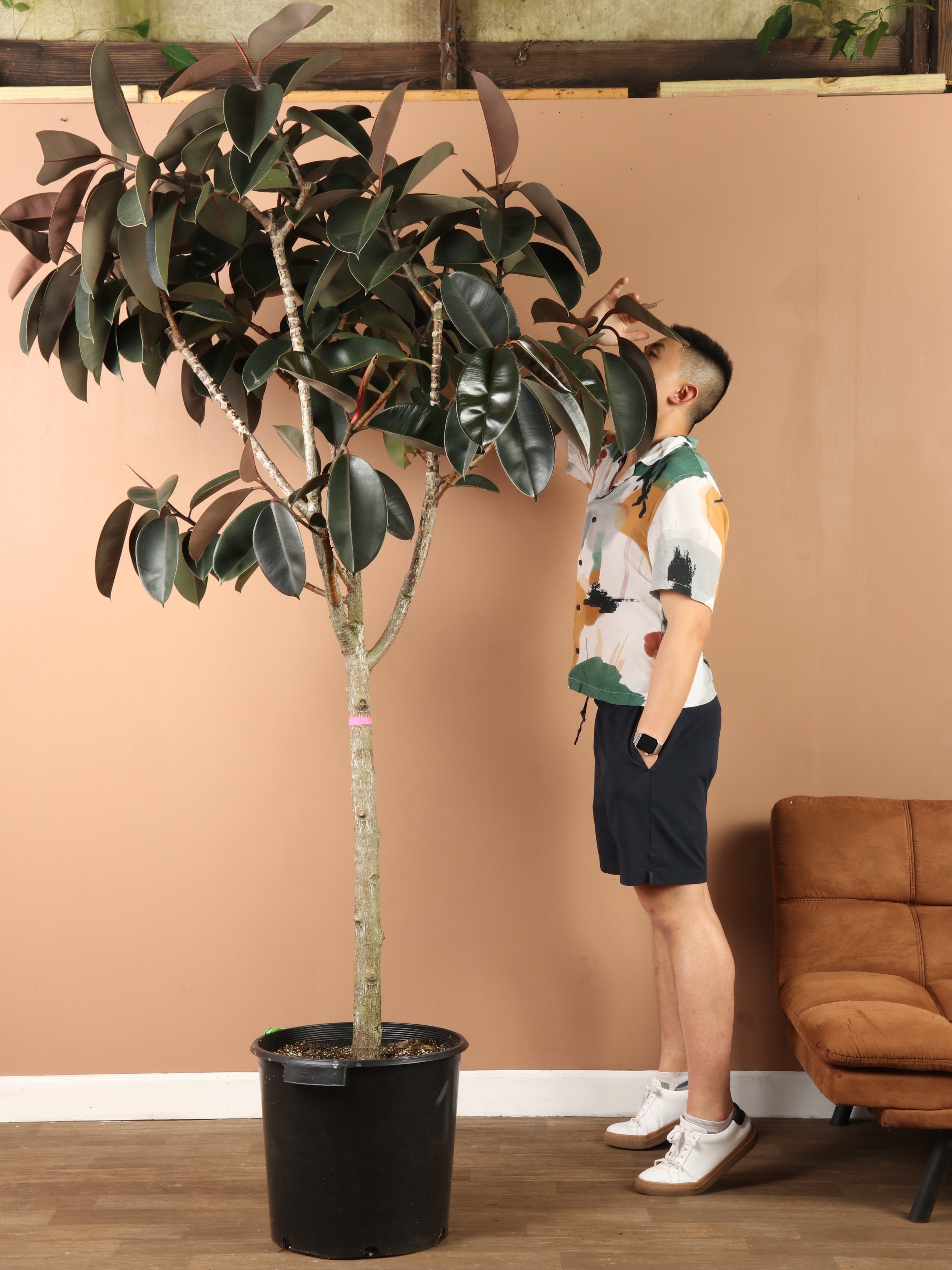
rubber tree rubber 7-10 FT Rubber Tree StdDescription On the hunt for authentic rainforest vibes? Like your houseplants a little bigger than the average? Then you need the Rubber Tree in your life. Smooth bark and glossy leaves, all ready to turn your room into a botanical sanctuary. Originally from the Amazon rainforests, the Hevea brasiliensis is the very species that revolutionized the world with natural latex. Now, they bring their historical significance and impressive stature indoors to
Description
On the hunt for authentic rainforest vibes? Like your houseplants a little bigger than the average? Then you need the Rubber Tree in your life. Smooth bark and glossy leaves, all ready to turn your room into a botanical sanctuary.
Originally from the Amazon rainforests, the Hevea brasiliensis is the very species that revolutionized the world with natural latex. Now, they bring their historical significance and impressive stature indoors to offer your guests a huge conversation starter.
Care
Is a rubber tree a good indoor plant?
So the rubber tree needs a little more room than your average house plant, but it also makes an exceptional statement. If you’ve got the ceiling height, then it’s the perfect botanical museum specimen meets living sculpture.
Are rubber trees hard to keep alive?
Rubber trees do need consistent attention to be happy indoors. They’re not impossibly demanding, but they appreciate stable conditions: steady temperatures, regular watering, and bright light. Get that right, and this Amazonian native will be happy in his adopted environment.
How often should I water a rubber plant?
When you need to water your rubber tree, think about recreating that perfect rainforest floor dampness in your container - consistently moist without being waterlogged. Top it up when the top 2-3 inches (5-8 cm) of soil dry out.
Where should I place a rubber tree in my house?
When you need to water your rubber tree, think about recreating that perfect rainforest floor dampness in your container - consistently moist without being waterlogged. Top it up when the top 2-3 inches (5-8 cm) of soil dry out.
Can rubber tree plants live in bathrooms?
If you like company when you’re brushing your teeth, you’re in luck. Rubber trees can thrive in large, bright bathrooms with excellent ventilation and substantial space for growth. They love the humidity, as long as it comes with headroom!
What fertilizer should I use for a rubber tree?
Think of your rubber tree as a botanical athlete preparing for its next growth spurt marathon. It needs consistent nutrition - rather than irregular gorging. So feed it with balanced liquid fertilizer monthly during its spring and summer growing seasons.
What does rubber tree plant care involve?
To properly care for your rubber tree, you’ll need to provide bright light, consistent moisture, high humidity, and regular feeding during the growing season. It’ll also appreciate occasional misting and leaf cleaning - think spa treatment for your magnificent Amazonian houseguest-turned-permanent-resident.
Does a rubber tree need sunlight?
Your rubber tree absolutely needs bright, indirect sunlight for optimal growth - and that means at least 6 hours daily. But think dappled rainforest canopy light, rather than blazing tropical beach conditions, as harsh afternoon rays can scorch leaves.
Pet-friendly?
The rubber tree isn’t pet-friendly. Its latex sap contains ficin and other irritating things that are toxic to your pets. Best to keep out of their reach.
Are rubber tree plants toxic to dogs?
Rubber trees are toxic to dogs because their latex sap contains ficin compounds that cause gastrointestinal upset, drooling, and oral irritation. If your little pooch gets a little snack-happy then you should head straight to the vet.
How toxic is a rubber plant to cats?
The rubber tree is toxic to cats. Its latex sap causes oral irritation, drooling, vomiting, and tummy problems. If your feline housemate has got too friendly with your rubber tree, get in touch with your vet immediately.
Factoids
What is the difference between a rubber plant and a rubber tree?
The rubber tree (Hevea brasiliensis) produces commercial latex and grows massive, while the rubber plant (Ficus elastica) is a smaller ornamental houseplant. Our authentic rubber tree has genuine Amazonian heritage - even if you’re not using it to make tires!
Do rubber trees make rubber?
Rubber trees absolutely make rubber! Hevea brasiliensis produces the latex used in everything from tires to medical gloves. Even if yours won't be tapped, you're literally growing the species that changed modern manufacturing - how's that for a conversation starter?
Does a rubber tree purify air?
While it might not be as effective as some houseplants, your rubber tree’s large leaves will contribute to air purification. It’ll create oxygen and improve humidity levels, essentially bringing a piece of the Amazon's legendary "lungs" into your space.
What is the lifespan of a rubber tree?
Indoor rubber trees can live several decades with proper care, and wild specimens reach 100 years. Think about it: This tree might outlast your mortgage, witness multiple home renovations, and even outlive mom jeans being in fashion!
Do they still use rubber trees to make rubber?
Although we’ve found synthetic ways of making rubber, Hevea brasiliensis remains the world's primary natural rubber source, with massive plantations across Southeast Asia. So most of your tires, footwear, and elastic bands are still coming from trees like yours.
What is the spiritual meaning of a rubber tree?
The rubber tree symbolizes resilience, adaptability, and abundance across cultures - which makes sense given its economic impact worldwide. Indigenous Amazonian peoples considered it sacred, representing the forest's generosity. Modern interpretations link it to flexibility and bouncing back from life's challenges.
Is the rubber tree fruit edible?
Sorry to disappoint, but the rubber tree fruits aren’t edible. They’re more capsules containing seeds than fleshy fruit. These explode when ripe, shooting seeds impressive distances (nature's catapult!). But indoor specimens rarely fruit, focusing their energy on leaf growth instead.
Buy a Rubber Tree
Make the ultimate botanical statement with your own rubber tree. You can bring genuine Amazonian majesty to your (large) space. If what you need is unmatched presence, historical significance, and conversation-starting appeal, then allow us to start or expand your rainforest collection.
From its smooth bark to impressive height potential, the rubber tree proves that sometimes you need to think bigger to create truly memorable interiors. You can get on a video call with us and choose your very own rubber tree. Your grand space deserves this living piece of botanical history!
Shipping Notes
- Free Standard Shipping on $100+ Orders to the USA.
- Except Preorder products are shipped in 48 hours.
- Delivery to the USA:
- Standard Shipping : 3-10 business days
- If time is of the essence, please consider selecting expedited delivery for faster service.
Exchange/Return Notes
- We offer a 30-day return/exchange service after receiving.
- Final sale items are not eligible for returns or exchanges.
- To process your return/exchange, please contact us at [email protected]
- Please click here for more details>>> Return & Exchange Policy